Reviewed · KILIMANJARO CLIMBS
8 Day Kilimanjaro Lemosho Climb
Kilimanjaro feels calmer on Lemosho. This non-technical 8-day camping climb takes you from a remote west start through forest and Shira country, then up toward Kibo with a classic Barranco wall scramble that uses your hands but needs no special gear. You also get that big-picture mountain climbing rhythm, from slow acclimatization days to the steep, cold summit push.
What I like most is the way the schedule builds altitude tolerance before you hit the top. You go to big heights like Lava Tower (4630m) and you spend enough time around the Shira Plateau and moorlands that your body has a better shot. I also like the practical camp and support setup, from an English-speaking guide team and tent crew to daily meals, hand washing stations, and even emergency oxygen with twice-daily health checks using an oximeter. The one real consideration is that the summit day is long and brutal, starting around midnight and taking you through loose scree in the arctic zone, so you need solid fitness and serious altitude respect.
In This Review
- Key highlights worth caring about
- Lemosho Route: why this climb profile feels more “mountain” and less “race”
- Day 1, Moshi to Lemosho gate and the forest start with slippery surprises
- Day 2, leaving the forest into heather and moorland for Shira ridge views
- Day 3, Shira Plateau and the option to push to Shira Cathedral (3880m)
- Day 4, Lava Tower acclimatization and the descent into Barranco Valley
- Day 5, the Barranco wall scramble to Karanga Valley, last water point
- Day 6, alpine desert to summit camp, pacing for the midnight start
- Day 7, midnight summit bid to Stella point and Uhuru Peak
- Day 8, Mweka Gate and the return through southern rainforest
- Camp life and food: why the details matter at altitude
- Guides, porters, and safety systems that reduce the guesswork
- Price and what your money is really paying for
- Who this trek fits best, and who should rethink it
- Should you book the 8-Day Lemosho climb?
- FAQ
- Where do we start and how does the transfer work?
- Is this climb technical?
- How long is the summit day and when do you start?
- What is included for camping, tents, and meals?
- Is drinking water provided, and can I bring any kind of bottle?
- Do you get medical support and oxygen?
- Is there free cancellation?
Key highlights worth caring about
- Quiet west-side start on Lemosho: more likely to feel remote compared with busier entry routes
- Real acclimatization in the middle days: Lava Tower and Shira Plateau give your body time to adjust
- Barranco wall, hands and feet but no technical gear: that mountain-climb feeling without rope training
- Warm, structured camp support: tent crew, dining setup, meals, and basic wash stations
- Safety extras you can actually use: emergency oxygen per 5 passengers plus twice-daily health checks
- Summit itinerary that prioritizes pacing: slow zig-zags, first stop at Stella point before Uhuru Peak
Lemosho Route: why this climb profile feels more “mountain” and less “race”
Lemosho has a reputation for doing something important for your success. It starts far back in the west side of Kilimanjaro’s world, which generally means fewer people in your daily path. That matters because the trek is not just about distance. It’s about how your mind stays steady while your body works at thin air.
This route is also a nice fit if you want real climbing moments without technical training. You will scramble at the Barranco wall, using your hands and legs, but you’re not asked to do anything like glacier travel or rope work. The big “mountain” feeling comes from movement, not equipment.
And you should know the overall rhythm is built for altitude. You are not jumping quickly to summit heights. The itinerary repeatedly shapes the day to day changes so you can acclimatize while still making progress.
More Kilimanjaro climbs:
- Kilimanjaro climb by Lemosho Route (7-day)
★ 5.0 · 651 reviews - Kilimanjaro climb, Machame Route (7-day)
★ 5.0 · 262 reviews - Kilimanjaro Climbing Lemosho Route 8 Days.
★ 5.0 · 186 reviews
Day 1, Moshi to Lemosho gate and the forest start with slippery surprises
Your day begins in Moshi, with departure around 09:00am and road transfer to the Lemosho gate. After registration, you drive along a 4×4 track to the trail head and then start walking through thick rain forest.
This is where Kilimanjaro often sets the tone. The forest path is narrow, winding, and alive, with varied flora and a chance of rain. If it rains, expect the trail to get slippery, so trekking shoes with solid grip are not optional.
You keep the pace steady, and the day ends at the first camp after about 4 hours of hiking. At this stage, you’re not chasing speed. You’re learning your effort level early, when oxygen is still plentiful enough to help you feel in control.
Day 2, leaving the forest into heather and moorland for Shira ridge views
Day 2 starts with a shift. You leave the dense vegetation behind and climb a steep path out of the forest zone. Then the terrain opens into heather and moorland.
This is one of the reasons the Lemosho route feels so good for first-time climbers. The hike becomes more “on purpose” visually, because you can start seeing jagged volcanic scenery develop as altitude increases. You hike across the Shira ridge with views of Shira peak, the third cone on Kilimanjaro.
The day is about 5 hours. Expect a steady walk, not a scramble. If you’re new to altitude trekking, this is the kind of day where you practice consistent breathing and relaxed effort. Save your energy for the higher days.
Day 3, Shira Plateau and the option to push to Shira Cathedral (3880m)
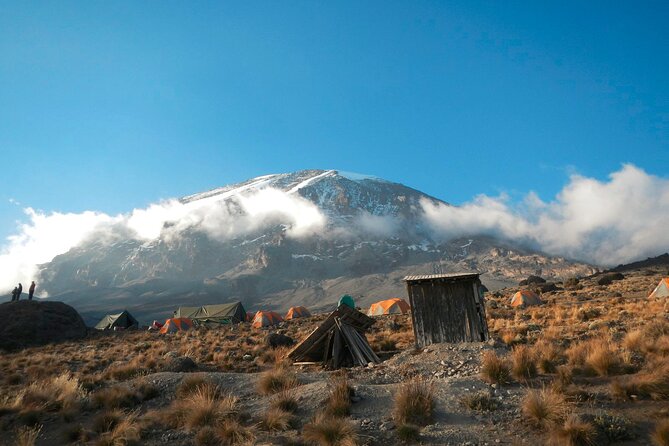
Today you work across the Shira Plateau through heather and moorland. You’ll have a chance for an optional extra hike to Shira Cathedral Peak (3880m) before continuing to Shira two camp.
That optional push is valuable if you feel good and your breathing is steady. It’s not just for bragging rights. It gives you a controlled taste of higher altitude views while you’re still far from summit stress.
The day is about 5 hours. It also sets up the western perspective you’ll keep appreciating as the route heads toward Kibo. Shira two camp is a turning point, because it’s where the journey starts to feel like a long approach to a final volcanic bowl.
A few more Moshi trips to compare
- Safari Serengeti And Ngorongoro
★ 5.0 · 288 reviews - Climbing Kilimanjaro – Machame Route
★ 5.0 · 170 reviews - Climbing Kilimanjaro through 7 days Machame Route
★ 5.0 · 151 reviews - Kilimanjaro climb, Lemosho Route (8-day)
★ 5.0 · 148 reviews
Day 4, Lava Tower acclimatization and the descent into Barranco Valley
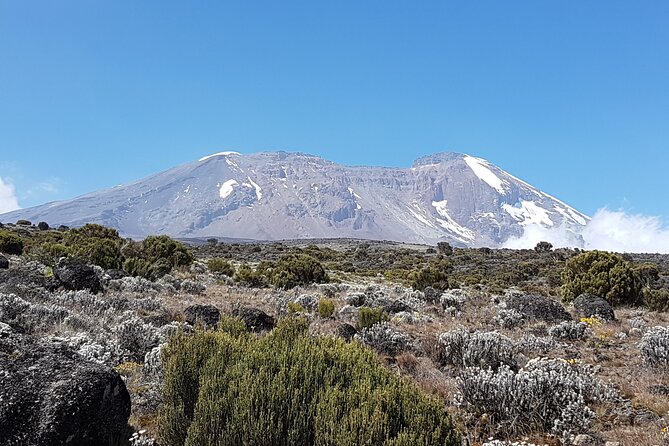
Day 4 aims at a key goal: altitude acclimatization before the harder days. You climb toward Kibo cone steadily, moving up and over edges of alpine desert. Your high point today is the Lava Tower area (4630m), and then you descend into Barranco Valley.
This is a smart pattern. You reach a high altitude, then you go down. That helps your body adjust, and it reduces the chance you feel wrecked later when things get steep.
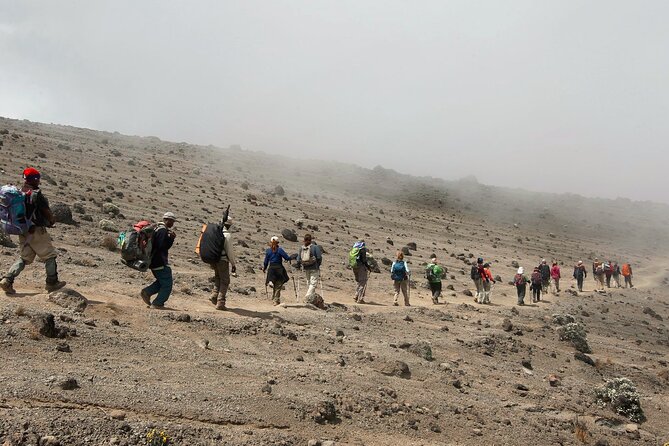
From the Lava Tower, you begin a steep descent, moving anti clockwise around Kibo toward the Barranco Valley. Along the way, you may spot flowering mountain cacti, known as Kilimanjaro Senecios, which are unique to the mountain. That’s the kind of small detail that makes the walk feel alive instead of repetitive.
The hike is about 8 hours. You will finish the day around the elevation similar to where you started, another quiet win for acclimatization.
Day 5, the Barranco wall scramble to Karanga Valley, last water point
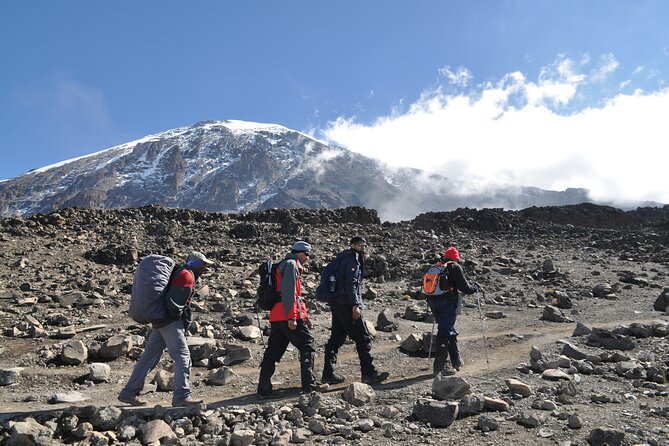
This is the day where people remember the route. You leave camp and head up the Barranco wall, and yes, it is a non-technical scramble that uses hands and legs. The good news is you don’t need special equipment, but you should expect the climb to feel serious in a way that a simple trail hike does not.
Reaching the top gives a superb view back into camp and toward Heim glacier on the peak. Even if the glacier view is partly obscured by weather, you’ll still feel the payoff of gaining height with effort, then being rewarded immediately.
After the wall, the route continues through alpine desert, winding around the mountain until Karanga Valley, where it becomes your last water point for the trek. Plan your water habits carefully today. If you tend to sip too little at altitude, this is a good moment to build a better habit.
Day 5 is about 5 hours.
Day 6, alpine desert to summit camp, pacing for the midnight start
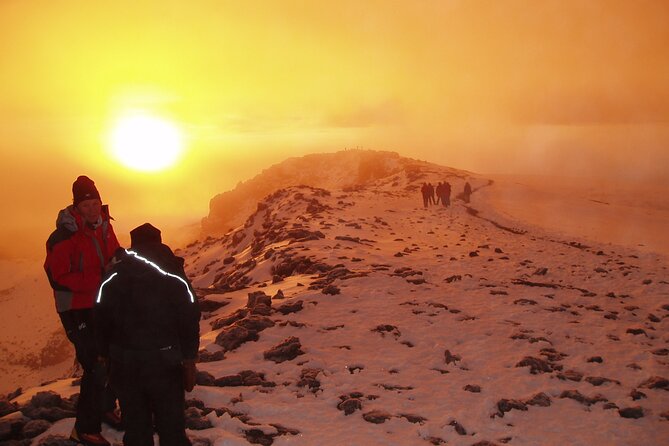
Day 6 climbs again through empty alpine desert, but the pace is described as almost casual. That doesn’t mean it’s easy. It means the incline is more manageable, so you can keep moving slowly without burning yourself out.
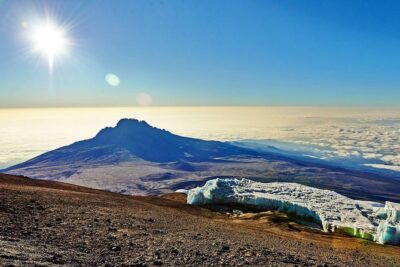
As you approach summit camp, you may finally catch sight of Mawenzi peak in the east. That moment often feels like a turning point, because the mountain stops being a featureless wall and starts becoming a set of real shapes again.
The hiking time is about 4 hours, and then you reach the summit camp with time to rest and prepare for the summit attempt that night. This is not the day to rush around. Eat, check your gear, keep warm, and let your body settle.
Day 7, midnight summit bid to Stella point and Uhuru Peak
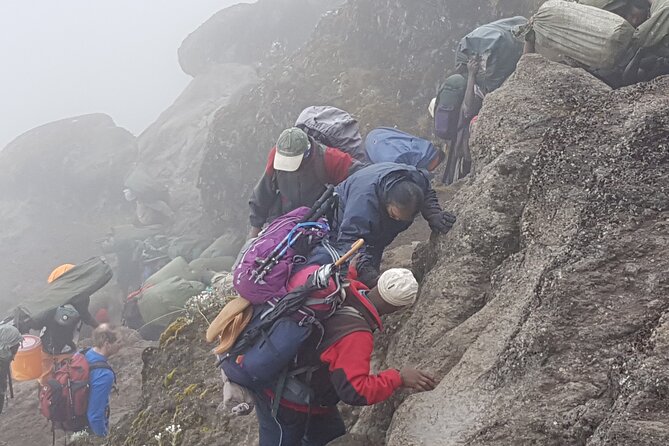
If you do this climb, this is the day you plan for the whole week.
You start around 00:00am, heading into the arctic zone. Expect cold, dark conditions and a steep hike over loose volcanic scree. This is where pacing is everything. The route uses zig-zag patterns, which helps you manage effort on uneven ground.
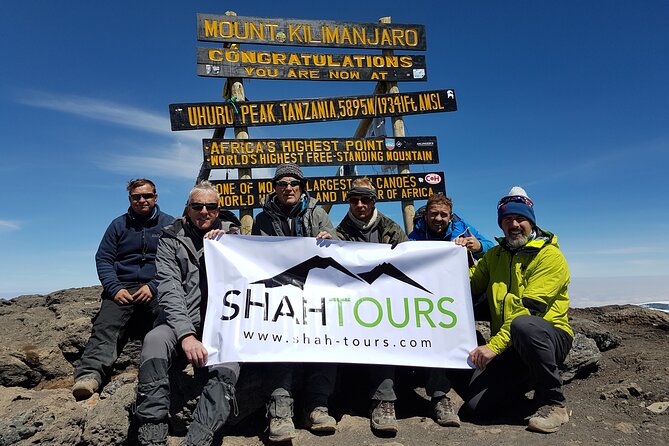
Your first key target is Stella point (5685m). From there, there is a short but difficult stretch to Uhuru Peak (5895m), the highest point on the African continent. Because you’re at extreme altitude, you usually do not spend long on top. Most of your time becomes focused on controlled movement, quick photos if you can see clearly, and then starting the descent.
The total time for the day is listed at about 18 hours, which is why you need to treat summit success as a long day, not a short hike. After reaching Uhuru Peak, you descend back toward the base camp for breakfast or brunch, then continue descending through the alpine desert.
Day 8, Mweka Gate and the return through southern rainforest
Day 8 is the emotional payoff day, because you’re finally moving back toward warmth and greenery. You descend through the southern rain forest to Mweka gate, where a vehicle waits to take you back to Moshi.
This last descent takes about 4 hours. You’ll likely notice how your legs feel different after spending days on altitude stress. It’s common to feel tired but also oddly satisfied, because the mountain finally starts letting you go.
The crew usually leaves you at Mweka gate, which gives you a clean chance to say goodbye to the team that got you there. If you’ve built a connection with your guides and porters, this is when that relationship feels real.
Camp life and food: why the details matter at altitude
Kilimanjaro camping looks simple from far away, but at altitude the setup is not decoration. It’s survival help.
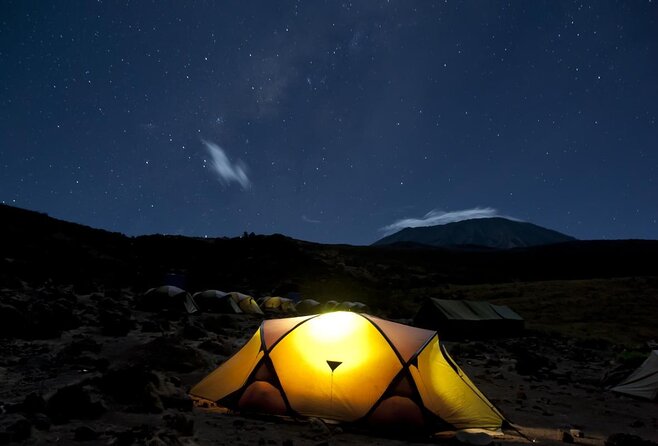
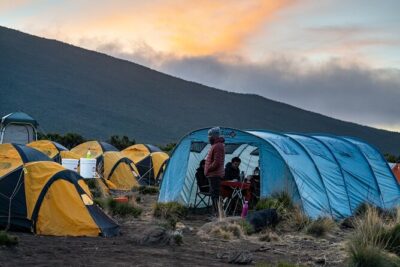
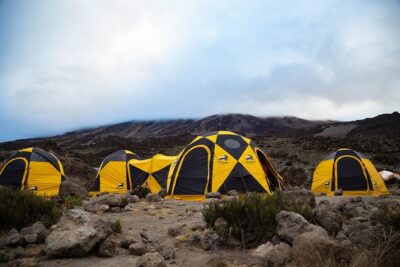
This trek includes a specialist tent crew that services and sets up campsites, along with tents designed for cold conditions. You also get a basic 1-inch foam sleeping mattress, and the camping includes chairs, tables, and a dining tent.
For personal comfort, there are small but meaningful things: a hand washing station and a small personal wash basin at campsites. Toilets are shared public facilities. It’s not a hotel, but it is functional, and the work crew keeps it running.
Food is also handled properly. You get meals every day on the mountain, with breakfast, lunch, and dinner included. The important part is that the meals are prepared with a trained mountain cook and waiter, plus you use provided eating utensils, cutlery, bowls, and cups. That means you’re not improvising meals with whatever you packed.
Water is provided as boiled drinking water on the trek from the first camp onwards, but you should note that water on the first day of the trek is not included. Also, water bottle rules are strict: metal and hard plastic bottles are not permitted, and soft plastics are not permitted on the mountain. Bring what is allowed, or plan to rely on the boiled water once you’re on camp water service.
Guides, porters, and safety systems that reduce the guesswork
The biggest difference between a stressful trek and a well-run one is usually not the mountain. It’s the people managing the plan.
You travel with trained, certified English-speaking mountain guides, and the route runs with defined ratios, with guides operating at KINAPA minimum requirements. There is also support from luggage porters, with one porter per person for up to 15kg of personal luggage.
Your team also includes tent crew and trained staff in charge of food and service. In past climbs with this operator’s teams, guides such as Mathayo and Calvin come up for being calm and encouraging, especially for first-time climbers. Other names like Hamza and Isaac also show up often in people’s feedback about the experience quality and day-to-day support.
On safety, this climb includes real medical logistics, not just talk. You get one emergency oxygen cylinder per 5 passengers, plus a first aid kit. Health checks happen twice daily with guides, and the group uses a medical oximeter. There’s also a pre-climb briefing and equipment check in Moshi before you start walking.
That stuff matters because altitude problems can start quietly. Monitoring and quick response can make the difference between panic and clear decisions.
Price and what your money is really paying for
At $3,125 per person for an 8-day climb, this is not a bargain hunt kind of budget. It’s priced like a full-service guided camping experience.
What you are paying for is the heavy stuff that adds up fast on Kilimanjaro:
- Park conservation and rescue-related fees plus camping fees
- Guide services and the tent crew setup
- Meals for the full climb days
- Transfers from Moshi to park gates and back to Moshi
- Luggage porter support (up to 15kg per person)
- Boiled drinking water from the first camp onward
- Safety systems like oxygen and oximeter checks
- Camping gear basics like sleeping mattresses and camp structures
Your extra costs are more straightforward: tips or gratuities and beverages are not included, and you’ll need insurance and personal items. Insurance is especially important because altitude treks carry real risk, and evacuation costs can be intense. Also, water on day 1 and post-climb stays in Moshi are not included.
If you want value on Kilimanjaro, look for operators that handle the logistics well. This one lists a lot of those costs inside the package price, which reduces surprises mid-trek.
Who this trek fits best, and who should rethink it
This climb is described as non-technical, with a key scramble day at Barranco wall, no special equipment required. That makes it a strong choice for people with hiking experience who can handle steep moments and long days.
You should also have strong physical fitness. The route is demanding even when it is not technical, and the summit night is long and cold.
It is not recommended if you have lung problems or other known altitude-related medical conditions. If that describes you, it’s worth talking with a medical professional who understands high-altitude treks before you commit.
Should you book the 8-Day Lemosho climb?
Yes, if you want a Kilimanjaro route with a calmer start, good acclimatization time, and a real climbing moment at Barranco wall without technical gear. You’ll like the structure, the camp organization, and the safety systems built into the trek plan.
Hold off if you are not ready for a long summit day starting around midnight, or if your health situation makes altitude unsafe. Kilimanjaro does not care about optimism. It cares about pacing, acclimatization, and readiness.
If you’re coming from Moshi, this operator’s meeting point is in town and the schedule begins with a transfer to the Lemosho gate, so your day one feels straightforward. Once you’re on the mountain, the plan is clear, and the crew is built to handle the details you do not want to manage at 4000m plus.
FAQ
Where do we start and how does the transfer work?
You start at the Shah Tours meeting point in Moshi, with a start time of 9:00am. The tour includes a transfer from a Moshi based lodge to the park gates per group, and a transfer from the park gates back to a Moshi based lodge per group. The final activity ends back at the meeting point.
Is this climb technical?
It is a non-technical Kilimanjaro camping route. The itinerary includes a non-technical scrambling section at the Barranco wall, where you may use your hands and legs, but no special equipment or experience is described as required.
How long is the summit day and when do you start?
You begin the summit ascent early morning around 00:00am. The summit push is described as a long day, with Day 7 listed at about 18 hours total.
What is included for camping, tents, and meals?
Camping includes a specialist tent crew and tent setup, plus a basic foam sleeping mattress. Meals on the mountain are included each day, with breakfast, lunch, and dinner included. Eating utensils and camp dining setup are included.
Is drinking water provided, and can I bring any kind of bottle?
Boiled drinking water is provided on the trek from the first camp onwards. Water on the first day of the trek is not included. Metal and hard plastic water bottles are not permitted, and soft plastics are also not permitted on the mountain.
Do you get medical support and oxygen?
Yes. The tour includes one emergency oxygen cylinder per 5 passengers and a first aid kit. There are twice-daily health checks with guides using a high-grade medical oximeter.
Is there free cancellation?
Yes. You can cancel up to 24 hours in advance of the experience for a full refund. If you cancel less than 24 hours before the start time, the amount you paid will not be refunded.
Just posted around Moshi
- machame route★ 5.0 · 16 reviews
- Kilimanjaro Climbing Umbwe Route★ 5.0 · 3 reviews
- Wildlife Extravaganza: Manyara, Tarangire & Ngorongoro in 3 Days★ 5.0 · 3 reviews
- Mt Kilimanjaro 6 days Marangu route hike★ 5.0 · 3 reviews
- 3 Days Private E-Bike Tour in West Kilimanjaro★ 5.0 · 3 reviews
- West Kilimanjaro cycling Adventures★ 4.5 · 8 reviews
- Kilimanjaro Climb • Marangu Route ~ 9 Day★ 5.0 · 4 reviews
- Private Cycle to Kilimanjaro Bike Park Safari★ 5.0 · 6 reviews
Kilimanjaro Climbs, compared.
8-Day Small-group Lemosho Kilimanjaro Summit Trekking
Read our review →
5 Days Best of Tanzania Luxury Safari Northern Circuit
Read our review →
Climbing Kilimanjaro through 7 days Machame Route
Read our review →