Reviewed · KILIMANJARO CLIMBS
7 Days Machame Route
A midnight start leads to big sky drama. The 7 days Machame Route on Kilimanjaro is all about timing and terrain, moving from mossy cloud forest up toward the Shira Plateau, then high moorland, and finally the summit glaciers at Stella Point and Uhuru Peak. I like that the plan is built for real acclimatization, not just a checklist.
I love how the climb follows walk high, sleep low, giving you a chance to adjust as you gain altitude. I also like the way the crew runs this trek with experienced organization, including care for your belongings while you’re up on summit night and meals that stay filling and interesting.
One consideration: the final ascent day is long and serious, with a start around midnight and a steep scree pull for hours. If your fitness is only just “okay,” you’ll feel it, so I’d be honest with yourself up front.
In This Review
- Key things to know before you go
- Machame Route in 7 days, the acclimatization strategy you feel
- Price and logistics that affect how smooth the trek feels
- Day 1 in Kilimanjaro cloud forest, where the air still feels friendly
- Day 2 and Day 3, Shira Plateau views to Lava Tower country
- Day 4 in high moorland, another acclimatization step (not just a filler day)
- Day 5 to Barafu Camp, glacier viewing with Kibo ahead
- Day 6 summit night, scree climb to Stella Point sunrise and Uhuru Peak
- Day 7 descent through rainforest to Mweka Gate, certificates and the return to Moshi
- What you’ll actually like most, based on how the operation runs
- Who this Machame trek suits best
- Should you book this Machame Route with Golden Summit Adventures?
- FAQ
- How long is the Machame Route trek?
- Where is the trek based?
- What time does the experience start?
- Is pickup from Moshi included?
- What kind of ticket do you receive?
- Are park or admission tickets included?
- Do you sleep in tents on the trek?
- How many travelers are in a group?
- When does the summit attempt begin?
- Do you get certificates at the end?
- Can you cancel for a full refund?
Key things to know before you go
- 7 days instead of 6 for better acclimatization, with built-in time at altitude
- Tents carried by porters, so you sleep in camp without hauling your own shelter
- Walk high, sleep low to help your body handle Kilimanjaro’s altitude
- A summit plan that targets sunrise at Stella Point (5739m) before pushing on to Uhuru Peak (5895m)
- A well-run team size capped at 15 travelers, so logistics stay manageable
- Strong customer service focus, including guidance and practical help during the hardest parts
Machame Route in 7 days, the acclimatization strategy you feel
Machame is often called Kilimanjaro’s most popular route for a reason: it’s scenic, varied, and it has a rhythm that matches altitude reality. The idea is simple. You climb higher during the day, but you also sleep at a lower relative level than you’d if you went straight up every night. That walk high, sleep low rhythm helps your body adapt. It does not make altitude risk disappear, but it improves your odds.
This specific trip is about 7 days, and that extra day matters. Yes, Machame can be completed in 6 days, but the company recommendation is to take 7 so you have more breathing room for acclimatization. Think of it as buying time for your lungs to catch up with your ambition. Your brain might say yes to “quick and tough,” but your body usually prefers gradual.
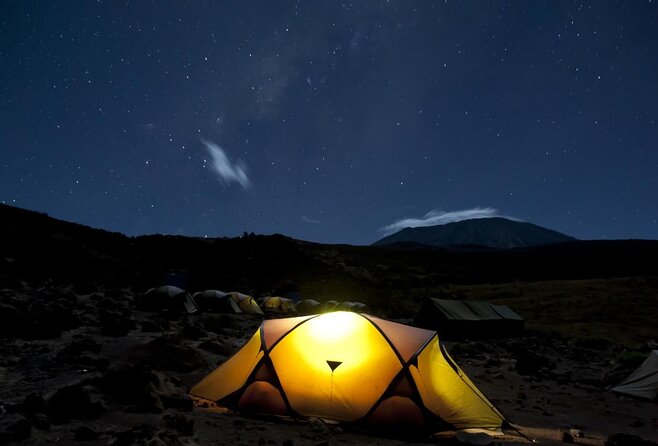
You’ll also sleep in tents carried up the mountain by porters. That means less physical load for you, more consistency for the camp setup, and fewer “where do we put this?” moments at altitude.
More Kilimanjaro climbs:
- Kilimanjaro climb by Lemosho Route (7-day)
★ 5.0 · 651 reviews - Kilimanjaro climb, Machame Route (7-day)
★ 5.0 · 262 reviews - Kilimanjaro Climbing Lemosho Route 8 Days.
★ 5.0 · 186 reviews
Price and logistics that affect how smooth the trek feels
At $2,000 per person, the price is not just about hiking. You’re paying for a full mountain operation: guides, porters, tents, and the route itself with park entry (admission ticket included). On Kilimanjaro, the difference between a trip that runs smoothly and one that feels chaotic is usually invisible until you’re already at altitude. Here, the organization is a core part of the value.
Logistics extras include pickup offered and a mobile ticket. You also start the day at 8:00 am, and the experience is designed around getting you from your base in Moshi into the climb cleanly. After the trek, you return to the hotel in Moshi, with time to shower and celebrate with cold drinks, which is exactly what your body wants after days in the mountains.
Group size is capped at maximum 15 travelers. That’s a sweet spot. Big enough to create energy, small enough that the crew can keep an eye on everyone without feeling like you’re part of a cattle line.
Day 1 in Kilimanjaro cloud forest, where the air still feels friendly
Day 1 starts with a hike through Kilimanjaro’s moss-covered trees in the cloud forest. This is the kind of terrain that slows you down in a good way. You’re surrounded by thick greenery and soft light, and the trail gradually shifts as the forest thins near the end of the day. Then the vegetation changes, with heathers, tall grasses, and wildflowers taking over.
You’re hiking about 6 hours, which is long enough to get into rhythm, but not so punishing that you arrive exhausted. It’s also a mental warm-up for what’s ahead. Cloud forest days teach you pacing, water habits, and how to notice how your body responds when you breathe slower.
You’ll be thinking: Okay, I can do this. That matters, because by the time you reach the higher zones, confidence needs to be matched with discipline.
Day 2 and Day 3, Shira Plateau views to Lava Tower country
Day 2 continues up through forest until the steep ascent onto the Shira Plateau. The prize here is the view, especially looking back and seeing Mount Meru rising above Arusha town in the distance. It’s the first big “wow” moment that also reminds you how far you’re rising above typical ground.
Day 2 is about 5 hours, and the altitude is starting to matter more. Early on, you can still move at a steady pace without pushing. That’s the trick: you want your body to feel like it’s working, not like it’s fighting.
Day 3 shifts you into high moorland and onto the southwest side. You’ll pass underneath features like Lava Tower and the Western Breach before reaching camp. This is also an acclimatization-focused day, with altitude during the hike up to around 4600m. Even though the day sits at real altitude, the plan follows the walk high, sleep low approach so you’re not just grinding higher and higher all day.
This is where smart trekking feels less like heroics and more like process. Step, breathe, sip water, repeat. You’ll be glad the camp setup is handled, because you want your energy reserved for rest.
A few more Moshi trips to compare
- Safari Serengeti And Ngorongoro
★ 5.0 · 288 reviews - Climbing Kilimanjaro – Machame Route
★ 5.0 · 170 reviews - Climbing Kilimanjaro through 7 days Machame Route
★ 5.0 · 151 reviews - Kilimanjaro climb, Lemosho Route (8-day)
★ 5.0 · 148 reviews
Day 4 in high moorland, another acclimatization step (not just a filler day)
Day 4 keeps you in the rhythm of high moorland terrain. You still move along the southwest side, again in the general zone around Lava Tower and the Western Breach, finishing the day at camp. The hike time is described as about 4 hours, which is shorter than Day 3.
That shorter day can feel like a luxury, but it’s actually a tool. When you already spent time at higher altitude, a slightly lighter day gives you time to recover and adjust before the push toward Barafu.
If you’re the type who tries to “make up time,” this day is your reminder to let the route do the work. The goal is not to prove you can suffer. The goal is to get yourself through summit night as well-prepared as possible.
Day 5 to Barafu Camp, glacier viewing with Kibo ahead
After breakfast on Day 5, you begin the hike to Barafu Camp. On the way, you get views of Kibo’s glaciers and the junction that connects the descent route Mweka with the Machame trail.
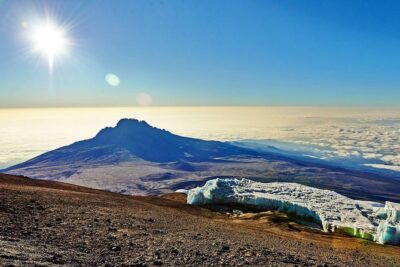
This is the day when Kilimanjaro feels more like an alpine mountain and less like a tropical hike. The glaciers are stark, and the light changes how the ice looks, which makes the scenery feel dramatic even in the middle of the day.
The route passes by areas near the Heim, Kersten, and Decken Glaciers, giving you that rare chance to see distinct glacier sections during the trek. It’s not just pretty. It’s also a timing checkpoint. You’re moving closer to summit terrain, and the camp at Barafu sets you up for the big night climb.
Day 5 is described as about 4 hours, so again, it’s not nonstop. You’re building your strength and keeping your acclimatization plan intact while positioning yourself for the summit push.
Day 6 summit night, scree climb to Stella Point sunrise and Uhuru Peak
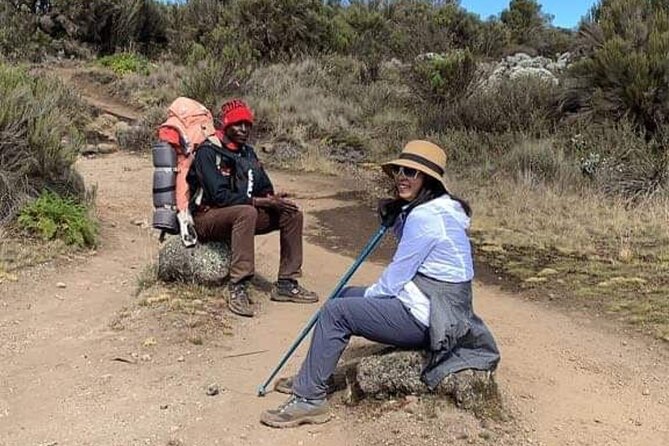
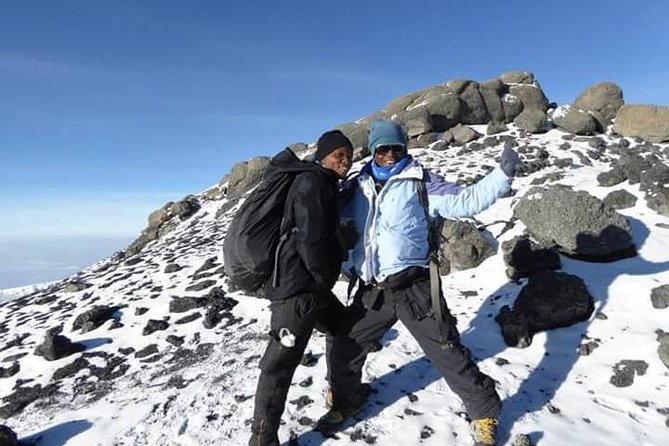
Day 6 is the headline day. You start at around midnight and begin steeply upward toward the summit glaciers. You’ll be climbing scree for 4 to 5 hours, gaining incredible height over a short distance. This is slow, steady climbing, not a sprint. Expect it to challenge your legs and your breathing.
Then you target Stella Point (5739m) for the first rays of sun. That sunrise moment is the kind of milestone hikers remember for years, because the world changes from darkness and cold to sharp visibility. The crater rim area also gives you spectacular ice cliffs within the crater, with views out toward jagged Mawenzi peak and beyond.
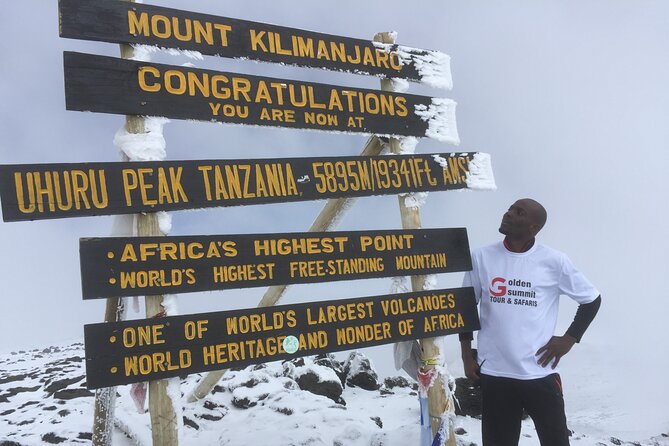
After Stella Point, there’s another hour of walking to the summit, Uhuru Peak (5895m). The summit itself is a goal, but the route makes it more about the journey you earned. You’ve done the long climb. Now you arrive.
Then comes the work of descent. You return to Stella Point, descend on scree and track back to Barafu Camp for breakfast, and then head down to Mweka Camp for a long, well-earned rest.
This is described as about 15 hours total. Plan your mindset accordingly. If you can keep calm, follow your guide’s pacing, and focus on small steps, the day becomes manageable even if it remains intense.
A practical plus from the experience style here: the crew is organized about summit night logistics. One detail highlighted in feedback is that porters help take care of your belongings while you summit, which can cut down mental load when you’re trying to focus on your breathing and rhythm.
Day 7 descent through rainforest to Mweka Gate, certificates and the return to Moshi
After the summit and the grinding days before it, Day 7 is about relief and closure. You take a gentle trek down through the rainforest to Mweka Gate. This part can feel strangely emotional. The mountain has been harsh and high. Now you’re walking into green again.
At Mweka Gate, you complete park formalities and receive certificates, which you can hang with pride. Then you’re met by vehicles and returned to your hotel in Moshi, with time for a welcome shower and cold drinks before overnight.
Day 7 is about 3 hours described for trekking time, so you’re not forced into long hiking after you’ve already done the heavy work. It’s the kind of ending that makes you appreciate the whole week as a complete trip, not just a summit day story.
What you’ll actually like most, based on how the operation runs
The standout theme is how seriously the crew takes the “safe and summit” mission, without turning it into cold mechanics. The guides’ goal is not just to get you to the top. They also aim to teach you about the environment and culture along the way, which helps the days feel richer than pure suffering.
Another big positive is customer service and communication. The operation is described as warm and easy to communicate with, so when questions pop up, you get answers instead of guessing. That matters a lot when you’re tired, cold, and thinking about altitude.
Meals come up as another practical win: food is described as interesting and filling, and that’s a big deal on Kilimanjaro. You’re burning calories, and your appetite might not behave like normal life. Being properly fed helps your body keep going.
Who this Machame trek suits best
This trek is stated for people with moderate physical fitness. That doesn’t mean “casual hiking.” It means you should be able to hike uphill for hours and take altitude seriously. If you’re used to regular walks, stair climbs, and some cardio, you’re more likely to fit the trip well.
You’ll also enjoy it if you want a trip with an organized team, not a DIY vibe. The support style here seems built for first-timers and experienced hikers alike, because you get structure, pacing, and help during summit night.
If you hate early mornings or you freeze at the idea of a midnight start, this is still doable, but you’ll need a mindset adjustment. Day 6 sets the tone. Make sure you’re okay with that long, steep summit day.
Should you book this Machame Route with Golden Summit Adventures?
If you want a Machame climb that leans into acclimatization, keeps logistics smooth, and focuses on safe summit execution, this kind of setup is a strong match. The price makes sense when you consider the full operation: tents carried by porters, park admission included, group size capped at 15, and a crew that handles details so you can focus on walking and resting.
I’d book if:
- You want the scenic Machame route with a real chance to adjust altitude over 7 days
- You value an experienced team that supports summit night operations
- You like guided learning, not just a transportation service up the mountain
I’d reconsider if:
- You know you struggle with long, high-stamina days and you’re not comfortable with a midnight summit push
- You want a quiet, self-guided trek with minimal structure (this is clearly team-led)
FAQ
How long is the Machame Route trek?
The Machame Route trek is approximately 7 days.
Where is the trek based?
The tour location is Moshi, Tanzania, and you return to your hotel in Moshi at the end.
What time does the experience start?
The start time is 8:00 am.
Is pickup from Moshi included?
Pickup is offered.
What kind of ticket do you receive?
A mobile ticket is included.
Are park or admission tickets included?
Yes, admission tickets are included.
Do you sleep in tents on the trek?
Yes. Hikers sleep in tents that are carried up the mountain by porters.
How many travelers are in a group?
The maximum group size is 15 travelers.
When does the summit attempt begin?
On Day 6, the summit climb starts at around midnight.
Do you get certificates at the end?
Yes. At Mweka Gate, you complete park formalities and receive certificates.
Can you cancel for a full refund?
You can cancel for a full refund up to 24 hours before the experience start time. If you cancel within 24 hours, the amount paid is not refunded.
Just posted around Moshi
- machame route★ 5.0 · 16 reviews
- Wildlife Extravaganza: Manyara, Tarangire & Ngorongoro in 3 Days★ 5.0 · 3 reviews
- Mt Kilimanjaro 6 days Marangu route hike★ 5.0 · 3 reviews
- Kilimanjaro Climbing Umbwe Route★ 5.0 · 3 reviews
- 3 Days Private E-Bike Tour in West Kilimanjaro★ 5.0 · 3 reviews
- West Kilimanjaro cycling Adventures★ 4.5 · 8 reviews
- Kilimanjaro Climb • Marangu Route ~ 9 Day★ 5.0 · 4 reviews
- Private Cycle to Kilimanjaro Bike Park Safari★ 5.0 · 6 reviews
Kilimanjaro Climbs, compared.
8-Day Small-group Lemosho Kilimanjaro Summit Trekking
Read our review →
5 Days Best of Tanzania Luxury Safari Northern Circuit
Read our review →
Climbing Kilimanjaro through 7 days Machame Route
Read our review →