Reviewed · KILIMANJARO CLIMBS
7 Days Machame route – Kilimanjaro
Climbing Kilimanjaro is one long story arc. This 7-day Machame route from Moshi mixes rain forest hiking, smart altitude gains, and a midnight summit push with local, English-speaking guides. I really like the way the team runs a safety-first climb, with trained staff and regular check-ins, and I also like the pacing that gives your body time to adjust. The main consideration is simple: you need strong physical fitness for the early start and summit night.
What makes this experience especially compelling is that you’re not just “walking to the top.” You’re moving through real ecological zones, from tropical forest to moorland and alpine desert, while a guide explains what you’re seeing. You’ll spend time resting at key camps too, which matters because altitude is not just a number, it’s a feeling.
One possible drawback to think about up front: the itinerary is tight. Day 6 includes a very early wake-up and long hours hiking, so if you’re prone to motion sickness, get exhausted easily, or struggle with steep, rocky sections, you’ll need to plan carefully.
In This Review
- Key reasons this Machame climb earns its reputation
- Moshi Pickup and the Drive to Machame Gate: where your climb starts
- Day 1 to Day 2: rain forest to Shira Plateau views
- Day 3 and Day 4: the acclimatization loop that protects your summit chances
- Day 5 to Day 6: Barafu rest and the midnight summit push
- Day 7: Mweka Gate certificates and the relief of the last steps
- The Habari Adventure team: why guides and crew make the difference
- Food, timing, and comfort on a 7-day high-altitude trek
- Price and value: what $2,850 really covers
- Who this Machame Route suits best, and who should think twice
- Should you book Habari Adventure for the 7 Days Machame Route?
- FAQ
- Where does the trek start?
- How long is the Machame route with this operator?
- What’s the maximum group size?
- What meals are included during the 7 days?
- Are park admission tickets included?
- When is the summit attempt?
- Is pickup included?
- Is snorkeling equipment included?
- What is the cancellation policy?
Key reasons this Machame climb earns its reputation
- Local guides with first-aid training and a safety mindset throughout the trek
- Machame pacing for acclimatization, including a lava tower detour before descending to Baranco
- Sunrise summit strategy with the crater rim at Stella Point and photos at Uhuru Peak
- Small group size (max 10), which keeps the pace more personal and manageable
- Crew support that shows in the details, from advice and encouragement to strong porter teams
- Meals and park fees included, so you’re not constantly sorting out logistics on the mountain
Moshi Pickup and the Drive to Machame Gate: where your climb starts
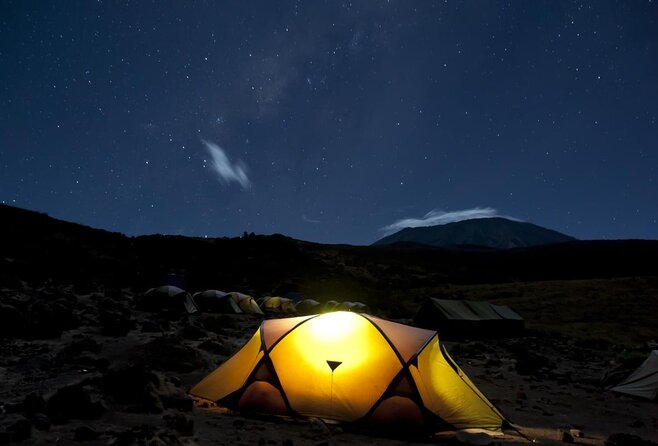
Most Kilimanjaro climbs begin with anticipation. Here, your day starts with a hotel pickup around 8:00 am and a transfer to Machame Gate. On the drive, you pass coffee and banana plantations grown by the Chagga people. It’s a small but powerful lead-in to what you’ll see on the mountain, because Kilimanjaro is not only “snow and rocks.” It’s also communities, farming, and culture that feed into the climb’s history.
You’ll handle park formalities at Machame Gate, then start walking. This first stretch is often the mental warm-up. The day’s hike is long enough to feel like a trek, but it’s not the steepest day you’ll have. The forest path is humid and green, and the altitude gain is steady rather than jumpy.
What you’ll like here: your first day sets a calm rhythm instead of throwing you into the hardest climbing immediately. What to consider: because this is an early start day, you’ll want to be ready the night before, with sleep and hydration taken seriously.
More Kilimanjaro climbs:
- Kilimanjaro climb by Lemosho Route (7-day)
★ 5.0 · 651 reviews - Kilimanjaro climb, Machame Route (7-day)
★ 5.0 · 262 reviews - Kilimanjaro Climbing Lemosho Route 8 Days.
★ 5.0 · 186 reviews
Day 1 to Day 2: rain forest to Shira Plateau views
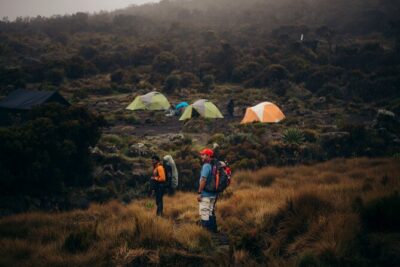
Day 1 takes you through tropical rain forest up to Machame Camp (2835 m). You’ll also have a picnic lunch along the way, which is a nice change of pace from formal meals. After that, you settle in for the night at the camp.
Day 2 starts around 8:00 am. You climb for about an hour toward the top of the forest, then shift into moorland with a gentler gradient. This is a key adjustment phase. In rain forest, you feel enclosed. In moorland, the air changes. The route becomes more open and the wind can be sharper, even when the sun is out.
Later, you continue into a rocky ridge heading toward the Shira plateau. The views start to widen in a way that can feel almost unreal if you’ve only ever seen Kilimanjaro from photos. You end the day at Shira Campsite (3750 m).
Why these two days are valuable: they give your legs and your breathing a chance to adapt without the “maximum effort” feeling of later segments. Also, watching the environment shift helps you stay mentally engaged when fatigue hits.
Small practical note: rocky sections can be uneven, even when the grade is manageable. Good trekking poles can help you keep balance, especially if you’re tired.
Day 3 and Day 4: the acclimatization loop that protects your summit chances
The Machame route’s reputation is tied to how it handles altitude. Day 3 is designed specifically for acclimatization. You’ll hike to higher ground and then descend to a lower altitude. You move into an alpine desert area, reaching up to about Lava Tower (4600 m) before descending to Baranco Camp (3900 m).
That descent is also one of the best moments for photos. The route gives you opportunities to look toward the Western Breach and the Barranco wall. It’s not just scenery, it’s motivation. When you can see the terrain you’re working toward, the climb feels more understandable.
Overnight at Barranco Camp (3900 m) means you’re sleeping higher than many first-timers expect. But the trade is worth it. You’re building the altitude tolerance that helps on the summit night.
Day 4 is shorter, which can feel like a relief. You climb toward the Barranco wall and top out just below where you’ll see the famous steep section referenced as “Item 6 lacer.” After that, you descend into the Karanga Valley camp. From camp, you can look east toward the jagged peaks of Mawenzi.
You’ll have a hot lunch in camp, then your afternoon is for resting. That rest is not wasted time. It’s the kind of pause that helps you go into Day 5 with enough energy, especially because the summit plan depends on both altitude tolerance and stamina.
What to take seriously: acclimatization is not optional. The itinerary’s “go up, then come down” idea is doing real work for your body.
Day 5 to Day 6: Barafu rest and the midnight summit push
Day 5 is where everything starts tightening. After breakfast, you hike toward Barafu Camp (4640 m). The day includes views of Kibo and Mawenzi peaks, and then you arrive, eat lunch, and rest. The goal is simple: save energy for the long night ahead.
Dinner comes early, and then you try to sleep. This is not a normal sleep situation. You’ll be getting up around midnight for the summit attempt.
Day 6 is the summit day. You’ll wake up around 00:00 with tea and cookies, then start hiking over scree. This is often described as relentless because the ground is loose and requires constant foot placement. The climb takes about 4 to 5 hours, gaining a lot of height in a relatively short time.
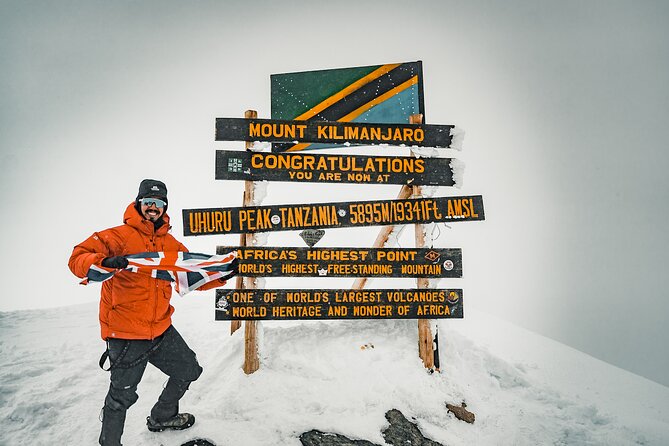
The payoff comes at sunrise. You aim to be on the crater rim at Stella Point (5756 m) as the first rays hit. From there, it’s about 1 hour to Uhuru Peak (5895 m). You’ll take photos for a few minutes and then start descending.
After the summit, you don’t go far at first. You head back to Barafu Camp for lunch, then walk down to Millennium Camp (3950 m) for dinner and overnight.
This is the part where the tour team matters most. On summit night, you need calm guidance, smart pacing, and reassurance when breathing gets hard. The best Kilimanjaro days feel organized and emotionally steady, not chaotic.
Plan for the reality: even if you feel strong, altitude can hit quickly. The summit success story is always a combination of effort and patience.
A few more Moshi trips to compare
- Safari Serengeti And Ngorongoro
★ 5.0 · 288 reviews - Climbing Kilimanjaro – Machame Route
★ 5.0 · 170 reviews - Climbing Kilimanjaro through 7 days Machame Route
★ 5.0 · 151 reviews - Kilimanjaro climb, Lemosho Route (8-day)
★ 5.0 · 148 reviews
Day 7: Mweka Gate certificates and the relief of the last steps
Day 7 is about descent and celebration. After breakfast, you continue the final descent from Millennium Campsite to Mweka Gate. It’s a couple of hours of walking, then you collect your certificates after completing park formalities.
Once you’re done, you’re taken back to your hotel by private car, so you can get a warm shower and properly reset.
That last day matters because it changes your experience. The summit peak is a moment, but the descent is what turns it into a complete trip. You’ll likely feel both physically tired and mentally satisfied when you finally reach the gate.
The Habari Adventure team: why guides and crew make the difference
Kilimanjaro is physically demanding. But it’s also psychologically intense. A big theme from Habari’s trekkers is that the team makes the climb feel supportive instead of scary.
You’ll be trekking with local guides from Kilimanjaro and other parts of Tanzania. They speak English, and many have learned additional foreign languages in established schools. More than language, though, is the practical skill. The guides are trained in safety and first aid, and they focus on education too, including local flora and fauna, geography, history, archaeology, anthropology, and even astronomy.
You’ll often see certain names in guests’ praise. Guides such as Leon, Ray, Michael, Omari, Oscar, Innocent, Godi, Justo, and others show up in accounts of what went well. Some guests highlight Mudy and Yusuph specifically for energy, encouragement, and professionalism. It’s a consistent pattern: you’re not just receiving directions, you’re receiving calm coaching.
Even the porter and chef teams show up in compliments, especially for sanitation and readiness. On a mountain where conditions change fast, that matters. One family described a medical style of care with twice daily checks, which you can interpret as an approach that treats health monitoring as part of the rhythm, not a last-minute reaction.
What this means for you: you’ll likely feel more secure when the unexpected happens, like fatigue, weather shifts, or a slow altitude adaptation day.
Food, timing, and comfort on a 7-day high-altitude trek
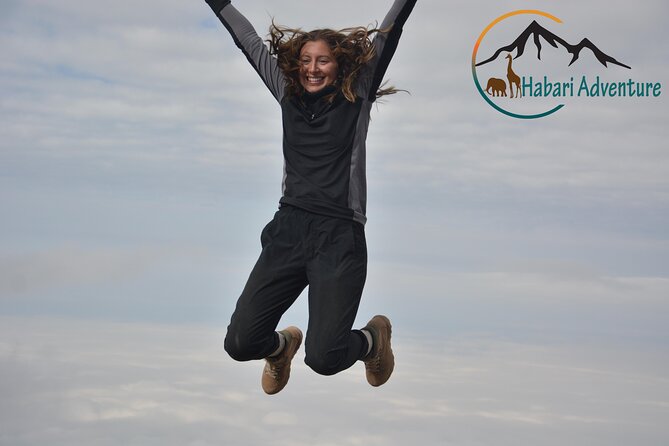
This trek includes breakfast (6), lunch (7), and dinner (6). In practice, that usually means you get fed consistently on trekking days and on the key “hard effort” nights.
Your itinerary also builds in rest strategically:
- Day 4 has a shorter hiking day to help acclimatize and recover.
- Day 5 turns into an early evening routine because the summit attempt starts shortly after midnight.
- Day 6 is long, but it ends with a return to lower elevation camp for dinner and sleep.
You should still expect basic camp life. What’s better here is that meals are planned around the climb’s demands. You’re not left wondering when you’ll eat or if you’ll have enough fuel for the next altitude jump.
One thing to keep in mind: the trek includes admissions, but it does not include everything outside the climb basics. For example, snorkeling equipment is not included, which is only relevant if you’re combining Tanzania activities after the mountain.
Price and value: what $2,850 really covers
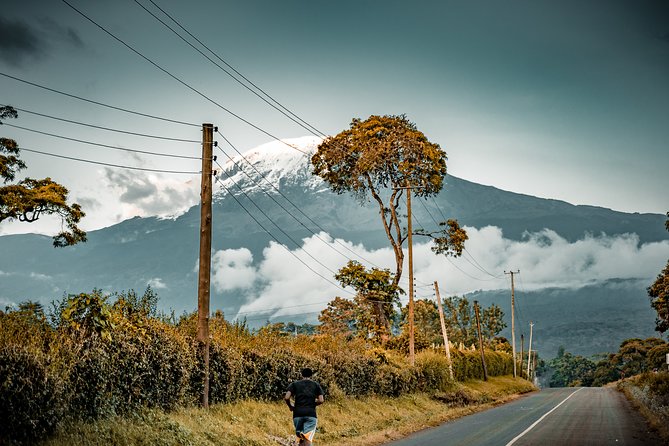
At $2,850 per person, this isn’t a budget trek. The value comes from what’s included and the size of the operation.
You’re paying for:
- Park admission tickets included as part of the trek days
- Most meals across the route
- A trained local guide team with safety and first-aid focus
- A maximum group size of 10 travelers
- Pickup support and an end-of-trek return by private car
If you’ve shopped around for Kilimanjaro before, you know the hidden costs can sneak in. Here, the “knowns” are clearer: meals and admissions are built in, and the route structure is fully staffed.
Also, small group size matters. With a cap of 10, you tend to get more attention and less waiting. On summit night, that difference can feel huge.
My practical take: if you want a smooth climb plan with a local team that prioritizes safety, this price can make sense. If your budget is strict, you’ll need to compare not just the total cost, but what that cost includes.
Who this Machame Route suits best, and who should think twice
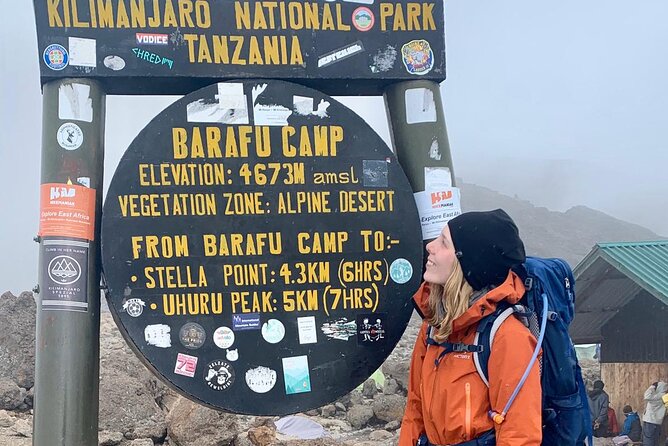
This trek is for people with strong physical fitness. Kilimanjaro is not a casual hike. Even when the itinerary includes a short day, you’re still sleeping at altitude and hiking steep, rocky sections.
This route can suit:
- First-time Kilimanjaro climbers who want a guided acclimatization approach
- People who appreciate structured pacing and early nights before the summit push
- Solo hikers and small groups, since the maximum size is 10 travelers
- Families and mixed ages, when everyone is physically prepared and comfortable with cold, high-altitude nights (some guests described family trips with strong support)
Who should reconsider:
- If you have limited endurance for long days, steep rocky steps, and a midnight wake-up
- If altitude usually knocks you out quickly and you haven’t trained your body for hikes with elevation
- If you expect a leisurely pace with long sleeping in each morning, this is not that
Should you book Habari Adventure for the 7 Days Machame Route?
I’d book this if you want a guided Machame climb with trained safety-minded local guides, solid acclimatization pacing, and a crew that takes health, communication, and logistics seriously. The itinerary is built around acclimatization, and the summit plan is clear enough that you’re not guessing what comes next.
I’d be cautious if you’re not ready for the reality of Day 6, with the midnight start and long hours of scree hiking. Also, the mountain depends on conditions, so you should be flexible about timing.
If you’re the type who values competence plus human encouragement, this is the kind of trip where the team can make a real difference.
FAQ
Where does the trek start?
The meeting point is Kilimanjaro Airport. You’ll also be picked up from your hotel and transferred to Machame Gate before you begin climbing.
How long is the Machame route with this operator?
It’s a 7-day climb.
What’s the maximum group size?
The trek has a maximum of 10 travelers.
What meals are included during the 7 days?
Breakfast is included for 6 days, lunch for 7 days, and dinner for 6 days.
Are park admission tickets included?
Yes, admission tickets are included.
When is the summit attempt?
You wake up around 00:00 for the summit climb. The plan is to reach Stella Point at sunrise, then continue to Uhuru Peak for photos, and descend afterward.
Is pickup included?
Pickup is offered, and you’ll be transferred to Machame Gate at the start. After the trek, you’ll return to your hotel by private car.
Is snorkeling equipment included?
No. Snorkeling equipment is listed as not included.
What is the cancellation policy?
You can cancel for a full refund up to 24 hours in advance. If it’s canceled due to poor weather, you’ll be offered a different date or a full refund.
Just posted around Moshi
- machame route★ 5.0 · 16 reviews
- Kilimanjaro Climbing Umbwe Route★ 5.0 · 3 reviews
- Wildlife Extravaganza: Manyara, Tarangire & Ngorongoro in 3 Days★ 5.0 · 3 reviews
- Mt Kilimanjaro 6 days Marangu route hike★ 5.0 · 3 reviews
- 3 Days Private E-Bike Tour in West Kilimanjaro★ 5.0 · 3 reviews
- West Kilimanjaro cycling Adventures★ 4.5 · 8 reviews
- Kilimanjaro Climb • Marangu Route ~ 9 Day★ 5.0 · 4 reviews
- Private Cycle to Kilimanjaro Bike Park Safari★ 5.0 · 6 reviews
Kilimanjaro Climbs, compared.
8-Day Small-group Lemosho Kilimanjaro Summit Trekking
Read our review →
5 Days Best of Tanzania Luxury Safari Northern Circuit
Read our review →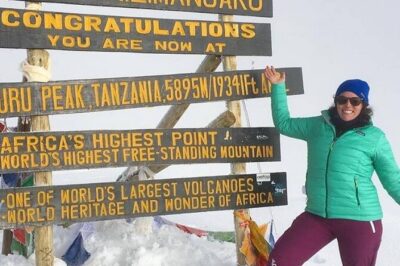
Climbing Kilimanjaro through 7 days Machame Route
Read our review →