Reviewed · KILIMANJARO CLIMBS
7 Days Lemosho Route
Kilimanjaro hits different when the early days are quiet. The Lemosho route, approached from the west out of Moshi, is known for great scenery plus a steady incline that can help your body adjust before the busier sections. You’ll also appreciate the pace that starts gentle in the first two days, then gradually builds once you meet the more popular traffic later on.
I like two things right away. First, the route timing gives you better acclimatization than fast, straight-up plans, with the first stretch staying relatively low-traffic. Second, the trip runs with a high level of coordination, with Elly described as professional and quick to answer questions, and guide Laraha praised for being considerate and even funny in a good way.
There is one drawback to weigh. Day 6 is the hard one, with a late-night start around 11:30 PM and a long, demanding climb up heavy scree toward Stella Point, so the summit push is not for people who dislike sleepless, cold starts.
In This Review
- Key things to know before you go
- Lemosho From the West: why your early days feel calmer
- Price and what you truly get for $2,050 per person
- Moshi logistics: airport transfers, a small group, and a clear start
- Day 1 in the Glades: forest trails to Mti Mkubwa campsite
- Day 2: Shira Ridge at 3,600 m and the drop to Shira Camp 1
- Day 3: Lava Tower lunch and the descent into Barranco Camp
- Day 4: Great Barranco Wall and an important acclimatization rest day
- Day 5: Barafu Hut timing, wind exposure, and a critical pre-summit night
- Day 6: the 11:30 PM summit night to Stella Point at sunrise
- Day 7: the 3-hour exit to Mweka Gate, certificates, and porter tipping etiquette
- The operator feel: coordination, guides, and the value of calm competence
- Who should choose this Lemosho 7-day trek
- Should you book this Kilimanjaro Lemosho climb?
- FAQ
- What is the tour start time?
- Is airport pickup included?
- What meals are included on the trek?
- What is not included in the price?
- How long is the trek?
- What is the group size limit?
- Is the booking refundable if plans change?
Key things to know before you go
- Quieter start on the west side: the first two days have relatively low traffic before you connect with the busier Machame route
- Steady climb for acclimatization: the rhythm is designed to help you adjust before the summit night
- Great Barranco Wall on Day 4: a short but memorable acclimatization obstacle, often easier than it looks
- Stella Point sunrise moment: you’ll reach the crater rim high point for a rest and a sunrise view, if conditions allow
- Support and structure: meals are included on most trek days, and the group is capped at 20 travelers
- Exit with certificates at Mweka Gate: you sign the register, and you receive a green certificate for Stella Point or gold for Uhuru Peak
Lemosho From the West: why your early days feel calmer
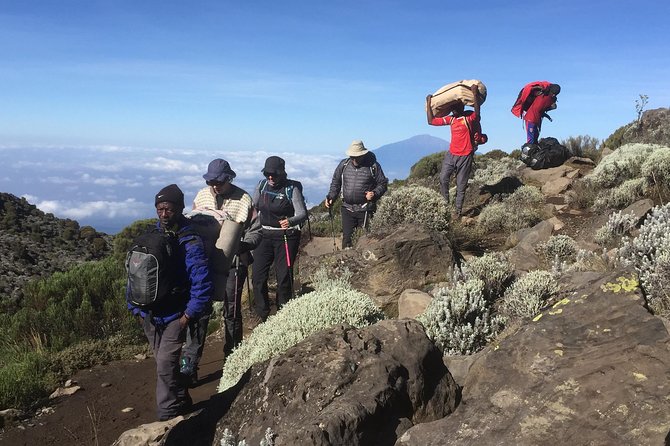
The big idea with Lemosho is simple: approach from the west, start with a steadier climb, and give your body time. This route is described as relatively new compared to the classics, but that also shows up as a different hiking feel. The first two days stay quieter and you are not surrounded by a constant stream of headlamps.
That matters because Kilimanjaro is not only about legs. It’s about altitude time. When the pace feels manageable early on, you tend to move with more control and waste less energy. You’ll still work, but you won’t feel like you are sprinting just to keep up.
Once you join the shared trail later, the vibe shifts a bit. Expect more hikers and more activity once you merge into the more popular route section. It is not a problem, but it helps to mentally brace for that change so you do not feel surprised by the crowd factor.
More Kilimanjaro climbs:
- Kilimanjaro climb by Lemosho Route (7-day)
★ 5.0 · 651 reviews - Kilimanjaro climb, Machame Route (7-day)
★ 5.0 · 262 reviews - Kilimanjaro Climbing Lemosho Route 8 Days.
★ 5.0 · 186 reviews
Price and what you truly get for $2,050 per person
At $2,050 per person, you are paying for a guided, structured attempt with support that covers more than just route planning. The trip includes private transport between Kilimanjaro International Airport and your accommodations in Moshi, plus meals on the trek.
Meal coverage is built in: breakfast (6), lunch (7), and dinner (6). That sounds like spreadsheet detail, but on Kilimanjaro it matters. When you stop worrying about what you will eat, you can focus on drinking fluids, pacing your breath, and keeping your legs steady.
A fair consideration: some costs sit outside the package. Hotel meals and drinks before and after the climb are not included, and travel insurance is also not included. If you’re budgeting, plan for those basics up front so the final total does not sneak up on you.
Moshi logistics: airport transfers, a small group, and a clear start
This trek starts with a pickup option, and you are also covered for private transport to and from the airport. That is one of those quietly valuable perks. Moshi is where you reset, get sleep, and sort your kit, and arriving without logistical stress helps you start well.
The trip uses a start time of 8:30 am. That matters on summit day as well, because it tells you the operation runs on clock time, not guesswork.
Group size is capped at 20 travelers. That usually means you get more of a guided feeling and less of a chaotic crowd. It also means you can reasonably expect space at camps during the busiest moments, though, like any mountain, you’ll still share trails and camp areas with other hikers once the route becomes popular.
Day 1 in the Glades: forest trails to Mti Mkubwa campsite
Your first hiking day begins from the Glades with a walk of about 3 hours along forest trails. This is a good way to ease into the experience. You’re moving, but you’re not immediately fighting the highest altitude. For many people, the first day is where you learn your walking rhythm and figure out how your body responds on the trail.
The destination is Mti Mkubwa campsite, named for the big tree. That kind of simple, natural landmark makes the day feel grounded. It is not just a random stop, it is a recognizable place where you can settle in, eat, and prepare for the next elevation step.
Potential drawback on Day 1 is also real life: forest hiking can make you feel warmer than you expect, even when you’re still relatively lower. Bring layers you can adjust and keep an eye on hydration, because damp clothing and sweat are a fast path to feeling chilled later.
A few more Moshi trips to compare
- Safari Serengeti And Ngorongoro
★ 5.0 · 288 reviews - Climbing Kilimanjaro – Machame Route
★ 5.0 · 170 reviews - Climbing Kilimanjaro through 7 days Machame Route
★ 5.0 · 151 reviews - Kilimanjaro climb, Lemosho Route (8-day)
★ 5.0 · 148 reviews
Day 2: Shira Ridge at 3,600 m and the drop to Shira Camp 1
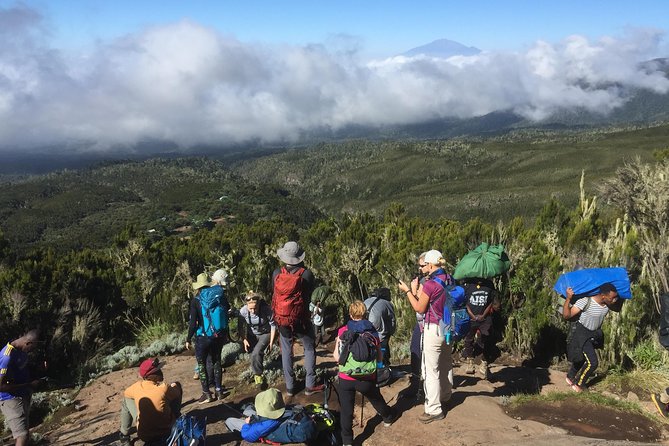
Day 2 length is about 5 hours, and the trail work includes a clear altitude shift. You gradually steepen, enter giant heather moorland, cross the Shira Ridge at 3,600 m, and then you drop gently to Shira Camp 1.
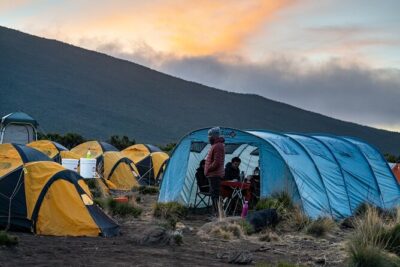
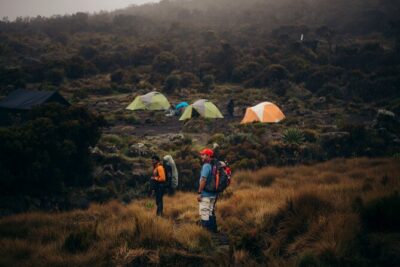
The camp sits by a stream on the Shira Plateau. That detail helps you understand why this day can feel different from the forest. You’re moving into more open terrain where wind and temperature swings are more noticeable. Streams and open plateaus also tend to mean your campsite area feels more exposed at night.
This is also one of the key acclimatization moments. Crossing the ridge at altitude and then descending to camp is part of how your body gets hints without forcing a nonstop grind higher. If you follow the plan closely, it can help you avoid the mistake of going too hard too early.
Day 3: Lava Tower lunch and the descent into Barranco Camp
Day 3 runs about 7 hours, and it shifts into a dramatic, scenic feel. After breakfast, you hike east up a path that steepens above the highest vegetation toward the looming mass of Kilimanjaro. Then you’ll stop for lunch near Lava Tower, a recognizable reference point in the region.
After lunch, the plan includes a 2-hour descent below the lower cliffs of the Western Breach and Breach Wall, ending at Barranco Camp at 3,950 m.
The real payoff is what Barranco Camp offers. You’re in a valley below big walls, which sets up a memorable sunset while you wait for dinner. Practical note: sunset at altitude can happen quickly, and temperatures can drop fast once the sun goes behind the peaks. Keep your warm layers ready before you need them.
Day 4: Great Barranco Wall and an important acclimatization rest day
Day 4 is shorter, about 4 hours, but it’s an important one. After breakfast, you continue up a steep ridge toward the Great Barranco Wall, then climb the imposing obstacle. The good news in the description is that it turns out to be easier than it looks, which matters because the wall can look intimidating from a distance.
From camp, you can see Mawenzi jutting into the sky. That visual cue is more than a photo moment. It’s a reminder of what you’re actually working toward, and it helps break up the emotional grind of long days.
After hot lunch, you get an afternoon at leisure for resting or exploring. This is one of the clearest signs of why this route is popular for acclimatization. You are not just moving up every day without pause. This shorter day helps you arrive fresher for the summit build-up.
Day 5: Barafu Hut timing, wind exposure, and a critical pre-summit night
Day 5 moves you into position for summit day. In the morning, you hike east over ridges and valleys to join the Mweka Route, which will be your descent route later. Then you turn left toward the mountain and hike up a ridge through sparse landscape for another hour to Barafu Hut, where you receive a hot lunch.
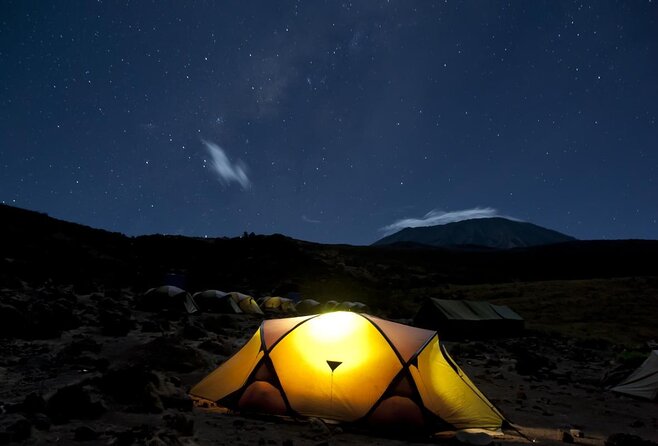
You sleep with your tent pitched on a narrow, stony, wind-swept ridge. That detail is not just scenery, it is safety planning. Familiarize yourself with where you’ll step around your tent and how to move in the dark. If you’re clumsy on uneven ground at home, treat this as practice before you head out into a cold night.
After an early dinner, you go to bed for a few hours of precious sleep. This day is all about conserving energy. Think of it as gear check, hydration check, and mind reset, so Day 6 does not catch you unprepared.
Day 6: the 11:30 PM summit night to Stella Point at sunrise
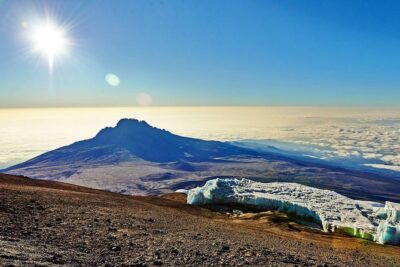
Day 6 is the big one for most climbers. You rise around 11:30 PM, have steaming tea and biscuits, then you shuffle off into the night. After that, it’s about a 6-hour climb northwest up heavy scree between the Rebmann and Ratzel glaciers to Stella Point at 5,685 m.
If you’re imagining a smooth trail, adjust your expectations. Heavy scree means small steps, constant balance, and steady effort. It is not the time to fight the terrain. Your win comes from rhythm: controlled breathing and consistent footing.
At Stella Point you stop for a short rest and a chance to see sunrise. Then you descend about 3 hours back to Barafu Camp, rest briefly, and continue down a rock and scree path into moorland and eventually into forest to Mweka Camp (3,100 m).
That transition down is valuable. You’re still at altitude, but dropping into forest feels like a pressure release. For your legs, it is relief. For your lungs, it’s a return to a more forgiving environment.
Day 7: the 3-hour exit to Mweka Gate, certificates, and porter tipping etiquette
After breakfast, you have a shorter 3-hour walk back to the park gate. From there, you continue down to Mweka Village, possibly a muddy 3 km walk if the road is too muddy for vehicles.
At Mweka Gate, you sign your name and add details in a register. This is also where successful climbers receive certificates. If you reached Stella Point, you are issued a green certificate. If you reached Uhuru Peak, you get gold.
One small etiquette note I really appreciate: do not tip your porters until you and all your gear reach the gate safely. Then remember to tip the staff at the gate. It’s a simple rule, but it prevents awkwardness and helps keep the process orderly at the finish.
When the climb ends, the mountain can feel distant. But the gate moment tends to make it real again. You have records, you have proof, and you have a clean end to a long, concentrated effort.
The operator feel: coordination, guides, and the value of calm competence
Golden Summit Adventures, under the coordination style highlighted in feedback, seems built around reducing uncertainty. Elly is repeatedly described as professional, and the communication is praised as fast and helpful, including details like vaccination information and packing guidance.
On the mountain, the guide experience seems to land on two traits: competence and temperament. Laraha is specifically called out as humorous, thoughtful, and proud of the work. That combination helps because you want someone who knows the route and also knows how to keep morale steady when conditions are tough.
Porters and the cook also show up as part of the experience quality. Porters are described as very fast and focused on carrying and packing, and the cook provides nutritious meals and snacks that keep you going. On Kilimanjaro, food is not just comfort. It’s fuel.
Who should choose this Lemosho 7-day trek
This route fits best if you want a steadier acclimatization rhythm and you can handle a long summit day that starts in the middle of the night. The description calls for moderate physical fitness, so you’re not expected to be an ultra runner, but you do need endurance and a willingness to hike for hours on varied terrain.
Choose it if you care about fewer early-crowd vibes. Lemosho’s west approach is designed so your first two days stay relatively quiet, which can make the experience feel more personal.
Consider thinking twice if you know you struggle with cold, darkness, and heavy scree work. Day 6 is the toughest moment, and the trek itself gives you a clear warning through the timing and terrain details. If that doesn’t sound like your kind of challenge, a different route plan with a less punishing summit night profile might be a better fit.
Should you book this Kilimanjaro Lemosho climb?
If your goal is good scenery, steadier acclimatization, and a structured 7-day plan with support and meals included, this Lemosho route is easy to take seriously. The included private airport transfers and the meal plan reduce everyday stress, and the operation seems built around smooth coordination.
My main check before booking is your summit-day readiness. The climb starts around 11:30 PM, and Day 6 includes heavy scree and a long uphill push to Stella Point. Make sure you feel good about that reality, not just the dream of the sunrise.
One more practical note: the booking is listed as non-refundable and cannot be changed for any reason. If your schedule is shaky or you’re not fully sure you can commit, that matters.
FAQ
What is the tour start time?
The start time is listed as 8:30 am.
Is airport pickup included?
Yes. Private transport is included for the trip between Kilimanjaro International Airport and your accommodations in Moshi.
What meals are included on the trek?
Breakfast is included 6 times, lunch is included 7 times, and dinner is included 6 times.
What is not included in the price?
Travel insurance is not included. Also not included are lunches, dinners, and drinks at your hotel before and after the climb, plus laundry (available at the hotel) and personal items and toiletries.
How long is the trek?
The duration is listed as about 7 days, and the time period is noted as 7 days and 8 days.
What is the group size limit?
The maximum number of travelers is 20.
Is the booking refundable if plans change?
No. This experience is non-refundable and cannot be changed for any reason, and the amount paid would not be refunded.
Just posted around Moshi
- machame route★ 5.0 · 16 reviews
- Wildlife Extravaganza: Manyara, Tarangire & Ngorongoro in 3 Days★ 5.0 · 3 reviews
- Mt Kilimanjaro 6 days Marangu route hike★ 5.0 · 3 reviews
- Kilimanjaro Climbing Umbwe Route★ 5.0 · 3 reviews
- 3 Days Private E-Bike Tour in West Kilimanjaro★ 5.0 · 3 reviews
- West Kilimanjaro cycling Adventures★ 4.5 · 8 reviews
- Kilimanjaro Climb • Marangu Route ~ 9 Day★ 5.0 · 4 reviews
- Private Cycle to Kilimanjaro Bike Park Safari★ 5.0 · 6 reviews
Kilimanjaro Climbs, compared.
8-Day Small-group Lemosho Kilimanjaro Summit Trekking
Read our review →
5 Days Best of Tanzania Luxury Safari Northern Circuit
Read our review →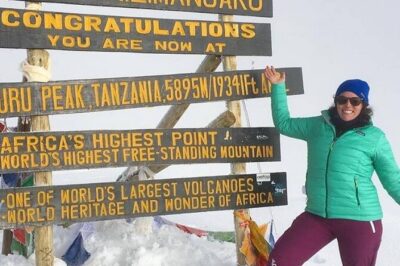
Climbing Kilimanjaro through 7 days Machame Route
Read our review →