Reviewed · KILIMANJARO CLIMBS
7 days, 6 Nights – Private Marangu Route
Summiting Kilimanjaro feels like stepping into another world. I love the Marangu route for its slower, more comfortable hiking pace, and I also love the Keys Hotel setup in Moshi, with an easy town walk and a real place to reset after trekking. You can even get a great team behind you, with guides like Moses and John Bosco showing up in past climbs. One thing to consider is that your summit push means a very early start in darkness and hours on steep volcanic scree.
The best part for me is how the mountain keeps changing your world day by day, from rainforest humidity to high alpine desert. The main drawback is simple: this climb is high altitude, so you need a steady, patient pace and a group rhythm that keeps you moving but not racing. If you like comfort and control, you’ll feel good with this plan.
In This Review
- Quick hits before you climb
- Moshi Basecamp at Keys Hotel, the part you will notice most
- Day 2: Marangu Gate to Mandara Huts through rainforest mud
- Day 3: Mandara Hut to Horombo Hut, the vegetation changes you can see
- Day 4: Horombo to Kibo Hut, the moonlike middle of the climb
- Day 5: Uhuru Peak at sunrise, headlamps and volcanic scree
- Day 6: Marangu Gate walkout, rainforest steps and the hot shower moment
- Price and value for a private Marangu climb out of Moshi
- Who this private Marangu route is best for (and who should think twice)
- A few details that can make or break your experience
- Should you book this Private Marangu Route with Keys Tours?
- FAQ
- Where does the tour start, and what time?
- Is this a private tour?
- What is the key route and where do you go each day?
- What physical fitness level do you need?
- What meals are included during the trip?
- What is not included in the price?
- What happens if weather is poor, or if I cancel?
Quick hits before you climb
- Keys Hotel in Moshi gives you a soft landing, with a pool and a short walk to town.
- Rainforest to alpine desert shifts hard, and it happens on a schedule you can trust.
- Mandara Hut and Horombo Hut are solid rhythm days, with time to breathe and take photos.
- Kibo Hut feels lunar under your boots, with Mawenzi Peak in your sightline.
- Uhuru Peak sunrise is the main event, reached via a slow steep walk on volcanic scree.
- Scree descent can be fun on the way down, if you move carefully and keep your balance.
Moshi Basecamp at Keys Hotel, the part you will notice most
Your climb starts with a human-scale plan: land at Kilimanjaro International Airport, meet the representative, and head to Keys Hotel. It is family run and set on the slopes of Mount Kilimanjaro. That matters, because after a long travel day and later after a long, cold night hike, you want a place that feels steady, clean, and calm.
Keys Hotel is also practical. It is only about a ten minute walk to Moshi town center, so you are not locked away from real life. Past hikers highlight how friendly the service feels, and I like that the hotel is not trying to be something fancy and distant. It is close to where you need to be, and it has a clean swimming pool, which is a nice morale boost if you have downtime on either side of your trek.
Then there is the reset you get at the end. On the final day, you finish by hiking back down toward Marangu Gate, and you return to Keys Hotel for a hot shower and overnight rest. That small detail is huge. After big days above the clouds, the ability to wash up and sleep in familiar surroundings makes the whole experience feel complete.
More Kilimanjaro climbs:
- Kilimanjaro climb by Lemosho Route (7-day)
★ 5.0 · 651 reviews - Kilimanjaro climb, Machame Route (7-day)
★ 5.0 · 262 reviews - Kilimanjaro Climbing Lemosho Route 8 Days.
★ 5.0 · 186 reviews
Day 2: Marangu Gate to Mandara Huts through rainforest mud
Day 2 is all about the forest, and it sets the tone. After breakfast, you transfer to Marangu Gate in Kilimanjaro National Park. Your hike follows a rainforest trail with dense vegetation and, in many cases, a muddy path. That is not a flaw of the route. It is the route being itself.
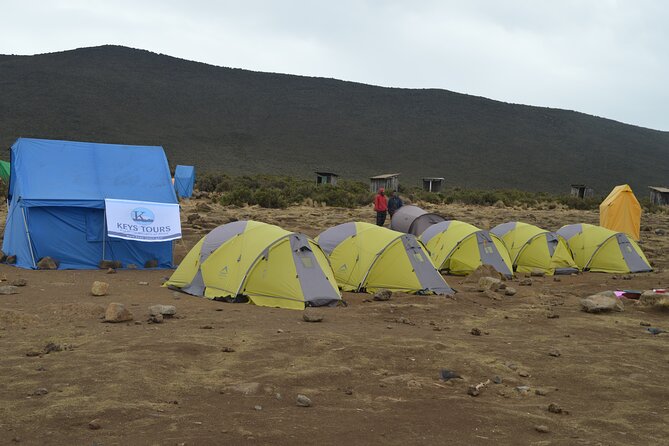
You walk at a slow, comfortable pace. That is one of the reasons people choose Marangu. It gives you time to look around instead of only looking at your feet. You also get a packed lunch, and your meals are handled by your guide and porters. Practically, that means you are not juggling logistics while your body is still adjusting.
You reach Mandara Hut at around 2,700m after about four hours from the gate. The itinerary also includes a detour option to waterfalls inside the rainforest. This is the kind of choice that actually changes the day. If weather and timing allow, I think this detour is worth asking about before you set off, since it adds energy to an otherwise steady hike through trees.
The potential drawback is the mud. If you hate wet boots or you get annoyed by slow walking on uneven ground, you will feel it here. The upside is that the day stays manageable, so you are not burning yourself out before the bigger altitude days.
Day 3: Mandara Hut to Horombo Hut, the vegetation changes you can see
On Day 3 you climb to Horombo Hut at about 3,700m. This is a longer day, and it also feels like a transition zone. The plan starts with a sometimes wet, steep stretch for about 20 minutes through the upper rainforest. Then the scenery starts shifting into high moorland.
After that forest segment, you get roughly a 2km stretch of tall giant heather with large clumps of tussock grass. You can think of it as the mountain loosening its hold on the trees. After about five hours of hiking total, you continue into stunted clumps of heather with short tussock grasses, plus everlasting flowers. In wetter areas, you may spot lobelia and groundsels, which are part of what makes Kilimanjaro feel more alive than a simple rocky ascent.
One thing I like about this day is the mix of effort and scenery. It is not just grinding uphill. You also get big, noticeable changes in plant life, and those changes help you stay mentally engaged.
The consideration is time. The itinerary puts Day 3 at around seven hours. That is a long day at elevation, even when the pace is controlled. You’ll do best if you treat it like a steady walk, not a challenge to finish faster than your breathing allows.
Day 4: Horombo to Kibo Hut, the moonlike middle of the climb
Day 4 is where Kilimanjaro starts looking less like a mountain and more like another planet. After breakfast, you set out on a path that traverses west, then turns north toward Middle Red Hill and the Triplets, before heading to the west for the final three kilometers to Kibo Hut at around 4,700m.
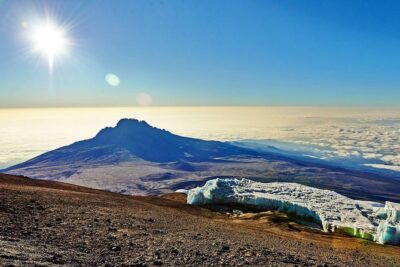
The key feeling here is how the ground changes. The plan describes this alpine desert area as rocky and it can feel like you are walking on the moon. I like that description because it matches what you often see on this sort of high-altitude volcanic terrain: fewer trees, more open sky, and a sense that your body is pushing through thin air.
You also get one of the most striking visual rewards of the day: the view toward Mawenzi Peak to the east. Mawenzi is not just a distant shape. In clear moments, it gives you a strong visual target as you move toward the summit zone.
You should be ready for tired legs on Day 4. Even if you feel fine, the environment is demanding. This is also the day that most strongly tells you how cold summit night might feel later on. I would treat this day as the moment you slow down mentally too, not just physically.
A few more Moshi trips to compare
- Safari Serengeti And Ngorongoro
★ 5.0 · 288 reviews - Climbing Kilimanjaro – Machame Route
★ 5.0 · 170 reviews - Climbing Kilimanjaro through 7 days Machame Route
★ 5.0 · 151 reviews - Kilimanjaro climb, Lemosho Route (8-day)
★ 5.0 · 148 reviews
Day 5: Uhuru Peak at sunrise, headlamps and volcanic scree
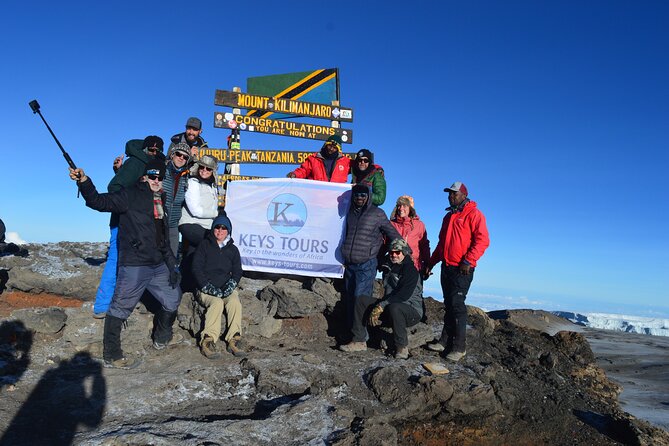
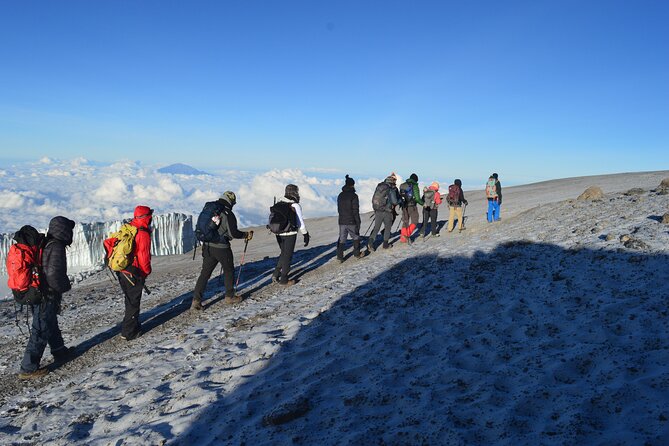
This is summit day, and it runs on a different clock. You wake up very early for a quick bite and something warm to drink. Then you start in darkness. The hike to Gilman’s Point is a slow, steep walk on volcanic scree for about five to six hours.
The itinerary describes headlamps lining the trail so they almost look like fireflies in a row. That is a small detail, but it is a real mood maker. It turns a hard climb into something shared, even when you are moving at your own pace.
As you get closer to the crater rim, you wait for the most memorable sunrise you may ever experience. The description focuses on golden light over Africa, plus the dramatic view of the horizon. People often comment on the way the earth’s curve becomes noticeable at height, and here it is specifically called out as part of the wow factor.
Practical advice, without making it complicated: keep your camera ready because the opportunities are continuous. You’ll want to capture the play of light as the sky changes, and also the wide views when clouds shift.
After you reach Uhuru Peak, you descend with high spirits. The trail down from Gilman’s Point back toward Horombo Hut is often enjoyed by hikers who slide down the scree slope. The itinerary even frames it as fun, with big steps and sideway moves. I would take that as permission to move with joy, but still with control. Scree can turn playful into risky fast if you rush.
You might also rest briefly at Kibo Hut depending on how you feel before continuing down. That optional stop is smart. It is there so you can adjust to your body, not the other way around.
Day 6: Marangu Gate walkout, rainforest steps and the hot shower moment
Day 6 is the relief day. You enjoy a slow hike through the rainforest to Marangu Gate. The plan calls out details that make this walk feel more like a stroll than a final punishment: the Old Man’s Beard tree moss hanging from giant trees, and giant ferns towering above the forest bed.
You also have a lot of steps leading down to the gate. Steps can be tough after summit day, but they also help you measure progress. Each one feels like a checkmark.
Once you reach Marangu Gate, you get transferred back to Keys Hotel for a hot shower and overnight rest. If you remember one thing from the whole itinerary, remember that part. The climb is demanding, but the ending is cared for, and it makes your energy come back in a normal way.
Price and value for a private Marangu climb out of Moshi
The price here is $1,965 per person for the private Marangu route over about six days of trekking. That number sounds big, and it should be judged against what you get, not just against the cost of a bus ticket.
What stands out as value is that you are not only paying for trails. You are paying for the human engine: guides and porters who manage the day-to-day routine, plus the meal plan. The included list shows 5 breakfasts, 4 lunches, and 3 dinners. The climb itself also has meals prepared by your guide and porters, which reduces what you have to carry and plan during the trek.
You also get parking fees included. Not exciting, but it is part of the total.
And the tour is private, meaning only your group participates. That usually translates to more control over pace, more attention on you, and fewer awkward waits while you try to blend into someone else’s rhythm.
What is not included: drinks and tips. That is normal. Still, I like to remind myself to budget for that so there are no surprises at the end.
If you are trying to decide whether this price is fair, I would ask yourself what you care about most: comfort in Moshi, fewer group hassles, and a well-run meal and hut routine. If those are your priorities, this plan fits.
Who this private Marangu route is best for (and who should think twice)
This climb lists a moderate physical fitness level as the target. That is consistent with Marangu’s reputation for a more comfortable pace. You do still hike for hours each day, and summit night is a long steep effort, but the plan is structured to keep you moving steadily.
This is also a good fit if you want a classic route with major altitude milestones: Mandara Hut, Horombo Hut, Kibo Hut, and then Uhuru Peak, followed by the long descent to Marangu Gate.
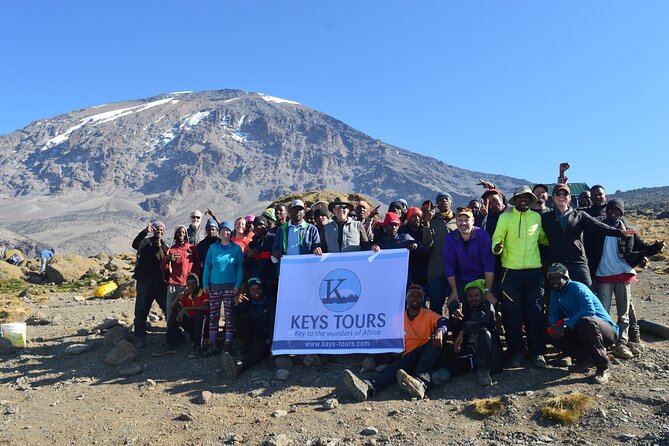
If you are nervous about the idea of trekking in groups or losing time waiting, the private format is a strong advantage. Past hikers specifically highlight service from guides and teams, including names like Moses and John Bosco, plus support staff who helped make other hikes, like a waterfall outing, feel fun and safe.
Who should think twice? If you strongly dislike early starts, especially in darkness, you will feel that on summit night. If wet, muddy trails annoy you, Day 2 will test your patience.
A few details that can make or break your experience
Kilimanajaro is big, but the experience comes down to small rhythm decisions. Here are the ones I’d focus on based on what this plan does well.
First, you get built-in time for the trail. The itinerary repeatedly frames days as slow, comfortable pacing, especially through rainforest. That pacing is not just nice. It helps you avoid the common trap of going too hard too early.
Second, you get intentional breaks and hut stops. Mandara Hut at about 2,700m gives you a first milestone without making Day 2 a full battle. Horombo Hut at about 3,700m is the next rhythm point, and Kibo Hut brings you up into the alpine desert zone.
Third, the summit approach is slow steep work. The plan calls out the scree hike to Gilman’s Point as gradual and steep, about five to six hours. That tells you what matters most: patience on footing and steadiness in breath.
Finally, you have a planned ending. A hot shower and overnight rest at Keys Hotel is not a luxury detail. It is part of how you absorb an intense experience without rushing into travel fatigue.
Should you book this Private Marangu Route with Keys Tours?
I would recommend booking this climb if you want Kilimanjaro done with less stress in your day-to-day life. The Keys Hotel base is a real morale plus, and the route pacing through rainforest, then into higher zones, matches what most people need to keep their energy consistent.
I would not book it if you hate early mornings in darkness or you know you struggle with long, steep days on uneven ground. Summit day is the centerpiece, and it is not short.
If you are set on a private climb and you care about organization, meals, and a comfortable Moshi home base, this is a strong option. One last practical tip: bring a calm attitude about mud on rainforest days and scree on summit day. When you do, Kilimanjaro feels like a story with chapters, not a single endless grind.
FAQ
Where does the tour start, and what time?
The tour starts at Kilimanjaro International Airport, with a start time of 7:30 am.
Is this a private tour?
Yes. It is listed as a private tour, and only your group participates.
What is the key route and where do you go each day?
This is the Marangu route, with stops that include Mandara Hut, Horombo Hut, Kibo Hut, Uhuru Peak (via Gilman’s Point), and then Marangu Gate on the way back down.
What physical fitness level do you need?
The tour notes a moderate physical fitness level.
What meals are included during the trip?
The included meals list shows 5 breakfasts, 4 lunches, and 3 dinners. During the climb, the guide and porters prepare meals as part of the trek plan.
What is not included in the price?
Drinks and tips are not included.
What happens if weather is poor, or if I cancel?
This experience requires good weather. If it is canceled due to poor weather, you will be offered a different date or a full refund. You can cancel up to 3 days in advance for a full refund, and cancellations made less than 3 days before the start time are not refunded.
Just posted around Moshi
- machame route★ 5.0 · 16 reviews
- Kilimanjaro Climbing Umbwe Route★ 5.0 · 3 reviews
- Wildlife Extravaganza: Manyara, Tarangire & Ngorongoro in 3 Days★ 5.0 · 3 reviews
- Mt Kilimanjaro 6 days Marangu route hike★ 5.0 · 3 reviews
- 3 Days Private E-Bike Tour in West Kilimanjaro★ 5.0 · 3 reviews
- West Kilimanjaro cycling Adventures★ 4.5 · 8 reviews
- Kilimanjaro Climb • Marangu Route ~ 9 Day★ 5.0 · 4 reviews
- Private Cycle to Kilimanjaro Bike Park Safari★ 5.0 · 6 reviews
Kilimanjaro Climbs, compared.
8-Day Small-group Lemosho Kilimanjaro Summit Trekking
Read our review →
5 Days Best of Tanzania Luxury Safari Northern Circuit
Read our review →
Climbing Kilimanjaro through 7 days Machame Route
Read our review →