Reviewed · KILIMANJARO CLIMBS
7 Day Kilimanjaro Machame climb
Machame turns Kilimanjaro into a real hike. This whisky route is one of the most popular climbs, starting in the southwest rainforest and stepping up through heather, moorland, and alpine desert before the big night push to Uhuru Peak. You also get that classic Machame feature, a small, hands-on scramble at the Barranco wall, without needing ropes or special climbing gear.
I like two things a lot here. First, the itinerary builds acclimatization into the rhythm, with high points like Picnic Rock and the Lava Tower and then controlled descents that help your body adjust. Second, the trip runs with a serious safety net: English-speaking guides, altitude health checks with an oximeter twice daily, and emergency oxygen (listed as one cylinder per five passengers), plus a first aid kit.
One thing to consider, though: the summit day is not a gentle stroll. You start around midnight, climb steep loose scree toward Stella Point, then make the short but difficult final move to Uhuru, and the whole day is listed at about 18 hours. If you have lung issues or any known altitude concern, this route may not be the right fit.
In This Review
- Key Highlights You’ll Feel on the Machame Route
- Why the 7-Day Machame Route Feels Classic, Not Complicated
- Days 1-2: Moshi to the Forest, Then Picnic Rock Views
- Days 3-4: Lava Tower Acclimatization and the Barranco Wall Moment
- Day 5 and Day 6: Summit Camp Calm Before the Midnight Climb
- Day 7: The Southern Rain Forest Exit, and the Feeling of Finishing
- Price and What Your Money Actually Buys
- The Crew, Camp Setup, and Health Checks That Reduce Stress
- Who This Machame Climb Fits Best (and Who Should Rethink It)
- Should You Book This 7-Day Machame Camping Climb?
- FAQ
- What time does the trek start, and where do I meet?
- Is the Machame route technical?
- When does the summit attempt happen?
- What health and emergency support is included?
- Is drinking water included during the trek?
- Can I cancel for a full refund?
Key Highlights You’ll Feel on the Machame Route
- Rainforest to alpine desert changes every day, so it never feels like one long repetition
- Picnic Rock views and Lava Tower altitude give you both scenery and acclimatization work
- Barranco wall scramble brings that real mountain-climbing feeling using hands and legs
- Stella Point on the way to Uhuru Peak marks the high point on the crater rim approach
- Twice-daily checks plus emergency oxygen add practical peace of mind at altitude
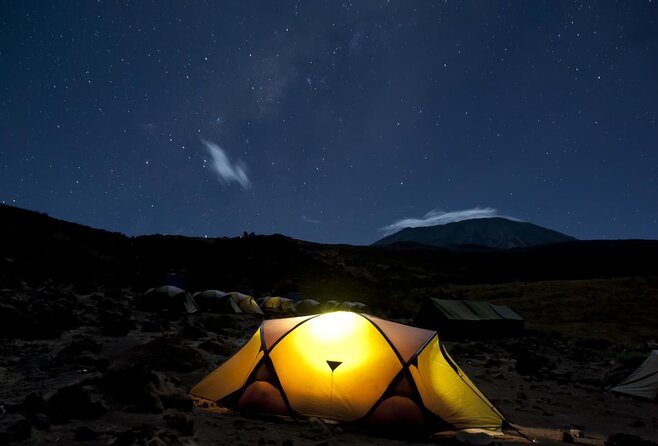
- Fully run camping setup includes tent crew, meals, boiled water from camp one onward, and porter support
Why the 7-Day Machame Route Feels Classic, Not Complicated
Machame is popular for a reason. The route profile is strong enough to feel like you are earning altitude, but it is still designed around natural ups and downs that help with acclimatization. Even better, this version is non-technical, so you are not dealing with ropes, harnesses, or technical rock steps.
You do, however, get a taste of climbing at the Barranco wall. The operator describes it as an impressive non-technical scramble, hands-and-legs work, and a mountain-climbing feel without advanced equipment. That is a great middle ground for people who want adventure and confidence building, but not a technical skill test.
Also, the route is shaped by the mountain’s zones. Day by day you move through different altitude ecosystems. You will see rainforest walking on Day 1, heather and moorland on Day 2, then alpine desert, crater-rim views, and eventually the southern rain forest on the way out on Day 7. That shift matters. It helps your mind stay engaged when your legs are tired.
More Kilimanjaro climbs:
- Kilimanjaro climb by Lemosho Route (7-day)
★ 5.0 · 651 reviews - Kilimanjaro climb, Machame Route (7-day)
★ 5.0 · 262 reviews - Kilimanjaro Climbing Lemosho Route 8 Days.
★ 5.0 · 186 reviews
Days 1-2: Moshi to the Forest, Then Picnic Rock Views
Day 1 starts with the practical part: you are transferred from Moshi at about 09:00 to Machame gate. After registration, the trek begins through thick rainforest. This is the part where you warm up slowly but also realize the ground can get slippery if rain moves in. The hike is listed at about 7 hours, and the goal is to climb to the edge of the forest and into the heather zone.
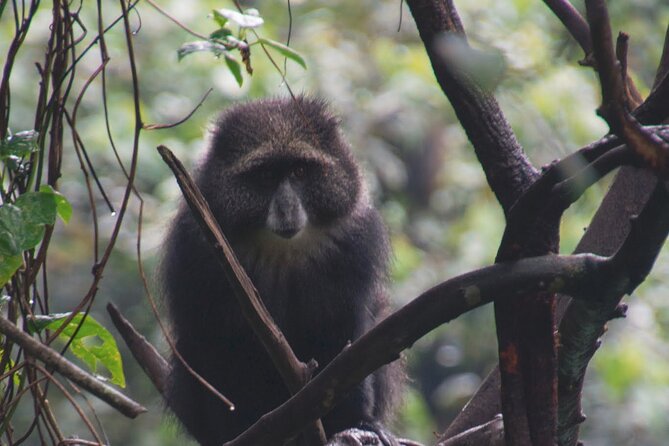
What you’ll likely love here is how alive the trail feels. The rainforest section is described as thick and diverse, with flora and fauna, and it sets the tone that Kilimanjaro is not just rocks and snow. If it rains, that adds traction challenges, but it is also a very normal part of the zone.
Day 2 continues through heather and moorland. The big moment is Picnic Rock. You climb a steep ridge, then reach a semi-circular cliff that can offer excellent views on a clear day. The draw is big and direct: you may look toward Kibo peak (your goal is Uhuru Peak), and you can also catch the jagged peaks of the Shira Plateau to the west. On good visibility days, you might even see Mt Meru in the distance.
Then the day softens. After Picnic Rock, the itinerary shifts toward a gentler, flatter trail to camp, also around 7 hours total. That matters because it gives your body a chance to settle rather than redline every day.
Days 3-4: Lava Tower Acclimatization and the Barranco Wall Moment
Day 3 targets the Kibo cone side of the mountain. You steadily climb over the alpine desert to the Lava Tower area at about 4,630 m. This is a key day for acclimatization. The operator frames it as both helping your body handle altitude and acting like a check-in on how you feel at higher elevation.
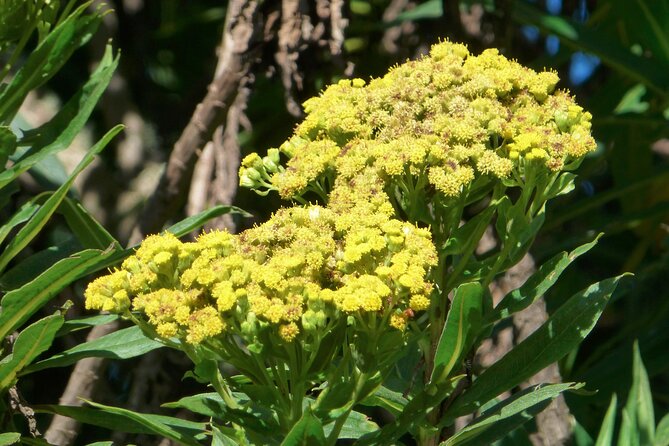
Then comes the switch to descent. From Lava Tower you descend steeply, moving anti-clockwise around Kibo into the Barranco Valley. This is where you start noticing the small things that make Kilimanjaro feel uniquely itself. One standout detail here is the large flowering mountain cacti (the Senecios). They are not what you expect on a trek, and they show up in a way that makes the valley feel alive even in the harsh high-altitude environment.
Your day ends around a similar elevation to where you started on the heather and moorland edge. That is a smart design choice. It keeps the climb challenging but not reckless.
Day 4 is shorter on paper, about 5 hours, but it has the emotional highlight of the Machame trek for a lot of hikers. You leave camp and ascend the Barranco wall. This is the described non-technical scramble, using hands and legs, with no special climbing equipment required.
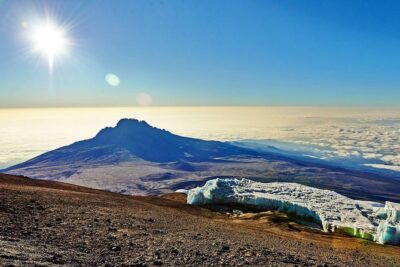
From the top, you get a superb view back into the camp and toward the Heim glacier on the peak. Even if you are not a glacier expert, the view is a gut-check that you are really up there. After Barranco, you move through alpine desert, wind around the mountain, descend into Karanga Valley, and then climb back to camp. Karanga Valley is listed as the last water point, so you can think of Day 4 as partly scenery, partly logistics, and partly setting you up for the summit push later.
Day 5 and Day 6: Summit Camp Calm Before the Midnight Climb
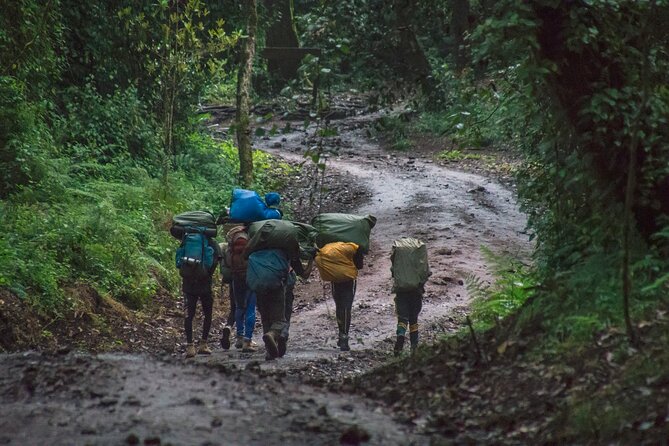
Day 5 is described as almost casual through empty alpine desert, but casual does not mean easy. The route keeps a slow pace even though the trail is not extremely steep. You get a rising sense that Uhuru is close, and the itinerary notes you may finally glimpse Mawenzi peak in the east.
Here is why Day 5 is valuable: you are not just covering distance. You are setting up your body and your mind for the night summit attempt. The route is short enough to give you plenty of time at your summit camp to rest and prepare for the summit attempt that night.
Day 6 is the big one. You begin the final ascent around 00:00 into the arctic zone. The description is clear: it is a steep hike over loose volcanic scree through a dark, cold night, with a slow zig-zag pattern toward Stella Point (about 5,685 m). Stella Point is your first stop on the Kibo crater rim.
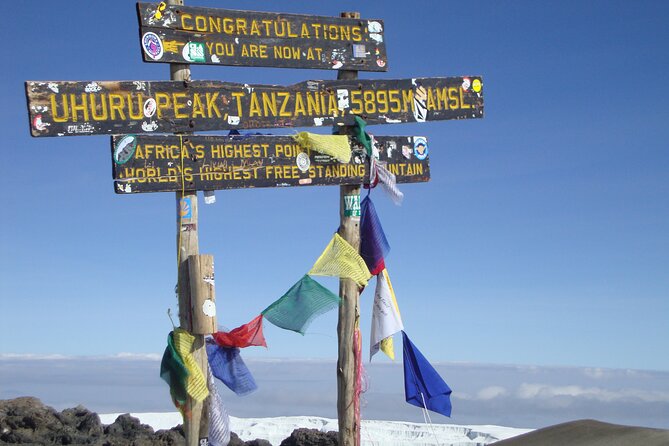
From Stella, it is a short but difficult final hike to Uhuru Peak (about 5,895 m), the highest point in Africa. The plan also notes you usually do not spend a long time at the summit due to extreme altitude. That is important for expectations. Your reward is the moment you reach it, not lingering at the top like it is a viewpoint.
Then you descend back toward the base camp for breakfast or brunch, and later you continue the descent through the alpine desert. The total day listing is about 18 hours, so plan on one of the longest travel days you will ever do.
A few more Moshi trips to compare
- Safari Serengeti And Ngorongoro
★ 5.0 · 288 reviews - Climbing Kilimanjaro – Machame Route
★ 5.0 · 170 reviews - Climbing Kilimanjaro through 7 days Machame Route
★ 5.0 · 151 reviews - Kilimanjaro climb, Lemosho Route (8-day)
★ 5.0 · 148 reviews
Day 7: The Southern Rain Forest Exit, and the Feeling of Finishing
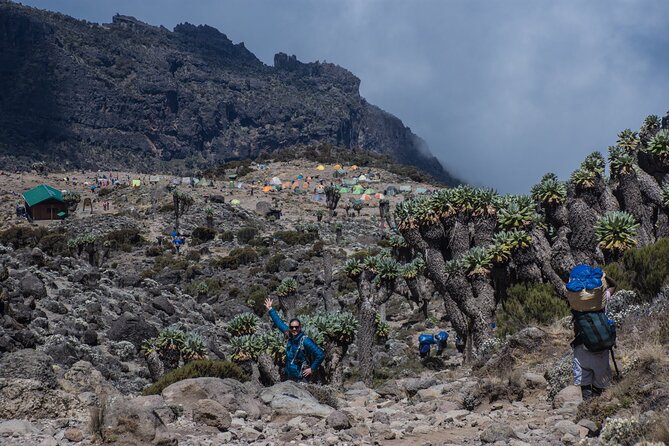
After the hard work of summit day, Day 7 is about getting you home with dignity. You start a descent through the southern rain forest until Mweka gate, where a vehicle waits to take you back to Moshi town and your drop-off location.
The day is listed at about 4 hours. Even if you feel tired, this is the kind of final trail that helps your brain process what you did. Going from high, cold altitude back into rainforest is a strong shift, and it is also a practical win because the descent feels more straightforward than scree climbing.
You also get a natural goodbye moment. The itinerary notes the crew usually leaves you at Mweka gate, and it becomes a clean closing for the relationship with your team.
Price and What Your Money Actually Buys
This climb costs $2,580 per person. That number can sound high until you look at what is included, because Kilimanjaro is not like booking a guided day hike. A huge part of what you are paying for is the infrastructure: permits and park fees, trained guides, a tent team, cooks, porters, and the logistics to keep you fed, sheltered, and medically watched at altitude.
Here is what the price includes that matters most:
- Park entry, camping, and rescue fees as applicable, plus all taxes and VAT listed for this package
- Certified English-speaking mountain guides with minimum ratios set by KINAPA
- One porter load per person (15 kg) for personal luggage
- Tent crew setup and specialist camping operations
- All meals on the mountain (breakfast, lunch, dinner, with eating utensils and tableware)
- Pre-climb briefing and equipment check in Moshi
- One transfer from Moshi to park gates and one transfer back, per group
- Boiled drinking water on trek from 1st camp onward
- Emergency oxygen and first aid kit (oxygen listed as one cylinder per five passengers)
- Twice-daily health checks plus a medical oximeter
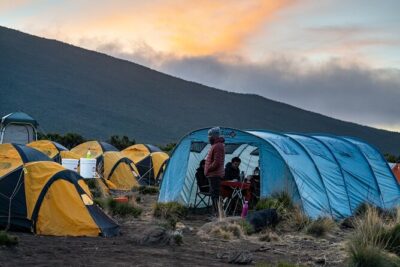
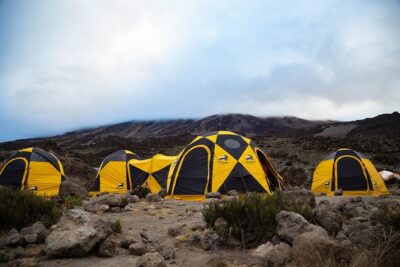
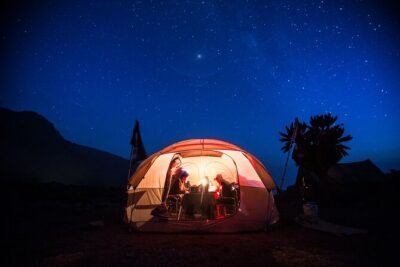
- Sleeping mattress and camping basics like four-season tents, dining tent, and chairs/tables
- KPAP monitoring for fair treatment standards of porters
You still need to budget for the non-included items. Tips or gratuities are not included. Insurance is not included. Beverages are not included. And you also need to manage water expectations. The package notes water on the first day is not included, and it flags that metal and hard plastic water bottles are not permitted on the mountain (soft plastics are also not permitted).
If you are thinking about value, this package looks best if you want a fully run camping experience rather than trying to piece together gear, permits, and staff yourself. It also helps if safety and health monitoring are priorities for you.
The Crew, Camp Setup, and Health Checks That Reduce Stress
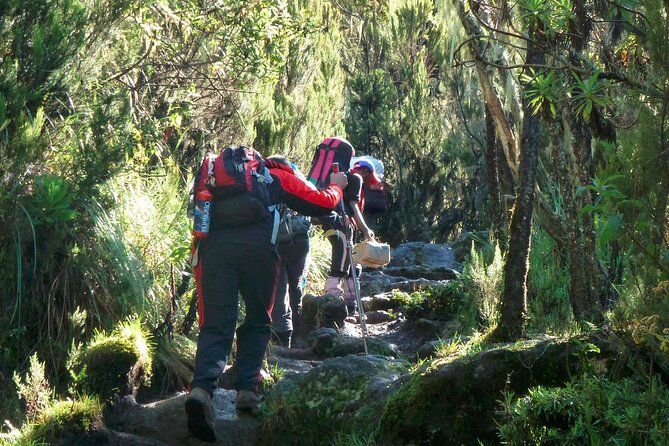
Kilimanjaro success is not just legs. It is also sleep, hydration, food, and how you handle altitude changes. This trip is built around that reality.
The guide team is described as trained and certified, with English-speaking mountain guides at KINAPA minimum ratios. You also get a pre-climb briefing and equipment check in Moshi, which is a practical moment to ask questions and confirm your plan before you are already on the mountain.
Camp support is real here. A specialist tent crew services and sets up camps. There is a trained personal mountain cook and waiter, and the meals are organized for the group with utensils and tableware included.
Then there are the health measures. The itinerary lists twice daily health checks with guides and a high-grade medical oximeter. It also lists emergency oxygen and a first aid kit. That combination matters, because it helps you notice problems early. It cannot eliminate altitude risk, but it makes the trip more responsible.
You also get practical comfort touches like a hand washing station and a small personal wash basin at campsites. Toilets are shared public toilet facilities. You should expect camping comfort, not hotel comfort.
One more item I appreciate: baggage logistics. Your personal luggage is stored while on trek, and you get help from porters who carry up to 15 kg of your personal luggage. That makes the trekking days more realistic.
Finally, porter treatment is part of the package. It lists Kilimanjaro Porters Assistance Project monitoring and mentions fair treatment standards. That is not just moral marketing. A porter who is treated well and supported tends to perform better, and it also makes the whole operation more professional.
Who This Machame Climb Fits Best (and Who Should Rethink It)
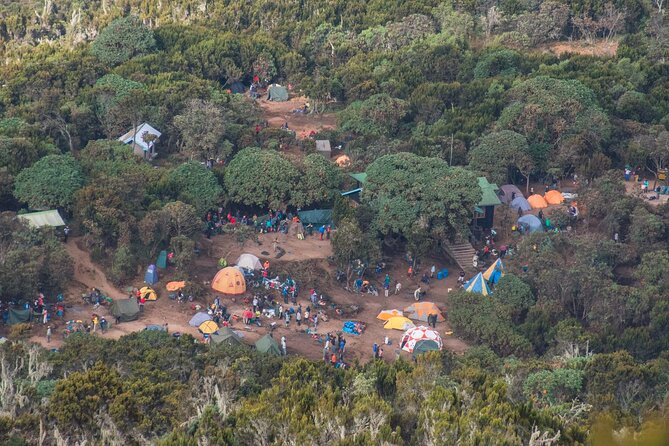
This route is built for people with strong physical fitness. It is a non-technical climb, but it is still a high-altitude challenge. You should be comfortable with long days and cold nights, and you should take altitude seriously.
It is not recommended for travelers with lung problems or other known altitude-related medical conditions. If that applies to you, do not force it. Better to get medical guidance before you spend money on a climb that might not be safe.
This climb is also a good match if you like clear daily goals. Each day has a purpose, from rainforest entry, to Picnic Rock views, to Lava Tower acclimatization, to the Barranco scramble moment, to summit camp preparation, to the midnight summit push.
If you want a trail that feels like mountaineering but stays non-technical, Machame fits. The Barranco wall is the point where you feel it physically, but you are not forced into ropes or technical climbing skills.
Should You Book This 7-Day Machame Camping Climb?
I would book this if you want a classic, popular Kilimanjaro route that gives you acclimatization structure, real mountain terrain, and strong camp logistics. I also like that the package includes medical monitoring with an oximeter twice daily and lists emergency oxygen, because it’s the kind of detail that helps you feel looked after.
I would hesitate if you know you are sensitive to altitude, have lung issues, or you are not ready for a long, cold summit day that starts around midnight. This is not a quick trip where you can bounce back easily.
If you can handle the altitude challenge and you value a well-run camping operation with professional support, this Machame climb is a sensible choice.
FAQ
What time does the trek start, and where do I meet?
You meet in Moshi at Shah Tours, 6 Sekou Toure Way, and the start time is 9:00 am. From there, you are transferred by road to Machame gate.
Is the Machame route technical?
It is described as non-technical. There is a small scrambling section at the Barranco wall where you use hands and legs, but no special equipment is listed as required.
When does the summit attempt happen?
You start the final ascent around 00:00 am. The route goes via Stella Point on the crater rim and then continues to Uhuru Peak.
What health and emergency support is included?
The package includes twice daily health checks with guides and a high-grade medical oximeter. It also includes one emergency oxygen cylinder per five passengers plus a first aid kit.
Is drinking water included during the trek?
Boiled drinking water is provided from the first camp onwards. Water on the first day of the trek is not included, and the notes also say that metal and hard plastic water bottles are not permitted on the mountain.
Can I cancel for a full refund?
Yes, you can cancel for a full refund if you cancel at least 24 hours before the experience’s start time. If you cancel less than 24 hours before, the amount paid is not refunded.
Just posted around Moshi
- machame route★ 5.0 · 16 reviews
- Kilimanjaro Climbing Umbwe Route★ 5.0 · 3 reviews
- Wildlife Extravaganza: Manyara, Tarangire & Ngorongoro in 3 Days★ 5.0 · 3 reviews
- Mt Kilimanjaro 6 days Marangu route hike★ 5.0 · 3 reviews
- 3 Days Private E-Bike Tour in West Kilimanjaro★ 5.0 · 3 reviews
- West Kilimanjaro cycling Adventures★ 4.5 · 8 reviews
- Kilimanjaro Climb • Marangu Route ~ 9 Day★ 5.0 · 4 reviews
- Private Cycle to Kilimanjaro Bike Park Safari★ 5.0 · 6 reviews
Kilimanjaro Climbs, compared.
8-Day Small-group Lemosho Kilimanjaro Summit Trekking
Read our review →
5 Days Best of Tanzania Luxury Safari Northern Circuit
Read our review →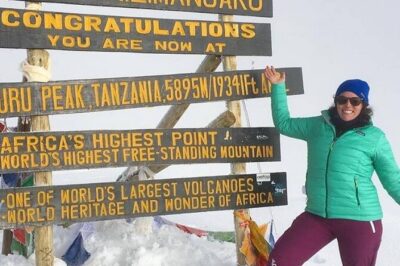
Climbing Kilimanjaro through 7 days Machame Route
Read our review →