Reviewed · KILIMANJARO CLIMBS
7-Day Guided Mount Kilimanjaro Climb by Machame Route
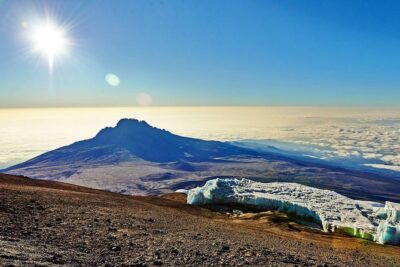
Kilimanjaro feels different on Machame. This 7-day guided climb is famous for changing scenery fast, from rain forest up through moorland and semi-desert, then finishing with a midnight summit attempt and a sunrise at Stella Point. I like the way this route is paced for acclimatization, and I also like that the operator builds in real support, not just a group and a map.
What I especially like is the Machame Route itself, the “whiskey route” terrain that gives you long views and lots of natural breaks in elevation. The second big win for me is value: your guide team, park and rescue fees, and camping are wrapped into the cost, plus you get meals across the trek and pickup and drop-off from the area.
The main drawback to plan for is effort. Machame is not technically hard, but it is steeper, longer, and more up-and-down than gentler routes, so first-timers who are not used to trekking may feel it hard, especially late in the climb.
In This Review
- Key highlights that matter on Machame
- Machame Route, the whiskey trail, and why it is harder but still a smart bet
- Price and value: what $2,180 covers, and what you still need to budget
- Moshi to the park gate: start with the rainforest and respect the mud
- Day-by-day Kilimanjaro Machame: from Machame Camp to Shira and Lava Tower
- Day 1: Machame Camp, rain forest walking and a steep first taste
- Day 2: Shira campsite in moorland, plus a short distance that still climbs
- Day 3: Shira Plateau to Arrow Glacier area, down to Barranco Hut for acclimatization
- Day 4 to Day 5: the Barranco Wall style climb and the Barafu launch point
- Day 4: a short acclimatization day to Karanga Valley campsite
- Day 5: up to Barafu Hut, finishing the south circuit for summit views
- Day 6: midnight start, Stella Point sunrise, and Uhuru Peak at the top
- Day 7: Mweka Park Gate, muddy walking, and summit certificates
- Who should choose this Machame 7-day climb, and who should adjust expectations
- The team factor: guides, cooks, porters, and the service you will feel
- What to pack and how to stay comfortable on Machame
- Should you book this 7-day Machame climb?
- FAQ
- How long is the Kilimanjaro climb on this Machame route?
- Where does the tour start and what time does it begin?
- Is pickup or drop-off included?
- What is included in the tour price?
- Do I need travel insurance?
- What fitness level do I need, and what if I cancel?
Key highlights that matter on Machame
- Pacing that supports acclimatization with extra nights before the summit push
- Iconic day 3 to 6 terrain including Shira Plateau, Lava Tower area, Arrow Glacier, and the crater rim route
- A midnight summit strategy aimed at Stella Point sunrise, weather permitting
- Meals plus park and rescue fees included, so your budget is easier to manage
- Local crew focus with guides, cooks, and porters and fair wages built into the tour
Machame Route, the whiskey trail, and why it is harder but still a smart bet
Machame is one of Kilimanjaro’s most popular routes for a reason. You get a real sense of progression as the mountain changes around you, and the walking terrain is varied, with ridge climbs, river gorges, and valley crossings that keep your body guessing. The trade-off is that Machame costs more energy than you may expect.
It is described as not technically difficult, meaning you are not doing rock scrambling or requiring special mountaineering gear in the usual way. Still, it is exhausting because the days include lots of ups and downs as you cross chain-like valleys and ridges. If you are more “vacation walker” than “weekend hiker,” you’ll want to prepare for a longer, tougher grind.
Here is the practical upside: Machame’s success rate is often higher than Marangu, and the route’s pattern helps many bodies adjust. In plain terms, the mountain gives you the views, and it also gives you the workout, so you should match your expectations and training.
More Kilimanjaro climbs:
- Kilimanjaro climb by Lemosho Route (7-day)
★ 5.0 · 651 reviews - Kilimanjaro climb, Machame Route (7-day)
★ 5.0 · 262 reviews - Kilimanjaro Climbing Lemosho Route 8 Days.
★ 5.0 · 186 reviews
Price and value: what $2,180 covers, and what you still need to budget
This climb costs $2,180 per person, and you should judge that number by what’s included, not by the sticker. In this package, you get professional guides, cooks, and porters. You also get park fees, camping fees, and rescue fees, plus VAT fees and charges.
You also get two nights of accommodation in Moshi or Arusha before and after the climb, and you get meals built in: lunch on 7 days, breakfast on 6 days, and dinner on 6 days. On Kilimanjaro, that matters. Food and shelter are not cheap when you are already paying premium logistics to work inside the park system.
What is not included is also important for planning:
- International flights
- Tips to the driver guide and hoteliers
- Insurance fees
- Cost of Tanzania (listed as not included)
My advice: treat the stated price as the “core Kilimanjaro cost,” then add a realistic buffer for insurance, any extras like snacks, and tipping. If you do that, the trip tends to feel straightforward rather than stressful.
Moshi to the park gate: start with the rainforest and respect the mud
You begin in the Moshi area, and the drive to the Mount Kilimanjaro National Park gate is about 50 minutes. Along the way, you pass through Machame village on the lower slopes, which helps you realize you are not just jumping into wilderness. This matters because your body starts acclimatizing to the climb environment right away, not after you are already tired.
Your day 1 hike moves through rain forest on a winding trail up a ridge. Lower down, it can be muddy and slippery, so practical gear earns its keep. I strongly recommend gaiters and trekking poles here, because they help your knees and keep footing more secure when the trail is damp.
Day 1 also sets expectations for the group rhythm. Even though it is the “first day,” you hike about 11 km for roughly 5 to 7 hours and gain big elevation from around 5,400 ft to about 9,400 ft. That is a lot in one go, so don’t treat day 1 like a warm-up stroll.
Day-by-day Kilimanjaro Machame: from Machame Camp to Shira and Lava Tower
A few more Moshi trips to compare
- Safari Serengeti And Ngorongoro
★ 5.0 · 288 reviews - Climbing Kilimanjaro – Machame Route
★ 5.0 · 170 reviews - Climbing Kilimanjaro through 7 days Machame Route
★ 5.0 · 151 reviews - Kilimanjaro climb, Lemosho Route (8-day)
★ 5.0 · 148 reviews
Day 1: Machame Camp, rain forest walking and a steep first taste
You hike from the park gate up through rain forest to Machame Camp, staying between 5,400 ft and 9,400 ft. Expect 11 km and around 5 to 7 hours. The terrain is lush but can be slippery, and you will feel it most on your calves and ankles as the trail winds upward.
A realistic goal for day 1 is to move steadily, not fast. If you rush at the start, you will pay later when the mountain shifts into colder, drier air.
Day 2: Shira campsite in moorland, plus a short distance that still climbs
After breakfast, you leave the rain forest and head into an ascending path. You cross a small valley, then move along a steep rocky ridge covered with heather until the ridge ends, and you transition onto a river gorge. This day is shorter on paper, but the effort is in the continuous grade changes.
You climb from about 9,400 ft to 12,500 ft, hike around 5 km, and spend roughly 4 to 6 hours moving. You end at Shira campsite for rest, dinner, and the night.
What I like here is that the day is structured to start acclimatization early. Your body gets altitude practice without the longest walking day on the route.
Day 3: Shira Plateau to Arrow Glacier area, down to Barranco Hut for acclimatization
This is one of the most important days on the route. From the Shira Plateau, you continue east up a ridge, pass key junctions, and head toward Lava Tower, known as the Shark’s Tooth. After that, you move toward the Arrow Glacier area at about 16,000 ft, then continue down to Barranco Hut around 13,000 ft.
Distance is about 10 km and hiking time is roughly 6 to 8 hours, with mixed terrain. You end the day at about the same elevation as you started, but the body has still worked through higher altitude. That is the point.
If you are thinking, why climb higher and then come back down, that is your answer: this day helps acclimatization. It also gives you high-altitude views that make the fatigue feel worth it.
Day 4 to Day 5: the Barranco Wall style climb and the Barafu launch point
Day 4: a short acclimatization day to Karanga Valley campsite
After breakfast, you leave Barranco and continue along a steep ridge. You pass the Barranco Wall and then head to Karanga Valley campsite. This is a shorter day by design, often a relief after days that involve big elevation swings.
You stay around 13,000 ft to 13,100 ft, with about 3 miles (roughly) and 4 to 5 hours of hiking. The habitat is described as alpine desert. Translation: expect harsher conditions, less lush cover, and a feeling of exposure, especially in wind.
I like day 4 because it helps you keep a calm pace. You get acclimatization work without the pressure of a long day.
Day 5: up to Barafu Hut, finishing the south circuit for summit views
Day 5 is when the route positions you for the summit push. You hike from the Karanga area up toward a junction that connects with the Mweka Trail, then continue up to Barafu Hut. This is when you complete the south circuit, and the views of the summit often come from multiple angles in this stretch.
Elevation climbs from about 13,000 ft to 15,300 ft. Hiking time is about 4 to 5 hours and distance is roughly 2.5 miles. It is one of Kilimanjaro’s shorter days in distance, but it is still serious work because altitude changes your breathing and your stride.
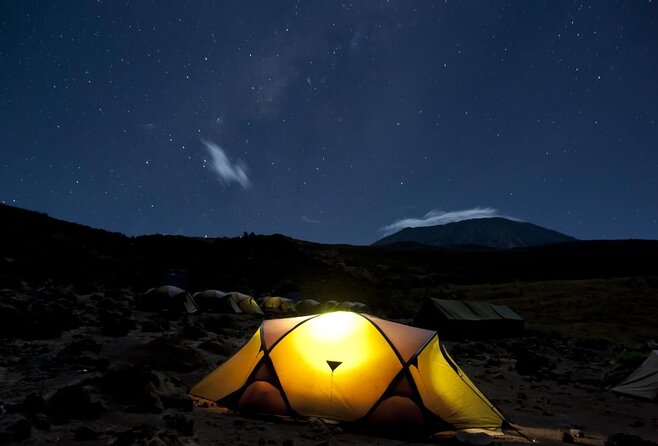
At Barafu, you camp, rest, eat dinner, and prepare for the summit day. Mawenzi and Kibo are visible from this camp area, which helps you visually understand what you are about to attempt.
Day 6: midnight start, Stella Point sunrise, and Uhuru Peak at the top

Day 6 is the big one, and it starts early. You move between midnight and 2am, ascending through heavy scree toward Stella Point on the crater rim. The route heads generally northwest between the Rebmann and Ratzel glaciers, then continues up toward Stella Point.
This is one of those days where planning and mindset matter more than speed. You may find snow on the way, and you should be ready for cold. The push to Uhuru Peak involves about a 1-hour ascent from Stella Point to the summit area, and faster hikers may reach the sunrise view from the summit itself.
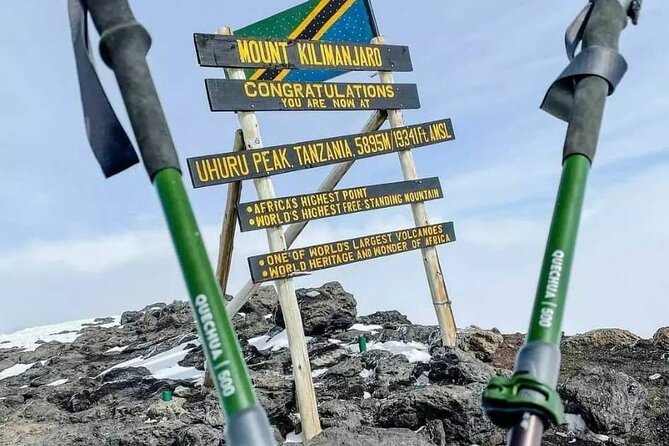
At Stella Point, you pause briefly. If weather cooperates, you get the most memorable sunrise most people imagine seeing on a mountain like this. Then you continue to Uhuru Peak, the highest point on Mount Kilimanjaro and the continent of Africa.
After the summit, you descend straight down to the Mweka Hut campsite area. You will feel the altitude on the descent too. Knees often complain first, not lungs, so take the downhill seriously even if the hard part feels over.
Day 7: Mweka Park Gate, muddy walking, and summit certificates
After breakfast, you continue the descent to the Mweka Park Gate for your summit certificates. At lower elevations, conditions can be wet and muddy, so gaiters and trekking poles are still your best friends.
From the gate, you continue about another hour to Mweka Village, where a vehicle meets you and drives you back to your hotel in Moshi. The day includes a drop from about 10,000 ft down to 5,400 ft, with about 3 to 4 hours of hiking and roughly 6 miles.
This day is not glamorous, but it is satisfying. You’re still moving through rainforest terrain, and you get your official proof that the mountain won, and you won back too.
Who should choose this Machame 7-day climb, and who should adjust expectations
This tour is aimed at people with moderate physical fitness and, ideally, some trekking experience. Machame is best for people who like adventure and are comfortable with longer days and altitude fatigue.
If you are a first-timer, don’t panic. The route can still work well, especially with the pacing and acclimatization rhythm built into a 7-day schedule. But you should go in ready for a demanding walking style, not a casual hike.
A good match:
- You hike regularly, even if not at high altitude
- You can handle early nights and very early mornings
- You want iconic Kilimanjaro scenery and a stronger chance of acclimatization through the route plan
A cautious match:
- You get winded easily on steep trails
- You have knee issues that act up on descents
- You want the least exhausting route option possible
The team factor: guides, cooks, porters, and the service you will feel
On Kilimanjaro, your team makes a big difference. This package includes professional guides, cooks, and porters, and it also lists fair wages for the mountain crew. That is more than a feel-good line. It often translates into better organization, better camp functioning, and less chaos when plans shift for weather or pacing.
In customer feedback, names that come up include Stephen, Michael, Francis, Louis, David, Ezekiel, and Lusekelo. Even without knowing which guide you’ll get, it’s a sign that the operator builds a consistent local leadership team rather than rotating random help.
The service style people highlight is responsiveness and practical problem-solving, including fast replies and clear guidance during the climb period. For you, that matters because Kilimanjaro has lots of small stressors: gear questions, pacing decisions, and the mental shift into summit night. When your team communicates well, you spend less energy worrying and more energy moving.
What to pack and how to stay comfortable on Machame
The tour details point you toward specific needs. Day 1 and day 7 can be muddy, so plan for traction. Cold hits at altitude, including the summit push when you might see snow. And every day is long enough that comfort gear matters.
Here are the essentials I’d treat as non-negotiable based on what the route conditions suggest:
- Gaiters for slippery mud and wet stretches
- Trekking poles for both climbs and descents
- Warm layers for night and early morning cold
- Rain gear you can use without turning it into a wrestling match
- Comfortable hiking boots with decent grip
Also, keep your clothing flexible. Short sleeves and t-shirts are likely fine at lower elevations, but keep warmer layers and rain protection handy because the weather can change fast at Kilimanjaro altitude.
Should you book this 7-day Machame climb?
I’d book this if you want the more scenic, more demanding Machame experience and you are willing to train for it. The 7-day schedule helps you avoid rushing through the key acclimatization steps, and the inclusion list is strong for value: guides, meals, camping, park fees, and rescue fees are all covered, plus you get pre and post accommodation in Moshi or Arusha and airport transfers.
I would not choose this climb if you’re looking for a relaxed walking pace or you have limited trekking experience and you want minimal fatigue. Machame will still feel like work, even when the route is well organized.
If you can commit to steady effort, pack for mud and cold, and take acclimatization seriously, this is a solid way to climb. The finish, the certificate day, and that sunrise at Stella Point are the kind of payoff you remember long after the soreness fades.
FAQ
How long is the Kilimanjaro climb on this Machame route?
It runs about 7 days.
Where does the tour start and what time does it begin?
The start is at Kilimanjaro International Airport, and the start time is 9:00 am.
Is pickup or drop-off included?
Yes. Pickup and drop-off are included.
What is included in the tour price?
It includes professional guides, cooks, and porters, park fees, camping fees, rescue fees, VAT and charges, airport pickup and drop-off, 2 nights of accommodation in Moshi or Arusha before and after, and meals (lunch, breakfast, and dinner as listed for the days on the trip).
Do I need travel insurance?
Insurance fees are not included in the tour price, so you should plan for that separately.
What fitness level do I need, and what if I cancel?
The tour notes a moderate physical fitness level. Free cancellation is available up to 24 hours in advance for a full refund.
Just posted around Moshi
- machame route★ 5.0 · 16 reviews
- Kilimanjaro Climbing Umbwe Route★ 5.0 · 3 reviews
- Wildlife Extravaganza: Manyara, Tarangire & Ngorongoro in 3 Days★ 5.0 · 3 reviews
- Mt Kilimanjaro 6 days Marangu route hike★ 5.0 · 3 reviews
- 3 Days Private E-Bike Tour in West Kilimanjaro★ 5.0 · 3 reviews
- West Kilimanjaro cycling Adventures★ 4.5 · 8 reviews
- Kilimanjaro Climb • Marangu Route ~ 9 Day★ 5.0 · 4 reviews
- Private Cycle to Kilimanjaro Bike Park Safari★ 5.0 · 6 reviews
Kilimanjaro Climbs, compared.
8-Day Small-group Lemosho Kilimanjaro Summit Trekking
Read our review →
5 Days Best of Tanzania Luxury Safari Northern Circuit
Read our review →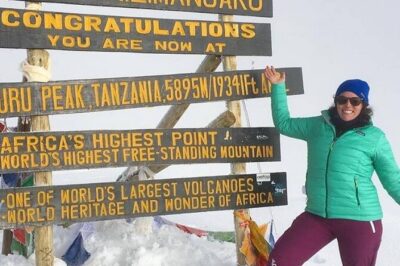
Climbing Kilimanjaro through 7 days Machame Route
Read our review →