Reviewed · KILIMANJARO CLIMBS
6 Days Machame route Kilimanjaro climbing
First night on Kilimanjaro can feel unreal. This 6-day Machame route is built for acclimatization and includes the stuff you do not want to scramble for at altitude, like oxygen and an oximeter. You start from Moshi, hike through dramatic habitat changes, and finish with certificates plus a warm shower back in town.
What I especially like is the guide setup: Habari uses local guides trained in safety and first aid, and they bring real expertise beyond directions, like local flora and fauna, geography, and even astronomy. I also like that the route plan gives you real chances to see the Western Breach and glacier views, then rests you at key camps rather than rushing you.
One consideration: Machame is a serious effort. Expect long days and a very early summit start, and the tour requests moderate physical fitness because the altitude gain is not a walk in the park.
In This Review
- Key highlights worth knowing before you go
- Machame Route from Moshi: what the trip is really like
- Price, inclusions, and whether $1,948.72 is good value
- Habari Adventure’s local guides: safety, first aid, and real mountain brain
- The Machame route, day by day: from forest to the crater rim
- Day 1: Machame Gate through montane forest to Machame Camp (2835 m)
- Day 2: Shira Plateau views, moorland hiking, and ridge walking
- Day 3: Lava Tower push, then down to Baranco Camp for acclimatization
- Day 4: The Baranco Wall climb, Karanga Camp lunch, then Barafu (4640 m)
- Day 5: Summit night wake-up at 00:00, Stella Point sunrise, Uhuru Peak photos
- Day 6: Mweka Gate descent, certificates, and a car back to your hotel
- What camps and crew comfort usually feel like at 4,000 to 5,800 meters
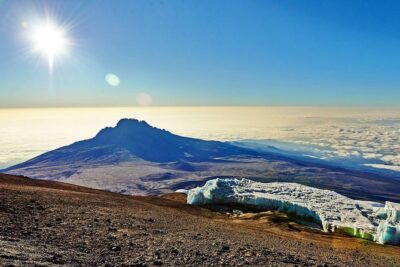
- Where the route shines: views, habitats, and the Western Breach moments
- Who should choose the 6-day Machame route with Habari Adventure
- Should you book Habari Adventure for the 6-day Machame route?
- FAQ
- How long is the Kilimanjaro 6-day Machame route climb?
- Where does the trek start and where do you end?
- What meals are included?
- Is oxygen and an oximeter included?
- How many hiking hours are typical on the hardest day?
- Is this a private tour?
- What is not included in the tour price?
- What happens if weather is bad?
Key highlights worth knowing before you go
- Local leadership with safety training, plus English-speaking guides who know the mountain and the country
- Oxygen and an oximeter included, which helps you monitor altitude risk during the trek
- Machame route pacing with acclimatization that includes hiking high and descending to lower camps
- A summit day plan built around a pre-dawn wake-up, Stella Point sunrise views, and a timed ascent to Uhuru Peak
- A full logistics bundle: meals, mountain equipment, first aid, and private transportation are included
Machame Route from Moshi: what the trip is really like
This is a classic Kilimanjaro climb out of Moshi, and Machame is the route most hikers talk about when they want variety. You do not just hike “up a mountain.” You move through changing ecosystems: montane forest, moorland, then alpine desert. That matters because it changes how you feel physically. Forest days tend to be humid and steady. Higher days can feel exposed, cold, and dry.
You also should expect a trek that follows a real rhythm. Each day has a purpose, not just “more kilometers.” The plan is structured around altitude, with a high push followed by a drop to a lower camp to help you acclimatize.
Finally, this is offered as a private tour/activity, meaning it is tailored to your group rather than a shared circus of strangers. That can make mornings smoother, and it usually helps you feel more cared for when you need guidance on pace.
More Kilimanjaro climbs:
- Kilimanjaro climb by Lemosho Route (7-day)
★ 5.0 · 651 reviews - Kilimanjaro climb, Machame Route (7-day)
★ 5.0 · 262 reviews - Kilimanjaro Climbing Lemosho Route 8 Days.
★ 5.0 · 186 reviews
Price, inclusions, and whether $1,948.72 is good value
The price here is $1,948.72 per person for about 6 days. On Kilimanjaro, the real question is what is included, because logistics can quietly add up fast.
What stands out is the package includes:
- All fees and taxes
- Private transportation
- All meals during the trek (breakfast 6 times, plus lunch and dinner as listed)
- Oxygen, an oximeter, and a first aid kit
- Mountain equipment and trekking gear support
- Admission tickets tied to each climbing day
And what you should plan for outside the package:
- Flights and entry visa
- Tips for the mountain crew
- Personal items
- Portable flush toilet
So yes, you are paying for a lot of the mountain-specific costs. If you were to price these items separately, oxygen, medical monitoring tools, and the full crew system can get expensive quickly. This itinerary also includes meals every day and ends with transport back to your hotel after the Mweka descent, which removes a common pain point.
In short: if you want a climb where you do not have to manage the “we forgot something” moments, this price looks like it covers the right things.
Habari Adventure’s local guides: safety, first aid, and real mountain brain
The biggest quality driver on any Kilimanjaro trek is the guide team. Habari Adventure builds the guiding around local knowledge, and the key detail is safety training. Their guides are local to Kilimanjaro and other parts of Tanzania and are trained in safety and first aid. That is not a marketing line. It affects how you move as a group when someone feels off, how they plan your pace, and how quickly they can respond if altitude symptoms show up.
You can also benefit from their broader learning. These guides are described as specialists in tour guiding and wildlife management, with knowledge spanning geography, history, anthropology, and astronomy. On the trek, that typically shows up in the small moments: explaining what you are seeing in the forest, what the changes in vegetation mean, and why the views open up at certain ridgelines.
From recent climb experiences, you might hike with guides such as Inno, Abdi, Leon, Evance, Stanley, or Mudy, depending on the team assigned. Across groups, the pattern is the same: clear communication before and during the climb, careful pacing, and a crew that treats health as the top priority.
The Machame route, day by day: from forest to the crater rim
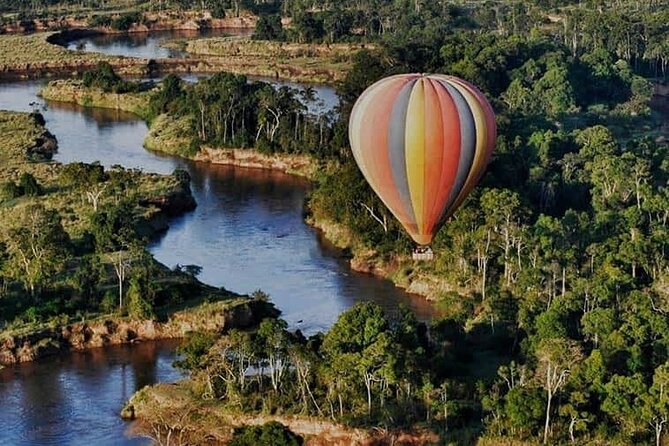
Below is the flow you should expect. I like to look at Machame as three acts: forest to moorland, moorland to high desert, then summit and descent.
A few more Moshi trips to compare
- Safari Serengeti And Ngorongoro
★ 5.0 · 288 reviews - Climbing Kilimanjaro – Machame Route
★ 5.0 · 170 reviews - Climbing Kilimanjaro through 7 days Machame Route
★ 5.0 · 151 reviews - Kilimanjaro climb, Lemosho Route (8-day)
★ 5.0 · 148 reviews
Day 1: Machame Gate through montane forest to Machame Camp (2835 m)
You meet the team after pickup around 8:00 am and transfer to Machame gate. On the way, you pass coffee and banana plantations grown by the Chagga people, which is a nice warm-up for the cultural side of Kilimanjaro.
After registration, you hike about 7 hours covering around 11 km through tropical rain forest. The route finishes at Machame Camp (2835 m). This day includes breakfast, lunch, and dinner, plus a picnic lunch on the trek.
What I like about Day 1 is that it sets the tone. You ease into hiking, get used to the group pace, and start learning what the crew does well, like timing breaks and moving with purpose.
Day 2: Shira Plateau views, moorland hiking, and ridge walking
Day 2 is shorter on paper, but it matters because it puts you into the high-country zones. You start around 8:00 am, hike about 3 hours total for the main climbing sections, covering about 5 km, with habitat shifting from moorland onward.
The plan describes:
- about 1 hour climbing up to the top of the forest zone
- about 1 hour on a gentler moorland gradient
- snacks and a short break at lunch
- then continuing up a rocky ridge toward the Shira plateau
From here you get big visual payoff. You should be able to see east direction views, and the western breach with glacier views.
A small downside: rocky ridge walking can feel uneven. Take it slow. This is a day for rhythm more than speed.
Day 3: Lava Tower push, then down to Baranco Camp for acclimatization
This is an acclimatization day that still has intensity. You hike about 6 hours and cover around 10 km.
You go up to Lava Tower (4600 m) through alpine desert, then descend to Baranco Camp (3900 m). The descent takes about 3 hours, and it is where you often get some of your best photo chances, especially of the Western Breach and the Baranco wall.
The camp sits in a valley below the wall, which the plan frames as a good setup for a memorable sunset while you wait for dinner.
If you want a simple reason this day is valuable: it gives you a taste of higher altitude without chaining you to the highest point all day.
Day 4: The Baranco Wall climb, Karanga Camp lunch, then Barafu (4640 m)
Today you tackle the Baranco wall. Expect about 8 hours hiking and around 8 km, moving through alpine desert.
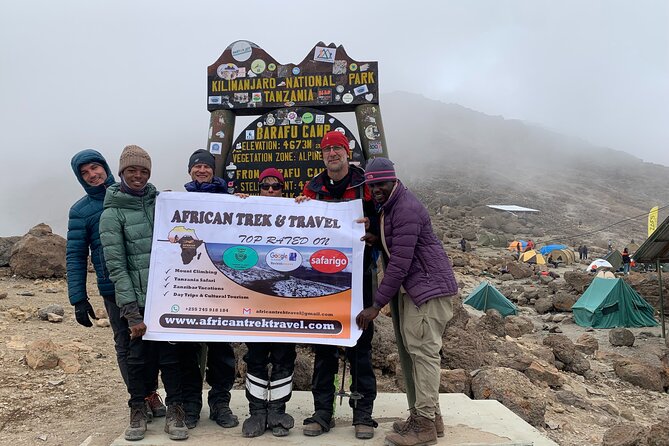
This section is described as not technical, but it is long and tiring, with a lot of rock climbing. You should reach Karanga Camp for lunch and the last stop for water, then continue toward Barafu Camp (base camp, 4640 m).
This is a day where having a careful guide matters. When you are tired, it is easy to rush. Rushing is also when mistakes happen. Follow their pacing and keep your breathing steady.
Day 5: Summit night wake-up at 00:00, Stella Point sunrise, Uhuru Peak photos
This is the longest day. The trekking window is 12 to 15 hours over about 15 km.
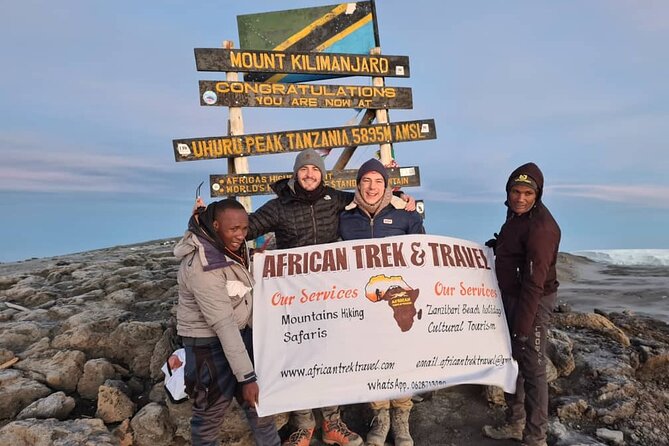
You wake very early around 00:00 with light tea and cookies. Then you climb scree for about 4 to 5 hours, gaining a lot of height over a short horizontal distance. The plan targets Stella Point (5756 m) for the first rays of sun, which is one of the most iconic moments on Kilimanjaro.
From Stella Point, it is about 1 hour to Uhuru Peak (5895 m). You get a few minutes for photos, then you start descending to Barafu Camp for lunch and rest. After that, you walk down to Millennium Camp (3950 m) for dinner and overnight.
This is also the day where you will feel the difference between “possible” and “comfortable.” Many people summit because of good team pacing, not because they are speed hikers. The crew system helps here: the guide keeps you on a safe rhythm, and the porters and support staff help you keep moving without burning out early.
Day 6: Mweka Gate descent, certificates, and a car back to your hotel
Your final hiking time is about 5 hours covering around 14 km. You start with breakfast, then continue the final descent from Millennium Camp down to Mweka Gate.
The day includes park formalities and receiving certificates. Then you are taken by private car back to your hotel where you can get a warm shower and celebrate.
I like the way this ending is planned. Some climbs end with a chaotic scramble. Here, you have a clear last step, then a real reset back in Moshi.
What camps and crew comfort usually feel like at 4,000 to 5,800 meters
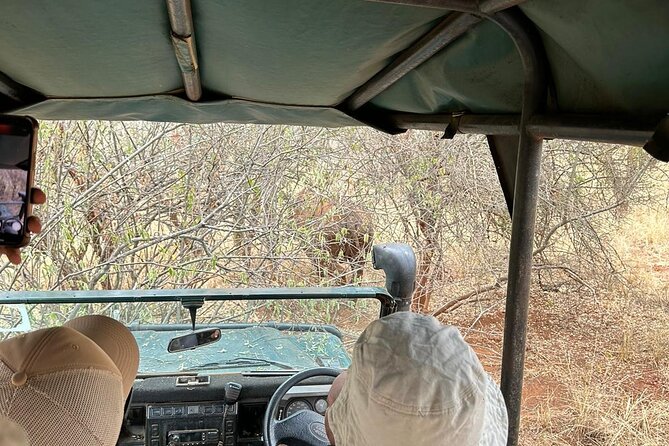
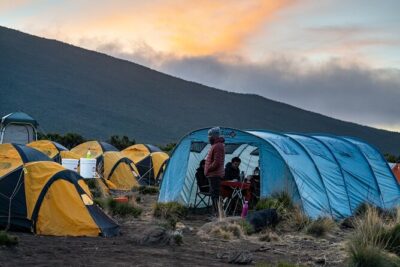
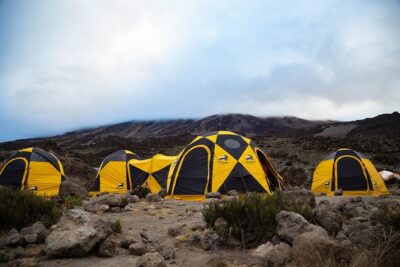
Habari’s included setup aims to keep you functional, not just fed. The package includes mountain equipment, tents, oxygen, an oximeter, and a first aid kit. That gives you a baseline of comfort and monitoring.
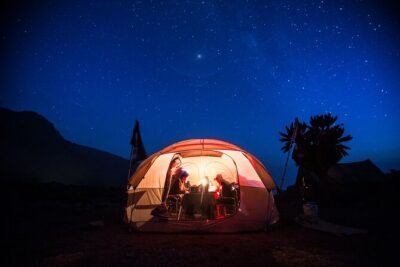
In past team experiences, the pattern is also warm and practical: guides can be organized and reassuring, chefs run the meals, and porters care for your load. One detail that comes up repeatedly is that early mornings can include small comforts, like tea prepared for your tent, which matters when you are facing cold hours before sunrise.
I also suggest you think about comfort in a realistic way. Higher altitude camp comfort is not “hotel comfort.” It is about staying warm enough, sleeping as well as you can, and being ready to hike the next day.
Where the route shines: views, habitats, and the Western Breach moments
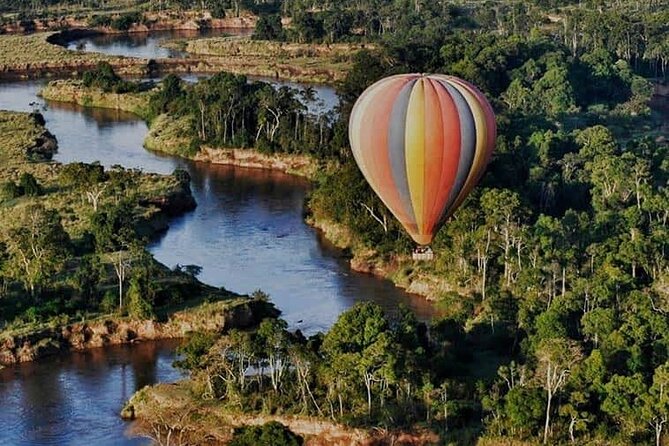
You are going to spend your time looking up and down, but the itinerary is designed to reward your effort with specific view windows.
- Day 2 sets up the western breach with glacier views, plus the Shira plateau perspective
- Day 3 highlights Baranco wall views and the breach again during descent
- Day 5 is the big payoff, with Stella Point sunrise and Uhuru Peak photos
Habitat changes are also part of the “wow.” Day 1’s tropical rain forest feels like a different planet. Later, the trail shifts into moorland and then alpine desert, where the air and light can hit your body quickly. That is why your pace and rest matter.
If you like a climb where you can actually picture what you are passing through, Machame is one of the better choices.
Who should choose the 6-day Machame route with Habari Adventure
This plan is described as suitable for travelers with moderate physical fitness. That is a helpful starting point, but you should also be honest about your stamina for long hiking blocks, especially Day 4 and Day 5.
It tends to fit best if:
- you want a classic route with strong acclimatization pacing
- you prefer a private group experience
- you value safety systems like oxygen and an oximeter
- you want a team that communicates clearly and cares about your wellbeing
If you are the type who gets anxious about altitude, the included monitoring tools and trained crew structure can make the process feel more controlled.
Should you book Habari Adventure for the 6-day Machame route?
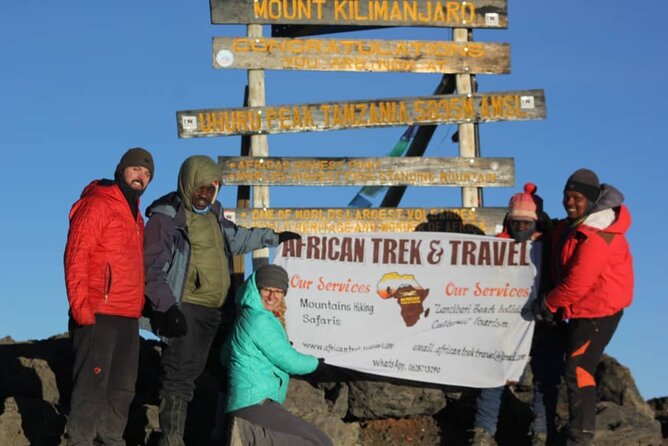
I’d book this if your top priorities are safety, solid logistics, and a guide team that knows Kilimanjaro from inside the local system. The inclusions are strong for a 6-day climb: oxygen, oximeter, first aid, all meals, mountain equipment, and admission coverage. That is a lot of risk removed for your budget.
I would think twice if you are expecting a short, easy trek or if you do not feel ready for a very long summit day starting around 00:00. Machame delivers views, but it asks for effort and smart pacing.
If you want, tell me your travel month, age range, and whether you prefer a faster or slower pace, and I can help you sanity-check if the Machame timing matches your comfort level.
FAQ
How long is the Kilimanjaro 6-day Machame route climb?
The trek runs for about 6 days.
Where does the trek start and where do you end?
Day 1 starts at Machame gate, and the final descent ends at Mweka Gate where you collect certificates.
What meals are included?
The trek includes breakfast, lunch, and dinner on the days listed in the plan, and breakfast is included for 6 mornings overall.
Is oxygen and an oximeter included?
Yes. Oxygen and an oximeter are included, along with a first aid kit and first aid support items.
How many hiking hours are typical on the hardest day?
The summit day (Day 5) is listed as about 12 to 15 hours of hiking.
Is this a private tour?
Yes. It is described as a private tour/activity, with only your group participating.
What is not included in the tour price?
Not included are flights, entry visa, tips to mountain crew, items of personal nature, and a portable flush toilet.
What happens if weather is bad?
This experience requires good weather. If it is canceled due to poor weather, you will be offered a different date or a full refund.
Just posted around Moshi
- machame route★ 5.0 · 16 reviews
- Kilimanjaro Climbing Umbwe Route★ 5.0 · 3 reviews
- Wildlife Extravaganza: Manyara, Tarangire & Ngorongoro in 3 Days★ 5.0 · 3 reviews
- Mt Kilimanjaro 6 days Marangu route hike★ 5.0 · 3 reviews
- West Kilimanjaro cycling Adventures★ 4.5 · 8 reviews
- 3 Days Private E-Bike Tour in West Kilimanjaro★ 5.0 · 3 reviews
- Kilimanjaro Climb • Marangu Route ~ 9 Day★ 5.0 · 4 reviews
- Private Cycle to Kilimanjaro Bike Park Safari★ 5.0 · 6 reviews
Kilimanjaro Climbs, compared.
8-Day Small-group Lemosho Kilimanjaro Summit Trekking
Read our review →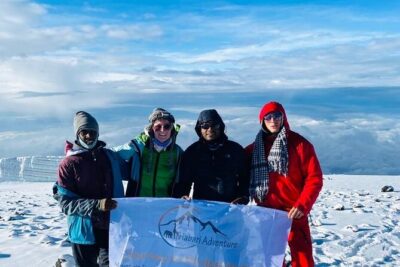
5 Days Best of Tanzania Luxury Safari Northern Circuit
Read our review →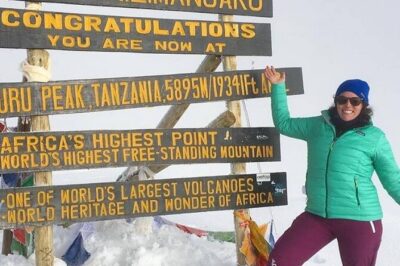
Climbing Kilimanjaro through 7 days Machame Route
Read our review →