Reviewed · KILIMANJARO CLIMBS
6 Days Kilimanjaro Climbing Marangu Route
Kilimanjaro has a way of changing plans fast. The Marangu Route is the classic, hut-based way up, with a built-in acclimatization day and a famous summit-night rhythm that many hikers find manageable. I like the structure of the route, and I like that the package includes park fees, meals, and a professional crew, so you focus on the mountain and not paperwork. One thing to consider: it is extremely popular, so you are not looking at a private, empty trail, and the late-night summit effort is still tough even with huts.
At a price of about $2,000 per person, this climb is not cheap, but the value is real if you want full support: guides and porters, purified drinking water, airport transfers, and all meals are included. Also, expect cold on summit night and wet, muddy footing on the final descent, so bring the gear that keeps you stable.
In This Review
- Key points I’d plan around before you go
- Why the Marangu Route is the classic Kilimanjaro choice
- Moshi, the park gate, and Day 1’s rainforest footing
- Mandara to Horombo: heathland, giant lobelias, and Mawenzi views
- The Horombo acclimatization day: rest, or a controlled Mawenzi stroll
- Kibo saddle and the moonscape approach before summit night
- Summit night to Uhuru Peak: Gillman’s Point sunrise and the cold math
- Final descent: back to Mandara, tips you should plan for, and the hot shower
- Price and value for $2,000: what’s included, and what to budget
- Should you book this Marangu 6-day climb?
- FAQ
- Where does the tour start, and is pickup included?
- How long is the climb?
- What accommodations do you sleep in?
- Are meals and water included?
- Are park fees included in the price?
- What costs are not included, and can you get a refund if plans change?
Key points I’d plan around before you go
- Marangu huts at Mandara, Horombo, Kibo, and Mweka make logistics simpler than tent camping for many people.
- A dedicated acclimatization day at Horombo helps you handle altitude instead of rushing.
- Midnight to 2 a.m. summit start gives you a sunrise at Gillman’s Point, with Uhuru Peak close after.
- Guides and porters are consistently praised for support and friendly energy in tough conditions.
- Godfrey is noted for booking support from the first steps through the last day.
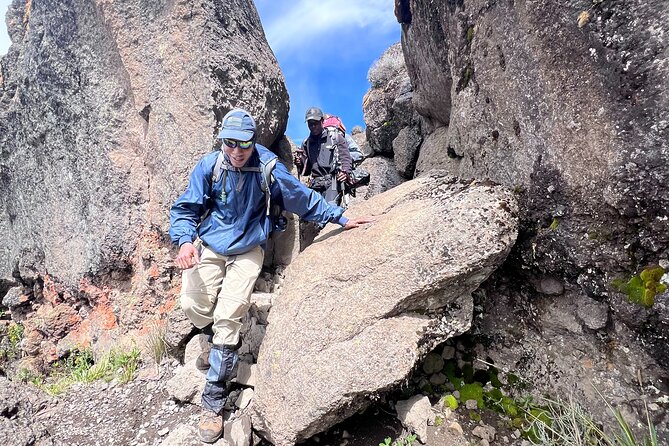
- Gaiters and trekking poles are repeatedly recommended for mud, steep descents, and cold night footing.
Why the Marangu Route is the classic Kilimanjaro choice
The Marangu Route is often called the Coca-Cola Route, and it earns that reputation the old-fashioned way: it is the oldest and most established route on Kilimanjaro. The biggest practical advantage is the one that drives most hikers to Marangu in the first place, hut accommodation. Instead of living out of a tent every night, you sleep in mountain huts at set stops like Mandara Huts, Horombo Huts, Kibo Huts, and Mweka Camp.
I also like the way this route is paced for altitude. You gain elevation steadily through forest and then into moorland, but you also get time to adjust. On Day 3 you can rest at Horombo for a full day, or take an easier walk up toward Mawenzi base camp and return. That extra day can make a big difference for comfort and decision-making later, when the summit push gets cold and demanding.
The Marangu Route is extremely popular. That means you should expect a regular flow of hikers, especially during the summit window. It does not remove the challenge, but it does change the feel: you will not have a silent mountain experience.
More Kilimanjaro climbs:
- Kilimanjaro climb by Lemosho Route (7-day)
★ 5.0 · 651 reviews - Kilimanjaro climb, Machame Route (7-day)
★ 5.0 · 262 reviews - Kilimanjaro Climbing Lemosho Route 8 Days.
★ 5.0 · 186 reviews
Moshi, the park gate, and Day 1’s rainforest footing
Your climb starts in Moshi, with a drive of about 45 minutes through the Village of Machame to the Kilimanjaro National Park Gate. There is a real human moment here: you wait patiently for permits while you watch crews preparing for the journey ahead. If you have ever felt nervous about starting big trips, this part helps. You get your bearings, you see what everyone is doing, and you step into the routine.
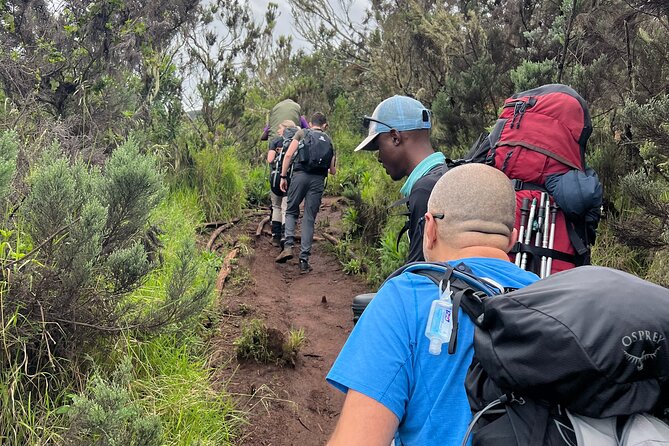
Then it is rainforest. Early on, the trail can be muddy and slippery at lower elevations. This is where gear matters. The route guidance is blunt and useful: use gaiters and trekking poles. Gaiters help keep grit and wet from soaking your socks, and poles take weight off your knees on uneven ground. At this stage you are gaining altitude from roughly 1,905m to 2,723m, about an 818m climb, so your legs are working but you are not yet at the big thin-air zones.
Day 1 ends at Mandara Huts. It is a shorter segment at around five hours of walking, which can be a relief if you are still feeling out your pack weight and your breathing rhythm.
Mandara to Horombo: heathland, giant lobelias, and Mawenzi views
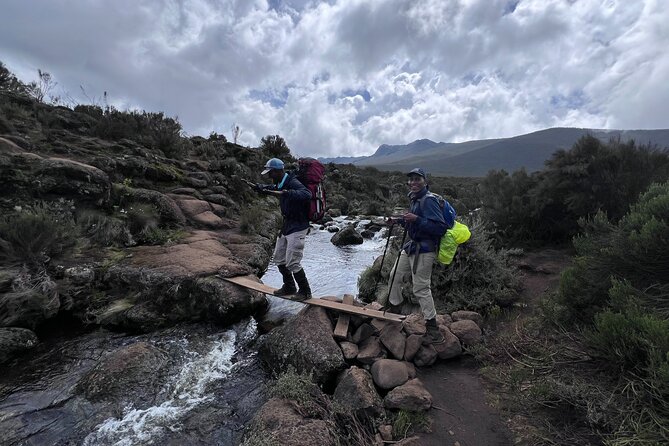
Day 2 is a noticeable change in scenery and air. You move from about 2,723m up to roughly 3,721m, gaining around 998m. You start by leaving the rain forest behind. The trail shifts into heathland with plant life that feels like a different planet, including giant lobelias and groundsels. If you like learning what you are walking through, this is a satisfying day because the guide can point out the natural details you would miss without someone local.
As you climb higher you reach open moorlands. The vegetation gets lower and windier. The air also gets sharper, and on this day the guide-led rhythm becomes your best friend: steady steps, purposeful pacing, and enough time for a midday break.
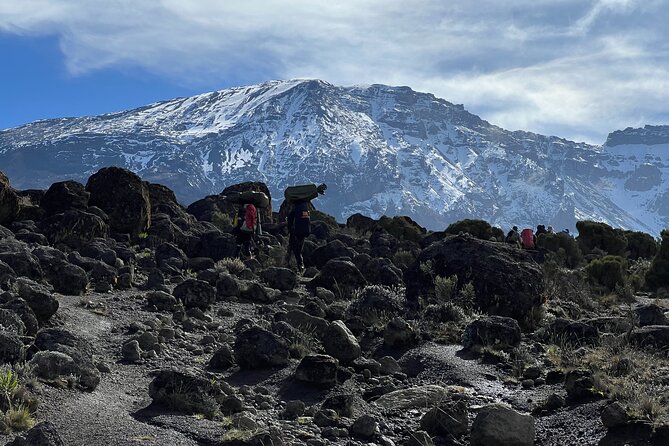
Lunch is timed with views of Mawenzi. You also arrive at Horombo Huts late afternoon beneath a Kibo Summit viewpoint area. Temperatures start dropping, and that is a key theme on Kilimanjaro: even when the walk is not at peak difficulty, the cold can sneak up on you as day turns to night.
You are looking at about six hours walking, which is long enough to feel accomplished, but not so long that you are likely to drain yourself before the altitude-rest day.
The Horombo acclimatization day: rest, or a controlled Mawenzi stroll
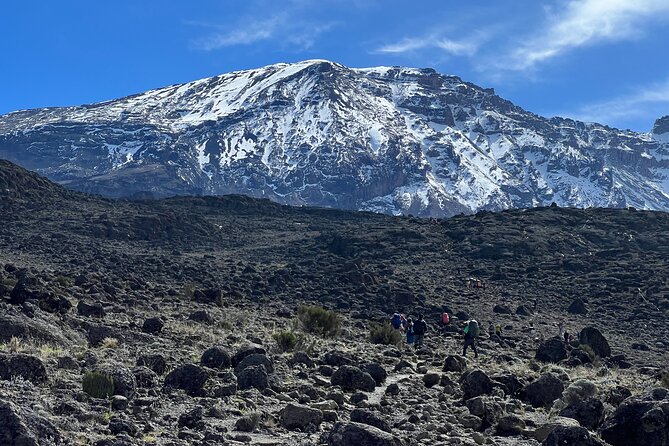
Day 3 is built for something many hikes ignore: time. Instead of pushing forward immediately, you stay at Horombo for a full day and a second night. You are already at around 3,721m. That is high enough to feel the altitude, but not so high that you are forced into survival-mode decisions.
This day is valuable in two ways. First, it improves acclimatization, which can help your body cope later when you head higher toward Kibo and the summit zone. Second, it gives you room to experience the mountain’s weather changes without rushing. On Kilimanjaro, conditions can turn fast, and learning how you respond is useful.
You have options. You can rest at the huts, or take a stroll up toward Mawenzi base camp and return. It is not described as a summit attempt. Think of it as a controlled walk, meant to keep your legs moving while your body catches up.
If you tend to get impatient on trips, this is the day to respect the plan. The payoff comes on summit night. You may not feel it immediately, but you will feel it when cold and fatigue hit.
A few more Moshi trips to compare
- Safari Serengeti And Ngorongoro
★ 5.0 · 288 reviews - Climbing Kilimanjaro – Machame Route
★ 5.0 · 170 reviews - Climbing Kilimanjaro through 7 days Machame Route
★ 5.0 · 151 reviews - Kilimanjaro climb, Lemosho Route (8-day)
★ 5.0 · 148 reviews
Kibo saddle and the moonscape approach before summit night
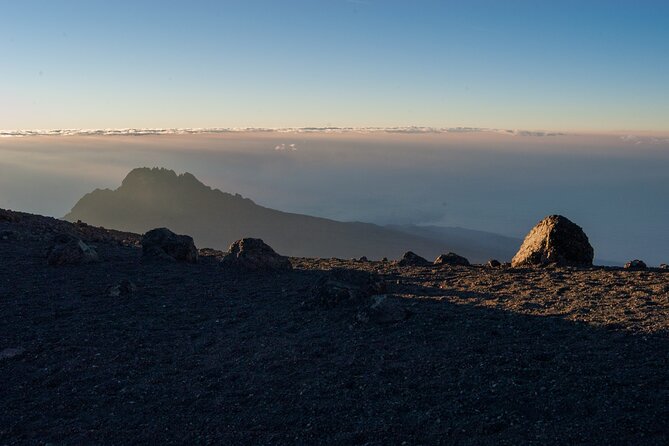
Day 4 is where the mountain starts feeling more exposed and less forgiving. You climb from about 3,721m to roughly 4,714m, gaining around 993m. The trail passes through dwindling heathland that blends into a moonscape as you reach a saddle connecting Mawenzi and Kibo.
This saddle is a useful stop because it makes the summit climb feel real. You stop for lunch, then later you cross that surprisingly large saddle. The guidance here is practical, and it matches how hikers experience it: you will be starting the summit climb in just a few hours, so take in the shape of the terrain while you still have daylight.
Because you are higher now, cold starts affecting everything: your fingers, your breathing, even how quickly you feel tired. The route gives you time by keeping the walking segment to about six hours, but the bigger shift is the mental one. You are no longer in a green hiking environment. You are in a place where wind and temperature can change your comfort level.
You arrive at Kibo Huts for the night. This is your staging area for the midnight summit start on Day 5.
Summit night to Uhuru Peak: Gillman’s Point sunrise and the cold math
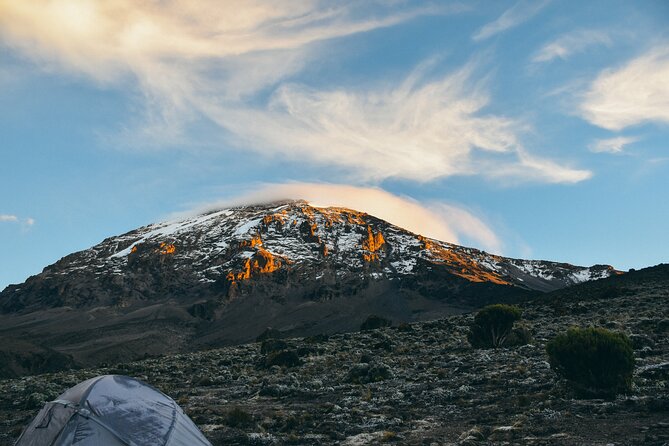
Day 5 is the big one. You start your toughest climb between midnight and 2 a.m., and the route description is honest about what it feels like: cold, fatigue, and switchbacks. You are gaining elevation from roughly 4,714m to about 5,895m, about 1,181m of climb, then you later descend a lot, losing around 2,174m overall by the time you reach 3,721m.
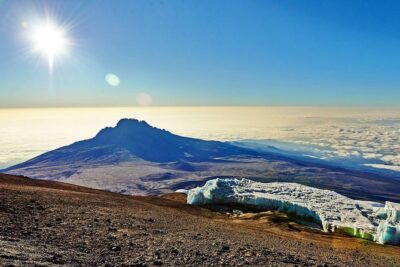
This is also the day with the best payoff timing. The trek to Gillman’s Point is set up for sunrise. You climb in darkness, then you start to see the world wake up, with the summit, Uhuru Peak, just about an hour away. The route notes that Uhuru Peak may be reached through snow, which is a good reminder to pack for winter-like conditions even if the earlier days felt mild.
Standing on Uhuru Peak is a celebration moment, plain and simple. The bigger win is that you got there in stages, following the pacing designed for altitude. Then comes the part many people underestimate: after celebrating, you descend steeply, using Barafu as the route through to Mweka Camp. The guidance is again practical: gaiters and trekking poles are advised. On descent, your legs do the work, but your balance and your stability decide whether the descent feels controlled or scary.
Day 5 is only listed around five hours for the main climb segment in the schedule, but emotionally it takes longer because it includes the night start, the summit effort, and the steep descent.
Final descent: back to Mandara, tips you should plan for, and the hot shower
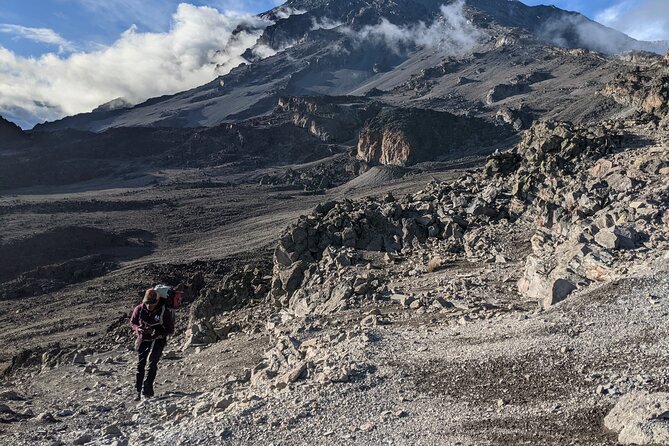
Day 6 starts at about 3,721m and drops down to around 1,905m, losing about 1,816m. This is a day you feel in your knees and calves, even when the walking feels straightforward on paper. The weather is warmer than summit night, but the terrain becomes wet, muddy, and steep. That means the same gear that helps on Day 1 still matters: gaiters and trekking poles.
You also get a meaningful closing moment. After breakfast, there is a ceremony of appreciation and team bonding with your crew. This matters more than it sounds. Kilimanjaro depends on the work of guides, cooks, and porters, and it is good to acknowledge that in a real, not just polite, way.
Lunch is stopped at Mandara Huts. Then you return to the Marangu Park Gate and receive your summit certificates. Finally, a vehicle meets you at the gate and drives you back to your hotel in Moshi, about 45 minutes. That is when the mountain experience turns into regular life again, hot shower first, then dinner and celebrations.
One practical note the route stresses: tip your guides, cooks, and porters. You are leaving them at Mandara Huts, so have cash ready.
Price and value for $2,000: what’s included, and what to budget
At $2,000 per person, this package feels like it makes sense if you want a supported climb with predictable costs. It includes all park fees, the salaries for guides, porters, and cook support, and professional, experienced mountain guides. It also includes airport transfers and clean, purified drinking water, which is more important than it sounds on high-altitude treks where hydration affects how you feel.
Meals are also covered for the full trip, with 6 breakfasts, 6 lunches, and 6 dinners. That removes one of the biggest headaches of self-managed travel, where you end up buying food snacks at the worst times. Here you eat as the trek plan expects.
The lodging is described as quality, waterproof, four-season private mountain sleeping tents, and the route itself is known for hut accommodation. Either way, you should assume you are not expected to bring a full winter camping system yourself, since the package is built to cover nights at the mountain camps.
Not included is just as important:
- Alcoholic and soft drinks
- Tips and personal spending money for souvenirs
So the real “all-in” budget is $2,000 plus tipping plus drinks. If you budget that from the start, you will feel calm at the end instead of doing math at the gate.
Should you book this Marangu 6-day climb?
Book it if you want the classic, hut-based Kilimanjaro experience with a planned acclimatization day, strong crew support, and meals handled for you. It is also a good fit if you want a private setup, since this is described as a private tour/activity, with only your group participating.
Skip it or reconsider if you know you struggle with very early starts and steep, cold conditions. Even with huts and support, summit night starts between midnight and 2 a.m., and Day 5 includes a steep descent right after the summit.
One more reason I’d lean toward booking: the people side. The crew is repeatedly described as friendly and supportive, and Godfrey is highlighted for help from the first booking steps through the final day. On a trip this physically demanding, that kind of coordination makes a real difference.
FAQ
Where does the tour start, and is pickup included?
The experience meets at Kilimanjaro Airport. Airport transfers are included, and pickup is offered.
How long is the climb?
It is listed as a 6-day climb, with daily walking segments that typically run about 5 to 6 hours, plus extra time on summit night and the acclimatization day.
What accommodations do you sleep in?
The Marangu Route is known for hut accommodation. Your stops include Mandara Huts, Horombo Huts, Kibo Huts, and Mweka Camp.
Are meals and water included?
Yes. Clean, purified drinking water is included, and meals are included for the full trip: 6 breakfasts, 6 lunches, and 6 dinners.
Are park fees included in the price?
Yes. All park fees are included.
What costs are not included, and can you get a refund if plans change?
Alcoholic and soft drinks are not included, and tipping plus personal spending money for souvenirs is also not included. The tour offers free cancellation, with a full refund if you cancel up to 24 hours in advance.
Just posted around Moshi
- machame route★ 5.0 · 16 reviews
- Mt Kilimanjaro 6 days Marangu route hike★ 5.0 · 3 reviews
- Kilimanjaro Climbing Umbwe Route★ 5.0 · 3 reviews
- Wildlife Extravaganza: Manyara, Tarangire & Ngorongoro in 3 Days★ 5.0 · 3 reviews
- 3 Days Private E-Bike Tour in West Kilimanjaro★ 5.0 · 3 reviews
- West Kilimanjaro cycling Adventures★ 4.5 · 8 reviews
- Kilimanjaro Climb • Marangu Route ~ 9 Day★ 5.0 · 4 reviews
- Private Cycle to Kilimanjaro Bike Park Safari★ 5.0 · 6 reviews
Kilimanjaro Climbs, compared.
8-Day Small-group Lemosho Kilimanjaro Summit Trekking
Read our review →
5 Days Best of Tanzania Luxury Safari Northern Circuit
Read our review →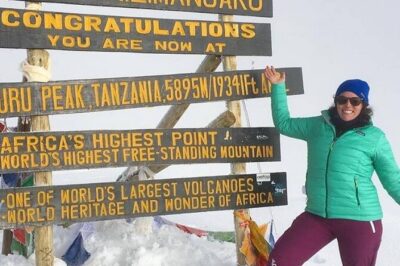
Climbing Kilimanjaro through 7 days Machame Route
Read our review →