Reviewed · KILIMANJARO CLIMBS
6 Days Kilimanjaro climb – Marangu route
Huts, forests, and a midnight climb to Uhuru. That is the feel of this 6 Days Kilimanjaro climb on the classic Marangu route, also known as the Coca-Cola route, and it follows a path tied to the mountain’s earliest European summit story. If you want a structured climb with built-in breaks and no camping nights, Marangu is the obvious starting point.
Two things I like a lot: you sleep in mountain huts most of the way, and the schedule gives you a real acclimatization day before the big push. The other practical plus is how the trip is set up as a private experience, with private transportation and a team arranged around your group.
One drawback to plan around: Day 5 starts around midnight and the wind and cold at summit altitude can be extreme, so this route is never a casual hike. Also, tipping the mountain crew is not included in the price.
In This Review
- Key Things You’ll Be Glad You Know Up Front
- Marangu Route on Kilimanjaro: Why It’s the Coca-Cola Classic
- Moshi Morning Start, Private Tour Setup, and What That Means for Your Day
- Day 1: Moshi to Marangu Gate, Rain Forest to Mandara Hut
- Day 2: Forest Out, High Moorland Up, Views of Kibo and Mawenzi
- Day 3: The Acclimatization Day on Mawenzi Ridge (Short Hike, Big Payoff)
- Day 4: Alpine Desert, the Saddle, and Night at Kibo Hut
- Day 5: Midnight Summit Push to Uhuru Peak, Gilman’s Point, and the Cold Wind Reality
- Day 6: Descent to Mweka Gate, Summit Certificates, and the Ride Back to Moshi
- Crew, Food, and the Support Machine Behind the Hike
- Price and Value: Is $2,000 a Fair Deal for This Marangu Program?
- Who This Marangu Route Suits Best (and Who Might Think Twice)
- Should You Book Destiny Explorers for the 6-Day Marangu Climb?
- FAQ
- What route is this trek on Kilimanjaro?
- Where does the trek start and what time does it begin?
- How long is the trek?
- What is included in the price?
- What is not included?
- Does the program include the summit certificate and how do you return to Moshi?
Key Things You’ll Be Glad You Know Up Front
- Hut sleeping on Marangu means you spend nights inside, so you are not packing and sleeping on tent platforms.
- A dedicated acclimatization day gives you time around Mawenzi Ridge before you climb higher toward the saddle.
- Your summit plan starts at midnight with a cold, windy ascent, so warm layers and a calm mindset matter.
- The day-by-day elevation jumps are real on Kilimanjaro, even when the hiking hours look moderate on paper.
- Support staffing can be heavy on smaller private groups, with guides, cooks, and porters making the climb work smoothly.
- Meals and transport are handled through included breakfasts, lunches, and dinners plus private transport from Moshi.
Marangu Route on Kilimanjaro: Why It’s the Coca-Cola Classic
The Marangu route is often labeled the Coca-Cola route because it is the best-known, most straightforward path people choose for Kilimanjaro. It is also described as following the line similar to what Hans Meyer trekked when he became the first European to summit Kilimanjaro. In other words, this is the route many people imagine when they think of Kilimanjaro, and that familiarity is part of its appeal.
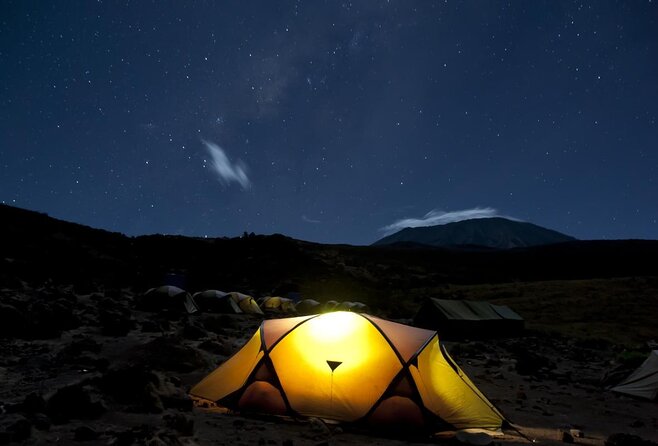
Marangu also has a big practical advantage. The route uses sleeping huts, so you avoid the full camping setup that comes with some other routes. If you prefer your trip to feel like a guided mountain program rather than a backcountry camping expedition, Marangu fits that style.
More Kilimanjaro climbs:
- Kilimanjaro climb by Lemosho Route (7-day)
★ 5.0 · 651 reviews - Kilimanjaro climb, Machame Route (7-day)
★ 5.0 · 262 reviews - Kilimanjaro Climbing Lemosho Route 8 Days.
★ 5.0 · 186 reviews
Moshi Morning Start, Private Tour Setup, and What That Means for Your Day
This trip starts at 7:00 am, with departure from Moshi for Kilimanjaro. It is set up as a private tour/activity, so only your group participates, which typically means less waiting around for other people and more control over timing.
You also get private transportation included, and pickup is offered. That matters because getting to the gate areas on Kilimanjaro is not something you want to improvise. A mobile ticket is included too, which is useful when you just want everything lined up without extra paperwork headaches.
The trip is listed as about 6 days. The itinerary is tight but thoughtful, with a built-in acclimatization day and a final descent day that includes time to collect your summit certificate and get back to Moshi.
Day 1: Moshi to Marangu Gate, Rain Forest to Mandara Hut
Day 1 is where the Kilimanjaro feeling starts. You depart Moshi for Marangu Gate for the needed formalities, then begin with a rainforest climb. The trail rises through rain forest for about 8 km (5 miles) with roughly 4-5 hours of hiking.
This is the day where you are likely to see wildlife. The route description specifically mentions the chance to spot blue monkeys near the upper edge of the forest line. Even if you do not see them, the rainforest stretch is still a good mental warm-up. It feels like your body is settling into the rhythm, not white-knuckling altitude right away.
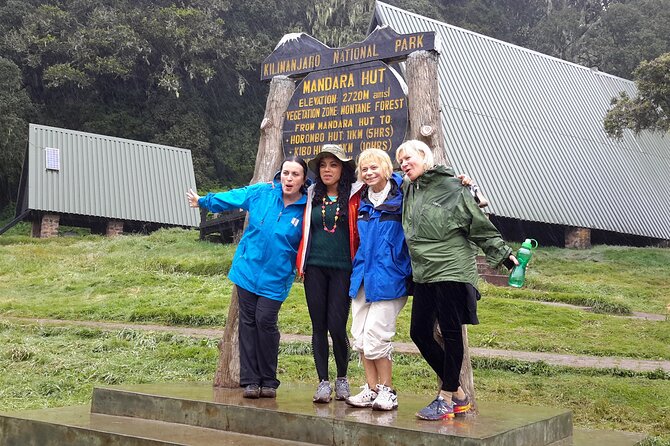
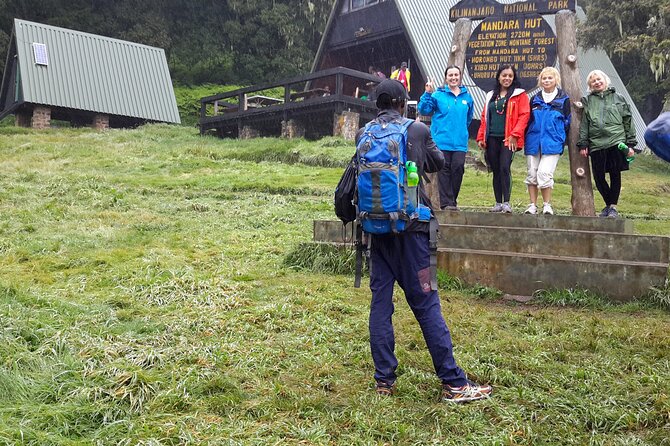
The day ends at Mandara Hut, and this is also listed with an admission ticket included. On a practical level, this is the day you want to start slow. You are fresh, but the climb is still real. I like Day 1 on Marangu because it sets you up for success, rather than jumping straight into the cold.
Day 2: Forest Out, High Moorland Up, Views of Kibo and Mawenzi
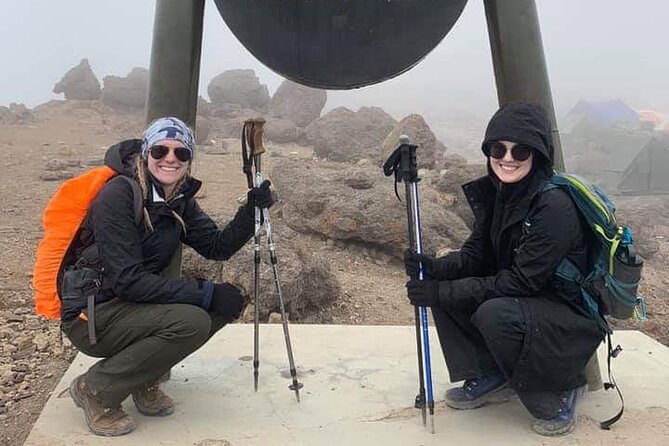
On Day 2 you climb from about 8,858 ft to 12,205 ft, hiking 6-8 hours over 12 km (7 miles). The environment shifts from forest toward high moorland. This is when the route begins to open up and the mountain starts revealing its bigger faces.
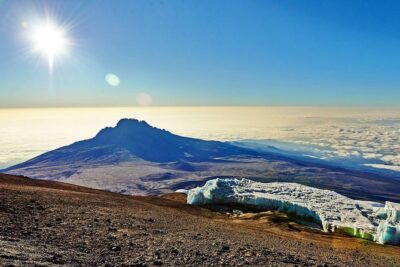
The trip specifically calls out your first views of Kibo and Mawenzi. These are two of the three volcanic peaks that form Kilimanjaro’s summit area, and seeing them early helps you understand what the rest of the climb is aiming toward. Kibo is your summit goal, but Mawenzi is the dramatic counterpoint that makes the whole skyline feel like a real landscape of volcano ridges.
Day 2 ends at the higher hut area in the program, and again, admission ticket inclusion is listed. This is not a short walk day, so you want to pace yourself. If you feel like you are breathing too hard, that is your cue to slow down early. With Kilimanjaro, slow usually means steady, and steady means you are in better shape for the days ahead.
A few more Moshi trips to compare
- Safari Serengeti And Ngorongoro
★ 5.0 · 288 reviews - Climbing Kilimanjaro – Machame Route
★ 5.0 · 170 reviews - Climbing Kilimanjaro through 7 days Machame Route
★ 5.0 · 151 reviews - Kilimanjaro climb, Lemosho Route (8-day)
★ 5.0 · 148 reviews
Day 3: The Acclimatization Day on Mawenzi Ridge (Short Hike, Big Payoff)
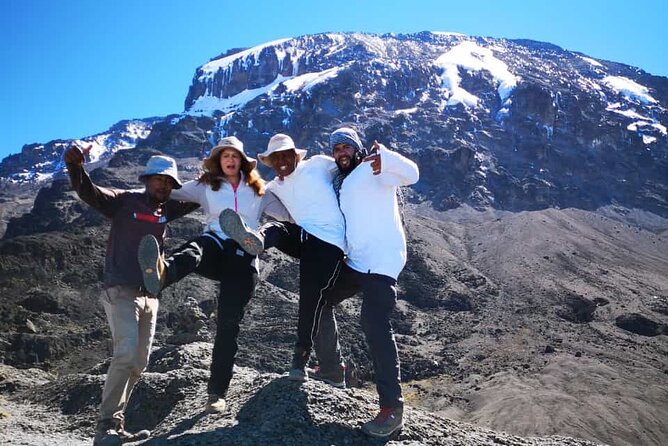
Day 3 is an acclimatization day designed to help your body adjust. You go from Horombo Hut to Mawenzi Ridge and then back down to Horombo Hut. The hiking time is listed as 2-3 hours up and 1-2 hours back, with a total distance around 5 km (3 miles) each way. You are also staying within the heath habitat for this part of the itinerary.
This is one of the smartest pieces of the Marangu plan. Instead of pushing higher every single day, the schedule gives you a chance to do a manageable climb while letting your lungs and body catch up.
The route description highlights motivating views of Kibo and Mawenzi from around Mawenzi Ridge. You get the reward without the exhaustion of a huge altitude push. Then you return to Horombo Hut, ready for the climb toward the saddle the next day.
If you have ever regretted racing ahead too fast on an altitude trip, Day 3 is the day that helps you avoid that. It is a reminder that acclimatization is not a bonus. It is part of the plan.
Day 4: Alpine Desert, the Saddle, and Night at Kibo Hut
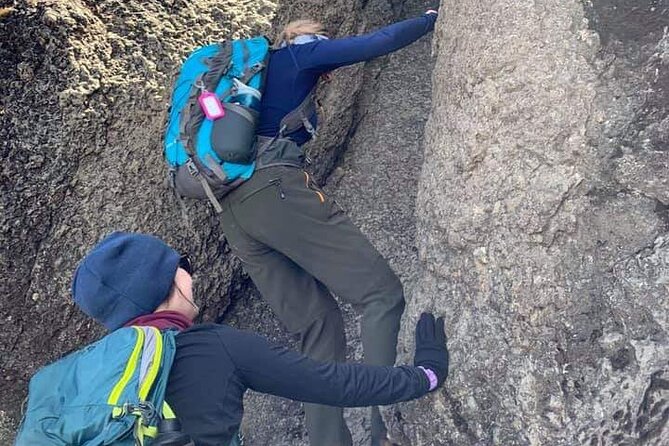
Day 4 moves you into higher terrain. You climb from about 12,205 ft to 15,430 ft over 10 km (6 miles) and about 6-8 hours of hiking. The habitat is listed as alpine desert, which is a clue that the feel of the hike will change. Less forest, more open, and usually more exposed to wind and temperature swings.
The itinerary describes crossing the Saddle between Mawenzi and Kibo, then reaching Kibo Hut at the bottom of the Kibo crater wall. From here, you rest and enjoy an early dinner to prepare for summit day.
This day matters because it is the bridge between the climb you have already done and the climb you are about to fight. You may feel tired, and that is normal. I like that this schedule builds in that last night reset. Early dinner and rest give you a better chance of feeling mentally ready for the long early wake-up and the summit climb.
Day 5: Midnight Summit Push to Uhuru Peak, Gilman’s Point, and the Cold Wind Reality
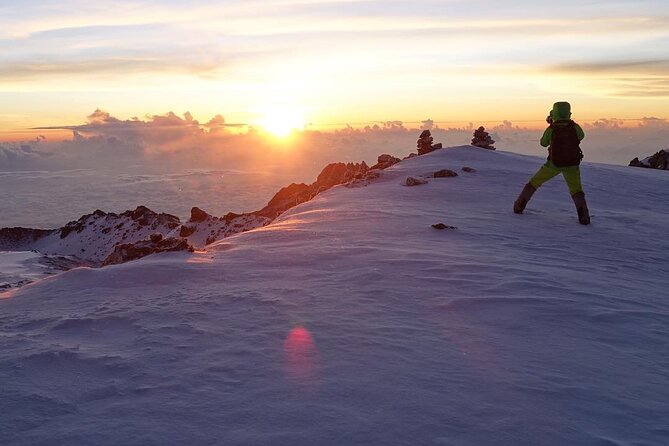
Day 5 is the main event. You start with a summit climb from Kibo Hut to Uhuru Peak, listed from 15,430 ft up to 19,341 ft. Total hiking time is 6-8 hours for that segment, followed by a descent from Uhuru Peak back to Horombo Hut over 4-5 hours.
The itinerary notes that the summit push begins around midnight. That means you start climbing in darkness, and it also means you will feel the altitude cold and the wind when it is at its toughest. The description calls out that conditions at this time and elevation can be extreme.
The route mentions short, frequent breaks. That is a smart approach for moving uphill at high altitude. You do not want to empty yourself early. You want a steady rhythm.
At Gilman’s point (18,600 ft), you are rewarded with the most magnificent sunrise you are ever likely to see, coming over the mountain’s peaks. Sunrise at high altitude is one of those moments that justifies everything. Even if you cannot appreciate it fully because you are still focused on breathing, the view is a real payoff.
Then you descend to Horombo Hut. This is important to remember: the hardest part often includes the descent fatigue. You go from summit effort into long lower-altitude trekking, still with your body sensitive to altitude.
Day 6: Descent to Mweka Gate, Summit Certificates, and the Ride Back to Moshi
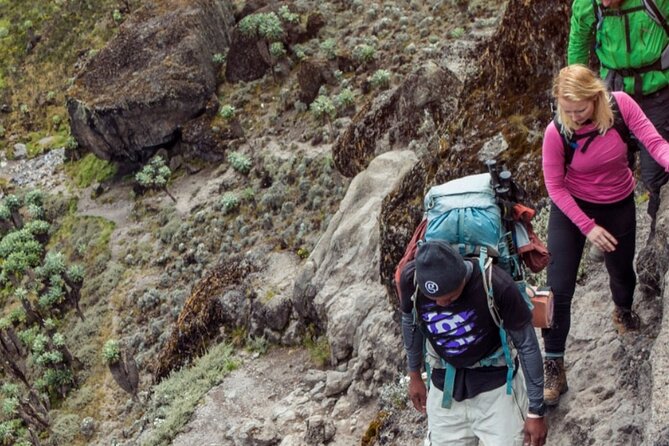
Day 6 is about coming down and finishing well. You descend from about 12,205 ft to 6,046 ft, hiking 5-7 hours over 20 km (12 miles). The habitat is listed as rain forest, so you are returning to greenery as you drop altitude.
The itinerary has a clear sequence. You continue to Mweka Gate, collect your summit certificates, then continue about another hour to Mweka Village. A vehicle then meets you at Mweka Village to drive you back to your hotel in Moshi.
This is the day where weather can turn the trail into mud. The itinerary notes that lower elevations can be wet and muddy. Pack for traction in your own mind, meaning plan for slower steps. After a summit day, your goal is to protect your energy and avoid slips.
Getting certificates and finishing with a vehicle ride is one of Marangu’s practical strengths. You are not stuck negotiating logistics at the end of an intense trek.
Crew, Food, and the Support Machine Behind the Hike
Kilimanjaro is not a solo sport. Even when you are hiking alone for stretches, you are still part of a larger system: guides, cooks, and porters, all working to keep you fed, safe, and moving.
One of the strongest praise points tied to this operator is how the mountain crew is described as very reliable and professional. Food also gets called out as fresh and delicious, which matters more than people think. When you are climbing for days and waking up at midnight, a real meal is fuel, comfort, and morale in one.
Staffing on private groups can also be significant. For one group of 6, the support team was described as 27 people combined across guides, cooks, and porters. That kind of coverage can translate into smoother camp and meal operations, and it also means you are less likely to get stranded if you slow down due to altitude.
Still, remember that altitude sickness can happen to anyone. In the information shared, altitude sickness led one person to turn back. That is a reality check: your safety comes first, even on a structured route.
Price and Value: Is $2,000 a Fair Deal for This Marangu Program?
At $2,000 per person, you are paying for more than just the hiking days. This price includes private transportation plus a full set of meals: breakfast (5), lunch (6), and dinner (5). That is a big part of value on Kilimanjaro, because buying food, planning logistics, and coordinating timing would be a headache on your own.
The trip also includes admission tickets for the trekking days as listed in the itinerary details. You also get pickup offered, and the experience runs as a private climb for your group only.
What is not included is tipping the mountain crew and person expenses. That is normal for many mountain programs, but you should budget for it so you do not end up stressed at the end.
In plain terms, $2,000 starts to make sense when you count the included meals, included transport, and the operational team required to make huts-based trekking work. The price can feel steep if you only compare it to other outdoor hikes, but Kilimanjaro is not a normal hike. This is an organized, multi-day altitude expedition with multiple staff roles.
Who This Marangu Route Suits Best (and Who Might Think Twice)
This tour is described as best for people with moderate physical fitness. It is also set up with realistic hiking times for each day, including a short acclimatization hike on Day 3 rather than only long grind days.
I think this is a strong match for you if:
- You want hut sleeping instead of camping.
- You prefer a structured plan with meals included.
- You are okay with a big day at altitude, including a midnight summit start.
This might be a less ideal fit if:
- You know cold and wind at night are a major issue for you, because Day 5 can be extreme.
- You are very sensitive to altitude and you do not handle acclimatization well. The route includes an acclimatization day, but sickness can still happen.
Also, if you are hoping for a relaxed walk with minimal altitude effects, this is not that. Kilimanjaro challenges everyone. Marangu just organizes the challenge in a more accessible style.
Should You Book Destiny Explorers for the 6-Day Marangu Climb?
If your goal is a classic Kilimanjaro experience with huts, clear daily structure, and included meals and transport, I would seriously consider this Marangu setup. The program includes the key pieces that make success more likely: an acclimatization day, a planned progression through habitats, and a finish that includes certificates and a vehicle back to Moshi.
I would book it if you like the idea of a well-run support team. The operator is described as responsive during reservations through Issa, and the on-mountain crew is praised as professional and reliable, with fresh food that keeps you going.
I would think twice if you feel unprepared for the summit night reality. Day 5 starts around midnight, and the cold and wind can be intense. If that scares you, spend time honestly assessing your fitness and your readiness for altitude before you commit.
FAQ
What route is this trek on Kilimanjaro?
It is the Marangu route, a classic Kilimanjaro climb that uses sleeping huts instead of camping along the way.
Where does the trek start and what time does it begin?
The itinerary departs from Moshi and starts at 7:00 am.
How long is the trek?
The climb is listed as 6 days (approx.).
What is included in the price?
Included items are private transportation, lunch (6), breakfast (5), and dinner (5), plus admission tickets noted in the day-by-day itinerary.
What is not included?
Tipping the mountain crew and person expenses are not included.
Does the program include the summit certificate and how do you return to Moshi?
On the last day you hike to Mweka Gate to collect summit certificates, then continue to Mweka Village where a vehicle meets you to drive back to your hotel in Moshi.
Just posted around Moshi
- machame route★ 5.0 · 16 reviews
- Wildlife Extravaganza: Manyara, Tarangire & Ngorongoro in 3 Days★ 5.0 · 3 reviews
- Mt Kilimanjaro 6 days Marangu route hike★ 5.0 · 3 reviews
- Kilimanjaro Climbing Umbwe Route★ 5.0 · 3 reviews
- 3 Days Private E-Bike Tour in West Kilimanjaro★ 5.0 · 3 reviews
- West Kilimanjaro cycling Adventures★ 4.5 · 8 reviews
- Kilimanjaro Climb • Marangu Route ~ 9 Day★ 5.0 · 4 reviews
- Private Cycle to Kilimanjaro Bike Park Safari★ 5.0 · 6 reviews
Kilimanjaro Climbs, compared.
8-Day Small-group Lemosho Kilimanjaro Summit Trekking
Read our review →
5 Days Best of Tanzania Luxury Safari Northern Circuit
Read our review →
Climbing Kilimanjaro through 7 days Machame Route
Read our review →