Reviewed · KILIMANJARO CLIMBS
6-Day Kilimanjaro Climbing Via Machame Route
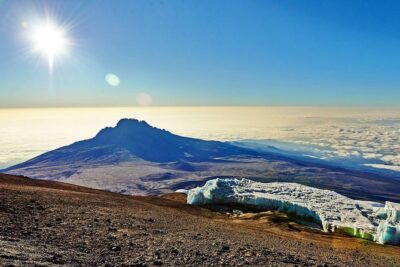
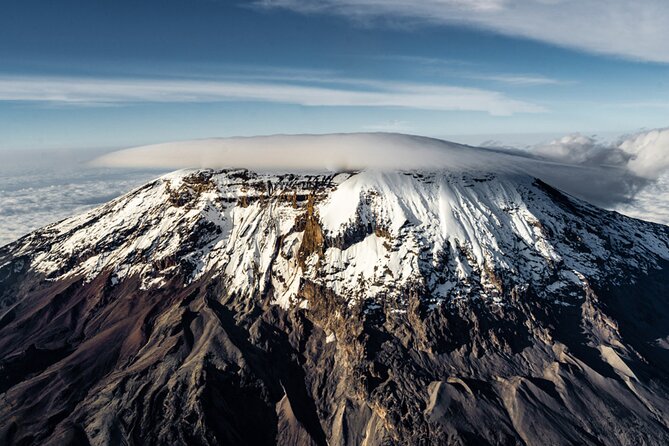
Kilimanjaro wakes you up before dawn. This 6-day climb on the Machame route from Moshi is a classic South Circuit with big scenery variety, plus a summit push timed for sunrise near Stella Point. I like the way the itinerary keeps things moving while still giving your body time to adjust. One consideration, though, is that Machame is harder than easier routes, and because it is popular, you may share some moments on crowded trails.
What also matters is who runs the trek. In the feedback I’ve seen about Spirit of Kilimanjaro, the team led by William and guides such as Paul and Rama come across as calm, professional, and focused on getting you through safely. Expect pickup offered around Moshi, and a trek that can run with a large maximum group size, up to 100 travelers, so your experience will not be fully private.
In This Review
- Key highlights on this 6-day Machame trek
- Why the Machame Route from Moshi fits the “worth it” mindset
- Route fit: who should choose this 6-day South Circuit
- Day 1: Machame Gate to Machame Camp through rainforest ridges
- Day 2: Shira campsite and the moorland change of scenery
- Day 3: Shira Plateau toward Lava Tower and Barranco Camp
- Day 4: Barranco Wall and Barafu Camp, where summit angles start
- Day 5: Midnight summit bid to Stella Point sunrise
- Day 6: Mweka descent, mud footing, and summit certificates
- Price and value: what $1,810 covers on Machame
- Guides, food, and the human side of altitude
- What to pack and how to prepare using this itinerary’s real demands
- Should you book this Machame 6-day climb with Spirit of Kilimanjaro?
Key highlights on this 6-day Machame trek
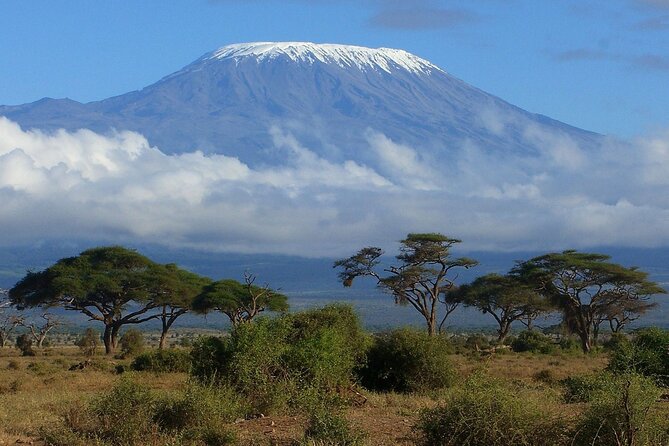
- Southwest summit approach with Mweka descent: you get the feel of one mountain, but with a satisfying change of scenery on the way down
- Acclimatization-focused pacing: days are planned to help you adjust, not just rack up altitude
- Stella Point sunrise payoff: the hardest stretch is short at the key moment, with a major payoff in the pre-dawn hours
- Lava Tower called Shark’s Tooth: an optional scramble adds spice if you are feeling strong
- Real camp support: chef and cook handle meals, while professional guides keep the rhythm steady
- Expect mud at the end: gaiters and trekking poles are practical insurance on the Mweka descent
Why the Machame Route from Moshi fits the “worth it” mindset
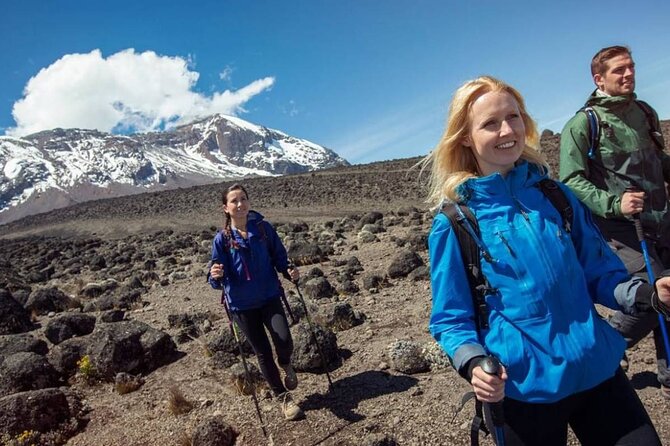
If you are choosing Kilimanjaro by value, Machame makes a strong case. It is nicknamed the Whiskey route because it is known for being tougher and typically more expensive than the Marangu route. I like that this version tries to earn that higher cost with a route design that supports acclimatization and delivers variety, not just a straight line to the summit.
The big promise here is variety across climates. You start in montane forest, move into moorland, then step into semi-desert and alpine desert zones before the final scree slog. That variety matters because it keeps your eyes busy when your legs are counting steps, and it changes the kind of fatigue you feel each day.
One more practical angle: the itinerary is built for the reality that Machame is popular. You get the beauty, but you may not always get the empty feeling. If you hate crowds on busy trails, you might find that annoying. If you like shared milestones, it can feel like a moving community.
More Kilimanjaro climbs:
- Kilimanjaro climb by Lemosho Route (7-day)
★ 5.0 · 651 reviews - Kilimanjaro climb, Machame Route (7-day)
★ 5.0 · 262 reviews - Kilimanjaro Climbing Lemosho Route 8 Days.
★ 5.0 · 186 reviews
Route fit: who should choose this 6-day South Circuit
Machame is considered a difficult route. That label is not just about bragging rights. This trek includes steep sections like the Barranco Wall and a summit bid that starts around midnight, with heavy scree climbing toward Stella Point on the crater rim.
So I’d steer you toward this if:
- you have some hiking or backpacking experience
- you can handle early nights and late starts
- you are comfortable with steep ridges and rocky ground
The good news is that the operator states most travelers can participate, so it is not pitched as a technical climbing expedition. It is still tough on the body, but it is trekking, not rock climbing.
Also, your day-by-day elevations are part of why this route is so often chosen for pacing. Even when a day ends around the same altitude you started, the climb still loads your system and helps you acclimatize for what comes next.
Day 1: Machame Gate to Machame Camp through rainforest ridges
Day 1 starts with a short transfer from Moshi to Kilimanjaro National Park. The drive to Machame Gate takes about 45 minutes, passing through Machame village on the lower slopes.
Then you walk into the rain forest on a winding trail up a ridge. This is the part where the ground can be muddy and slippery at lower elevations. That is why gaiters and trekking poles make immediate sense. If you wait until later days to bring poles, you will probably wish you had them sooner.
By the end of the day, you reach Machame Camp, climbing from about 1,830 m to around 3,050 m. Expect roughly 11 km of hiking and about 5 to 6 hours on the move, with montane forest habitat all around you. Meals include lunch and dinner, which helps you settle in after the first climb.
Practical takeaway: Day 1 is not just the warm-up. It sets your habit. Take it slow enough that you can still talk without sounding like you ran a sprint.
Day 2: Shira campsite and the moorland change of scenery
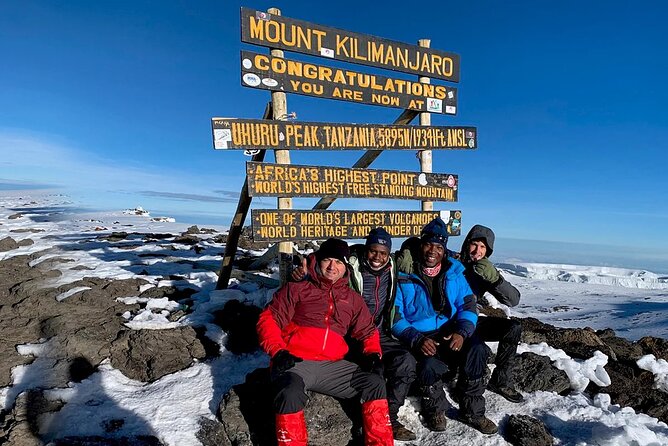
After breakfast, you leave the forested glades and head onto an ascending path. You cross a valley along a steep rocky ridge, then the route turns west into a river gorge before arriving at Shira campsite.
This day is shorter on paper, which is deceptive. The hike distance is about 5 km and walking time is around 4 to 5 hours, but you are gaining altitude from roughly 3,050 m to about 3,850 m. That is a big number in a short time, so pace still matters.
The habitat shifts to moorland, and that change shows up in your senses: thinner air, windier conditions, and a feel of open space. Meals are breakfast, lunch, and dinner.
Practical takeaway: if you tend to “go hard early,” this is where you should resist that instinct. Save your push for later days, especially when the trek turns into the long work near the crater approach.
A few more Moshi trips to compare
- Safari Serengeti And Ngorongoro
★ 5.0 · 288 reviews - Climbing Kilimanjaro – Machame Route
★ 5.0 · 170 reviews - Climbing Kilimanjaro through 7 days Machame Route
★ 5.0 · 151 reviews - Kilimanjaro climb, Lemosho Route (8-day)
★ 5.0 · 148 reviews
Day 3: Shira Plateau toward Lava Tower and Barranco Camp
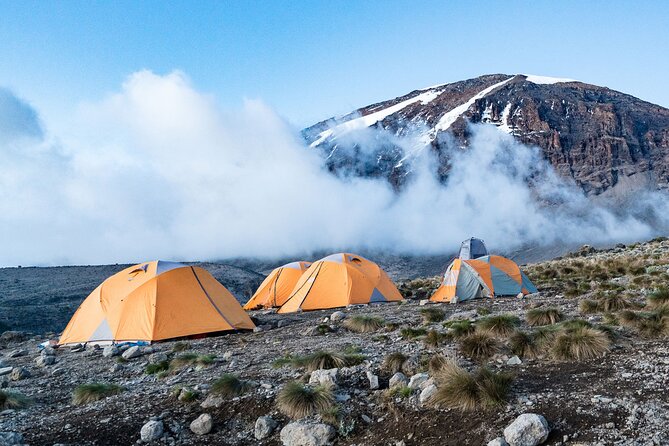
From Shira Plateau, you continue east up a ridge and pass the junction toward the peak of Kibo. Then your direction shifts south-east toward Lava Tower, known as the Shark’s Tooth, at about 4,650 m.
You then reach another junction leading toward the Arrow Glacier area. After that, the day continues down to Barranco Camp. What I like here is the acclimatization logic: while you end the day around the same elevation as where you started, it is still one of the key preparation days. Your body learns how to handle altitude and effort before the summit workload.
This day runs about 10 km and about 5 to 6 hours, with a habitat change into semi-desert. Elevation sits around 3,850 m up toward 4,000 m by camp. Meals include breakfast, lunch, and dinner.
One scenic note that is worth getting excited about: Lava Tower and the surrounding high zones are where Machame’s drama starts to show. If conditions allow for the optional scramble toward Lava Tower, it is the kind of extra challenge that can feel rewarding, as long as you do not force it when the air is thin.
Practical takeaway: keep your “effort style” consistent. Short, steady steps win more than heroic strides.
Day 4: Barranco Wall and Barafu Camp, where summit angles start
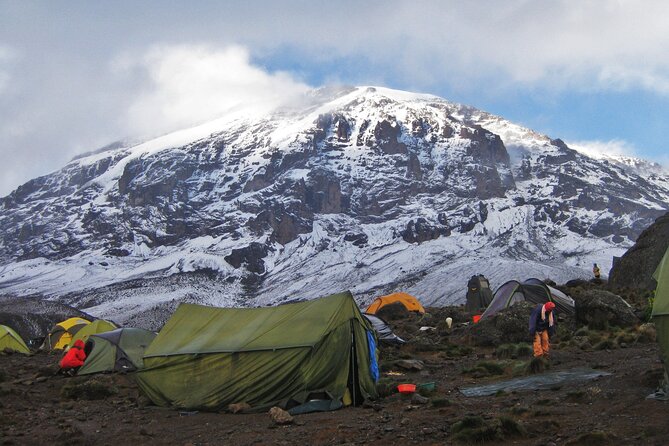
Today is a turning point. You leave Barranco and move toward the steep ridge up the Barranco Wall, reaching about 4,250 m. The route then passes through Karanga Valley around 4,050 m and connects with the Mweka Trail at a junction before continuing up to Barafu Camp.
This is where Machame earns its difficulty rating. The Barranco Wall section is a physical challenge, and it also changes your mental game. You are not just walking, you are climbing something that feels like a wall.
You will reach Barafu Camp at about 4,700 m, after roughly 9 km and 6 to 8 hours of hiking, in alpine desert habitat. This day is also special because you get summit views from multiple angles as you complete the South Circuit.
Meals include breakfast, lunch, and dinner. Camping here with the summit in the distance makes the next day feel real.
Practical takeaway: Barafu Camp is not a place to ignore your body. Eat what you can, rest when offered, and keep your energy for the next late start.
Day 5: Midnight summit bid to Stella Point sunrise
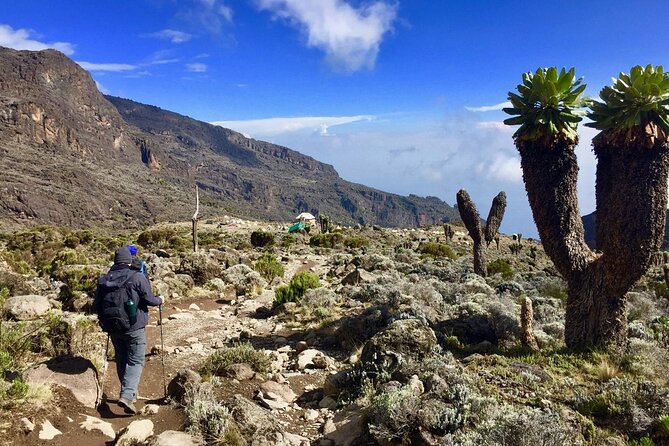
This is the big one. You head out in the very early hours, between midnight and about 2 a.m., climbing between the Rebmann and Ratzel glaciers.
From there, the direction turns northwesterly. You ascend through heavy scree toward Stella Point on the crater rim. This portion is described as the most mentally and physically challenging part of the trek, and I agree with the logic. Heavy scree plus thin air is a tough combo, because it slows you down and makes every step feel louder.
At Stella Point, you stop for a short rest. Then you are rewarded with one of the signature moments of Kilimanjaro, a magnificent sunrise. Faster hikers might see sunrise from the summit, but Stella Point is where the plan makes sure the timing works.
This day is listed as about 6 hours of hiking. Even if you feel strong at the start, treat this as a steady climb, not a race.
Practical takeaway: your goal is to keep moving consistently. If you sprint, you pay later. If you move steady, you get the sunrise.
Day 6: Mweka descent, mud footing, and summit certificates
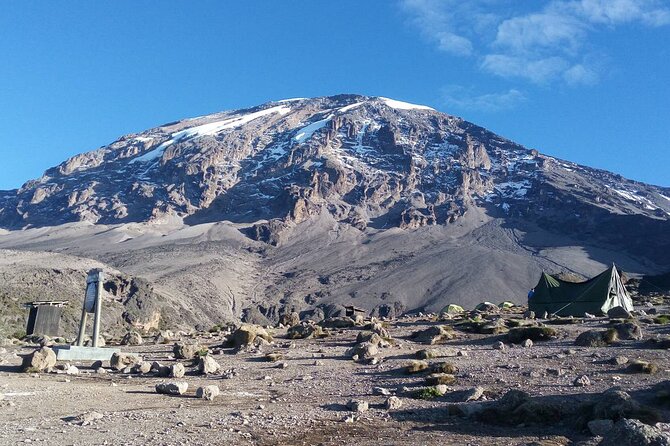
After breakfast, you descend to the Mweka Park Gate to receive your summit certificates. This day is shorter, around 10 km and about 3 to 4 hours of hiking, dropping from roughly 3,090 m down to around 1,680 m into forest habitat.
It can be wet and muddy at lower elevations, so plan for that. Gaiters and trekking poles help here again. The guidance is also practical: at this lower altitude, shorts and t-shirts will probably be enough, while you should keep rain gear and warmer clothing handy in case the weather shifts.
Once you finish at Mweka gate, the Monkey Adventures vehicle waits to drive you back to your hotel in Moshi. The drive is about 60 minutes.
Meals include breakfast.
Practical takeaway: the summit is a win, but descent still matters. Take your time on mud and uneven ground, especially in the final stretch when your focus can drift.
Price and value: what $1,810 covers on Machame
This trek is priced at $1,810 per person for about 6 days. On Machame, that pricing often feels higher than easier routes, and this tour’s list of inclusions explains why.
Included costs are:
- park fees
- professional guide(s)
- chef and cook
- all fees and taxes
- meals for the trek: breakfast 6, lunch 6, dinner 6
In plain terms, you are paying for the full operating machine: access to the park, trained guidance, food handling, and the day-to-day running cost that keeps camps functional.
What is not included:
- visa
- international flights
So the value calculation is not just the mountain itself. It is whether you want your planning to include the practical items that many travelers would otherwise have to sort out once they arrive in Tanzania.
One more detail that matters for value: pickup is offered, and you also get a vehicle transfer back to Moshi after the descent. That reduces friction at both ends of the trek.
Guides, food, and the human side of altitude
The trek runs on teamwork. This operator uses professional guides, plus a chef and cook to manage meals. In the feedback you can see a theme: guides like Paul and Rama are praised for keeping things calm and focused, including during the most demanding summit hours.
That matters because Kilimanjaro is as much a decision-making challenge as a physical one. Good guiding is not only navigation. It is pacing you so you can keep going, watching your limits, and keeping the whole group moving with confidence.
Food support is also a big deal. Meals are included daily, which means you do not have to worry about finding food during a remote trek. It also helps you keep a consistent routine during the days when appetite and energy can fluctuate.
Group size has a maximum of 100 travelers. That number is high enough that you should expect some level of crowding on a popular route, but the trek still functions as a guided experience with a defined camp rhythm.
What to pack and how to prepare using this itinerary’s real demands
You can train for Kilimanjaro in many ways, but you should also pack for the conditions this route creates.
Here are the practical, itinerary-based items to prioritize:
- Gaiters: the itinerary calls out muddy and slippery trail conditions at lower elevations on Day 1 and again on the Mweka descent
- Trekking poles: recommended for slippery sections, especially downhill when your legs get tired
- Rain gear: you are advised to keep it handy, since lower elevations can get wet
- Warm layers: you will likely want warmer clothing too, even if you will be warm elsewhere on the climb
- Light clothing for lower elevations: shorts and t-shirts are probably plenty during the final descent
On summit night, the route involves heavy scree and steep effort toward Stella Point. That means footwear stability matters more than fashion. Keep your steps controlled and make sure your pack weight stays manageable, because your stride turns into survival when the ground is loose.
Finally, remember the time schedule: the summit push starts around midnight to 2 a.m. That is not just a start time, it is a whole-night shift. Plan your mindset for early darkness and slow motion.
Should you book this Machame 6-day climb with Spirit of Kilimanjaro?
Book it if you want:
- the Machame route with a South Circuit feel and an Mweka descent
- a trek built around acclimatization pacing, not just maximum altitude goals
- early summit timing aimed at sunrise at Stella Point
- meals, park fees, and guidance handled as part of a full package
- pickup and a return drive to Moshi after you finish
Skip it, or at least reconsider, if:
- you know you dislike steep, rocky trekking and scree
- you are sensitive to crowds on popular routes
- you are trying to do Kilimanjaro on a tight budget and want a simpler, less expensive route
If you match the “adventurous trekker with some hiking or backpacking experience” profile, this itinerary looks like a solid, well-run way to climb Kilimanjaro through varied terrain and end with the sunrise memory you came for.
Just posted around Moshi
- machame route★ 5.0 · 16 reviews
- Kilimanjaro Climbing Umbwe Route★ 5.0 · 3 reviews
- Wildlife Extravaganza: Manyara, Tarangire & Ngorongoro in 3 Days★ 5.0 · 3 reviews
- Mt Kilimanjaro 6 days Marangu route hike★ 5.0 · 3 reviews
- 3 Days Private E-Bike Tour in West Kilimanjaro★ 5.0 · 3 reviews
- West Kilimanjaro cycling Adventures★ 4.5 · 8 reviews
- Kilimanjaro Climb • Marangu Route ~ 9 Day★ 5.0 · 4 reviews
- Private Cycle to Kilimanjaro Bike Park Safari★ 5.0 · 6 reviews
Kilimanjaro Climbs, compared.
8-Day Small-group Lemosho Kilimanjaro Summit Trekking
Read our review →
5 Days Best of Tanzania Luxury Safari Northern Circuit
Read our review →
Climbing Kilimanjaro through 7 days Machame Route
Read our review →