
Reviewed · KILIMANJARO CLIMBS
5 Days Marangu Route – Mount Kilimanjaro Trek
Uhuru Peak is a grind, in the best way. This 5 day Marangu route with Rupia Adventure is built around classic hut-to-hut hiking, starting in rainforest and ending with a midnight climb to the rim and summit. You get a small group vibe (up to 15), airport to hotel transfers, and a schedule that makes acclimatization part of the plan, not an afterthought.
What I like most is the clear progression through the zones. You move from dense forest to higher heath and moorland, then into the Kibo area, with real altitude milestones like Horombo Hut at 3,700m and the summit landmarks at 5,220m, 5,681m, and 5,895m. Another strong point is the guide-led support right away, including an equipment check on the first day and the option to rent missing gear before you start walking.
One consideration is that the summit day is genuinely hard and time-sensitive. You start the final ascent around midnight, pass Hans Meyer Cave at 5,220m, reach Gillman’s Point at sunrise, then push on to Uhuru Peak at 5,895m. If you’re not comfortable with cold night hiking and a steep, long grind, you should think carefully about your fitness and acclimatization.
In This Review
- Quick reasons this Marangu climb works well
- How the 5 Days Marangu Route fits into a 7 day trip
- Starting with Kilimanjaro airport pickup and an equipment check
- Day 2: Marangu Gate paperwork, rainforest hiking, Mandara Hut, Maundi Crater
- Day 3: Timberline to heath and moor zone, then Horombo Hut at 3,700m
- Day 4: Last Water point, the saddle, and reaching Kibo Hut
- Day 5: Midnight start to Hans Meyer Cave, Gillman’s Point, and Uhuru Peak
- Day 6: Heath and moor zone down to Mandara Hut, then rainforest back to the gate
- Day 7: Moshi time, souvenirs, and optional safari or Zanzibar add-ons
- Price and value: what $1,500 includes and what it means on the ground
- Who should choose this Marangu climb, and who should think twice
- How guides and team energy shape your summit day
- FAQ
- FAQ
- How long is the whole trip, including arrival and departure?
- Where do you start, and how do you get to the trek?
- Is airport or local pickup included?
- What route is used to reach Uhuru Peak?
- How many people are in a group?
- Do you handle equipment if something is missing?
- Do you get a ticket on your phone?
- What happens if weather is poor or the minimum number of travelers is not met?
- Should you book this 5 Days Marangu Route trek with Rupia Adventure?
Quick reasons this Marangu climb works well
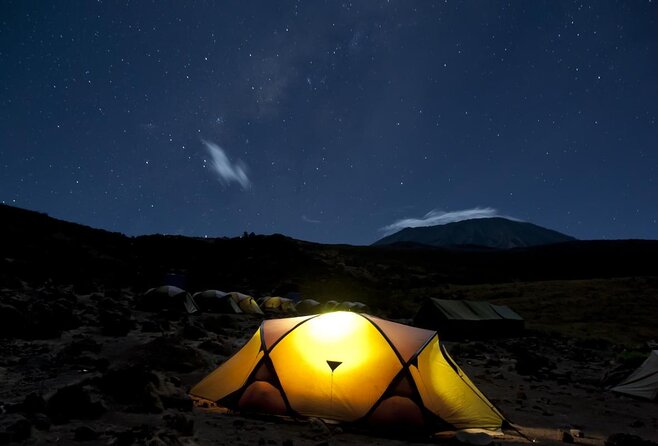
- Marangu route hut stages: Mandara, Horombo, and Kibo Hut give you predictable “rest stops” across the climb.
- Acclimatization built into the route: The schedule gives you time in the heath and moor zone before the summit push.
- A focused summit timeline: Start around midnight, sunrise at Gillman’s Point, summit at Uhuru Peak.
- Support from pickup through the gate: Airport to hotel transfers and a return to Moshi after you finish at the Kilimanjaro gate.
- Small group limit: Up to 15 travelers, which usually means more manageable guiding.
- Gear help before Day 2: Equipment check on arrival, with rentals possible if something is missing.
How the 5 Days Marangu Route fits into a 7 day trip
This is sold as a 5 day Marangu route, but the whole experience runs about 7 days once you add arrival and departure. Day 1 centers on getting you settled in the Moshi area and prepared to climb. Day 2 through Day 6 are the walking and hut nights that make up the “5 day” trekking rhythm. Day 7 is deliberately lighter so you can recover, shower, and handle your flight.
That pacing matters more than it sounds. Kilimanjaro is not just about walking hours, it is about when you walk those hours. The Marangu profile uses a gradual step up, then asks for the big effort on the final night. You’ll feel it most on the transition days where the vegetation thins out and the air gets thinner.
Also note the route is fixed. You cannot swap to a different corridor mid-trip based on how you feel, because the climb follows the established hut-to-hut flow. If you like clear expectations and a structured plan, this kind of schedule is comforting.
More Hiking Trips in Arusha
- 8-Day Small-group Lemosho Kilimanjaro Summit Trekking
★ 5.0 · 186 reviews - Mountain Kilimanjaro Day Hike
★ 5.0 · 102 reviews - Private Full Day Hiking Experience to Marangu Route
★ 5.0 · 61 reviews
Starting with Kilimanjaro airport pickup and an equipment check
Your trip begins with pickup at Kilimanjaro International Airport, then transfer to a hotel in the Moshi area. From there, you meet your guide and do an equipment check. This is one of the practical parts I appreciate, because it reduces last-minute stress.
If something is missing, you can rent gear on Day 1. That matters because many people arrive thinking they are packed perfectly, then discover a gap like cold-weather layers or rain protection. Renting on arrival can be a lifesaver if you travel light.
One more small detail to keep in mind: your overnight base may be in the Moshi area, and the description also references Panama Hotel or Mvuli Hotel in Arusha (or an alternative). The key point is that Day 1 is meant to get you aligned with the climb start, with a guide briefing and an organized start the next morning.
Day 2: Marangu Gate paperwork, rainforest hiking, Mandara Hut, Maundi Crater
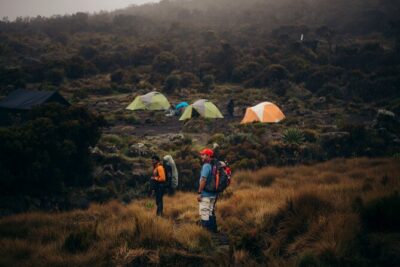
Day 2 starts with the formalities at the Marangu Gate. Once the paperwork is done, you step into dense rainforest. This is where the Marangu route feels most like a “real trek” instead of a high-altitude mission. The trail through thick vegetation is slower and steadier, and you may even catch glimpses of primates along the way.
You’ll reach Mandara Hut after hiking through the rainforest. Then comes the mid-day rhythm shift: rest, rehydrate, and get ready for a day that starts in greenery and ends in viewpoint country. From Mandara, your guide can take you to Maundi Crater for wide views toward the Kenyan interior.
What makes Day 2 valuable is not the altitude number. It’s the mental reset. The rainforest stage gives your body a warm-up, and it gives your group time to find its hiking tempo before the climb turns more demanding.
Day 3: Timberline to heath and moor zone, then Horombo Hut at 3,700m
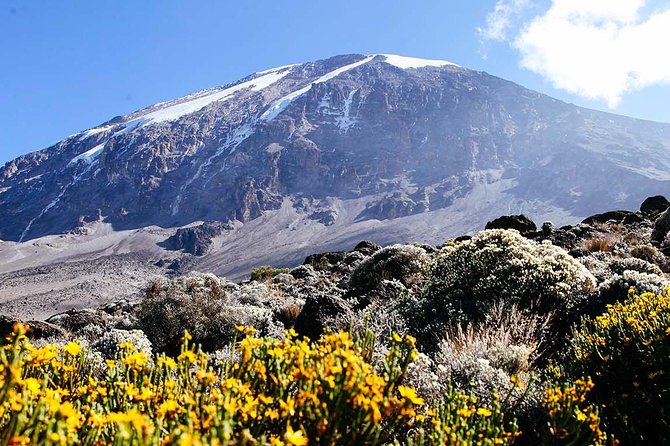
Day 3 begins early with breakfast, then you climb out of the earlier forest feel. Shortly after Mandara Hut, you reach the timberline. From there, the route shifts into heath and moor zone, which means thinner air, more exposure, and a different kind of ground underfoot.
After about 4 to 6 hours, Horombo Hut comes into view at 3,700m. From the hut, you get fantastic views across Mawenzi and Kibo, plus the wide Masai steppe below. This is the day where the mountain starts to look less like a wall and more like a system of peaks and layers.
Why this stage matters is acclimatization by design. You are not rushing straight to the highest zones. You spend time in the zone transition, so your body has a chance to adjust before you face the longer, tougher move to the Kibo area.
Practical note: the day starts early, and the effort can feel uneven because you’re crossing terrain with changing vegetation. Wear what allows you to adjust warmth as conditions shift.
More Kilimanjaro climbs:
- 5 Days Best of Tanzania Luxury Safari Northern Circuit
★ 5.0 · 174 reviews - 7-Day Machame Kilimanjaro Summit Tour from Arusha
★ 5.0 · 125 reviews - 4 days Best experience Kilimanjaro Hike, Serengeti &Ngorongoro
★ 5.0 · 54 reviews - From Arusha/Moshi: Kilimanjaro Hike Marangu Route Day Trip
★ 4.5 · 54 reviews
Day 4: Last Water point, the saddle, and reaching Kibo Hut
Day 4 is described as long and tough, and the wording is fair. The trail is well built, but the day’s profile still asks a lot. You pass the Last Water point, then continue through the area known as the saddle. This is where the terrain becomes close to vegetation less plateau, and it feels like you are moving through open air rather than a corridor of trees.
Your destination is Kibo Hut, usually reached in about 5 to 6 hours. The payoff is that you finally arrive near the summit working zone, with the knowledge that your short window to the top is coming soon.
The schedule also respects the physics of altitude nights. When you arrive at Kibo Hut, you eat early and plan an early night because the summit night will be short and intense. If you’ve never climbed this kind of mountain before, this is the part that surprises people most. You are preparing for the final push, not just “staying warm.”
Day 5: Midnight start to Hans Meyer Cave, Gillman’s Point, and Uhuru Peak
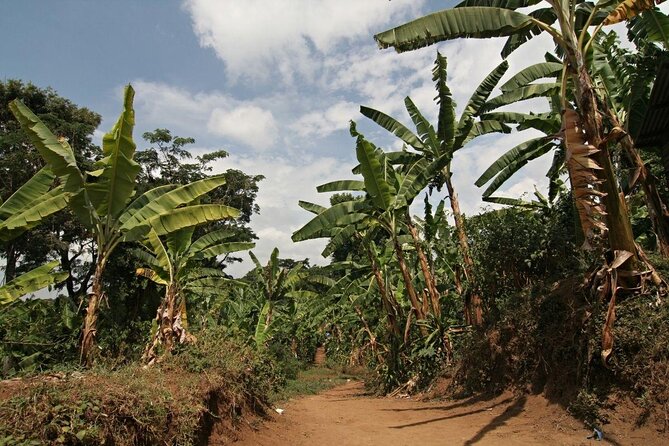
This is the big day. You begin the final ascent around midnight, which is a different kind of challenge than a normal hike. You’ll pass Hans Meyer Cave at 5,220m. From there, the climb continues upward at a steady grind. You don’t just climb higher, you climb colder and more uncomfortable.
At sunrise, you reach Gillman’s Point at 5,681m, the crater rim of Kilimanjaro. From this spot, the sun starts to warm the land, and that shift can feel dramatic after hours in the cold. After another 1 to 2 hours, you reach Uhuru Peak at 5,895m.
Then you turn around. The descent back to Kibo Hut is not a victory lap, but you do get a warm meal waiting for you. After a 1 to 2 hour break, you continue down to Horombo Hut.
The rhythm here is what makes the day manageable. It breaks one huge goal into smaller steps, each with a checkpoint, each with an outcome. Guides often keep the pace controlled, because you want to protect breathing and energy during the long upward stretch.
Day 6: Heath and moor zone down to Mandara Hut, then rainforest back to the gate
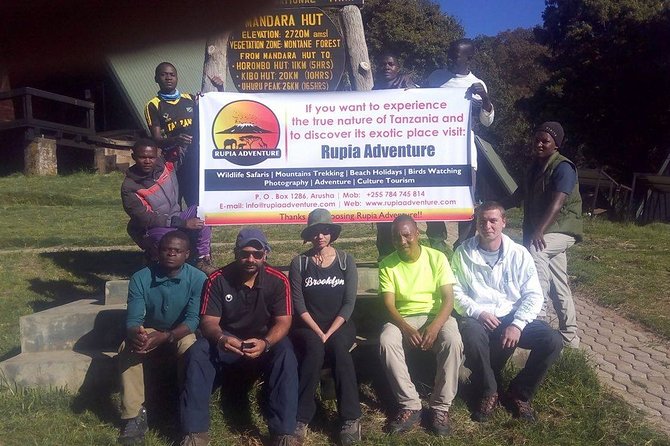
Day 6 is a return journey, but it is still active. You pass back through the heath and moor zone to Mandara Hut at 2,700m, where a warm lunch is waiting. This matters because after the intensity of summit day, warmth and food become part of recovery, not a bonus.
After lunch, you move back into the tropical rainforest. The route continues for a total time of about 6 hours trekking, until you return to the Kilimanjaro National Park Gate at 1,860m.
Once you finish, you say goodbye to the mountain guides and transfer back to your hotel in Moshi. Then you get the well deserved piece that people forget to plan for: a warm, relaxing shower and a chance to actually celebrate your summit success.
This is also a good day to treat your body gently. You’re descending, which means legs do more work than you think, especially after nights on the mountain.
Day 7: Moshi time, souvenirs, and optional safari or Zanzibar add-ons
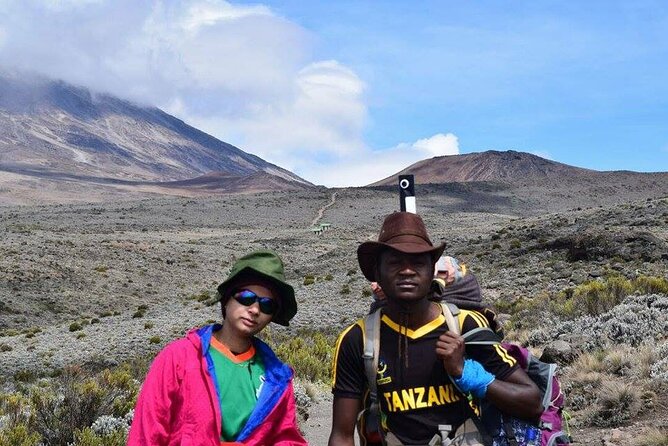
Day 7 is left free, which I consider a smart choice. After a summit push and a full descent, you need time to wind down. Depending on flight times, you can explore Moshi town and grab souvenirs before heading to the airport.
If you want to extend your Tanzania trip, safari and Zanzibar add-ons are available. That turns your Kilimanjaro climb from a single event into a longer arc of East African travel, with a chance to see savanna wildlife and then a different coast vibe.
Even if you do not add on anything, Day 7 helps you avoid the common mistake of booking your flight too soon after the trek.
Price and value: what $1,500 includes and what it means on the ground
At $1,500 per person, this is not a budget experiment. You are paying for the full structure that keeps a trek like this from turning chaotic: airport and hotel transfers, trained guiding, hut nights, and a route that follows a defined schedule from gate to gate.
A big value factor is the equipment check on Day 1 with possible rentals. That reduces the chance you lose time later on, or end up with gear problems that make the cold and rain harder than they should be. Another value factor is the small group limit of up to 15 travelers, which usually supports smoother guiding and better pacing.
You are also paying for logistics that you cannot easily DIY, especially the organized transition from day to day and the summit window timing. On Kilimanjaro, timing is everything, because you start the ascent around midnight and reach specific checkpoints in a predictable order.
If you compare carefully, the value comes down to this: you are buying reduced risk and reduced hassle, not just the view at the top.
Who should choose this Marangu climb, and who should think twice
Most travelers can participate, but Kilimanjaro still filters for a few key qualities. This route includes a demanding summit day that starts around midnight and climbs to Uhuru Peak. You do not need to be an athlete, but you should be comfortable with steep night hiking, cold conditions, and a long day even after you summit.
This Marangu route also suits people who like the idea of hut nights instead of camping. If you prefer defined rest stops and predictable facilities over tent life, Marangu tends to feel more approachable.
If you are the type who panics at uncertainty, the structure here can help. The daily plan is clearly laid out, and you have viewpoints and landmarks built into the experience, like Horombo Hut at 3,700m and the crater rim at Gillman’s Point.
The main thing to consider is whether you can handle the physical and mental demands of the final ascent. If you know you struggle with cold, or you have limited endurance for steep uphill at altitude, you should take that seriously before you commit.
How guides and team energy shape your summit day
One reason climbs can feel wildly different is the team. In the stories connected to Rupia Adventure, certain guide names come up repeatedly, including Meshack, Maziku, Franky, John, and Julius. While every mountain experience has its own mood, the common thread is that the guides bring mountain knowledge and keep morale steady.
On summit night, that matters. When it is cold and you are tired, the wrong kind of pace can burn you out early. A strong guide can help you keep moving efficiently, protect breathing, and make sunrise and summit feel like a series of steps rather than one endless wall.
Even the earlier days benefit. When the guide can interpret the terrain, time breaks well, and explain what to watch for, you spend more energy walking and less energy guessing.
FAQ
FAQ
How long is the whole trip, including arrival and departure?
The trek is 5 days on the mountain, with the overall experience running about 7 days, including transfers and a free Day 7 before your flight.
Where do you start, and how do you get to the trek?
You are picked up at Kilimanjaro International Airport and transferred to a hotel in the Moshi area. From there, you are collected to go to Marangu gate after breakfast on Day 2.
Is airport or local pickup included?
Yes. Pickup is offered, and you are picked up at Kilimanjaro International Airport on Day 1.
What route is used to reach Uhuru Peak?
This is the Marangu route. You hike through rainforest to Mandara Hut, then onward to Horombo Hut, then Kibo Hut, and the summit stage ends at Uhuru Peak.
How many people are in a group?
The group maximum is 15 travelers.
Do you handle equipment if something is missing?
On Day 1, there is an equipment check with your guide, and missing mountain gear can be rented on that day.
Do you get a ticket on your phone?
The tour includes a mobile ticket.
What happens if weather is poor or the minimum number of travelers is not met?
The experience requires good weather. If it is canceled due to poor weather, you are offered a different date or a full refund. If it is canceled because the minimum number of travelers is not met, you are offered a different date or experience, or a full refund.
Should you book this 5 Days Marangu Route trek with Rupia Adventure?
If you want a structured Kilimanjaro climb with hut nights and a clear summit plan, this can be a good fit. Choose it especially if you value organized support (pickup, guide briefings, gear check, and possible rentals) and you want a group size that stays manageable. If summit night and altitude hardship are things you are unsure about, slow down and match the route to your fitness and comfort with cold, steep hiking.
More Hiking & Trekking in Arusha
- 4 Days Mount Meru Trekking
★ 5.0 · 55 reviews - 6 Days Serengeti Safari(hiking waterfalls &coffee tour)
★ 5.0 · 48 reviews - Arusha: Napuru Waterfalls Guided Hike
★ 4.8 · 39 reviews - Mount Kilimanjaro Day Hike Through Marangu Route to Mandara Hut
★ 5.0 · 37 reviews
Just posted around Arusha
- 8 Days Serengeti Migration safari★ 5.0 · 11 reviews
- tarangire & ngorongoro 2 days tour★ 5.0 · 14 reviews
- serengeti, ngorongoro & tarangire 4 days private tour★ 5.0 · 18 reviews
- tarangire, ngorongoro & lake manyara park 3 days private tour★ 5.0 · 11 reviews
- serengeti & ngorongoro 3 days private tour★ 5.0 · 15 reviews
- climb the KILIMANJARO via Lemosho route★ 5.0 · 4 reviews
- Mt. Kilimanjaro: Shira plateau to Cathedral point 3872m Day hike★ 5.0 · 7 reviews
- Kilimanjaro Waterfalls Hike & Moshi Hot Springs Day Trip Tour★ 5.0 · 4 reviews
Kilimanjaro Climbs, compared.
8-Day Small-group Lemosho Kilimanjaro Summit Trekking
Read our review →
5 Days Best of Tanzania Luxury Safari Northern Circuit
Read our review →
Climbing Kilimanjaro through 7 days Machame Route
Read our review →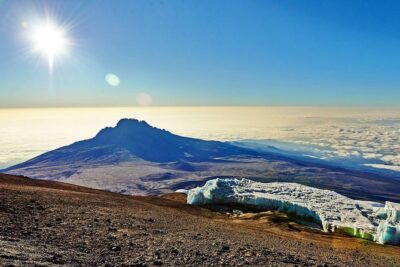
Browse the lists this tour appears in