Reviewed · KILIMANJARO CLIMBS
5 Day Mount Kilimanjaro Climbing via Marangu Route
Kilimanjaro in five days is a sprint. This 5-day climb via the Marangu route with Kentau Safaris gives you hut bunks instead of camping and a tight, attentive crew. The tradeoff is that altitude acclimatization is tough on this shorter itinerary, even though the trail profile feels gentler than some other routes.
Marangu is the oldest and most established route on Kilimanjaro, often called the Coca-Cola route. It is straightforward, but it is also less scenic because you climb and descend along much of the same path.
You will start from Moshi and spend nights in dorm-style huts with lots of communal life. You get mattresses and pillows, but you still need a sleeping bag, and the toilets range from basic flushing options lower down to long drops and buckets at Kibo Hut.
In This Review
- Key things I found most useful about the experience
- Marangu Route: why the Coca-Cola path is a popular Kilimanjaro option
- Price and what you get for $1,650 in Moshi
- Hut life on Kilimanjaro: dorm bunks, mattresses, and changing toilets
- Day 1 from Moshi to the Kilimanjaro National Park Gate: rainforest, permits, and slippery feet
- Day 2 into heathland and moorlands: Mawenzi views and Horombo Hut chills
- Day 3 across the saddle day: moonscape walking and summit preparation
- Day 4 midnight start to Gillman’s Point: the mental hardest day
- Day 5 down to Moshi via Mandara Huts: ceremony, steep mud, and certificates
- Crew, safety, and solo-friendly comfort that shows up in real life
- Who should book this 5-day Marangu climb?
- Should you book Kentau Safaris for the 5-day Marangu route?
- FAQ
- What kind of accommodation do you get on the Marangu route?
- Are meals included in the price?
- What is included with the tour price?
- What should I bring for the trail conditions?
- What is not included?
- How many people are in the group?
Key things I found most useful about the experience
- Huts instead of camping: dorm-style bunk beds at Mandara, Horombo, and Kibo, with communal dining.
- A realistic schedule for the mountain: steady altitude gain most days, with the toughest push happening early Day 4.
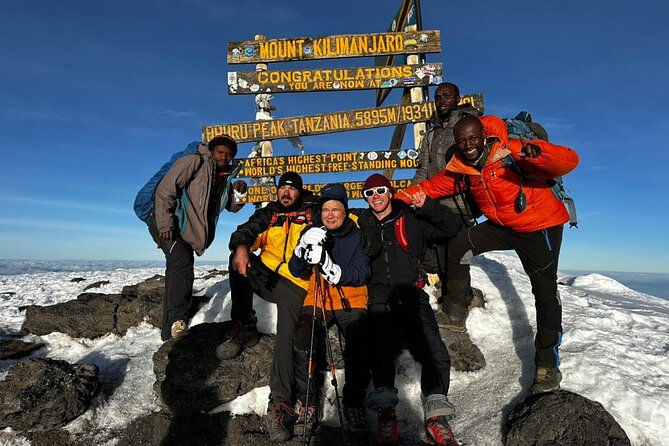
- Sunrise timing near Gillman’s Point: you rest on the crater rim, where the sunrise is the big moment.
- Mud-proof planning matters: slippery rainforest sections and a wet, steep Day 5 make gaiters and trekking poles a smart call.
- Good value if you want structure: transfers, park fees, meals, hiking and safety equipment, and hut accommodation are included.
- Crew support feels like the difference: multiple solo and group accounts highlight comfort, safety, and good organization.
Marangu Route: why the Coca-Cola path is a popular Kilimanjaro option
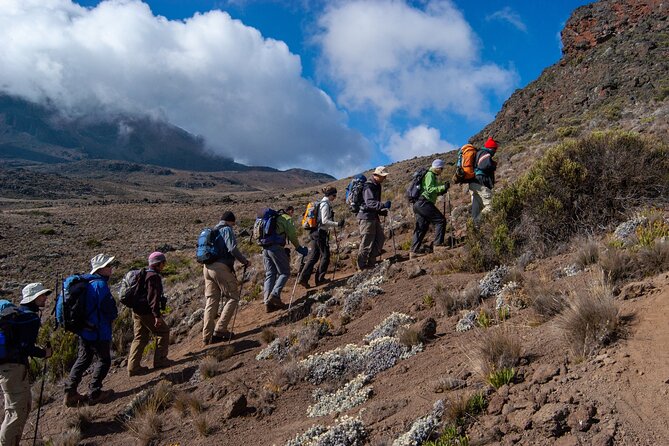
The Marangu route is the classic way up Kilimanjaro for people who want a clear plan and built-in comfort. It is the oldest route, with established huts at night, and it generally has a smoother climb compared with the steeper, more technical profiles on other paths.
Still, gentler does not mean easy. The mountain does not care that the trail is gradual. On a 5-day itinerary, you can end up feeling like you are always slightly behind your breathing. That is the big consideration: the climb gives you less time to adjust to altitude than longer routes do.
The route also approaches from the southeast, and it has an important practical downside: you will walk up and down along much of the same corridor. That can make it feel a bit repetitive compared with loop routes where each day looks different.
More Kilimanjaro climbs:
- Kilimanjaro climb by Lemosho Route (7-day)
★ 5.0 · 651 reviews - Kilimanjaro climb, Machame Route (7-day)
★ 5.0 · 262 reviews - Kilimanjaro Climbing Lemosho Route 8 Days.
★ 5.0 · 186 reviews
Price and what you get for $1,650 in Moshi
At $1,650 per person, this is not a budget hike. It is also not an all-inclusive fantasy package, either. The value really comes from what is included and what is not.
Included items that matter:
- Transfers and trailhead access: you get transport to the Kilimanjaro National Park gate and back to Moshi.
- Entry and park fees: you have admission ticket coverage for the route.
- Hut accommodation on the mountain: you sleep in the dorm huts.
- A climbing crew: guides and the support team are part of the plan.
- Meals: dinner (4), lunch (5), and breakfast (4).
- Hiking and safety equipment: you are not walking into this totally empty-handed.
- Private transportation: you do not have to piece together local logistics.
Not included items you must budget for:
- Tips for the crew
- Visa
- Internal and external flights
So here is my practical take on value: if you want the mountain handled for you, with structure, meals, and hut lodging, the package makes sense. If you already have most gear and you would prefer to DIY logistics, you might find cheaper approaches, but you will be trading away convenience and coordination.
Hut life on Kilimanjaro: dorm bunks, mattresses, and changing toilets
On Marangu, you are not camping. You are sleeping in dormitory style huts with a lot of shared space and early mornings.
Here is what to expect:
- Mandara and Kibo huts: each has 60 bunk beds.
- Horombo hut: has 120 bunk beds.
- You are provided mattresses and pillows, but you still need a sleeping bag.
- The huts include communal dining halls and basic washrooms.
The bathroom situation is part of your planning. Lower down, you can find flushing toilets and running water. Higher up, at Kibo Hut, you are dealing with long drop toilets and bucket water. That is not dramatic, but it is real. Pack like you are not going to have a hotel bathroom situation.
Also, dorm bunks change your sleep strategy. You might get noise, and you will probably wake for early departures. A warm layer plus your sleeping bag matters more than you might expect.
Day 1 from Moshi to the Kilimanjaro National Park Gate: rainforest, permits, and slippery feet
Day 1 starts with a drive from Moshi through the Village of Marangu to the Kilimanjaro National Park gate. You will wait for permits to be issued, and that means you see a lot of the logistics happening around you.
Once you are on the trail, you are in rainforest scenery with windy, lower-elevation paths. This is a quiet trap: even though this day looks like the “easy start,” the trail can be muddy and slippery.
Two specific gear choices I would not skip:
- Gaiters: helps keep mud and grit off your boots and lower legs.
- Trekking poles: makes the footing more stable and saves energy on uneven ground.
You are climbing from about 1,830 m to 2,740 m, and it is roughly a 5-hour hiking day. The goal is steady movement, not speed.
A few more Moshi trips to compare
- Safari Serengeti And Ngorongoro
★ 5.0 · 288 reviews - Climbing Kilimanjaro – Machame Route
★ 5.0 · 170 reviews - Climbing Kilimanjaro through 7 days Machame Route
★ 5.0 · 151 reviews - Kilimanjaro climb, Lemosho Route (8-day)
★ 5.0 · 148 reviews
Day 2 into heathland and moorlands: Mawenzi views and Horombo Hut chills
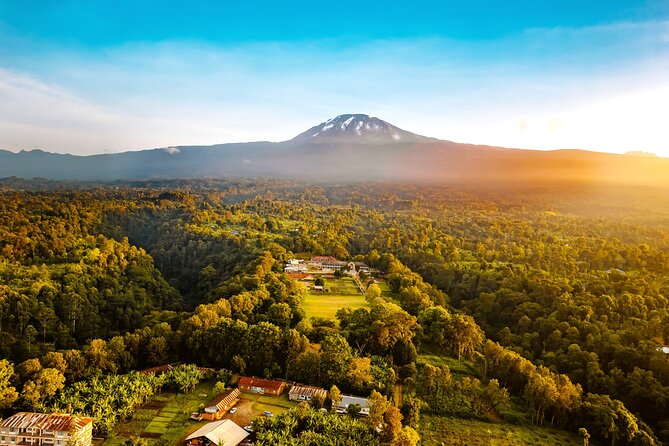
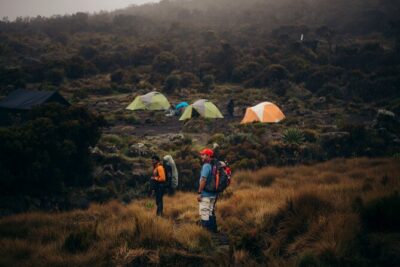
Day 2 is a good example of why Marangu is often described as easier. You start by leaving the rainforest behind, then you move into heathland and moorland zones.
Vegetation changes as you climb. You may spot giant lobelias and groundsels, and the upper moorland turns into more open, shrub-dotted terrain.
You also get an early reward on this climb: during a lunch stop midway, the views of Mawenzi can really hit. That is your reminder that you are not just walking uphill. You are moving through distinct mountain zones.
By late afternoon, you arrive at Horombo Huts, and temperatures begin to drop. Expect cold sooner than you want, especially if the weather turns.
This is the day you want to keep your pace calm. You are going from about 2,740 m up to 3,690 m, about 7 hours of hiking.
Day 3 across the saddle day: moonscape walking and summit preparation
Day 3 is where the mountain starts to feel surreal. You move through dwindling heathland, and it blends into a moonscape as you enter the saddle connecting Mawenzi and Kibo.
The saddle is big, and it matters emotionally as well as physically. You get lunch there, and later you cross it while thinking about the summit climb that is about to begin. Even without fancy strategy talk, that mental setup helps.
This day runs about 6 hours, rising from roughly 3,690 m to 4,695 m.
One practical note: since it feels more barren, you may also feel more exposed to wind and cold. Bring layers that you can manage without wrestling with everything in thin air.
Day 4 midnight start to Gillman’s Point: the mental hardest day
Day 4 is the summit day, and it is also the day you remember for the rest of your life. The schedule starts early, between midnight and 2 a.m., and that alone is enough to turn this into a serious test.
This portion is described as the most mentally and physically challenging. That matches what you should expect on any summit push: you are tired, it is cold, the climb feels long, and your breathing is never fully comfortable.
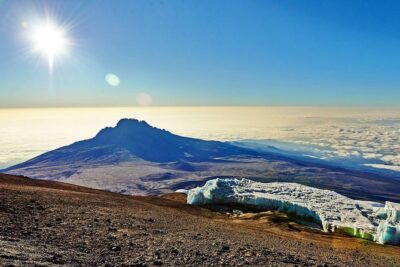
On the way up, you move in switchbacks through heavy scree and possibly snow toward Gillman’s Point on the crater rim. This is where the sunrise becomes a real target, not just a nice idea.
You take a rest at Gillman’s Point and get the chance at the most magnificent sunrise on the route. Faster hikers may be able to view it from higher up, but the crater rim rest is still a major moment.
Afterward, you descend back down toward Horombo Huts, ending around 3,690 m. The hiking time listed for the day is about 7 hours, so you are moving through a long window even if you are not walking nonstop.
If there is one day to take seriously, it is this one. Start warm, move efficiently, and do not force pace when your body asks you to slow down.
Day 5 down to Moshi via Mandara Huts: ceremony, steep mud, and certificates
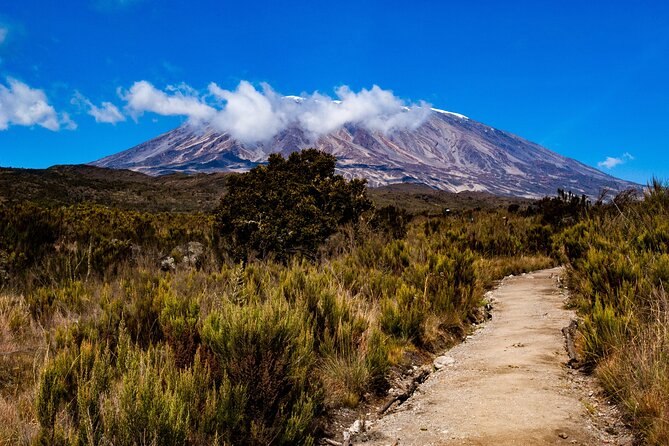
After your big summit effort, Day 5 is about descent and closing the loop.
You start with breakfast and a heartfelt ceremony of appreciation and team bonding with your crew. This matters more than it sounds. You spend days together, and on summit day you rely on each other. The closing moment is part of how the whole experience stays human, not just mechanical.
Then you descend down stopping at Mandara Huts for lunch. Your crew is also leaving you here, so remember to tip your guides, cooks, and porters since they are not going all the way back to Moshi with you.
The last descent can be muddy and steep, and it gets warmer. That is the day your gear matters again. Gaiters and trekking poles are just as useful on the way down as they were on Day 1.
When you reach the Marangu Park Gate, you receive your summit certificates. From there, a vehicle picks you up and drives you back to your hotel in Moshi, about 45 minutes.
Crew, safety, and solo-friendly comfort that shows up in real life
This package is built around a climbing crew, and the vibe matters. I like that the overall experience is described as well organized and that the guides are attentive and experienced. When you are at altitude and moving in the dark, you do not want guesswork.
There is also a strong theme of comfort for solo climbers, including solo women hiking with a group of male crew members. That kind of trust comes from professionalism and clear support roles, not from luck.
Even if you are not traveling alone, a good crew keeps the experience grounded. They help you manage pacing, keep you calm during rough moments, and make the huts and meals feel organized rather than chaotic.
Who should book this 5-day Marangu climb?
This 5-day Kilimanjaro route suits you best if:
- You want hut accommodation rather than camping.
- You prefer a more established route with clear logistics.
- You are willing to work hard, even if the trail is not the steepest.
- You can handle cold starts, especially around the early summit push.
- You have moderate physical fitness and you train before you come.
It may not be the best fit if you strongly want more time for altitude acclimatization. On this schedule, the mountain can feel demanding. If you are altitude sensitive, you might consider longer options, but if you do go Marangu, take the pacing and hydration seriously.
Should you book Kentau Safaris for the 5-day Marangu route?
If you want structure, meals, hut lodging, and a crew that takes care of the key mountain details, I think this is a solid way to do it. The included transfers, park fees, and equipment reduce friction in Moshi, and the hut setup makes the nights more manageable than tent camping for many people.
The decision hinges on your priorities. If your priority is the most scenic route with the most variety, Marangu can feel repetitive since you go up and down along the same corridor. If your priority is an established, guided, hut-based climb with a dramatic sunrise moment and a real summit push, this is a strong match.
My practical recommendation: if you book, commit to the basics. Train, bring a quality sleeping bag, and pack for mud and cold. The mountain rewards planning.
FAQ
What kind of accommodation do you get on the Marangu route?
You sleep in dorm-style huts with bunk beds. There are 60 bunk beds at Mandara and Kibo Huts, and 120 bunk beds at Horombo Hut. Mattresses and pillows are provided, but you still need a sleeping bag.
Are meals included in the price?
Yes. Dinner is included for 4 nights, lunch for 5 days, and breakfast for 4 days.
What is included with the tour price?
The package includes transfers to the trailhead, entry to Kilimanjaro National Park, all fees and taxes, private transportation, hiking and safety equipment, hut accommodation, and a climbing crew.
What should I bring for the trail conditions?
The climb can be muddy and slippery, especially on the lower trail sections and again on the Day 5 descent. Gaiters and trekking poles are highly recommended. You also need a sleeping bag for the huts.
What is not included?
Tips for the crew, visa, and internal and external flights are not included.
How many people are in the group?
The tour lists a maximum group size of 15 travelers.
Just posted around Moshi
- machame route★ 5.0 · 16 reviews
- Kilimanjaro Climbing Umbwe Route★ 5.0 · 3 reviews
- Wildlife Extravaganza: Manyara, Tarangire & Ngorongoro in 3 Days★ 5.0 · 3 reviews
- Mt Kilimanjaro 6 days Marangu route hike★ 5.0 · 3 reviews
- 3 Days Private E-Bike Tour in West Kilimanjaro★ 5.0 · 3 reviews
- West Kilimanjaro cycling Adventures★ 4.5 · 8 reviews
- Kilimanjaro Climb • Marangu Route ~ 9 Day★ 5.0 · 4 reviews
- Private Cycle to Kilimanjaro Bike Park Safari★ 5.0 · 6 reviews
Kilimanjaro Climbs, compared.
8-Day Small-group Lemosho Kilimanjaro Summit Trekking
Read our review →
5 Days Best of Tanzania Luxury Safari Northern Circuit
Read our review →
Climbing Kilimanjaro through 7 days Machame Route
Read our review →