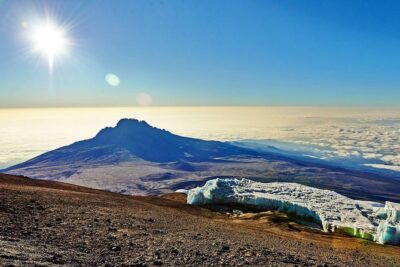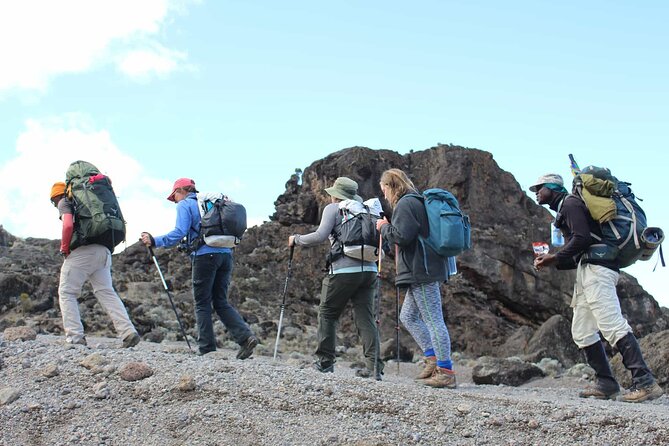
Reviewed · KILIMANJARO CLIMBS
10 Days Machame Route Kilimanjaro Climb
Kilimanjaro rewards patience, and this Machame trek is built for it. I love the way the route mixes long acclimatization days with dramatic high-altitude scenery, so you are working smart on the climb. I also like the safety net built into the trip, including emergency oxygen, oximeters, and a Flying Doctors insurance plan. The one real drawback to plan for is the effort, Machame is steeper and longer hiking days than gentler options, so you should come in with real hiking stamina.
Moshi is the starting point, and you get a smooth buffer before the mountain work begins. Airport pick-up takes you to Bristol Cottages or Parkview Inn, then you get a brief orientation and equipment check before heading to the Machame Gate. From there, you spend days moving through thick forest, moorlands, and the high-altitude desert before the early-morning summit push.
You should also know the summit day is not a relaxed hike, it is a midnight start and a long, hard climb to Uhuru Peak at about 5,895 m. If the idea of steep sections and cold, thin air makes you nervous, you may want to adjust your expectations and training plan early, not on Day 7.
In This Review
- Key things that make this Machame climb worth your attention
- Machame Route Mount Kilimanjaro: what you are really signing up for
- Day 1 in Moshi: airport pick-up, hotel reset, and zero-pressure breathing time
- Day 2 in Moshi: orientation, equipment check, and the town tour that helps you relax
- Day 3: Machame Gate to Machame Camp through thick tropical forest
- Day 4: Shira Plateau acclimatization with moorlands, streams, and big Kilimanjaro views
- Day 5: up to 4,250 m to Barranco, plus the up and down that can wear you out
- Day 6: Barranco Wall climb (not technical) and the Kibo South Circuit day
- Day 7: Barafu Camp, an exposed ridge staging point for the summit push
- Day 8: midnight start to Stella Point and Uhuru Peak at about 8 a.m.
- Day 9: the steep, possibly slippery Mweka Gate descent with picnic lunch
- Day 10: transfer out of Moshi, or continue the safari and Zanzibar path
- Price and value: what $3,025 per person really covers
- Who this Machame climb is best for
- Should you book this 10-day Machame climb with Real Life Adventure Travel?
- FAQ
- What city do you start from on this Kilimanjaro climb?
- How long is the Machame route climb?
- Is airport pick-up included?
- What hotel options are used in Moshi?
- What route is used to reach the summit and return?
- What time does the summit day start, roughly?
- What is included in the price?
- What is not included?
- What fitness level is recommended?
- Is free cancellation available?
Key things that make this Machame climb worth your attention
- Machame ascent, Mweka descent: Classic combo, with a steady build upward and a defined end at Mweka Gate.
- Acclimatization is not an afterthought: You gain height, then come back down in a controlled way during the Shira and Barranco days.
- Safety equipment is part of the package: Oxygen, oximeters, and even a hyperbaric chamber are listed as included.
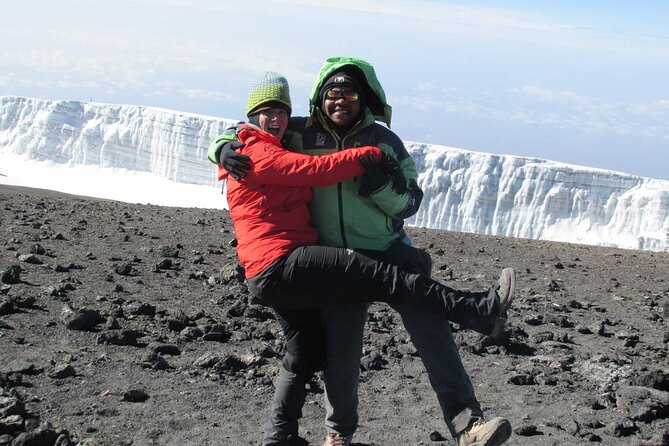
- You get a real crew experience: Your guides and porters are central to the trip, and names from past climbers include Freddie, Hans, and Wilfred.
- Summit morning timing is early: You leave Barafu around midnight for a sunrise-style arrival around 8 a.m.
- Meals and water support you on the trail: Boiled or filtered water and multiple breakfast, lunch, and dinner meals are included.
Machame Route Mount Kilimanjaro: what you are really signing up for
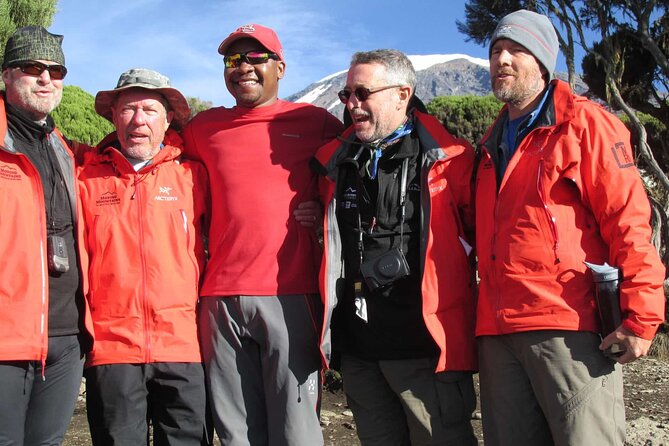
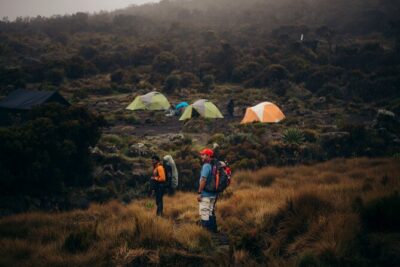
The Machame route is popular for a reason. The big story is variety. You do not just walk uphill and call it a day. You move from tropical forest into moorland, then higher into an alpine zone that starts to look like a rocky, wind-swept desert with grasses and lichens doing most of the surviving.
Machame is also steeper and more demanding than the smoother, more direct routes. That is not meant to scare you, it is meant to set you up for success. If you like a challenge and you are the type who trains for big days, this route fits. If you want minimal effort and lots of flat walking, you may feel like you are constantly paying for altitude.
One more detail that matters for your planning: this climb approaches the summit from the southwest and then descends via the Mweka route. That means you are building momentum on the way up, then getting rewarded with views and memorable sections as you work your way down. It also means the route is not a loop of convenience. You commit to a direction and you finish strong.
More Kilimanjaro climbs:
- Kilimanjaro climb by Lemosho Route (7-day)
★ 5.0 · 651 reviews - Kilimanjaro climb, Machame Route (7-day)
★ 5.0 · 262 reviews - Kilimanjaro Climbing Lemosho Route 8 Days.
★ 5.0 · 186 reviews
Day 1 in Moshi: airport pick-up, hotel reset, and zero-pressure breathing time
You land at Kilimanjaro International Airport, and your trip leader picks you up for the drive into Moshi. The hotel options listed are Bristol Cottages or Parkview Inn. This is a small but important start. You want a warm bed and an easy landing day, not a long scramble to sort logistics.
Your first real job on Day 1 is simple: get sleep, hydrate, and let your body reset after travel. Kilimanjaro still waits for you, but you will appreciate having that night in Moshi before climbing begins.
Day 2 in Moshi: orientation, equipment check, and the town tour that helps you relax
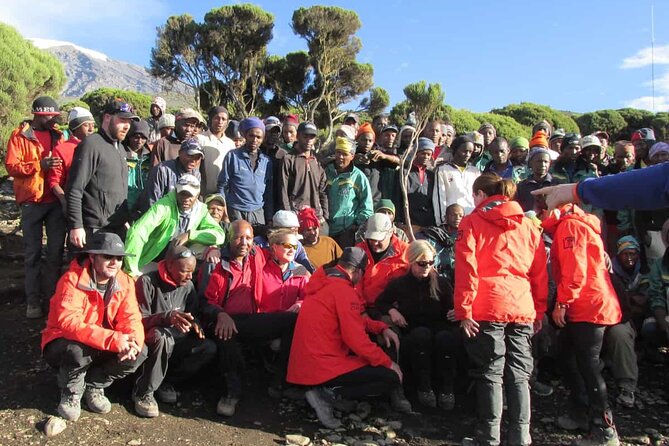
Day 2 gives you a morning to rest and relax. Then you get a brief orientation and an equipment check after lunch. This is exactly the kind of pre-mountain step that can prevent problems later. Socks you did not pack right. Boots that are not worn in. A missing headlamp battery. A water system that leaks.
After the equipment check, you do a town tour and then dinner and overnight again at Bristol Cottages or Parkview Inn. You are not far from comfort while you are still waiting for the mountain to start making demands.
Day 3: Machame Gate to Machame Camp through thick tropical forest
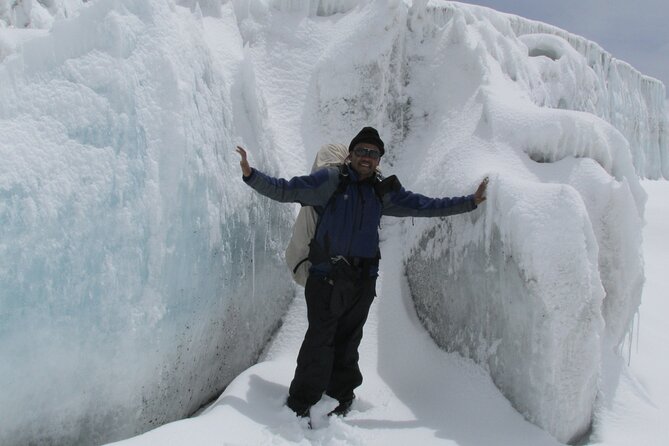
Your climb starts after breakfast, with departure from your hotel around 9:30 a.m. You drive to the Machame Gate where you meet your guides and porters. Then you start the hiking section to Machame Camp.
This day is about getting into rhythm. The hike is listed at about 5 to 7 hours through thick tropical forest, and the camp is around 3,000 m. The forest setting matters because it changes how you experience the climb. It can feel cooler than lower elevations at times, but it can also be humid and steady-going. You will likely sweat even when the air feels mild.
Practical tip for this day: start slower than you think you need to. Machame is not the place to prove fitness early. The goal is to arrive tired-but-manageable, ready for the acclimatization work that comes next.
A few more Moshi trips to compare
- Safari Serengeti And Ngorongoro
★ 5.0 · 288 reviews - Climbing Kilimanjaro – Machame Route
★ 5.0 · 170 reviews - Climbing Kilimanjaro through 7 days Machame Route
★ 5.0 · 151 reviews - Kilimanjaro climb, Lemosho Route (8-day)
★ 5.0 · 148 reviews
Day 4: Shira Plateau acclimatization with moorlands, streams, and big Kilimanjaro views
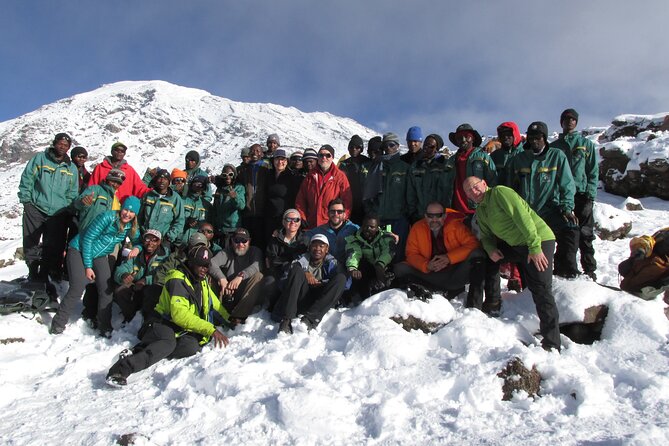
Today is your easy paced acclimatization day. You hike over streams, a river gorge, and moorlands, typically 4 to 5 hours. You spend the night on the Shira Plateau, and the camp location is chosen for views of Kilimanjaro and Mt. Meru when weather cooperates.
This is not a “take it easy” day in the sense of doing nothing. It is an acclimatization day, meaning the pacing and the terrain help your body adjust to altitude without forcing maximum exertion.
A key consideration: Shira Plateau days often come with shifting weather. If skies are clear you get those wide mountain views, if they are not you still benefit from the controlled effort. Either way, Day 4 is valuable because it helps prevent the altitude problem of trying to go too hard too fast.
Day 5: up to 4,250 m to Barranco, plus the up and down that can wear you out
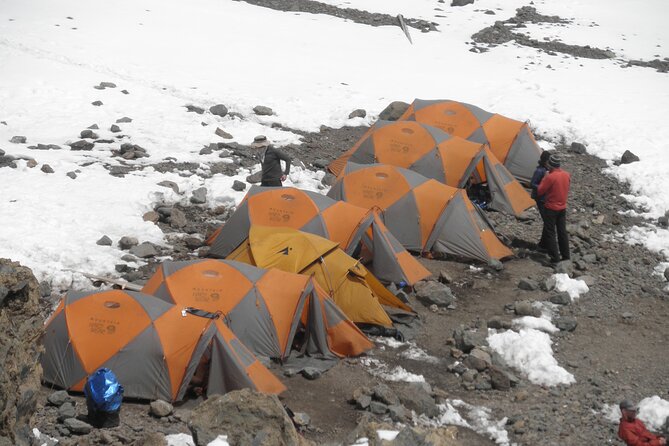
Today is described as an important acclimatization day. You travel up to about 4,250 m, then spend the night at Barranco. The hike moves through moorlands into the alpine zone where the plant life becomes sparse, mostly grasses and lichens. This is the “high altitude desert” feel, and it can look surprisingly stark compared to the forest start.
Your views can include the Western Breach of Kibo when conditions are clear. Then, around 4 hours in, the path forks and you descend into a gorge called Barranco. That means you get the combination of height and terrain changes.
The tricky part is right in the description: this is a day with fair bit of up and down. It can be tiring even if you are not climbing straight up a mountain wall. You are working your legs on uneven footing, and your heart and lungs still feel altitude effects.
Trekking poles help here, especially when you feel your form slipping in fatigue. They take some load off your knees and improve stability when paths turn steep or slippery.
Day 6: Barranco Wall climb (not technical) and the Kibo South Circuit day
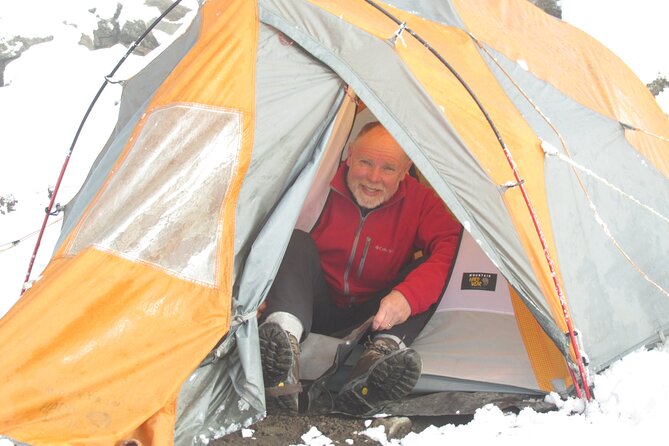
Day 6 starts with the Barranco wall climb. The key word is not technical. This is still a steep effort, but you are not dealing with roped climbing or technical gear. Then you follow the Kibo South Circuit.
This segment can deliver some of the most inspiring visual moments on the whole trip. If weather is clear, you may see Kibo’s southern glaciers in the distance. That said, your comfort is still about altitude management, not only scenery.
The hiking time is listed as 3 to 4 hours, which makes this a comparatively short day. You should arrive by lunchtime at a camp located just after the Karanga Valley on top of a ridge.
Short days like this are a big part of why Machame works. You get movement and acclimatization without draining every reserve you need later.
Day 7: Barafu Camp, an exposed ridge staging point for the summit push
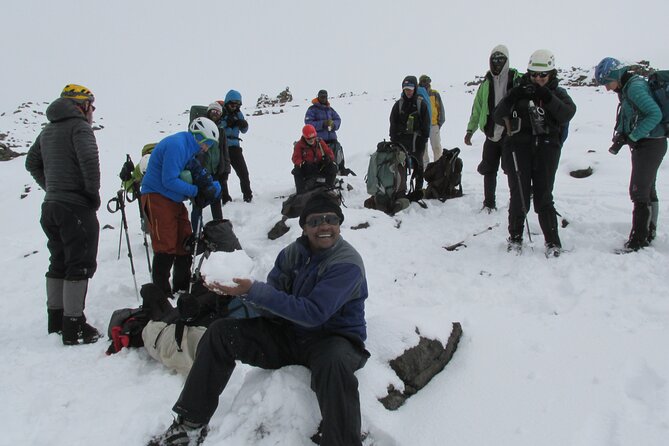
On Day 7 the trail is steadily uphill. It gets colder and the landscape more sparse as you work your way to Barafu Camp. Barafu means ice in Kiswahili, and the name fits the mood of this section: fewer trees, more exposure, and a stronger sense that summit season is approaching.
You are hiking about 4 to 5 hours, and you reach an exposed ridge camp. Barafu is described as the staging point for the push to the summit. That means your day is not just hiking, it is also preparation.
Once you arrive late lunchtime, you rest before the final summit attempt. Think of this as your “be ready” day. Eat well, hydrate, keep warm when you can, and try to get sleep. Your summit success depends on what you do tonight, not only what you do tomorrow.
Day 8: midnight start to Stella Point and Uhuru Peak at about 8 a.m.
This is the long, hard day. You leave your campsite at midnight, with the climb from Barafu to Stella Point described as fairly steep. Then you move through a high-altitude zone near the glaciers.
At Rebmann Glacier (listed at 4,870 m) you head north between Rebmann and Ratzel glaciers. If you have clear skies, these moments are stunning, but you should still focus on steady breathing and consistent footing.
You reach the crater rim just west of Stella Point after about 6 to 7 hours, then you join the main trail for the last leg. The last stretch to Uhuru, listed as about 1 hour, brings you to the summit at Uhuru Peak, around 8 a.m., at 5,895 m (19,340 feet).
This is when the mountain can feel like it is holding still for you. The views can extend across Africa in all directions if the clouds have not moved in. Then you descend back down. The plan leads you toward the Mweka route the next day.
A consideration that matters: cold affects more than comfort. Cold stiffens joints, slows your hands, and can make you feel clumsy. You will be more successful if you start early and keep your body moving at a pace you can maintain. Summit day is not a sprint day.
Day 9: the steep, possibly slippery Mweka Gate descent with picnic lunch
Your last hike is a descent of about 3,500 feet to Mweka Gate. It takes about 3 to 4 hours. The description notes the hike is steep in places and may be slippery if wet, so trekking poles again make sense.
When you reach Mweka Gate, you say goodbye to your mountain crew. Then you enjoy a picnic lunch. After that, trip leaders take you back to your hotel for a much welcome hot shower at Bristol Cottages or Parkview Inn.
That hot shower matters more than you think. After days of cold air and sweat management, warm water helps you recover. It also turns the climb into a complete experience, not just a top-of-the-mountain moment.
Day 10: transfer out of Moshi, or continue the safari and Zanzibar path
If you are flying home, you get transferred to Kilimanjaro International Airport. If you are continuing on, you will be picked up at your hotel for the next part of your Real Life African adventure, including safari or Zanzibar options.
This is a nice final touch. You can turn the big physical achievement into the start of a wider trip around Tanzania, without needing to re-handle logistics at the end of your climb.
Price and value: what $3,025 per person really covers
At $3,025 per person for an approximately 10-day climb, this Machame package sits in the mid-to-higher range of Kilimanjaro climbs, but the inclusions are where value tends to show up.
Here is what you are paying for beyond the hiking route:
- All park fees
- Guide, chef, and porters salaries
- Camping accommodation during the hike
- Boiled or filtered water on the mountain
- Emergency oxygen, oximeters, hyperbaric chamber, and Flying Doctors Insurance
- A full meal plan with multiple breakfasts, lunches, and dinners
What is not included is also clear: international or local flights, visa fees, alcoholic and soft drinks, personal spending, tips, and travel insurance.
The balanced way to look at it: you are not just buying trail time. You are buying a mountain support system. Oxygen and medical planning are not theoretical on Kilimanjaro. That safety kit is especially important because summit days are the hardest and the most altitude-sensitive.
The smartest money move you can make, even with a strong package, is to budget for tips and travel insurance separately. If you under-plan those, you feel it later at the worst time.
Who this Machame climb is best for
This trip is best for people with moderate physical fitness and a preference for adventure. Machame is described as challenging and steeper, so it suits trekkers who can handle longer hiking days and frequent changes in elevation.
It also makes sense if you want a crew-led experience with strong communication and support. Past climbers have named guides and crew members including Freddie, Hans, and Wilfred, and described the service as welcoming and professional, with guides focused on encouragement and preparation.
If you are the kind of hiker who likes a clear plan, predictable daily movement, and structured acclimatization, this route matches your style.
If you are unsure about your fitness, do not wait until you are on the mountain to find out. Train for uneven walking, practice hiking with a loaded day pack, and get comfortable with trekking poles.
Should you book this 10-day Machame climb with Real Life Adventure Travel?
I would consider booking if you want the Machame route experience with a structured acclimatization rhythm, and you are happy to work for it with longer, steeper walking. The included safety setup, especially emergency oxygen plus medical coordination details, is the kind of support you appreciate once you are at altitude.
I would pause and re-check your expectations if you are hoping for an easier ascent or shorter hiking days. Machame is demanding by design, and the climb asks for steady effort on multiple days, not just on summit night.
If you do book, do two things early: train for the steep sections, and pack for cold. Summit day is scheduled for a midnight start, and the “just make it to the top” plan works best when you arrive ready to handle cold hands, thin air, and long hours on the move.
FAQ
What city do you start from on this Kilimanjaro climb?
You start in Moshi, Tanzania. The experience ends back at the meeting point.
How long is the Machame route climb?
It is approximately 10 days.
Is airport pick-up included?
Yes. Your trip leader picks you up upon arrival at Kilimanjaro International Airport and drives you to your hotel in Moshi. On the way out, you also get a transfer to the airport.
What hotel options are used in Moshi?
The tour lists Bristol Cottages or Parkview Inn for overnight stays.
What route is used to reach the summit and return?
You ascend via the Machame route and descend via the Mweka route, reaching Mweka Gate on the final hiking day.
What time does the summit day start, roughly?
You leave Barafu at midnight for the climb from Barafu to Stella Point, and you reach Uhuru Peak around 8 a.m.
What is included in the price?
Park fees, guide, chef, and porters salaries, camping accommodation during the hike, boiled or filtered water on the mountain, emergency oxygen and oximeters, hyperbaric chamber, Flying Doctors Insurance, and meals including breakfast, lunch, and dinner.
What is not included?
International and local flights, visa fees, tips, travel insurance, alcoholic and soft drinks, and personal spending for souvenirs.
What fitness level is recommended?
Travelers should have a moderate physical fitness level.
Is free cancellation available?
Yes. You can cancel up to 24 hours in advance for a full refund. If you cancel less than 24 hours before the start time, the amount paid is not refunded.
Just posted around Moshi
- machame route★ 5.0 · 16 reviews
- Mt Kilimanjaro 6 days Marangu route hike★ 5.0 · 3 reviews
- Kilimanjaro Climbing Umbwe Route★ 5.0 · 3 reviews
- Wildlife Extravaganza: Manyara, Tarangire & Ngorongoro in 3 Days★ 5.0 · 3 reviews
- 3 Days Private E-Bike Tour in West Kilimanjaro★ 5.0 · 3 reviews
- West Kilimanjaro cycling Adventures★ 4.5 · 8 reviews
- Kilimanjaro Climb • Marangu Route ~ 9 Day★ 5.0 · 4 reviews
- Private Cycle to Kilimanjaro Bike Park Safari★ 5.0 · 6 reviews
Kilimanjaro Climbs, compared.
8-Day Small-group Lemosho Kilimanjaro Summit Trekking
Read our review →
5 Days Best of Tanzania Luxury Safari Northern Circuit
Read our review →
Climbing Kilimanjaro through 7 days Machame Route
Read our review →