Reviewed · 7-DAY EXPERIENCES
7 Days Great Wildebeest Migration Mara River Crossing
The Mara River is why you come. This 7-day Great Wildebeest Migration safari in northern Serengeti is built around the drama of the crossing at the Mara River, with enough time on the ground to chase the moment when herds and predators collide in real time. You also get strong add-ons like Tarangire elephants and a full day in Ngorongoro Crater, so the trip does not feel like one long wait for one event.
What I like most is how the schedule gives you multiple Serengeti days instead of a one-night rush. I also like the practical safari setup, especially the 4×4 Toyota Land Cruiser and the fact that you are in and out of game drives with meals sorted (full board at the lodges where noted).
One thing to consider: the Mara River crossing is not guaranteed. The itinerary gives you your best chance by timing your days in Kogatende, but nature keeps the final say.
In This Review
- Key highlights at a glance
- Why the Mara River crossing is the whole point
- Price and what you actually get for $4,428
- Day 1 arrival in Arusha, then Tulia Boutique Hotel
- Day 2 Tarangire National Park: elephants, baobabs, and an open roof
- Day 3 road to Serengeti, with Olduvai Gorge as your human-history add-on
- Day 4 Kogatende region in northern Serengeti: the base for crossing season
- Day 5 your best shot at the Mara River crossing moment
- Day 6 back through the Serengeti: predators plus huge herd rhythms
- Day 7 Ngorongoro Crater: big animals in a natural bowl
- What the private setup changes for you
- Practical travel notes that matter on safari
- Who this safari suits best
- Should you book this 7-day Mara River Migration safari?
- FAQ
- Is this tour private?
- What transportation is included?
- Are park admissions included?
- Is Olduvai Gorge Museum included?
- What meals are included?
- What time do you depart for Ngorongoro Crater?
- Do you get airport transfer in Arusha?
Key highlights at a glance
Kogatende timing for the Mara River action: you spend key days in the northern Serengeti region where crossings are most likely.
Open-roof viewing on Tarangire day: the roof opens as you enter, which helps you spot animals and reduces glare.
Serengeti game drives with predator focus: each day keeps you searching for carnivores, not just grazing herds.
Olduvai Gorge Museum option: you can add human-history context before heading deeper into the Serengeti area.
Ngorongoro Crater early morning drive: you leave at 07:00 AM to catch the caldera at its best.
Why the Mara River crossing is the whole point
If you are chasing the Great Wildebeest Migration, you already know it is not just about seeing animals. It is about seeing decisions, panic, and momentum, all at once. The Mara River crossing is where that drama spikes, because it combines fast water with the threat of crocodiles along the banks.
This tour is interesting because it does not treat the crossing like a bonus. It treats it like a mission. You are based in northern Serengeti (Kogatende area), and you give yourself extra chances during the day to be positioned for when the herds commit.
And yes, the description includes the kind of intensity safari dreams are made of: wildebeest and zebras braving currents and lurking Nile crocodiles. Just remember, the best laid plans still depend on herd timing and what the river is doing that day.
A few more Arusha trips to compare
- Balloon Safari & Bush Breakfast in Serengeti – Miracle Experience
★ 5.0 · 1,646 reviews - Tanzania Classic – 7 Days
★ 5.0 · 1,151 reviews - 4 Days Group Camping Safari
★ 5.0 · 1,101 reviews
Price and what you actually get for $4,428
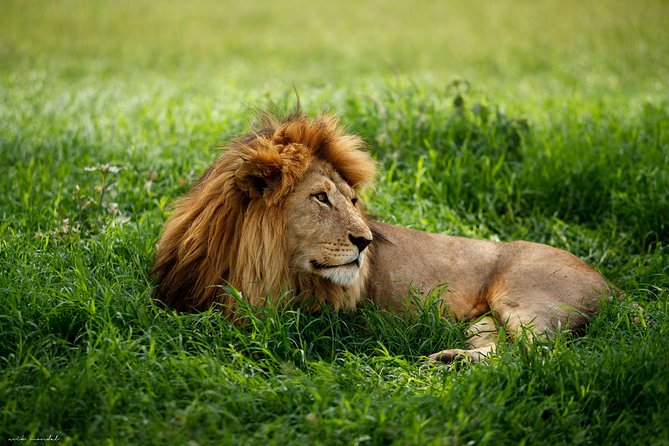
$4,428 per person for about 7 days is not cheap. But the value question is less about the sticker price and more about what is included, and how much “real safari time” you buy with it.
Here is the strong value side:
- You get private tour setup (only your group). That matters when you are trying to find animals and keep everyone comfortable.
- You have a driver guide with a dedicated 4×4 Toyota Land Cruiser.
- Meals are covered in a structured way: the included list shows 6 breakfasts, 6 lunches, and 6 dinners.
- Key park entries are marked as included for several days, including Tarangire, Serengeti, and Ngorongoro Crater.
The cost pressure points:
- International and domestic flights, visa, travel and medical insurance, and tips are not included.
- Olduvai Gorge Museum is not included (listed at USD 36 per person if you add it).
- Alcohol and extras like a Maasai visit or a Hot Air Balloon activity are not included.
- The tour notes do not list an air-conditioned vehicle.
So for me, this price makes sense if you want a focused migration safari with multiple days in the right zones, and you want the comfort of having the planning and logistics handled.
Day 1 arrival in Arusha, then Tulia Boutique Hotel
Your tour starts with arriving at Kilimanjaro International Airport or Arusha Airport. You get met and assisted through immigration, baggage claim, and customs. After that, you transfer to Tulia Boutique Hotel.
This is a smart start because it removes the first-day stress. You can focus on rest, not figuring out transport while you are tired and jet-lagged.
No game drive day one, which is fine. In safari trips, starting slow helps you enjoy the long drives that come next.
Day 2 Tarangire National Park: elephants, baobabs, and an open roof
Day two hits Tarangire National Park after breakfast, with pickup from your Arusha hotel at 08:30 AM. It is about a 2-hour drive to get into the park.
Once you arrive, the guide opens the roof for better viewing. That is a small detail that makes a real difference. You get more direct viewing angles, and it can cut down the sense of glass-between-you-and-the-wildlife.
Tarangire is famous for elephants, and the tour specifically calls out the largest elephant herds in northern Tanzania. You can also see giraffes, buffalo, lions, zebras, and wildebeest, plus various antelopes and gazelles. The park setting includes seasonal marshes and tree savannah with baobab trees, so you are not stuck with only one kind of scenery.
You spend the night at Marera Valley Lodge on a full board basis. That full board setup matters because you are less likely to waste evening time thinking about dinner logistics.
A practical note: Tarangire is a day-drive-heavy park. If you are sensitive to long wildlife searching, plan for a slower start with hydration.
Same base in Arusha, a completely different day:
- 5 Days Group Camping Safari
★ 5.0 · 730 reviews - Materuni Waterfalls, coffee tour & Kikuletwa Hot Springs
★ 5.0 · 643 reviews - 3 Days Serengeti & Ngorongoro Group Camping Safari
★ 5.0 · 574 reviews - 7-Day Premium Luxury Tanzania Safari All-Inclusive
★ 5.0 · 426 reviews
Day 3 road to Serengeti, with Olduvai Gorge as your human-history add-on
Day three is a travel and transition day, plus an optional cultural stop. After an early breakfast, you set off toward the Serengeti, and you pass through Ngorongoro Conservation Area with mist-shrouded rainforests. Along the way, you might glimpse cape buffalo, baboons, elephants, or leopards in dense undergrowth.
The drive to the Serengeti gates is almost four hours, and you can break it up with an optional stop at Olduvai Gorge Site Museum. The museum is described as being near the famous Zinjanthropus monument, with exhibits focused on the gorge’s archaeological and cultural history.
Here is the key tradeoff: adding Olduvai Gorge can turn your day into a two-theme safari, wildlife plus early human story. The museum ticket is not included and is listed as USD 36 per person. If you want the museum, budget time and keep the rest of the day flexible.
When you arrive, Serengeti time starts. You push deeper into the migration area, and the trip pivots toward the northern action.
Day 4 Kogatende region in northern Serengeti: the base for crossing season
Day four is where this safari starts feeling mission-like. After breakfast, you drive across the plains of Togoro and through Mbuzi Mawe kopjes (small hills). The tour calls out that you will see everything from dik-dik to elephants and giraffes as you move into northern reaches.
Then you arrive in the Kogatende region, where you look for both the migration and big game. The tour keeps the focus broad, but it is clear that your attention is on wildebeest movement patterns near the river corridor.
You sleep at Heritage Mara Tented Camp on a full board basis. Staying right where you can access the right search zones helps you avoid “drive fatigue” and gives you more usable daylight.
This is also one of the best days to set expectations. Migration searching can mean long stretches of patience, then sudden payoff. Kopjes can act like animal magnets because predators and prey use them for vantage and cover.
Day 5 your best shot at the Mara River crossing moment
Day five is built around the last major obstacle before the safer stretch beyond the river: the Mara River. The tour notes that hippos and Nile crocodiles call this river system home, which is why the crossing looks so dangerous and why it is also so dramatic.
You start after breakfast and do a game drive around the Kogatende area. The plan is to search for carnivores and for large migration groups preparing to cross the Mara River into Kenya.
And this is the day you are waiting for. The itinerary explicitly says that if you get lucky and patient, you may witness the death-defying crossing, wildebeest and zebras braving the currents while crocodiles lurk nearby.
A helpful way to think about this day: you are not just watching a river. You are watching an entire decision chain. Where animals gather, how they bunch, how they react to sound and movement, and how predators position themselves all matter.
If the crossing happens, it will feel fast. If it does not, the day still offers a strong safari payoff because you are also hunting predators and other big game.
Day 6 back through the Serengeti: predators plus huge herd rhythms
Day six moves you back toward the Ngorongoro Conservation Area, taking a different route through the Serengeti so you can spot animals that you might have missed on earlier drives. The tour describes seeing thousands upon thousands of animals moving together, including wildebeests and zebras migrating.
You also get targeted predator possibilities: cheetahs, leopards, hyenas, and lions. The tour calls lions the king of the group, but the practical takeaway is this, predator sightings often come in windows. A flexible route on day six increases your odds.
This is one of those days where the safari rhythm clicks. You go from “find the herd” to “read the field,” meaning you track signs of activity, wait for animals to emerge, and use kopjes and tree patches as visual anchors.
You will be rewarded if you stay alert rather than treating the drive like a sightseeing bus ride.
Day 7 Ngorongoro Crater: big animals in a natural bowl
You leave early on day seven, with breakfast and departure at 07:00 AM for Ngorongoro Crater. The tour describes it as the Eighth Wonder of the World, but what matters to you is the viewing structure.
When you see the caldera for the first time from the panoramic viewpoint, you get an immediate sense of why this place is so productive. The crater environment is described as vast and verdant, with over 120 species of mammal in the broader area and a strong chance of seeing classic big game.
The tour highlights two big draws:
- Black rhinoceros, including the chance to see an endangered animal feeding on grass plains
- Hippopotamus in the water
It also mentions Big Five and notes that Ngorongoro is one of the most sought-after safari destinations in the world. In practice, what you are buying with the early start is time, because animal activity and light change during the morning.
The tour also marks admission as included for this stop. That is one less fee headache on departure day.
What the private setup changes for you
This tour is listed as private, meaning only your group participates. That affects more than comfort.
- Your guide can tailor stops to what you are seeing. If you are thrilled by predators, you can ask for extra time where predators are likely to hunt.
- You can manage pace, because game drives can be long. Some people want more stops for photos, some want to cover more ground.
- It reduces the time-sink problem that comes with waiting for other vehicles.
The included driver guide setup means you are not just paying for transportation. You are paying for someone actively looking and interpreting what you are seeing in real time.
Practical travel notes that matter on safari
You are dealing with long days. Day two lists around 6 hours of activity. Day four lists 9 hours. Day five is about 8 hours. These are not half-day museum vibes.
So plan for:
- Early nights on lodge days. Full board makes that easy.
- Water and snacks even when meals are included, because game drives can run late based on animal movement.
- Clothing that works for sun and dust. The tour does not call out weather gear, so bring what you normally use for warm, dusty field conditions.
Also, remember you will be in and out of parks where cars may stop frequently. A vehicle that is not air-conditioned can still be fine, but you should dress accordingly.
And if you care about photography, ask your guide how they prefer to position you. The open-roof setup on Tarangire is a clue that they value sightlines.
Who this safari suits best
This trip is a great fit if:
- You are specifically chasing the Great Wildebeest Migration and want a real chance at the Mara River crossing.
- You prefer multiple days in Serengeti, not just a quick hit.
- You want a mix of animal drama and place variety, with Tarangire and Ngorongoro as anchors.
It might not be the best match if:
- You hate uncertainty, because the crossing depends on timing and animals do not follow schedules.
- You want lots of downtime. The itinerary is drive and game drive heavy by design.
Should you book this 7-day Mara River Migration safari?
I would book it if you want a migration safari that takes the Mara River seriously. The biggest reasons are practical: you get time in the right zone (Kogatende) and you stay inside the Serengeti long enough to build chances. Add Tarangire and Ngorongoro, and you get more than one “wow” moment.
If you are on a tight budget, you will probably feel the cost. But if your priorities are wildlife viewing, fewer hassles, and a guide who is there to track animals across multiple days, this is the kind of trip that makes your money feel like it went into the field, not into extra surprises.
FAQ
Is this tour private?
Yes. It is listed as a private tour/activity, so only your group participates.
What transportation is included?
You get a 4×4 Toyota Land Cruiser and a driver guide.
Are park admissions included?
Tarangire and Serengeti entries are listed as admission ticket free on the relevant days, and Ngorongoro Crater is listed as admission ticket included. Olduvai Gorge Museum is not included.
Is Olduvai Gorge Museum included?
No. Olduvai Gorge Museum is an optional activity and the fee is listed as USD 36 per person.
What meals are included?
The inclusions list 6 breakfasts, 6 lunches, and 6 dinners, plus soft drinks and coffee or tea.
What time do you depart for Ngorongoro Crater?
The itinerary says you depart at 07:00 AM after breakfast.
Do you get airport transfer in Arusha?
Yes. After you arrive at Kilimanjaro International Airport or Arusha Airport and go through immigration, baggage claim, and customs, you are transferred to Tulia Boutique Hotel.
Just posted around Arusha
- 8 Days Serengeti Migration safari★ 5.0 · 11 reviews
- tarangire & ngorongoro 2 days tour★ 5.0 · 14 reviews
- serengeti, ngorongoro & tarangire 4 days private tour★ 5.0 · 18 reviews
- tarangire, ngorongoro & lake manyara park 3 days private tour★ 5.0 · 11 reviews
- Mt. Kilimanjaro: Shira plateau to Cathedral point 3872m Day hike★ 5.0 · 7 reviews
- serengeti & ngorongoro 3 days private tour★ 5.0 · 15 reviews
- climb the KILIMANJARO via Lemosho route★ 5.0 · 4 reviews
- Kilimanjaro Waterfalls Hike & Moshi Hot Springs Day Trip Tour★ 5.0 · 4 reviews
7-Day Experiences, compared.
7-Day Premium Luxury Tanzania Safari All-Inclusive
Read our review →
Group Safari 7 Days in Tanzania’s Main Parks
Read our review →
Climbing Kilimanjaro through 7 days Machame Route
Read our review →
7-Day Machame Kilimanjaro Summit Tour from Arusha
Read our review →