
Reviewed · HISTORICAL TOURS
Bagamoyo Historical Tour – Everyday
History has a smell here, salt and old stone.
Bagamoyo is one of those places where the past feels physical, not dusty. I love the private pace, so you can pause when a site demands it, and I also love how the route walks you through a clear story, from the prison at the Old Arab Fort to the Christian landmarks tied to David Livingstone at the Museum. One thing to consider up front: this tour includes sites and displays connected to slavery and captivity, so it can feel emotionally heavy.
If you want a day trip that feels like a real guided field lesson, this is a strong choice. You’ll cover several major stops in one go, and the basics are handled for you with pickup offered, an air-conditioned vehicle, and admission tickets included where listed. You also get a mobile ticket, which is handy when your day starts early.
In This Review
- Key highlights worth planning around
- Bagamoyo’s timeline in one day: trade, German rule, and the harbor
- Getting there from Dar es Salaam, without turning the day into a slog
- Old Arab Fort: the prison that links directly to departure
- Old Boma: a German state residence before the capital moved
- Kaole Ruins: Arab settlement remains and the 13th to 16th century stone world
- Bagamoyo Museum and the Holy Ghost Church, with Livingstone’s connection
- Mangroves and beaches: how to make the scenery count
- Price and value: why $199 can make sense
- Who should book this Bagamoyo historical day trip
- Practical tips so your day runs smoothly
- Should you book this tour?
- FAQ
- What is the duration of the Bagamoyo Historical Tour?
- What time does the tour start?
- How much does the tour cost?
- Is pickup available?
- Do I need to print a ticket?
- What major stops are included?
- Are admission tickets included?
- Is lunch included?
- What transport is provided?
- What is the cancellation policy?
Key highlights worth planning around
- Private guide pacing, so you can slow down at the sites that hit you
- Old Arab Fort tunnels to the harbor story, the “prison to departure” connection is the big theme
- Kaole Ruins (8th century to 13th-16th century stone), where you see mosques, tombs, and settlement remains
- Holy Ghost Church and the Livingstone Tower, anchored to David Livingstone’s connection in 1874
- Air-conditioned transport plus admission included, good value for a long day out of Dar es Salaam
Bagamoyo’s timeline in one day: trade, German rule, and the harbor
Bagamoyo sits on Tanzania’s coast with Indian Ocean light and a steady rhythm of waves, but the real draw is what happened here. This town was once a major trading hub and it even served as the former capital of German East Africa. That fact matters because it explains why you see German-era structures, Arab settlement remains, and coastal departure points all in the same day.
The tour’s best feature is its way of linking places into a timeline. You are not just ticking off attractions. You’re moving from the fortified holding area tied to the slave trade, to German buildings connected to administration and residence, to Kaole’s earlier Arab-era settlement footprint, and then to the Museum where missionary history and David Livingstone are part of the same landscape.
A few more Dar es Salaam trips to compare
- Dar es Salaam History and Architectural Tours
★ 5.0 · 36 reviews - Bagamoyo Historical Tour – Everyday
★ 4.4 · 8 reviews - Private Tour in Historical Dar es Salaam with Lunch
★ 4.5 · 6 reviews
Getting there from Dar es Salaam, without turning the day into a slog
Start time is 8:00 am, and the tour runs about 8 hours. That timing is helpful because Bagamoyo looks good in morning light, and you avoid feeling like the day disappears in traffic. Pickup is offered, and the vehicle is air-conditioned, which you’ll appreciate in Tanzania’s coast heat.
One practical note: the maximum group size is listed as up to 100 travelers. Since this is described as a private tour, you should expect the feel to be more intimate than a mass group day. Still, it’s worth knowing the ceiling if you tend to like totally quiet tours.
For ticket handling, you’ll get a mobile ticket, so you’re not hunting for paper. And the tour includes all fees and taxes, which reduces the annoying surprise moments where you think something is covered but it isn’t.
If you’re traveling in a busy season, I’d book ahead. The experience notes it’s often reserved around 21 days in advance on average, which tells you demand is real for this day trip.
Old Arab Fort: the prison that links directly to departure
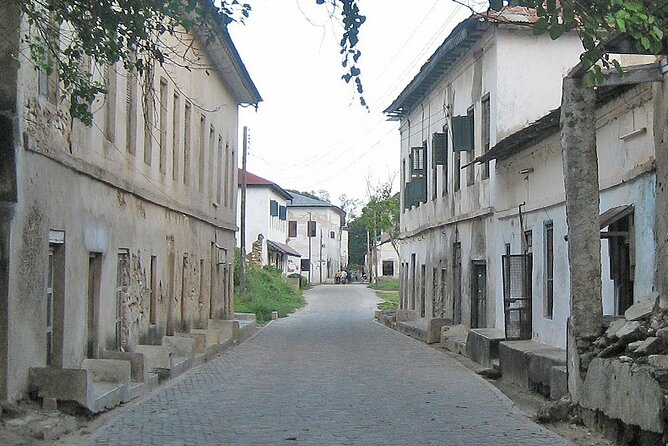
The Old Arab Fort of Bagamoyo is the opening stop, and it sets the tone. This was a prison where enslaved people were kept before being taken through underground tunnels toward dhows at the harbor. The key detail is that the architecture and layout are part of the story. You’re standing in a place designed for confinement and forced movement, and that helps the guide’s explanation land.
What I like about starting here is that it frames everything else you’ll see. Later stops can focus on settlement remains, museums, or colonial-era buildings, but the fort anchors the grim reality of how coastal trade networks worked.
Admission is included at this stop, and it takes about an hour. That’s enough time to absorb the explanation without rushing. If you’re sensitive to topics like slavery and imprisonment, give yourself permission to pause, step back, and take breaks. The value here is context, not speed.
Old Boma: a German state residence before the capital moved
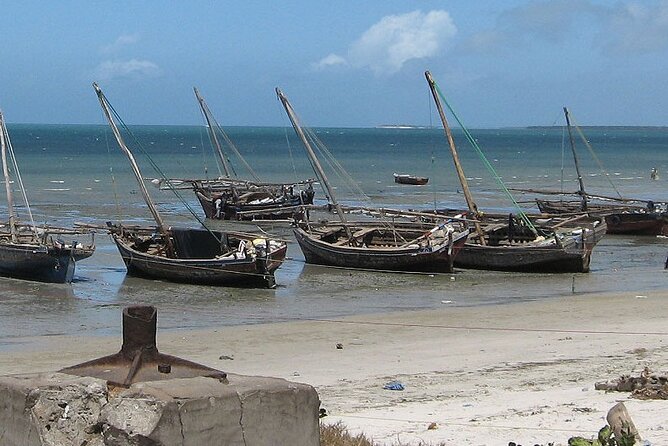
Next you’ll visit Old Boma, a historical building built by the Germans at the end of the 19th century. It was created as a residence for leaders in the area and served that role for only a few years. The reason is blunt and practical: the capital was moved to Mzizima, now known as Dar es Salaam, because the Bagamoyo port had shallow water depth.
I find this stop especially useful because it turns a big political story into an on-the-ground detail. You’re not just hearing about colonial decisions. You’re seeing how geography influenced where authority could function.
This stop is shorter, about 30 minutes. That works if you treat it like a “context checkpoint” between heavier and lighter moments. Admission is included here too.
Same base in Dar es Salaam, a completely different day:
- Dar es Salaam: City Tour
★ 4.7 · 159 reviews - Dar es Salaam City Center: Walking Tour
★ 4.8 · 102 reviews - Dar es Salaam City Tour – Everyday
★ 5.0 · 64 reviews - MIKUMI NATIONAL PARK – 3 Days
★ 4.5 · 63 reviews
Kaole Ruins: Arab settlement remains and the 13th to 16th century stone world
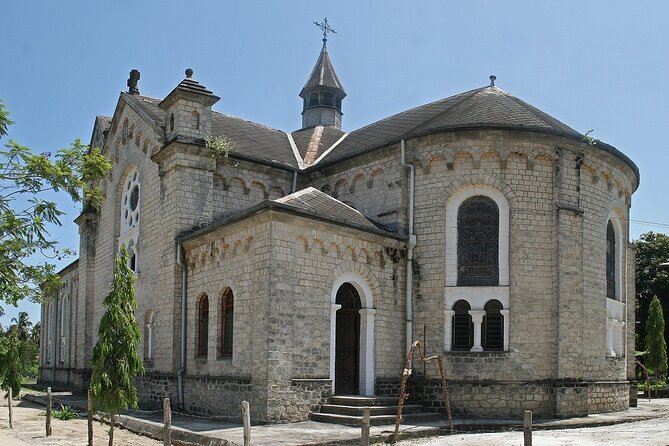
Kaole Ruins is one of the most interesting stops because it’s both specific and layered. The site holds remains tied to the first Arab settlement in Bagamoyo, and it also functions as an archaeological excavation area.
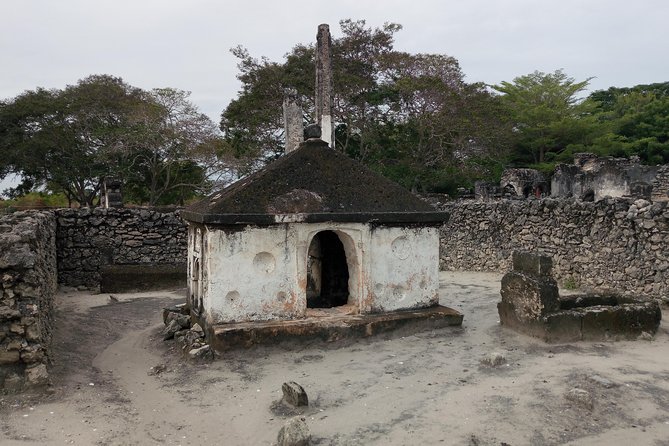
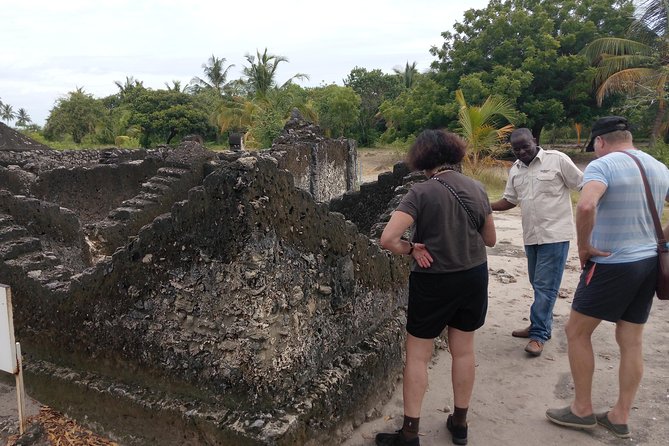
The tour describes Kaole as a small town and archaeological site on the shores of the Indian Ocean, south of Bagamoyo town. It was originally settled as early as the 8th century as a trading town. Then, between the 13th and 16th centuries, you get the stone ruins you can actually walk around and view, including two mosques, around 30 tombs, houses, water wells, and graves of foreigners who died there.
That mix of religious structures, domestic spaces, and burial sites is why this stop feels different from a single monument. You can visualize daily life and community organization rather than only a defensive or administrative story.
This stop takes about an hour. Admission is included. If you like archaeology, this is where the guided explanation really matters. The value is in having someone connect what you see on the ground to how a coastal trading settlement likely functioned.
Bagamoyo Museum and the Holy Ghost Church, with Livingstone’s connection
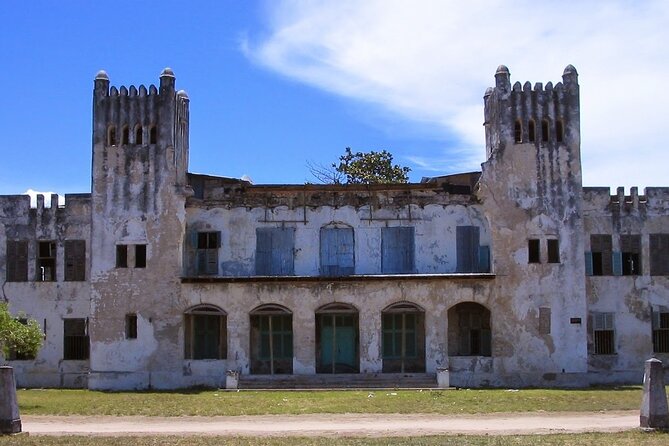
The Bagamoyo Museum stop centers on the Holy Ghost Church complex and related mission buildings. The original Holy Ghost Church was built in 1872 and is reportedly the oldest church on the mainland of East Africa. It was part of the Holy Ghost Mission, one of the first Christian missionary efforts in East Africa.
Here’s the David Livingstone connection: in 1874, he was interred for a night at the Holy Ghost Mission. The Livingstone Tower in the complex is named in his honor. Even if you’re not a history fanatic, it’s the kind of detail that makes the site feel anchored to real people and real timelines.
You’ll also spend time at the Sisters’ House, built in 1876. That building was converted into the Roman Catholic Mission Museum. The exhibits described include photographs showing enslaved people tied together with chains around their necks, plus items about missionary work and conversion to Christianity, and books and booklets related to that era.
This stop is about an hour, with admission included. It can be emotionally heavy because of the slavery-related displays. Still, I think it’s one of the most important parts of the day because it turns the earlier fort story into documented material.
For visitors who prefer a balanced tour, this is where you see another side of the historical record: missionaries, institutions, and how European religion took root alongside colonial and trading forces.
Mangroves and beaches: how to make the scenery count
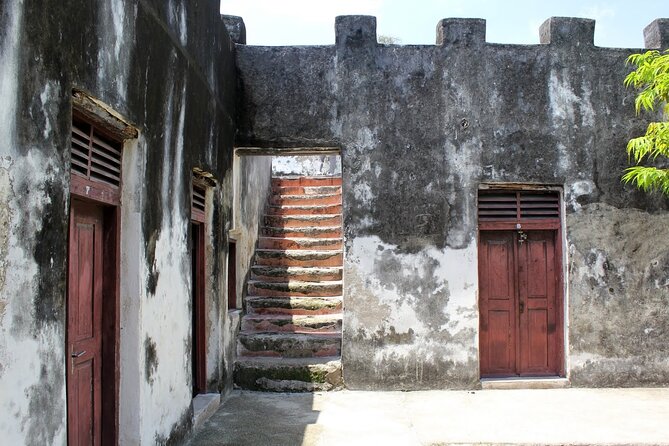
The tour overview includes time around mangrove forest and beaches. While the itinerary details provided list specific historical stops, I take this to mean your day is not all stone-and-stories. Coastal Bagamoyo scenery matters here, because it helps explain why the area became a gateway in the first place.
Mangroves connect to survival and trade along the waterline. Beaches connect to movement, departure, and livelihoods tied to the harbor. Even when you’re not in “nature tour” mode, a bit of fresh salt air helps you reset after heavier sites.
Use this time to pace yourself. If you feel emotionally weighed down after the fort and museum, this is where you can breathe, look out at the shoreline, and let your brain process instead of absorbing only dates and locations.
Lunch is something you’ll plan, not something that’s automatically solved. Lunch is not included, so I recommend you either eat on your own during the tour’s free time or bring a simple snack if you tend to get cranky before mid-day. (And yes, that happens to smart travelers too.)
Price and value: why $199 can make sense
At $199 per person, this isn’t a budget-only half-day. But for a full-day private-style experience, it can be fair value if you compare what’s included.
You get:
- pickup offered
- an air-conditioned vehicle
- all fees and taxes
- admission tickets included for the major listed stops
- a day guide who explains history and culture across multiple sites
- mobile ticket convenience
Where you might feel the cost is in the fact that lunch is not included. Also, because it’s a historical route with multiple stops, you’re paying for the guided “connective tissue,” not just transport.
To me, the best justification is the guide-led safety and clarity you can feel in the day. One review notes that the driver, Derrick, was prompt, good company, and safe, and that the guide, Sadiq, was incredibly informative about history and culture, with a thorough overview of the town. That kind of interpretation is often what makes the difference between seeing ruins and actually understanding them.
If you care about context, not just photos, the price starts to feel reasonable.
Who should book this Bagamoyo historical day trip
This tour is a good match if you:
- want a private style day where you can move at your own pace
- enjoy guided history with place-based details
- like coastal stories that connect trade, settlements, and colonial-era shifts
- don’t mind learning about the slave trade, including evidence shown at the fort and museum
It may not be ideal if:
- you want a carefree beach day with light topics
- you hate emotionally difficult content, since the tour focuses on captivity and slavery-linked displays
If you’re traveling with mixed interests, this can work because the itinerary includes different types of sites: fortifications and tunnels, German-era residence, archaeological ruins, and a church-museum complex tied to Livingstone.
Practical tips so your day runs smoothly
A few things to pack and plan for this kind of coast history day:
- Bring water. Even though the air-conditioned ride helps, you will still be outside at multiple stops.
- Wear comfortable shoes. Fort areas and archaeological sites can involve uneven ground.
- Keep a little flexibility in your schedule. The tour covers multiple locations, so you want to move through each stop with enough time to read, listen, and look.
- If you’re planning lunch, decide in advance whether you’ll stop for food on your own or bring simple snacks.
Also, if you’re the type who likes to ask questions, this is where it pays off. Having an experienced guide, like the one noted as Sadiq in reviews, can turn a list of dates into real cause-and-effect.
Should you book this tour?
I’d book it if you want a guided day that actually explains Bagamoyo, not just shows you buildings. The combination of Old Arab Fort, Old Boma, Kaole Ruins, and the Holy Ghost Church and Museum gives you a structured story across trading, settlement, colonial administration, and missionary-era artifacts.
I’d think twice only if you are hoping for a light, casual outing. The slavery-related material is real and directly tied to places you’ll visit, and the emotional weight is part of the experience.
If you do book, aim for comfort and timing: start early, hydrate, plan lunch, and go in ready to learn. This is one of those day trips where the effort pays off because every stop adds a piece to the bigger picture of why Bagamoyo mattered.
FAQ
What is the duration of the Bagamoyo Historical Tour?
It runs for about 8 hours.
What time does the tour start?
The start time is 8:00 am.
How much does the tour cost?
The price is $199.00 per person.
Is pickup available?
Yes, pickup is offered.
Do I need to print a ticket?
No, you’ll use a mobile ticket.
What major stops are included?
The tour includes Old Arab Fort of Bagamoyo, Old Boma, Kaole Ruins, and Bagamoyo Museum, plus additional time around the mangrove forest and beaches.
Are admission tickets included?
Admission tickets are included for the listed stops (Old Arab Fort, Old Boma, Kaole Ruins, and Bagamoyo Museum).
Is lunch included?
No, lunch is not included. You can stop for lunch during the day.
What transport is provided?
You travel in an air-conditioned vehicle.
What is the cancellation policy?
You can cancel for a full refund up to 24 hours before the experience starts. If you cancel less than 24 hours before, the amount paid is not refunded.
Just posted around Dar es Salaam
- 2 Day Wildlife Experience and Masai Culture Mikumi Park★ 5.0 · 5 reviews
- Explore Dar es Salaam: Full-Day Private City Tour★ 5.0 · 18 reviews
- 3 Days Explore Selous Game Reserve + Boat safari + bushman walking★ 5.0 · 5 reviews
- Sunrise Beach Walk with Picnic Breakfast Activity★ 5.0 · 3 reviews
- Mikumi Np Mid Range Tour 3 Days★ 5.0 · 3 reviews
- 3 Days Safari to Nyerere National Park (Selous Game Reserve)★ 5.0 · 8 reviews
- Saadani National Park Day Tour★ 5.0 · 3 reviews
- Mikumi National Park Day Trip by Train From Dar Es Salaam★ 5.0 · 4 reviews
Historical Tours, compared.
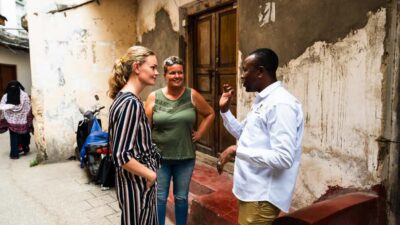
Stone Town Historical Cultural Walking Guided Tour
Read our review →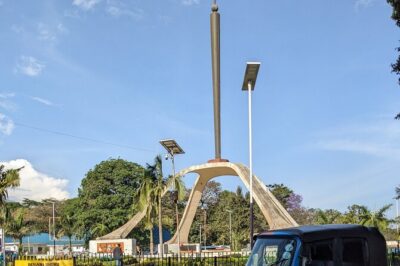
Arusha Guided Walking City Tour, Culture, Lifestyle & History
Read our review →
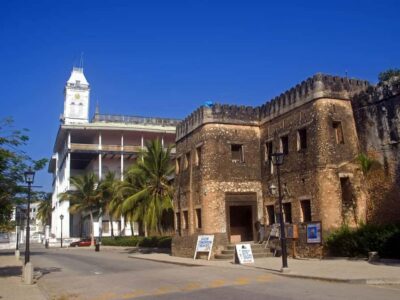
Stone Town’s Hidden History: Private Guided Walking Tour
Read our review →

Browse the lists this tour appears in