

Reviewed · STONE TOWN TOURS
Stone Town Historical Walking Tour
Stone Town has stories in every doorway. This walking tour packs UNESCO-worthy streets into a simple 2 to 3 hour loop, and I love how the guide builds the past into what you can see today, plus how the walk is paced to your interests. With Ahmed guiding my group style experience, I especially liked the focus on real cultural mix, including religious harmony, and the way he connected the heritage to the day-to-day reality Zanzibaris face now. The only thing to plan for is that some key stops have entrance fees or tickets not included, so your $25 may become a bit more once you’re there.
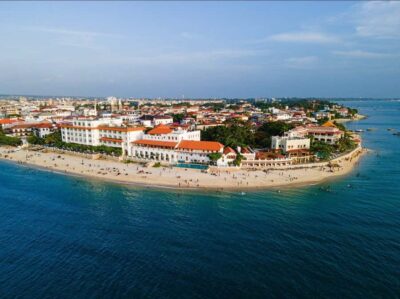
You’ll start in the Forodhani area and move through the Old Town’s main landmarks at an easy walking speed. Expect a strong sensory hit too, salt air, perfumes, and the call to prayer drifting between alleys, plus plenty of architectural details you would likely miss on your own. If you’re short on time in Zanzibar City, this is a smart way to get your bearings fast without trying to read Stone Town’s history from a screen.
In This Review
- Key highlights to know before you go
- Why Stone Town feels like a living museum
- Price and what you actually get for $25
- Getting started at Forodhani, then walking into the Old Town
- Stop 1: Stone Town Old City streets and the UNESCO feeling
- Stop 2: Ngome Kongwe Old Fort and the Portuguese to Omani story
- Stop 3: Forodhani Gardens and how the food square changes at night
- Stop 4: Darajani Bazaar for spices, crafts, and real daily life
- Stop 5: People’s Palace Museum and the Sultan’s residence angle
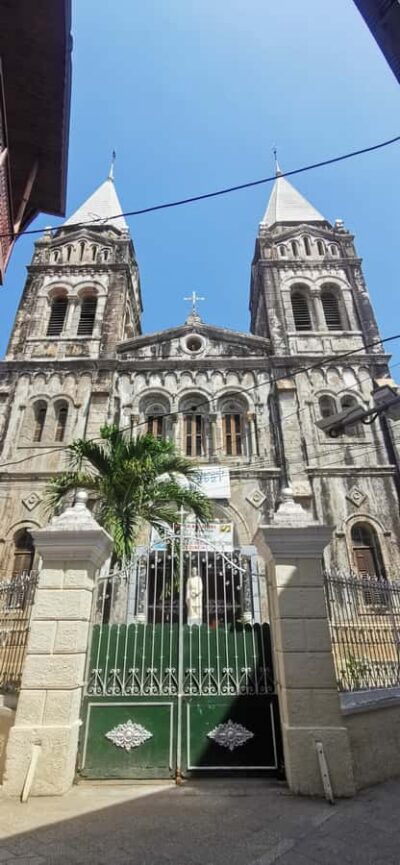
- Stop 6: Christ Church Cathedral and the memory of the slave market
- Stop 7: Freddie Mercury Museum for music fans (ticket not included)
- How long is enough time, and how to make the walk feel worth it
- What I’d watch for before you book
- Who this tour suits best
- Should you book this Stone Town Historical Walking Tour?
- FAQ
- Where does the Stone Town Heritage Walking Tour start and end?
- How long is the tour?
- What is the price per person?
- What’s included in the tour price?
- Are entrance fees included?
- Is food and drink included?
- Is this a private tour?
- What is the cancellation policy?
Key highlights to know before you go
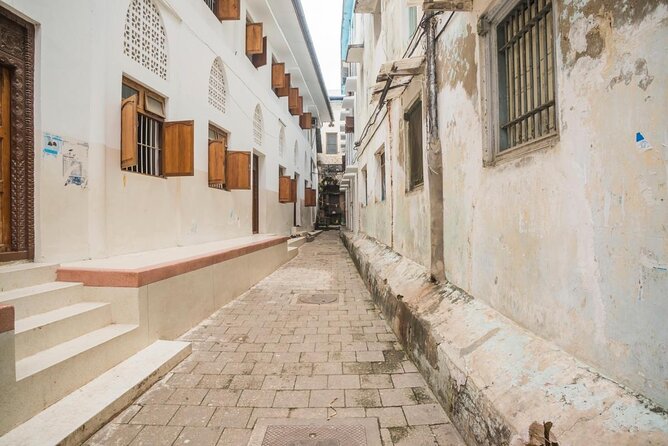
- UNESCO World Heritage Old Town streets: the best way to understand Stone Town without getting lost
- Ngome Kongwe (Old Fort): one of the oldest surviving stone structures, tied to Portuguese and Omani shifts
- Forodhani Gardens food square context: a feel for the street food scene, especially after sunset
- Darajani Bazaar market energy: spices, seafood, clothing, crafts, and everyday Zanzibar shopping
- Sultan’s story at People’s Palace Museum: royal residence history through artifacts and exhibits
- Freddie Mercury Museum option: music history and Zanzibar roots, with ticket not included
Why Stone Town feels like a living museum
Stone Town’s layout and buildings do something clever. They don’t just show history, they show trade, power, faith, and migration all tangled together in one place. This walk is built around that idea: you don’t just hear dates, you connect them to specific corners, structures, and functions.
I also like that the tour frames Zanzibar City as a meeting point. You’ll hear how African, Arab, Persian, Indian, and European influences shaped daily life, and you’ll see how different religious communities have lived side by side here, including Islam, Christianity, and Hinduism. It helps you understand why Stone Town looks the way it does, with carved doors and old colonial-era architecture standing right next to older trading-era patterns.
The timing works too. Two to three hours is long enough to cover the main highlights on foot, but short enough that you’re not collapsing by the end.
More Walking Tours in Zanzibar
- Stone Town Private Walking Tour
★ 5.0 · 371 reviews - Zanzibar: 3 Hours Private Stone Town walking Tour with Guide
★ 4.6 · 301 reviews - Zanzibar: Stone Town Historical Cultural Walking Guided Tour
★ 4.5 · 179 reviews
Price and what you actually get for $25
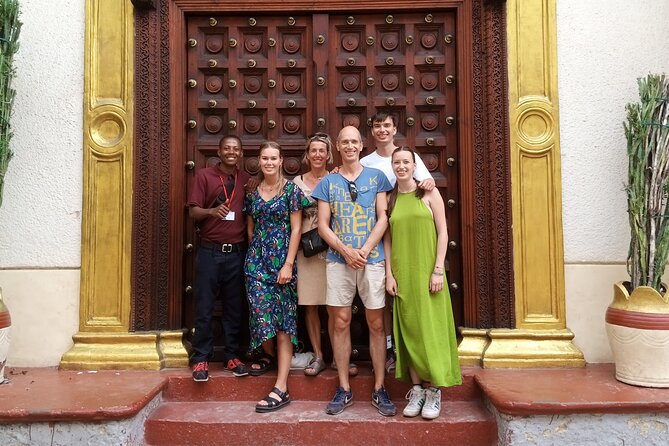
The stated price is $25 per person, and it includes a professional guide. It also includes hotel pickup within Stone Town if you request it in advance, so you’re not spending your energy trying to coordinate a starting point in a maze of streets.
What is not included matters for budgeting:
- Entrance fees are listed as $5 per person.
- Food and drink are not included.
- Tips and personal expenses are not included.
- Transfers from outside Stone Town are not included, since the walk starts in Stone Town.
In plain terms, you’re paying for guided context and efficient routing. You’re also likely paying a little more for museum-style stops once you arrive, depending on which entrances you choose to use.
Getting started at Forodhani, then walking into the Old Town
Your tour begins at Forodhani and ends back at the meeting point. That matters because Stone Town’s streets can be disorienting if you’re arriving fresh. Starting right in the heart of the action means you can orient quickly, then let the guide pull you from landmark to landmark.
This is also a private experience, meaning it’s just your group. That usually helps with pacing and questions. The review-style feedback I’ve absorbed from this type of tour is consistent: Ahmed (and other guides with similar methods) will slow down when you want details, and move on when you’re more interested in the next photo spot or story.
One more practical note: the tour uses a mobile ticket, so you’re not juggling paper in a humid environment.
Stop 1: Stone Town Old City streets and the UNESCO feeling

The first stop is the Old City area of Stone Town, the historical core of Zanzibar City and a UNESCO World Heritage Site. This is where the walk becomes more than sightseeing. Stone Town’s history as a trading hub for spice and silk, and its connection to long-running slave trade routes, is part of what shaped the city’s layout and buildings.
What you’ll enjoy most here are the small things:
- Old colonial-era buildings that show layers of control and commerce
- Carved doors and architectural details that reflect Zanzibari craftsmanship
- The way smells and sounds travel through alleys, especially sea air, perfumes, and the calls to prayer from the minarets
If you like architecture, this stop is your foundation. If you like history, it’s your map in words. The guide’s job is to help you see the same street in two ways, as a lived-in neighborhood and as a historical trading crossroads.
More Stone Town walks:
- Zanzibar: Stone Town, Spice Tour, Prison Island with Lunch
★ 4.4 · 1,219 reviews - Zanzibar: Prison Island, Stone Town, & Spice Farm Tour
★ 4.5 · 579 reviews - Zanzibar; Prison Island, Nakupenda, StoneTown Tour with BBQ
★ 4.3 · 457 reviews - Zanzibar: Stone Town, Spice tour & Prison Island with Lunch
★ 4.6 · 453 reviews
Stop 2: Ngome Kongwe Old Fort and the Portuguese to Omani story
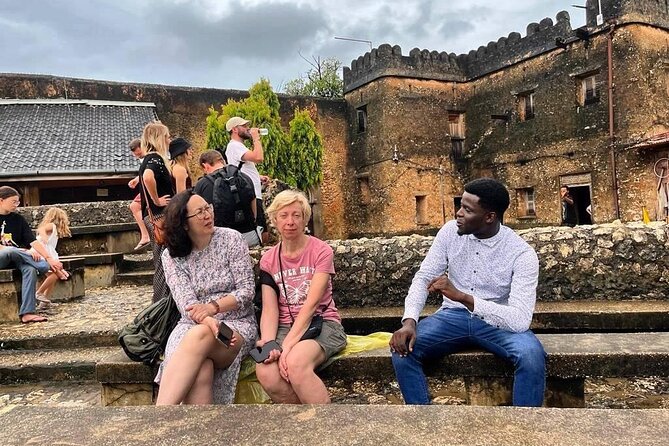
Next you’ll head to Ngome Kongwe, the Old Fort. This is described as the oldest stone building in Stone Town, around 1560. You’ll also hear why it matters in the bigger political story.
Here’s the historical thread you should listen for:
- It connects to the period when the Portuguese had influence in the region.
- It ties into the aftermath of Portuguese control, including how local power shifted after the Portuguese were expelled.
- It also points toward the later transition as Oman took over in 1698.
Even if you don’t memorize dates, the value is the cause-and-effect. Forts exist because trade routes are valuable and contested. When you see the fort, you get a physical anchor for the political changes that otherwise sound abstract.
One consideration: this stop is shorter than the first, so if you love forts and military history, you’ll want to ask your guide a question or two before moving on.
Stop 3: Forodhani Gardens and how the food square changes at night

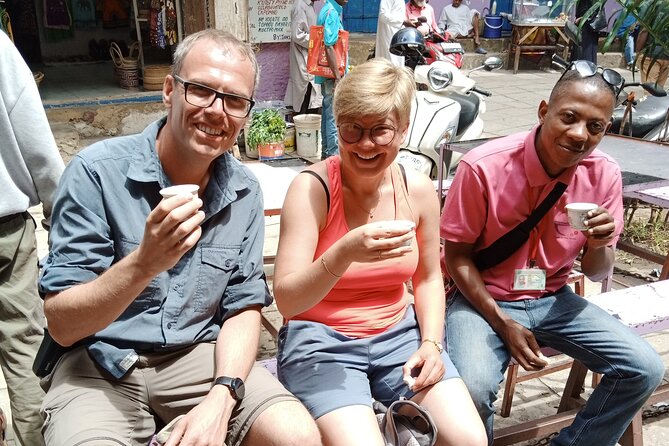
Forodhani Gardens is one of the most important “feel” stops on the route. The garden area gets very busy after sunset when locals and tourists gather at the street food market.
This is where you get to taste culture through everyday choices:
- grilled seafood
- samoosa
- cassava and potatoes
- and sweet options too
Important practical point: food and drink aren’t included in your tour price. But that’s also the beauty of this stop. You can decide on the spot what you want to eat instead of being locked into a pre-set menu.
If your tour timing lines up with evening, you’ll see the market vibe shift in real time, from quieter daytime browsing to the evening crowd energy.
Stop 4: Darajani Bazaar for spices, crafts, and real daily life
Then you’ll move to Darajani Bazaar, which is all about movement and variety. This is one of those places where the guide helps you see what you would otherwise just walk past.
What you’ll likely notice:
- fresh produce
- spices
- seafood
- clothing
- crafts and smaller goods you can’t always find in resort zones
Darajani is also the easiest stop for practical shopping. If you want souvenirs that look and feel like Zanzibar, this is typically the right place to ask questions and compare quality and prices.
If you’re shopping, my advice is simple: decide your budget before you get excited. Markets reward interest, and you might want a few different things once you start comparing.
Stop 5: People’s Palace Museum and the Sultan’s residence angle

Next is People’s Palace Museum. This is described as the Sultan’s historical residence, and the tour approach here is about royal past and cultural heritage through artifacts and exhibits.
What makes this stop valuable on a walking tour is context. You’re not just looking at objects. You’re hearing how the palace connects to power and the trading world that shaped Zanzibar’s elite families.
Interactive elements may also appear, like traditional music or craft demonstrations. Even when those aren’t happening at that exact moment, you’ll still get the point of the museum, a “how did life work here” view rather than a pure photo stop.
This stop is short, so if you’re museum-first, go with a mindset of seeing the most important highlights rather than trying to absorb everything.
Stop 6: Christ Church Cathedral and the memory of the slave market
Christ Church Cathedral is another emotionally heavy but important stop. The guide takes you to the site where the slave market used to be, and where the church stands today.
This is the kind of stop where you want to keep your expectations realistic. You may not get a long lecture, because the goal of this tour is to cover several landmarks in a short timeframe. But even a short visit here can change how you interpret the rest of Stone Town’s trading stories.
If you’re sensitive to hard topics, it helps to know that slavery is part of the route’s historical framing. You’ll want to be ready for that.
Stop 7: Freddie Mercury Museum for music fans (ticket not included)
The final landmark is the Freddie Mercury Museum. This is geared toward understanding Mercury’s Zanzibar roots and his path to global stardom with Queen.
The museum is described as showing personal belongings, memorabilia, and artifacts connected to his career and Zanzibar heritage. For music fans, this is usually the most fun “personal connection” stop on the walk.
But there are two practical points:
- Admission here is listed as not included.
- This is a short stop, so plan to treat it like a taste rather than a full museum day.
If you’re not a Queen fan, you might still enjoy it as a cultural bridge, a modern way to see how Zanzibar has shaped artists who became famous worldwide.
How long is enough time, and how to make the walk feel worth it
This tour runs about 2 to 3 hours. That’s a sweet spot for Stone Town. It gives you time to see multiple core sites without turning the trip into a marathon.
To get the most value, I’d do two things:
- Wear comfortable shoes you can walk in for a couple hours without thinking about it.
- Come ready with a couple questions about what you want to understand, history, architecture, markets, or today’s Zanzibar life.
Ahmed-style guiding makes a difference here. The pacing is meant to follow your interests, not the other way around.
What I’d watch for before you book
Here are the only real “watch outs” I see from how this tour is set up:
- Entrance fees can add up. Entrance is listed as $5 per person, and some stops explicitly note admission is not included.
- Food is on you. Forodhani Gardens is your chance to eat if you want, but your tour price does not include food or drink.
- Timing affects the vibe. Forodhani Gardens gets much busier after sunset, so your experience can feel different depending on when your tour runs.
If you plan a light meal strategy, you’ll likely enjoy Forodhani more, and you won’t feel rushed when you see street food.
Who this tour suits best
This is a great fit if you:
- want a guided overview of Stone Town’s key sights in a short time
- enjoy culture that mixes faiths, trade, and architecture
- like asking questions and getting straight answers from a guide
It’s also a good option if you want something structured but not rigid. A private group and interest-based pacing usually makes it easier to keep the tour aligned with what you care about.
Should you book this Stone Town Historical Walking Tour?
If your goal is to understand Stone Town quickly and accurately, I’d say yes. The big wins are the tight focus on the Old City’s most meaningful stops, plus the way the guide connects architecture and landmarks to real historical forces, trade and empire, and to the present-day context. Ahmed-style pacing and clear storytelling are exactly what you want in a place where the streets can feel confusing.
Book it if you’re okay handling a few extra costs for entrances and you don’t need the tour to include meals. Skip it only if you want a long museum day or a food-focused tour where eating is the main event. For a half-day sense of place, this one is hard to beat.
FAQ
Where does the Stone Town Heritage Walking Tour start and end?
It starts at Forodhani, Zanzibar, Tanzania and ends back at the meeting point.
How long is the tour?
The walking tour lasts about 2 to 3 hours.
What is the price per person?
The price is $25.00 per person.
What’s included in the tour price?
Included is a professional tour guide and pickup from Stone Town hotels, if you request it in advance. You also get a mobile ticket.
Are entrance fees included?
No. Entrance fees are listed as $5 USD per person and are not included. Some stops also note that admission is not included.
Is food and drink included?
No. Food and drink are not included.
Is this a private tour?
Yes. It’s private, meaning only your group participates.
What is the cancellation policy?
You can cancel for a full refund with free cancellation up to 24 hours in advance of the experience start time. If you cancel less than 24 hours before, the amount paid is not refunded.
More Historical Tours in Zanzibar
- Stone Town Historical Walking Tour
★ 5.0 · 143 reviews - Stone Town’s Hidden History: Private Guided Walking Tour
★ 4.6 · 94 reviews - Private Historic Stone Town Tour
★ 5.0 · 79 reviews - Zanzibar Stone Town Historical Tour and Spice Farm Tour
★ 5.0 · 30 reviews
Just posted around Zanzibar
- Stonetown Private Half-day Walking Tour★ 5.0 · 21 reviews
- Full Day Safari to Mikumi National Park from Zanzibar with Lunch★ 4.5 · 3 reviews
- Dolphin Watching Tour & Josani Forest Sea Trip – Zanzibar★ 4.5 · 3 reviews
- Come and taste the Zanzibar feelings★ 5.0 · 12 reviews
- Cooking Class Tour★ 5.0 · 9 reviews
- Cultural Walking Tour through Stonetown, a UNESCO World Heritage Site★ 4.5 · 14 reviews
- Private Catamaran – Stone Town Islands & Sandbanks (5 hrs)★ 5.0 · 10 reviews
- Cave Tour & Rock Restaurant Visit★ 3.5 · 5 reviews
Stone Town Tours, compared.
Stone Town, Spice Tour, Prison Island with Lunch
Read our review →

Prison Island, Nakupenda, StoneTown Tour with BBQ
Read our review →Stone Town, Spice tour & Prison Island with Lunch
Read our review →
3 Hours Private Stone Town walking Tour with Guide
Read our review →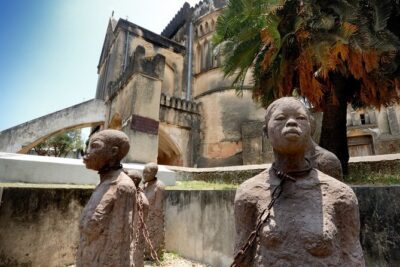
Full-Day Private Stone Town +Spice Farm and Prison Island Tour
Read our review →
Stone Town Historical Cultural Walking Guided Tour
Read our review →Browse the lists this tour appears in