

Reviewed · STONE TOWN TOURS
Stone Town Historical Walking Tour
Stone Town becomes a story you can walk. This Stone Town Historical Walking Tour turns alleyway wandering into clear history, with stops tied to the Persian, Portuguese, and Omani era stories of Zanzibar, plus the darker thread of the East African slave trade. I love that the tour is led by a professional, certified guide, and I especially love the Freddie Mercury connection, including the house linked to his life. One thing to keep in mind is that the meeting area around the House of Wonders can be a little hard to spot at first, so give yourself extra minutes.
If you like your sightseeing to feel practical, this one works. You get a focused 2 to 3 hour walk that hits major landmarks like Darajani Market and both Anglican and Catholic churches, with time for questions and photo stops. Since it is a private tour, you set the pace, and you are not squeezed into someone else’s schedule.
In This Review
- Key takeaways
- Getting Oriented in Stone Town Without Feeling Lost
- Your 2 to 3 Hour Route, from House of Wonders to Jaws Corner
- House of Wonders, Old Fort, and the Architecture Clues You Will Spot Later
- Freddie Mercury’s Stone Town Connection That Feels Real, Not Forced
- Darajani Market and the Church Stops for Everyday Zanzibar
- The Former Slave Market Site, and How to Prepare for It
- Value for Money: How $20 Really Works Here
- What Makes the Guides Stand Out in This Tour Style
- Timing and Logistics That Actually Affect Your Day
- Who This Stone Town Walking Tour Fits Best
- Should You Book This Tour?
- FAQ
- How long is the Stone Town Historical Walking Tour?
- What does the tour cost?
- Is this a private tour?
- Where does the tour start and end?
- Is there an admission fee included?
- What is included in the price?
- What is not included?
- Do I get a ticket on my phone?
- How early do people usually book this?
- What is the cancellation policy?
Key takeaways
- Certified guide focus on story, not just names on a sign
- Freddie Mercury house stop makes the tour feel personal and memorable
- Darajani Market and church stops show everyday Zanzibar alongside landmark sites
- Former slave market site visit gives important context for the East African slave trade
- Private tour feel so your group can move and ask questions at a human pace
Getting Oriented in Stone Town Without Feeling Lost
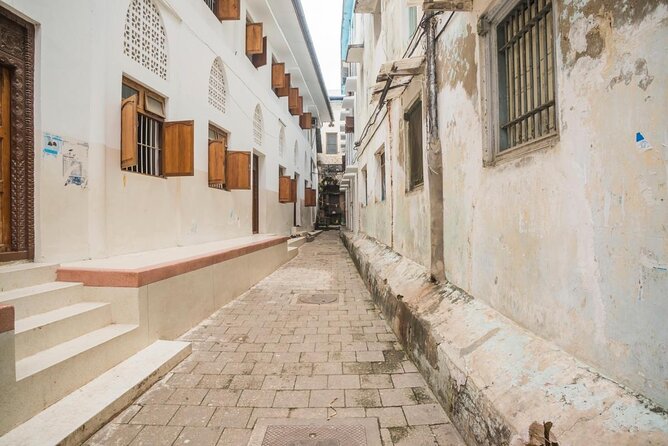
Stone Town is the kind of place where a wrong turn turns into a new surprise. That can be fun, but it also means you can miss what matters. This tour is designed to help you get your bearings fast while still letting you notice the details that make Stone Town feel like a living museum.
The walk is short enough to stay energetic, about 2 to 3 hours. The goal is not to cover every street, but to hit the big touchpoints that explain how Zanzibar became a crossroads for different peoples and powers. Expect a guided route through the old core, with stops that connect architecture, religion, trade, and power.
You also get a mobile ticket, which is simple if you like keeping travel days low-tech. And because it is a private tour, the guide can adjust the pace for your group, including families. If you are traveling with kids, this matters, because Stone Town streets can be fascinating but also a lot to process on your feet.
More Walking Tours in Zanzibar
- Stone Town Private Walking Tour
★ 5.0 · 371 reviews - Zanzibar: 3 Hours Private Stone Town walking Tour with Guide
★ 4.6 · 301 reviews - Zanzibar: Stone Town Historical Cultural Walking Guided Tour
★ 4.5 · 179 reviews
Your 2 to 3 Hour Route, from House of Wonders to Jaws Corner
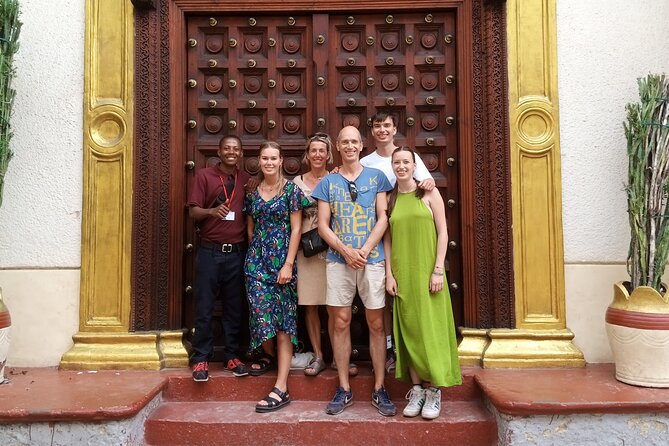
The tour typically starts at the House of Wonders area and ends back near the starting point. That is a big deal in Stone Town, because getting back on your own after wandering can be harder than it sounds, especially if you are mixing street views with heat and jet lag.
From there, you move through the older parts of Stone Town, including Mj Mpongwe, often described as the city’s older core. The guide’s job is to connect what you see to who lived there and why the streets and buildings look the way they do. You do not just walk past places, you get the meaning behind them.
As you go, you will hit well-known landmarks such as Jaws Corner. It is one of those spots that feels like a hinge in the town, where different streets and stories seem to meet. Guides usually use it as a natural pause, so you can look around, take photos, and get the next chunk of context before you keep moving.
There is also time built in for lingering. Stone Town rewards slow looking, especially at doors, balconies, and street-level details. Even on a short tour, a good guide will give you room to notice without turning the day into a full-day marathon.
House of Wonders, Old Fort, and the Architecture Clues You Will Spot Later
The House of Wonders stop is a logical opener because it signals the “this place matters” energy. Even if the building looks different in person than you expect from photos, the guide framing helps you connect it to the Sultanate-era story and the power shifts that shaped the city.
Next, you are likely to see the Old Fort. Forts are not just for battles. They are also about control of trade and movement. In Stone Town, that trade story is tied to global routes, which is exactly why the guide also connects the architecture to Zanzibar’s role across the Indian Ocean.
One practical tip: bring comfortable shoes and plan for uneven surfaces. Stone Town streets are not designed for roller skates, and your guide will not slow down to make the ground smoother. If you pace yourself and wear supportive footwear, you will enjoy the walking more and worry less about foot pain.
Freddie Mercury’s Stone Town Connection That Feels Real, Not Forced
The tour includes a Freddie Mercury Museum stop and the house where he lived. That is a fun hook, but the best part is how it is tied into the town itself, not treated like a random celebrity detour.
If you are a fan, you will probably remember the details more easily after the historical framing. The guide helps connect modern fame to an older place, showing you how Zanzibar can be both historic and current. A lot of people like ending a tour with a name they recognize, because it gives their photos a story you can tell later.
I like that this stop gives a break from the heavier themes. You still learn, but the tone shifts toward something lighter. It is a good rhythm check in the middle of a walk through topics that can get heavy.
More Stone Town walks:
- Zanzibar: Stone Town, Spice Tour, Prison Island with Lunch
★ 4.4 · 1,219 reviews - Zanzibar: Prison Island, Stone Town, & Spice Farm Tour
★ 4.5 · 579 reviews - Zanzibar; Prison Island, Nakupenda, StoneTown Tour with BBQ
★ 4.3 · 457 reviews - Zanzibar: Stone Town, Spice tour & Prison Island with Lunch
★ 4.6 · 453 reviews
Darajani Market and the Church Stops for Everyday Zanzibar

Not every stop is a postcard landmark. Darajani Market brings you into the everyday rhythm of the city. Even if you do not do a full shopping spree, seeing how markets work helps you understand why Stone Town functioned as a trading hub.
The market stop also helps you pace yourself. After a few historical buildings and street corners, a market is where your senses catch up. You can pause, look around, and refocus your attention on people and daily life.
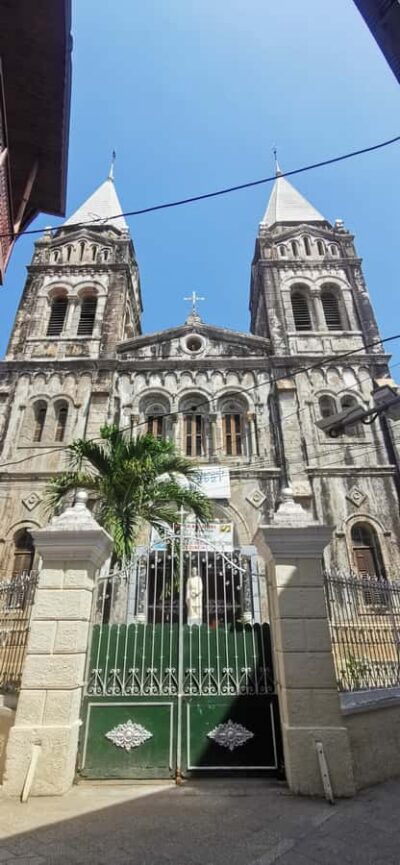
The tour also includes Anglican and Catholic churches. For me, seeing both matters. Zanzibar’s story is not one straight line. It is a mix of influences, and religion is one of the clearest ways to spot that layering. The guide’s explanation helps you read the streets beyond just dates and names.
If you have dietary or cultural sensitivities, plan your time around markets with care. The tour does not list food tastings as an included item, so you can choose what feels right. Treat any snacks as personal spending, not part of the tour price.
The Former Slave Market Site, and How to Prepare for It
This tour includes a visit to the former slave market site connected to the East African slave trade story. The listed entrance fee for this site is USD 5 per person, and it is not included in the tour price.
This is the part of Stone Town history that deserves a steady pace and respect. If you are sensitive to difficult topics, give yourself a moment before you arrive, then take the tour in small chunks. A good guide will keep the tone serious and factual, and they should be willing to answer questions without rushing you.
Practical note: bring a little cash for that USD 5. You will want to avoid the last-minute scramble that can happen when you are already tired and carrying water, phones, and shopping bags.
Also, do not treat this stop as just a box-check. Even on a short walk, the inclusion of this site is what turns the tour from sightseeing into real understanding of how Stone Town’s wealth and suffering are connected.
Value for Money: How $20 Really Works Here
The price is $20 per person, and the tour lasts about 2 to 3 hours. That is pretty good value for Stone Town, where self-guided wandering can leave you with lots of photos and not much context.
What you are paying for is not just movement and a route. You are paying for a professional, certified guide, plus a structured walk through high-impact landmarks. When you get a guide who answers questions clearly, $20 stops being a “cheap tour” and becomes a smart way to buy understanding.
There are also a couple costs to plan for:
- Former slave market entrance fee: USD 5 per person (not included)
- Tips for the guide at the end of the service (not included)
- Personal spending like souvenirs or snacks
If you want the best value, treat the guide like part of your sightseeing plan. Ask about what you see, not just what happened. You will get more out of the walk, and you will waste less time trying to guess meanings on your own later.
What Makes the Guides Stand Out in This Tour Style
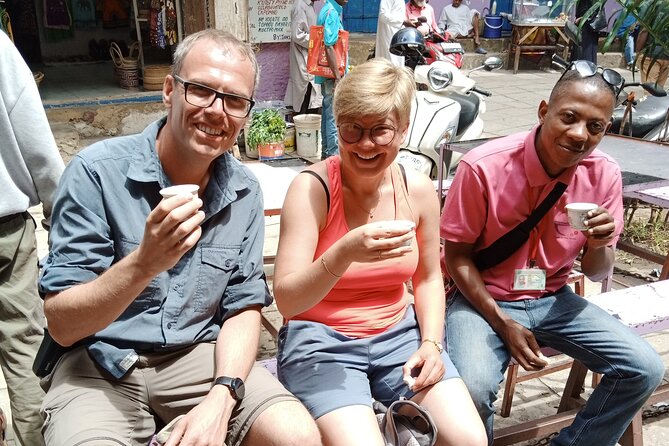
A strong pattern in the feedback is how the guides handle the “human parts” of Stone Town. People repeatedly highlight guides like Sultan, Rabik, and Alfa, with praise for patience, clear storytelling, and a friendly approach that keeps the group moving.
The best guides also manage time gently. For example, some guides are noted for helping people time their rides back after the tour. That is not glamour, but it matters, especially if you have a dinner plan or an airport shuttle waiting.
Family comfort is another strong theme. One big plus of a private tour is that a guide can keep kids engaged by adjusting pacing and attention. Stone Town can be long and twisty in a way that wears out adults too, so if a guide knows how to keep energy steady, you feel it immediately.
And then there is the practical help: guides often help with what to buy, what to skip, and how to shop without getting overwhelmed. If you want souvenirs, this tour can act like a “translator” for the market world.
Timing and Logistics That Actually Affect Your Day

This tour is booked on average 13 days in advance, so if you have a tight Zanzibar schedule, try to lock it in early. The operator provides confirmation at booking time, which helps you plan your walking and sightseeing around other reservations.
You will likely be offered weather-dependent timing. The experience requires good weather, and if it gets canceled due to poor weather, you should be offered a different date or a full refund. That matters because Stone Town can feel harsher when it is wet and slippery.
Meeting point: you start at House of Wonders (Sokoku St, Zanzibar, Tanzania) and return back to the meeting point area. Since some parts of Stone Town can be under construction or look different than the map thumbnail, it helps to show up a bit early and take an extra look at street signage before you decide you are in the wrong spot.
The tour is described as “Most travelers can participate,” which is broad. If you have mobility limits, you might find that 2 to 3 hours on uneven old-stone streets is the real challenge, not the sites themselves. Comfortable shoes are your best friend.
Who This Stone Town Walking Tour Fits Best
This is a great match if you want a short, structured introduction to Stone Town without losing the thread. It works well for:
- First-time visitors who want an order to the chaos
- People who care about Freddie Mercury as a fun anchor, but also want the wider town story
- Anyone who wants to understand the slave trade history context, not just landmarks
- Families who want a private pace instead of a packed group shuffle
If you want a long, slow, full-day photo expedition with no scheduled stops, this might feel too short. If you hate walking, Stone Town’s alleys are still alleys, and this is a walking tour by design.
Should You Book This Tour?
I think you should book it if you want Stone Town to make sense fast. The price is low enough to feel safe, and the guide-driven format is the difference between wandering and learning. The Freddie Mercury house stop gives you a fun payoff, while the former slave market site ensures the tour does not dodge the hardest parts of Zanzibar’s story.
I would hesitate only if you are worried about meeting point confusion near the House of Wonders area, or if you know you are uncomfortable with heavy history topics. If those are your concerns, plan your timing carefully and tell the guide what you need. A good guide will adjust.
Either way, wear good shoes, bring a little cash for the USD 5 former slave market entrance, and show up ready to ask questions. This tour is at its best when you treat the guide like your local translator.
FAQ
How long is the Stone Town Historical Walking Tour?
It typically runs about 2 to 3 hours.
What does the tour cost?
The price is $20.00 per person.
Is this a private tour?
Yes. It is private, so only your group participates.
Where does the tour start and end?
The meeting point is at the House of Wonders (R5QQ+JR, Sokoku St, Zanzibar, Tanzania), and the activity ends back at the meeting point.
Is there an admission fee included?
The tour lists admission ticket free, but the entrance fee for the former slave market site is USD 5 per person and is not included.
What is included in the price?
A professional and certified tour guide is included.
What is not included?
Not included are all fees and taxes, any means of transport, personal spendings and souvenirs, the former slave market entrance fee (USD 5 per person), and tips for the guide.
Do I get a ticket on my phone?
Yes. The tour uses a mobile ticket.
How early do people usually book this?
On average, it is booked 13 days in advance.
What is the cancellation policy?
You can cancel for a full refund up to 24 hours before the experience starts. If you cancel within 24 hours of the start time, the amount you paid is not refunded. The experience also depends on good weather, and you should be offered a different date or a full refund if canceled due to poor weather.
More Historical Tours in Zanzibar
- Stone Town’s Hidden History: Private Guided Walking Tour
★ 4.6 · 94 reviews - Private Historic Stone Town Tour
★ 5.0 · 79 reviews - Stone Town Historical Walking Tour
★ 5.0 · 40 reviews - Zanzibar Stone Town Historical Tour and Spice Farm Tour
★ 5.0 · 30 reviews
Just posted around Zanzibar
- Dolphin Watching Tour & Josani Forest Sea Trip – Zanzibar★ 4.5 · 3 reviews
- Stonetown Private Half-day Walking Tour★ 5.0 · 21 reviews
- Full Day Safari to Mikumi National Park from Zanzibar with Lunch★ 4.5 · 3 reviews
- Come and taste the Zanzibar feelings★ 5.0 · 12 reviews
- Cooking Class Tour★ 5.0 · 9 reviews
- Cultural Walking Tour through Stonetown, a UNESCO World Heritage Site★ 4.5 · 14 reviews
- Private Catamaran – Stone Town Islands & Sandbanks (5 hrs)★ 5.0 · 10 reviews
- Cave Tour & Rock Restaurant Visit★ 3.5 · 5 reviews
Stone Town Tours, compared.
Stone Town, Spice Tour, Prison Island with Lunch
Read our review →

Prison Island, Nakupenda, StoneTown Tour with BBQ
Read our review →Stone Town, Spice tour & Prison Island with Lunch
Read our review →
3 Hours Private Stone Town walking Tour with Guide
Read our review →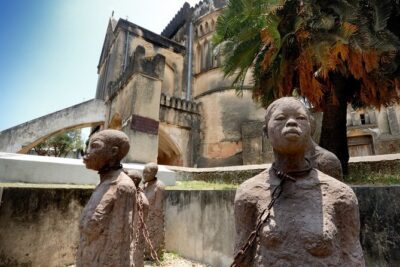
Full-Day Private Stone Town +Spice Farm and Prison Island Tour
Read our review →
Stone Town Historical Cultural Walking Guided Tour
Read our review →Browse the lists this tour appears in