
Reviewed · WILDLIFE
Tanzania Wildlife Cultural Safari from Arusha.
This Northern Circuit route hits wildlife and people, fast.
You get open-roof 4×4 game drives with window seats in small groups, plus classic stops like Manyara and Ngorongoro. I also like how the schedule mixes parks with cultural time, including a Hadzabe visit around Lake Eyasi and an Iraqw cultural center in Karatu.
Two more things I appreciate: the tour is built for small group travel (max 6 travelers per vehicle), and the safari pacing gives you real time in the Serengeti rather than racing through it. One possible drawback to factor in is the long, busy itinerary, with early starts and a couple of active moments like a hike in the Ngorongoro forest area.
In This Review
- Quick Take: Who This Fits Best
- Key Highlights You’ll Care About
- Northern Circuit, Done in a Way That Makes Sense
- Price and Value: What $4,999 Buys You Here
- Group Size and Vehicles: Why Small Really Matters
- Lodging Rhythm: Springlands, Coffee Lodge Style, and Serengeti Nights
- The Day-by-Day Safari Plan, Stop by Stop
- Day 1: Arrive in Arusha, Get Oriented, Sleep Easy
- Day 2: Arusha National Park for Easy Wildlife and Mount Meru Views
- Day 3: Lake Manyara for Ecosystems, Birds, and Tree-Climbing Lions
- Day 4: Karatu Area, Ngorongoro Forest Hike, and the Iraqw Cultural Center
- Day 5: Lake Eyasi for Birds, Then Hadzabe Hunter-Gatherer Life
- Days 6 to 8: Serengeti National Park for Big-Park Game Drives
- Day 9: Ngorongoro Crater Descent for Dense Wildlife and Rhino Country
- Day 10: Tarangire for Baobabs, River Water, and Dry-Season Wildlife Pull
- Day 11: Morning in Arusha, Then Fly Home
- Wildlife Value by Park: What You’re Actually Buying
- Cultural Stops That Add Real Meaning
- How to Prepare So Open-Roof Drives Stay Fun
- Should You Book This Safari From Arusha?
- FAQ
- What is the start time for this safari?
- How many travelers are in each safari vehicle?
- Do you use open-roof safari vehicles?
- Is pickup offered for this trip?
- Where do you stay during the safari?
- Which major parks are included?
- Is Lake Eyasi part of the itinerary, and does it include culture?
- What cultural activities are included besides Lake Eyasi?
- Are park entry fees included?
- Can I cancel for a full refund?
Quick Take: Who This Fits Best
If you want maximum sightings with a guide who’s actually paying attention, this is a strong choice. You’ll also like it if culture is not just a checkbox for you, especially the Lake Eyasi and Karatu days.
Key Highlights You’ll Care About
- Max 6 travelers per vehicle, so you’re not lost in a huge herd
- Open-roof custom 4x4s with window seats, built for spotting and photos
- Serengeti time for migration country, with multiple days in the park
- Ngorongoro Crater descent, plus a special focus on rhino habitat
- Lake Eyasi Hadzabe experience, a rare chance to see hunter-gatherer life
- Iraqw cultural center in Karatu, paired with a short forest hike and waterfall
More Safaris in Arusha
- Balloon Safari & Bush Breakfast in Serengeti – Miracle Experience
★ 5.0 · 1,646 reviews - 4 Days Group Camping Safari
★ 5.0 · 1,101 reviews - 5 Days Group Camping Safari
★ 5.0 · 730 reviews
Northern Circuit, Done in a Way That Makes Sense
This safari from Arusha is aimed at the classic Northern Circuit greatest-hits: Arusha National Park, Lake Manyara, Serengeti, Ngorongoro, and Tarangire. The value is in the way it stitches these places together with shorter “living time” between parks, rather than treating the trip like a nonstop driving contest.
What also helps is the cultural side. Many big-sightseeing safaris skip the human scale. Here, you get time with the Iraqw in Karatu and the Hadzabe around Lake Eyasi. That mix is exactly what turns a good wildlife trip into a trip that sticks with you.
Price and Value: What $4,999 Buys You Here
At $4,999 per person for an 11-day trip, you’re paying for more than vehicle rentals and long-distance driving. You’re paying for a system.
From the structure of the day-by-day plan, park-related admissions are handled for you on the days marked as admission ticket free, and the tour summary specifically notes park entry fees are included (at least for the core portion). You’re also not doing the logistics yourself: pickup is offered, you’re transferred to and from the airport, and you’ll get a mobile ticket.
Is it cheap? No. But for a route that includes multiple major parks plus Lake Eyasi culture, the cost looks closer to a “full safari program” than a basic transportation-only tour. If you compare it to piecing together a driver, park fees, lodges, and cultural visits one-by-one, this price becomes easier to justify.
Group Size and Vehicles: Why Small Really Matters
One reason this itinerary feels comfortable is the way it limits crowding. You’re traveling in a maximum of 6 travelers per vehicle, with window seats. That means your guide can actually aim the vehicle at the right spot and keep track of who is spotting what.
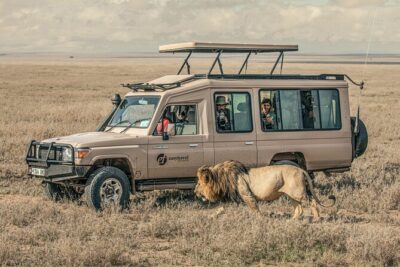
Then there are the vehicles themselves: custom designed 4×4 safari vehicles with open roofs for game viewing. In practice, that’s the difference between seeing animals through glass and actually watching their behavior. It also makes sunrise and late-afternoon drives easier on your eyes.
The trade-off is basic comfort. Open roofs mean you’ll feel sun, wind, and dust more than you would in a closed vehicle. Pack for that, and you’ll be happier.
More safaris from Arusha:
- 3 Days Serengeti & Ngorongoro Group Camping Safari
★ 5.0 · 574 reviews - 7-Day Premium Luxury Tanzania Safari All-Inclusive
★ 5.0 · 426 reviews - 3-Day Classic Serengeti Safari
★ 5.0 · 263 reviews - 8 Days Great Wildebeest Calving Migration Safari from Arusha
★ 5.0 · 254 reviews
Lodging Rhythm: Springlands, Coffee Lodge Style, and Serengeti Nights
Your base hotels are listed as:
- Springlands hotel on Day 1 in Arusha
- Highview Coffee Lodge or similar for multiple nights (including Karatu area and after Ngorongoro)
- Serengeti Safari Lodge or similar for your Serengeti nights
The tour info specifically calls out that some hotels are inside park areas and others are outside the parks. That matters because staying right inside the action can change your morning feel, you wake up closer to the wildlife time window.
Also, Highview Coffee Lodge is described with an attractive, tranquil environment, plus the overall vibe you’re buying here is calm after a full day of drives.
The Day-by-Day Safari Plan, Stop by Stop
Day 1: Arrive in Arusha, Get Oriented, Sleep Easy
You’re met at the airport with a name sign, then transferred to Springlands hotel. After arrival, you’ll have a meal and a pre-safari briefing. That first-day briefing matters more than people think. A good guide uses it to set expectations so you know what to look for on the next days.
You also get downtime: a swimming pool, gardens, and a bar and restaurant on site.
Good for you: you’ll start the safari rested, not frazzled.
Day 2: Arusha National Park for Easy Wildlife and Mount Meru Views
Today is game viewing in Arusha National Park. The park sits under Mount Meru (4,565m) and you can expect a good range of species even without the “migration drama” of Serengeti.
The itinerary calls out animals like hippos, giraffes, zebras, warthogs, waterbucks, and bushbucks. It also notes rarer sightings like reedbucks, leopards, and hyenas are possible but more occasional.
This park is also described as alkaline, creating a breeding area for flamingoes year-round. That detail is the kind of thing you won’t get if you just treat parks as a checklist.
Possible drawback: if you’re expecting a chaotic abundance of mega-sightings every hour, Arusha can feel more varied and sometimes slower than the biggest parks.
Day 3: Lake Manyara for Ecosystems, Birds, and Tree-Climbing Lions
Lake Manyara National Park is set against the Rift Valley escarpment, and the big selling point here is variety. The park includes evergreen groundwater forest, acacia woodland, grassy plains, a swampy fan delta, and the lake itself. That variety supports lots of wildlife and bird life.
The tour specifically calls out the rare tree climbing lions Manyara is known for. You’ll also look for buffalo, impala, giraffe, bushbuck, waterbuck, hippos, and elephants near the lake, plus monkey troops like blue monkeys, vervet monkeys, and olive baboons.
What to expect: you may see more birds and specialized habitat moments than in some other parks.
Day 4: Karatu Area, Ngorongoro Forest Hike, and the Iraqw Cultural Center
This day is split between nature and people.
In the morning, you head into the Karatu area between Ngorongoro and Lake Manyara. Then you hike for about two hours through the Ngorongoro forested slopes, where the itinerary mentions a magnificent waterfall and the “elephant caves,” created by elephants digging for vitamin-rich soil.
In the afternoon, you visit the Iraqw cultural center. The tour notes that the areas around Karatu are Iraqw homeland, and you can see locally developed intensive cultivation techniques. That’s one of the more grounded cultural touches on the trip.
Note for your planning: this is an active day. Comfortable shoes matter, and you’ll want light layers for the forest hike.
Day 5: Lake Eyasi for Birds, Then Hadzabe Hunter-Gatherer Life
Lake Eyasi is described as a mildly alkaline lake about 55km long. The bird focus is real: flamingos, pelicans, spoonbills, weavers, spurfowls, storks, barbets, egrets, and more.
Then the cultural part comes in strongly. You spend the day meeting the Hadzabe, an indigenous hunter-gatherer group known as Bushmen. You’ll visit homesteads and observe ways of life. The itinerary also notes hunting in groups with bows and arrows, and that the Hadzabe use their own medicines to treat diseases. You’ll also meet people who speak the Hadzabe language.
Good for you if: you want culture that’s tied to daily survival and land knowledge, not just a staged dance.
Days 6 to 8: Serengeti National Park for Big-Park Game Drives
You drive to Serengeti and then spend multiple days doing game drives. The itinerary frames Serengeti as endless plains, and its Maasai meaning is referenced as such.
The park focus is on the Great Wildebeest Migration, with massive herds of plains game like wildebeest, zebra, and antelope. You also look for predators like lion and cheetah near kopjes.
The itinerary notes Serengeti’s changing terrain, from open grass plains to savanna with acacia trees and hilly wooded grassland. That variety can mean your sightings change by the day and even by the hour.
There’s also an optional detour before or on the way in:
- Maasai village visit for culture and possible tribal activities
- Olduvai Gorge visit, called the Cradle of Humanity, plus a museum
Here’s the practical take: if you’re the type who gets impatient on long drives, Serengeti day(s) can still feel like they move slowly at times, because wildlife doesn’t show up on demand. But multiple days help you catch the right moments.
Day 9: Ngorongoro Crater Descent for Dense Wildlife and Rhino Country
Today is Ngorongoro Crater, described with hard numbers: the crater is 600m deep, 16km across, and 265 sq km. The itinerary calls it one of the world’s great natural wonders, and more importantly for your camera, it’s a place where many animals can share the same space.
You do a morning game drive on the crater floor. The itinerary says you can find Tanzania’s last remaining black rhino grazing on open grassland. It also notes around 20,000 large animals live in the crater, plus species like lion, cheetah, eland, zebra, and gazelle. Flamingos can often be seen at Makat Soda Lake.
What this feels like: crater drives are less about “find one animal” and more about “watch an ecosystem in a bowl.”
Day 10: Tarangire for Baobabs, River Water, and Dry-Season Wildlife Pull
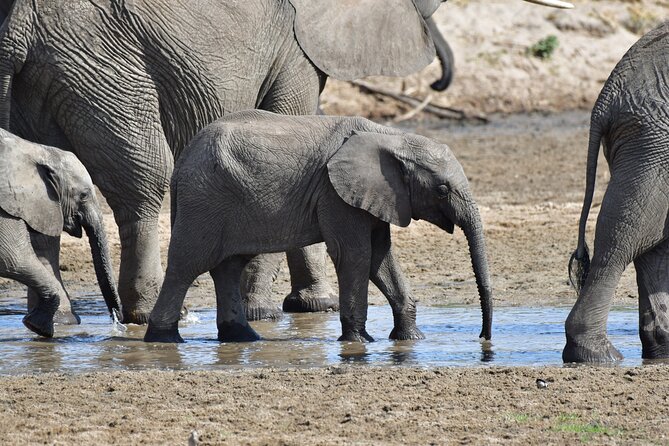
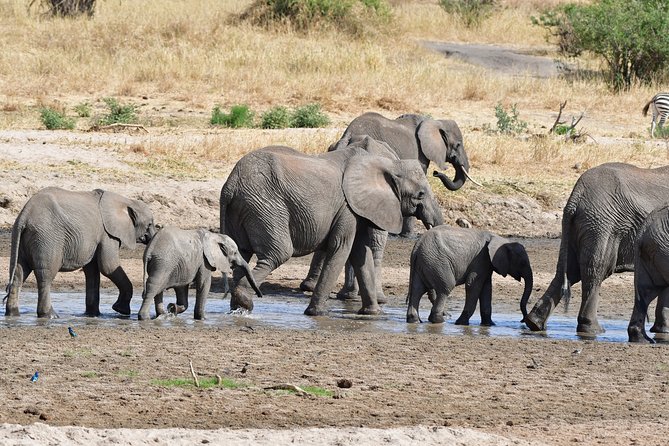
Tarangire National Park is built around the Tarangire River, which never dries up. The tour calls it the only source of water during the dry season, which is why wildlife concentrates there.
The landscape includes grassy savannah plains, swamps, hills, and spectacular baobabs. You’ll have a full day in the park for game viewing.
Practical note: Tarangire can be a bird-and-mammal show. If you love seeing animals grouped around the water, this is the day for it.
Day 11: Morning in Arusha, Then Fly Home
The last day is a morning at leisure in Arusha, then transfer to Kilimanjaro airport for your flight home.
Wildlife Value by Park: What You’re Actually Buying
This safari spreads wildlife chances across different habitats, not just one type of savanna.
- Arusha National Park: good variety, with a flamingo breeding angle due to alkaline conditions, plus animals like giraffes and hippos.
- Lake Manyara: ecosystem variety and the chance for tree-climbing lions, plus lake-side elephants and many monkeys.
- Serengeti: migration country energy, with predators on the hunt among kopjes.
- Ngorongoro Crater: dense wildlife and black rhino habitat, with flamingo opportunities at Makat Soda Lake.
- Tarangire: river-driven animal concentration and baobab scenery.
And the guide component is worth calling out. In the feedback connected to this operator, guides such as Yusuph, Marck, Baraka, Swai, and Moses are repeatedly highlighted for expert guiding and friendly energy. One guide is even singled out for being easygoing and charming, another for returning a trip feeling perfectly organized. That consistency is what you want when you’re spending full days on the move.
Cultural Stops That Add Real Meaning
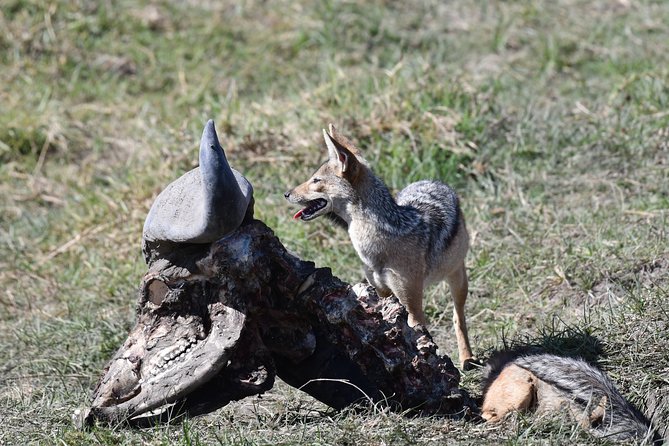
This safari does culture in two main ways.
- Iraqw cultural center in Karatu, tied to cultivation and how people manage land.
- Hadzabe visit near Lake Eyasi, tied to hunter-gatherer life, hunting methods, homesteads, and traditional medicine.
Then you have possible add-ons for the Serengeti travel days:
- Maasai village visit, with optional participation in activities
- Olduvai Gorge and its museum connection to early humanity
If you care about understanding how people live with the environment around them, these pieces give context to the wildlife. A lion sighting hits different when you’ve already spent a day seeing how communities farm, hunt, and manage resources.
How to Prepare So Open-Roof Drives Stay Fun
You don’t need fancy gear, but you do need the basics.
- Sunscreen and sunglasses. Open roofs mean constant sun exposure.
- A hat and light layers. Weather can shift during crater and savanna time.
- Binoculars if you have them. Some animals are close, others are “distant but important.”
- Comfortable shoes for the two-hour forest hike on Day 4.
Also, be ready for “sit and watch” time. Game drives are not only about speed. The best sightings often come when you’re patient and your guide is positioning the vehicle well.
Should You Book This Safari From Arusha?
I’d book it if you want:
- a small-group safari with open-roof viewing
- multiple days in Serengeti
- real cultural visits at Lake Eyasi and Karatu
- a route that covers multiple habitat types, not just one park style
I’d hesitate if you dislike long days, early mornings, and the physical side of at least one hike. This itinerary packs in a lot, so it’s better for travelers who like structure and momentum rather than loose wandering.
If you’re the kind of traveler who wants memorable wildlife plus meaningful cultural moments, this program is a solid fit. It feels designed to maximize sightings while still giving you enough human-scale experiences to make the trip feel complete.
FAQ
What is the start time for this safari?
The start time is listed as 8:30 am.
How many travelers are in each safari vehicle?
The tour states a maximum of 6 travelers per vehicle.
Do you use open-roof safari vehicles?
Yes. The safari vehicles are described as custom designed 4×4 vehicles with open roofs for game viewing, and you have window seats.
Is pickup offered for this trip?
Pickup is offered.
Where do you stay during the safari?
The itinerary names Springlands hotel for Day 1, and Highview Coffee Lodge or similar for multiple nights, plus Serengeti Safari Lodge or similar for Serengeti nights. It also notes that some hotels are inside parks and others are outside.
Which major parks are included?
Arusha National Park, Lake Manyara National Park, Serengeti National Park, Ngorongoro Crater (Ngorongoro Conservation Area / crater drive), and Tarangire National Park are all included.
Is Lake Eyasi part of the itinerary, and does it include culture?
Yes. Day 5 includes a visit to Lake Eyasi with a meeting and time with the Hadzabe people.
What cultural activities are included besides Lake Eyasi?
The itinerary includes a visit to the Iraqw cultural center in the Karatu area. It also notes optional visits to a Maasai village and Olduvai Gorge.
Are park entry fees included?
The itinerary lists admission ticket free for several park days, and the tour summary states park entry fees are included for the core safari segment. Confirming inclusions for every day is still smart.
Can I cancel for a full refund?
The policy says free cancellation is available up to 24 hours in advance for a full refund.
More Wildlife in Arusha
- Tanzania Wildlife Encounters – 6 Days
★ 5.0 · 277 reviews - 6 Day Tanzania Wildlife Mid range Safari
★ 5.0 · 54 reviews - 5 Days 4 Nights Tarangire, Serengeti , Ngorongoro & Manyara Wildlife Safari
★ 5.0 · 40 reviews - 4 Days Wildlife Safari and Cultural Experience in Tanzania
★ 5.0 · 23 reviews
Just posted around Arusha
- 8 Days Serengeti Migration safari★ 5.0 · 11 reviews
- tarangire & ngorongoro 2 days tour★ 5.0 · 14 reviews
- serengeti, ngorongoro & tarangire 4 days private tour★ 5.0 · 18 reviews
- tarangire, ngorongoro & lake manyara park 3 days private tour★ 5.0 · 11 reviews
- serengeti & ngorongoro 3 days private tour★ 5.0 · 15 reviews
- climb the KILIMANJARO via Lemosho route★ 5.0 · 4 reviews
- Mt. Kilimanjaro: Shira plateau to Cathedral point 3872m Day hike★ 5.0 · 7 reviews
- 2 Days Tanzania Midrange Group Join Safari★ 5.0 · 7 reviews
Wildlife, compared.

5 Days 4 Nights Tarangire, Serengeti , Ngorongoro & Manyara Wildlife Safari
Read our review →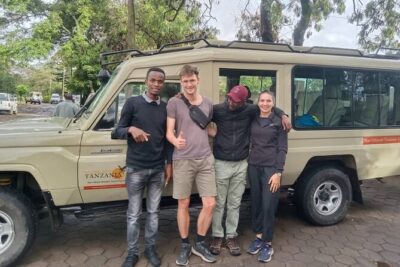
4 Days Wildlife Safari and Cultural Experience in Tanzania
Read our review →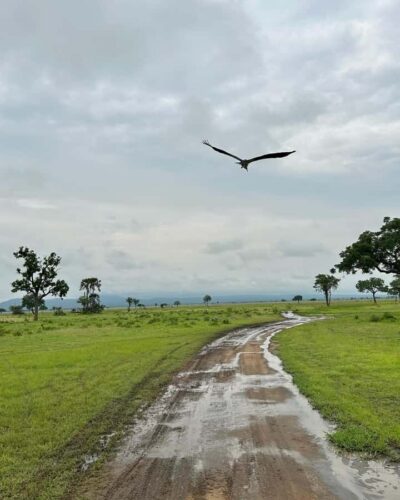
SAFARI WILDLIFE 3 DAYS 2 NIGHT FROM ZANZIBAR TO MIKUMI
Read our review →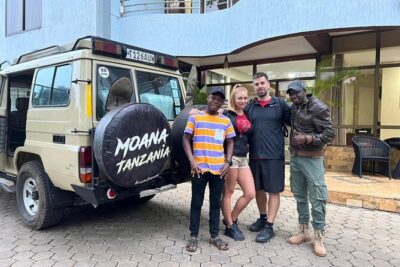
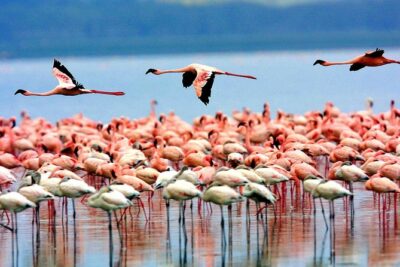
8 Days 7 Nights Tanzania Wildlife & Culture Lodge Safari
Read our review →Browse the lists this tour appears in