
Reviewed · WILDLIFE
8 Days 7 Nights Tanzania Wildlife & Culture Lodge Safari
Tanzania can feel big and intimidating, this safari keeps it organized. You get a tight north circuit built around wildlife game drives and a cultural stop that goes beyond just spotting animals. Two things I especially like: the park sequence (Tarangire, Serengeti, Ngorongoro, Lake Eyasi, then Manyara) and the value of all-fees, all-taxes pricing paired with private transportation.
You also start with a real briefing right away at Masailand Safari Lodge, including time to check your camping outfit and sleeping bag. That early setup matters because it helps you stop worrying about logistics and start paying attention to what your driver-guide is watching for.
One drawback to plan for: the trip packs in major driving days between parks. If you want lots of downtime and zero road time, this route may feel like a lot.
In This Review
- Key highlights worth the focus
- First morning in Arusha or Moshi, then straight into wildlife mode
- Tarangire National Park and the Tarangire River herds
- Olduvai Gorge en route to the Serengeti plains
- Serengeti watering holes and hippo-pools full-day game drive
- Ngorongoro rim night at Rhino Lodge, then a crater day that’s hard to top
- Inside Ngorongoro Crater: black rhinos, lion hunts, and flamingos
- Lake Eyasi: birdlife by the shore and a slower nature-and-culture rhythm
- Lake Manyara on the way back to Moshi or Arusha
- Price and logistics: what your $3,842.86 really buys
- Who this safari suits best, and who should rethink it
- Should you book this 8-day Tanzania Wildlife and Culture Lodge Safari?
- FAQ
- Where does the safari start?
- Where does the safari end?
- What parks and areas are included?
- Is this a private tour?
- What meals are included?
- What is included in the price?
- What is not included?
- Is pickup offered?
- What ticket method do you use?
- Can I cancel for a full refund?
Key highlights worth the focus
- Private safari, just your group with private transportation throughout
- Tarangire River sightings where animals concentrate around permanent water
- Olduvai Gorge stop as a meaningful pause on the way to the Serengeti plains
- Serengeti full-day drive with watering holes and hippo-pools timing
- Ngorongoro Crater day for rare black rhino, lion action, and water birds
- Lake Eyasi stays focused on birdlife plus a culture-and-nature pace
First morning in Arusha or Moshi, then straight into wildlife mode
Your trip starts at Kilimanjaro International Airport or Arusha Airport with pickup and an easy transfer to Masailand Safari Lodge. The start time is 7:30 am, and right after arrival you meet the safari coordinator for a briefing. I like this approach because it sets expectations early, including a practical check of your sleeping bag and camping outfit, plus a chance to choose your preferred meals during the safari.
From day one, the rhythm is simple: travel, then game drive or a clear “reset” moment at the lodge. That matters on a wildlife safari, because sightings often depend on timing, not luck. If you’re the kind of traveler who likes a plan, but still wants flexibility once you’re out on the road, this format usually feels comfortable.
One more value point I noticed right away is how lodge-based it is. You’re not living out of a tent every single night, and you still get the sense of “out there” from being in and around protected areas.
More Safaris in Arusha
- Balloon Safari & Bush Breakfast in Serengeti – Miracle Experience
★ 5.0 · 1,646 reviews - 4 Days Group Camping Safari
★ 5.0 · 1,101 reviews - 5 Days Group Camping Safari
★ 5.0 · 730 reviews
Tarangire National Park and the Tarangire River herds
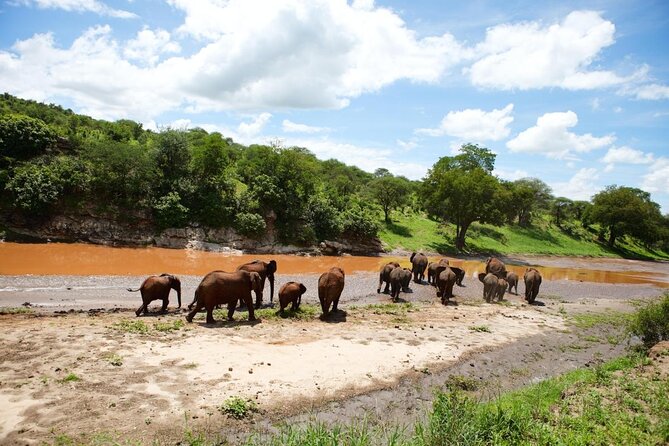
After breakfast, you head to Tarangire National Park, a drive of about 3 hours. This park earns its reputation quickly, because Tarangire is tied to the permanent waters of the Tarangire River. In plain terms, when animals need water, they show up. And when they show up, your chances to see a mix of species go up.
What you can expect here is a steady parade of big animals, including wildebeest and zebras, plus elephants, elands, and oryx. The tour also highlights that animals gather until rains push them toward new grazing areas. Even if you’re not chasing a specific animal, this is a day that often feels “busy” in the best way because herds tend to form around reliable water sources.
A practical consideration: Tarangire tends to reward patience. You’re not just driving past scenery. You’re waiting for moments, then reacting fast when your guide spots something good nearby.
Olduvai Gorge en route to the Serengeti plains
On your way to the Serengeti, you stop at Olduvai Gorge. The drive to Serengeti via Olduvai takes about 3 to 4 hours. This is not a quick photo stop. It’s an archaeological site where early human fossils were first discovered, and it adds a second layer to your trip. You come for wildlife, but you leave with a reminder that this region has been shaped by people for a very long time.
Then the day turns back to animals. In the evening, you go on a game drive in the Serengeti. The timing is key. The tour specifically notes that this is a favorite time for carnivores to hunt, which is exactly the kind of detail you want on a first Serengeti visit. If your goal is not just seeing animals but also watching natural behavior, this evening drive helps.
Guides matter a lot in places like this. Many trips mention drivers like Julius, Noel, Thomas, Temba, Bonny, and Chepa, and the common thread is that when your driver is sharp, the whole day feels smoother. You spend less time wondering and more time watching.
Serengeti watering holes and hippo-pools full-day game drive
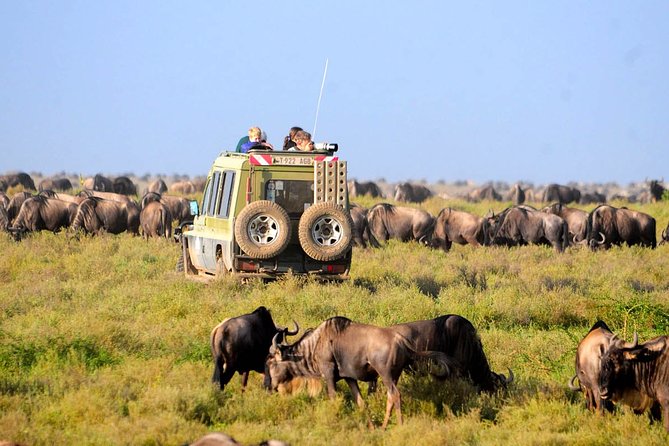
Day four is your full-day Serengeti game drive. After breakfast, you start in the morning, then spend the day moving between watering holes, hippo-pools, and other areas of interest. At midday, you take a picnic lunch while you’re out in the open.
I like this pacing because it mirrors how wildlife actually uses the land. Water is the magnet, and watering areas can become “stages” where you might see multiple species using the same spot. The tour also calls out the vastness of the Serengeti, including the idea that it holds one of the largest concentrations of plain game. That kind of scale is why day drives here can feel different than shorter park tours.
Two practical tips I’d take from how this day is structured:
- Plan for a long day outdoors. Your best sightings are tied to when wildlife moves.
- Don’t assume every animal will appear instantly. This route is built for repeated look-backs to watering zones.
Then you return to the lodge late in the day for rest, dinner, and overnight.
More safaris from Arusha:
- 3 Days Serengeti & Ngorongoro Group Camping Safari
★ 5.0 · 574 reviews - 7-Day Premium Luxury Tanzania Safari All-Inclusive
★ 5.0 · 426 reviews - 3-Day Classic Serengeti Safari
★ 5.0 · 263 reviews - 8 Days Great Wildebeest Calving Migration Safari from Arusha
★ 5.0 · 254 reviews
Ngorongoro rim night at Rhino Lodge, then a crater day that’s hard to top
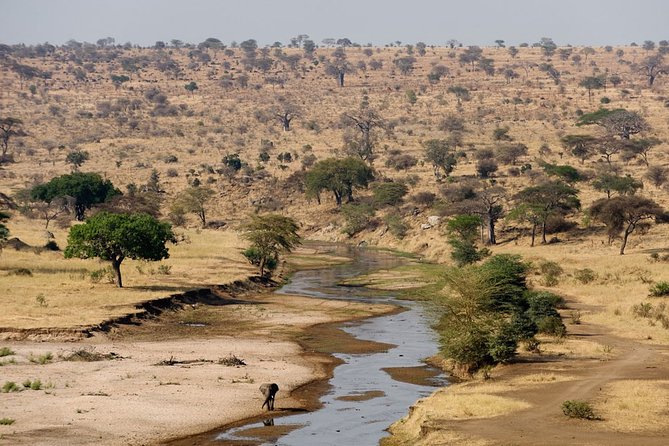
After a morning game drive on day five, you drive to Ngorongoro via Olduvai Gorge, then settle on the rim. You spend the night at Rhino Lodge, which puts you in a good position for an early crater descent the next day.
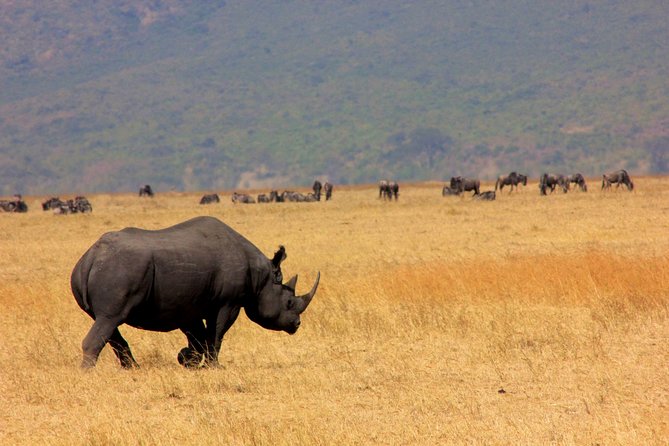
From here, the tour turns serious about one of Africa’s headline mammals. Ngorongoro Crater is framed as a top place to see the rare black rhino. And because it’s a crater, you’re also dealing with dense wildlife concentrations. That’s where the lion and water-bird action comes into play too.
Even before crater day, I think the rim stay is smart. It gives you time to rest after a driving day and still keep your sight window open for the next morning’s crater plan. It also sets a calmer tone than rushing straight down and trying to do everything in one long day.
Inside Ngorongoro Crater: black rhinos, lion hunts, and flamingos
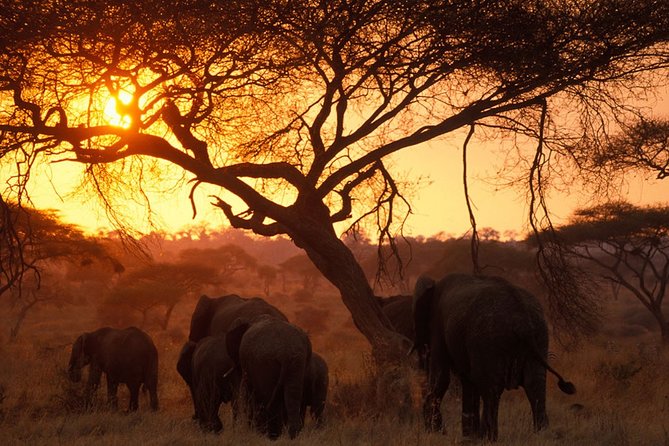
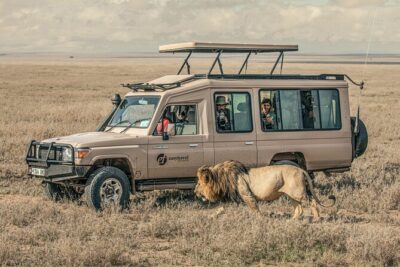
Day six is your crater day. After breakfast you drive down into Ngorongoro Crater and go on a full day game drive. This is the day built around big, unforgettable species. The tour highlights black rhino as a major target. It also calls out lions, including black-mane lions, plus a strong chance of other predators like leopards, cheetahs, and hyenas.
If you’re the type who loves “the whole food chain,” this is where it shows. The tour lists antelope family animals and lots of smaller mammals too, meaning it’s not only about the big icons. You get a more complete sense of how the crater ecosystem operates.
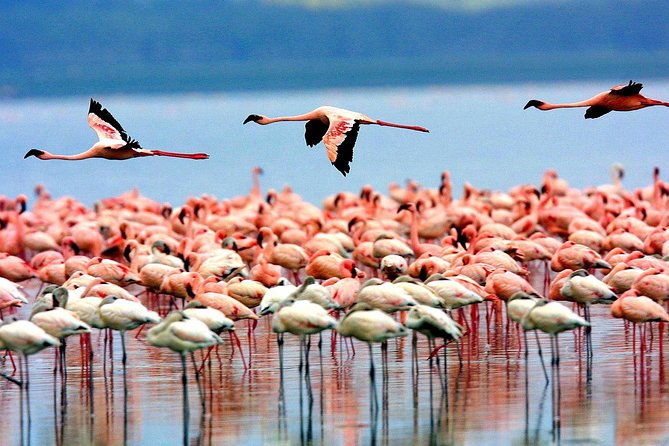
And don’t sleep on birds. The tour notes colourful flamingos and a variety of water birds. In a crater full of wildlife, it’s a nice contrast to see water-dependent species sharing the same day.
Then late in the afternoon, you drive onward to Karatu town for dinner and rest at the lodge. This overnight shift matters. It prevents you from turning crater time into a “wrap-up” that forces you to drive too far immediately after the best sightings.
Lake Eyasi: birdlife by the shore and a slower nature-and-culture rhythm
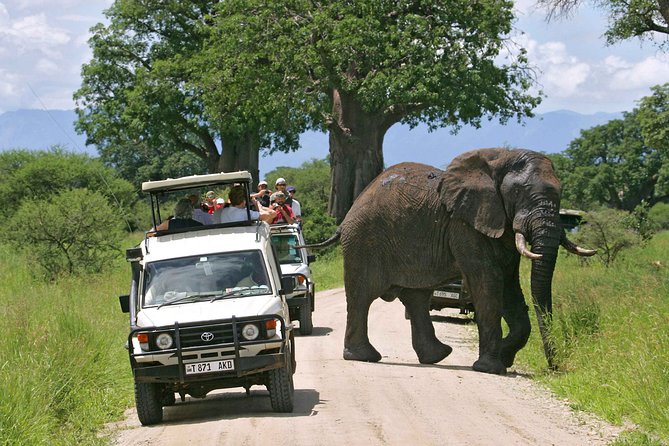
After breakfast on day seven, you drive to Lake Eyasi. The tour describes it as a place where you can see a great variety of birdlife along the shore, which alone makes it a strong stop. Eyasi also gets attention for its meadows along the shoreline, where wildlife can appear, including hippos and monkeys. The tour also says you might find the elusive leopard.
The big bird note here is flamingos, including both greater and lesser flamingos. So if you’re traveling for more than just the big mammals, Eyasi gives you that “other side” of wildlife watching.
Where Eyasi feels different is the accommodation style. The tour points out private lodges and tented camps set in forest clearings using local materials. I read that as intentional: it’s trying to keep you close to the place, not just placed near it.
If you want a cultural element, this is also the kind of stop that tends to feel more human-scale than the big parks. The tour description keeps it framed around wildlife and birds, but the setting makes it a natural place to slow down and absorb what you’re seeing.
Lake Manyara on the way back to Moshi or Arusha
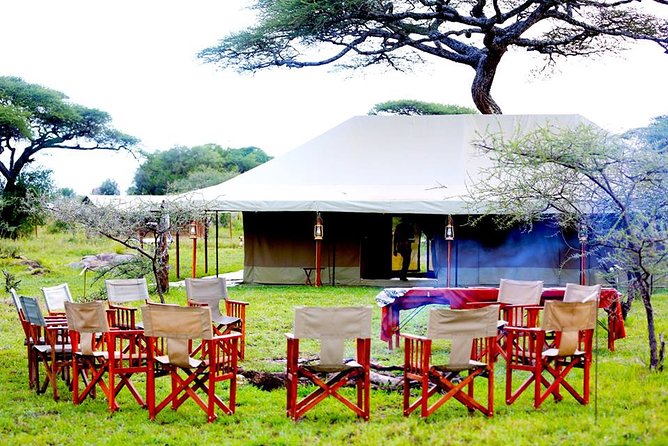
Your last day shifts from Eyasi to Lake Manyara National Park. The drive takes about 2 hours before entering the park. Manyara is described as a place with frequent sightings of zebras, impalas, monkeys, giraffes, buffalos, hippos, and warthogs.
This final park day is a good “wrap” because it gives you variety after earlier days focused heavily on Serengeti and Ngorongoro. If your trip has felt like a series of peaks, Manyara can feel like a solid, satisfying landing.
Before dark, you’re driven back to Moshi or Arusha for dinner and overnight stay. This timing is useful because it keeps you from rushing your last day into a travel scramble.
Price and logistics: what your $3,842.86 really buys
At $3,842.86 per person for 8 days and 7 nights, this safari is not cheap. The main reason it can still feel like good value is what’s included. The tour lists breakfast, lunch, dinner, plus all fees and taxes, and private transportation.
That matters because safari costs often balloon once you add park fees, transfers, and meal plans. Here, the structure is set so you’re paying for a whole experience, not piecing together daily essentials. You also get a private tour, meaning your group is the only group on the vehicle.
What you should plan to pay separately:
- Tips
- Insurance
- Visa for Tanzania
And because it’s a mobile ticket, you should be ready to show your ticket on the move rather than relying on a paper exchange.
Also, you’re starting and ending near Kilimanjaro, which reduces the chance you’ll waste precious days crossing the country.
Who this safari suits best, and who should rethink it
This trip fits best if you want a single north circuit that hits major wildlife hotspots and still leaves room for a nature-and-birds stop at Lake Eyasi. It’s also a strong option for families or mixed ages, since it’s private and can feel more flexible than a large-group format. Several guide names show up repeatedly, like Noel, Thomas, Temba, Bonny, and Julius, and that usually indicates good communication and smooth driving, especially helpful with kids or teens.
Who might reconsider:
- If you need lots of downtime between activities, the driving days between parks could feel intense.
- If you want a trip built around one park only, this route will feel like you’re moving too often.
The one “tradeoff” I’d focus on is pace. You’ll see a lot, but you’re also living inside a movement schedule.
Should you book this 8-day Tanzania Wildlife and Culture Lodge Safari?
If you’re aiming to see multiple headline areas in northern Tanzania without stitching together separate tours, I think this is a smart booking. The park sequence makes practical sense, and the inclusion of meals, fees, taxes, and private transport reduces the budget surprises that can pop up on safari.
I’d book it if your priority is:
- Wildlife and predator action in Serengeti timing,
- A high-probability crater day in Ngorongoro,
- A change of pace with Lake Eyasi for birdlife and that slower shoreline feel.
I’d pause if you’re the kind of traveler who wants long quiet mornings and short drives only. This trip is built for momentum.
FAQ
Where does the safari start?
The tour starts with pickup at Kilimanjaro International Airport (or Arusha Airport transfer), and it begins at 7:30 am.
Where does the safari end?
It ends back at the meeting point.
What parks and areas are included?
You visit Tarangire National Park, Serengeti National Park, Ngorongoro Crater, Lake Eyasi, and Lake Manyara National Park.
Is this a private tour?
Yes. This is a private tour/activity, and only your group participates.
What meals are included?
The tour includes breakfast, lunch, and dinner.
What is included in the price?
Included items are all fees and taxes and private transportation, along with the meals listed above.
What is not included?
The tour does not include tips, insurance, or a Tanzania visa.
Is pickup offered?
Yes, pickup is offered.
What ticket method do you use?
The tour mentions a mobile ticket.
Can I cancel for a full refund?
You can cancel up to 24 hours in advance for a full refund. If you cancel less than 24 hours before the start time, the amount paid is not refunded.
More Wildlife in Arusha
- Tanzania Wildlife Encounters – 6 Days
★ 5.0 · 277 reviews - 6 Day Tanzania Wildlife Mid range Safari
★ 5.0 · 54 reviews - 5 Days 4 Nights Tarangire, Serengeti , Ngorongoro & Manyara Wildlife Safari
★ 5.0 · 40 reviews - 4 Days Wildlife Safari and Cultural Experience in Tanzania
★ 5.0 · 23 reviews
Just posted around Arusha
- 8 Days Serengeti Migration safari★ 5.0 · 11 reviews
- tarangire & ngorongoro 2 days tour★ 5.0 · 14 reviews
- serengeti, ngorongoro & tarangire 4 days private tour★ 5.0 · 18 reviews
- tarangire, ngorongoro & lake manyara park 3 days private tour★ 5.0 · 11 reviews
- Mt. Kilimanjaro: Shira plateau to Cathedral point 3872m Day hike★ 5.0 · 7 reviews
- serengeti & ngorongoro 3 days private tour★ 5.0 · 15 reviews
- climb the KILIMANJARO via Lemosho route★ 5.0 · 4 reviews
- Kilimanjaro Waterfalls Hike & Moshi Hot Springs Day Trip Tour★ 5.0 · 4 reviews
Wildlife, compared.

5 Days 4 Nights Tarangire, Serengeti , Ngorongoro & Manyara Wildlife Safari
Read our review →
4 Days Wildlife Safari and Cultural Experience in Tanzania
Read our review →
SAFARI WILDLIFE 3 DAYS 2 NIGHT FROM ZANZIBAR TO MIKUMI
Read our review →
From Moshi or Arusha: Serval Wildlife Sanctuary Trip
Read our review →Browse the lists this tour appears in