Reviewed · PRIVATE
PRIVATE Wildebeest Calving Safari, Tanzania, January to March
Calves in minutes, lions on cue. This January to March private safari in Tanzania is built around the wildebeest calving season in the southern Serengeti area. You also get big-game classics in Serengeti and the dramatic drop into Ngorongoro Crater.
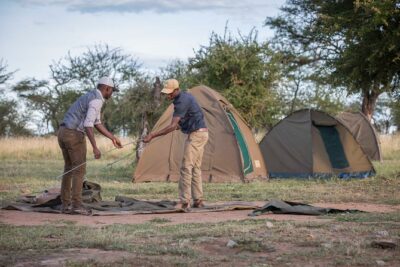
I like the practical setup for wildlife viewing: a small group (max 6) and 4×4 vehicles with a viewing roof, so you are not craning around for sightlines. I also love that meals are handled with full board, plus a bush lunch in the Serengeti, and bottled water is kept in the vehicles.
One thing to consider is how much driving you’ll do in a packed 8-day circuit. Even though game drives are the point, your days can feel full, and the Masaai village and Olduvai Gorge visits are not included in the trip price.
In This Review
- Key highlights that make this safari worth your time
- Why the January to March timing matters for calving
- Price and what you get for $2,400.40 per person
- Small-group setup, 4×4 roof seating, and the 7:00 am start
- Day 1: Kilimanjaro arrival, Moshi hotel, and an easy first evening
- Day 2: Lake Manyara National Park and the chance of tree-climbing lions
- Day 3: Serengeti drive-in, Masaai Village option, and Olduvai Gorge add-on
- Day 4: Full day in the Serengeti, kopjes, predators, and migration herds
- Day 5: Ngorongoro Conservation Area transfer and an afternoon drive
- Day 6: Ndutu calving day, newborn wildebeest, and best predator action
- Day 7: Ngorongoro Crater descent, black rhinos, and Makat Soda Lake
- Day 8: Moshi morning and your Kilimanjaro Airport transfer
- What makes this operator’s approach feel like value
- Who should book this private calving safari, and who might skip it
- Should you book it?
- FAQ
- Which parks and areas are included on this safari?
- How long is the safari, and when do the days begin?
- What is included in the price?
- What is not included?
- What group size should I expect?
- Is park entry included?
- What happens if I cancel?
Key highlights that make this safari worth your time
- Wildebeest calving timing in Ndutu (Jan to Mar): you’re positioned for newborns running minutes after birth
- Tree-climbing lions at Lake Manyara: a rare behavior you can actually put on your wish list
- Ngorongoro Crater scale: 600m deep and 16km across, with wildlife concentrated on the crater floor
- Small-group feel (up to 6 people): easier spotting, more flexibility, less crowding
- Serengeti predator chances in Ndutu: this time of year is noted for strong predator action
- Support in Moshi: 24-hour help from the office during your trip
Why the January to March timing matters for calving
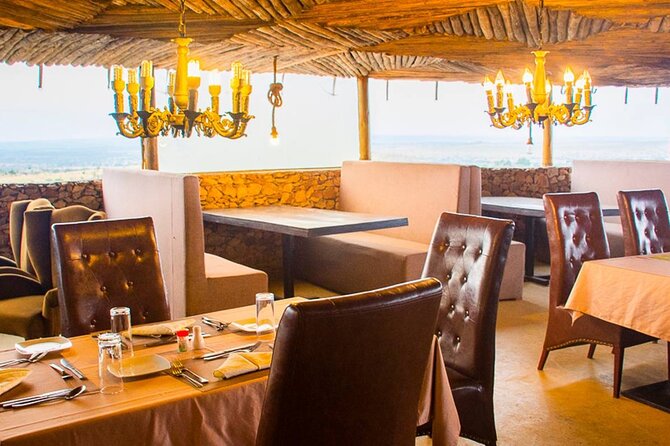
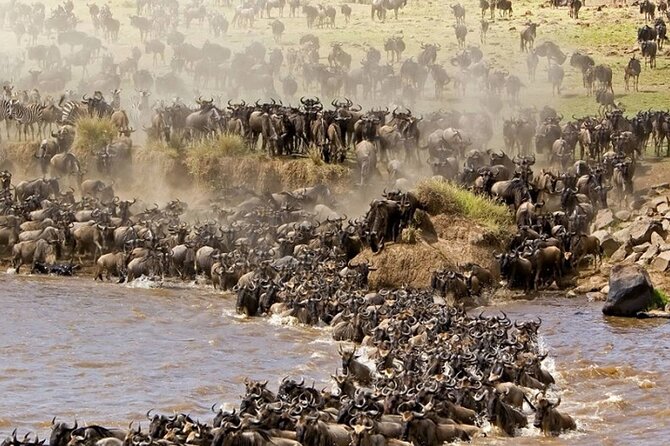
This safari is designed for the sweet spot of the wildebeest calving season. In the Ndutu area, you’re specifically in the window when calves can be seen running very soon after they’re born. That’s a huge difference from a typical safari month, where you might see wildebeest herds at different stages but not the same “right-now” birthing moment.
You’ll still do classic Serengeti viewing, not only baby-wildebeest drama. The route blends open plains habitat with greener wetland and soda-lake areas around Ndutu, plus the enclosed world of Ngorongoro Crater. That variety matters because animals shift with water, grass, and cover.
More Safaris in Arusha
- Balloon Safari & Bush Breakfast in Serengeti – Miracle Experience
★ 5.0 · 1,646 reviews - 4 Days Group Camping Safari
★ 5.0 · 1,101 reviews - 5 Days Group Camping Safari
★ 5.0 · 730 reviews
Price and what you get for $2,400.40 per person
At $2,400.40 per person for an 8-day trip, this is not a budget safari. You are paying for a guided circuit that bundles transport in 4×4 vehicles, park access coverage, and full board lodging.
Here is what makes the value more than just “you pay, you sit in a car.” The included package covers all fees and taxes, transfers to and from the airport, and full board meals while you are on safari. You also get bottled water in the vehicle and bush lunch in the Serengeti, which are small comforts that add up when you’re out all day.
There’s also the small-group cap at 6 people. In practice, that can mean your guide has an easier time tracking wildlife and adjusting the drive when the action changes. If you prefer a quieter safari pace over big group logistics, that matters.
Small-group setup, 4×4 roof seating, and the 7:00 am start
Your day starts at 7:00 am, which is typical for wildlife viewing days in Tanzania. The payoff is that you are in the right zones early, before animals settle into midday routines and before the sun turns everything into glare.
Transport is in 4×4 vehicles with a viewing roof. That’s a big deal. It keeps your viewing comfortable during bumpy drives and helps you get a clean angle when animals move close to the road. Plus, bottled water is provided in the vehicles, so you are not constantly buying snacks just to stay hydrated.
The trip is also positioned as a private safari with a maximum of 6 travelers. Private in this context usually means you are not stuck in a giant group format where your guide has to split attention or wait for everyone to catch up.
Day 1: Kilimanjaro arrival, Moshi hotel, and an easy first evening
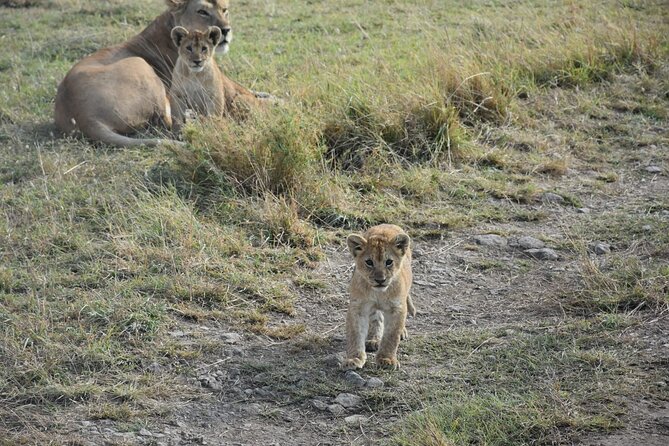
You start with arrival at Kilimanjaro Airport, then transfer to Moshi for dinner and overnight at Springlands Hotel. The itinerary keeps the exact arrival time flexible, so you’re not locked into a rigid schedule before you even start.
This day is about recovery and getting organized for safari life. You’ll have your first proper “base” in Moshi, which also sets you up for the final day transfer back to the airport later.
If you land with any delays, that flexible start can be comforting. You’ll still begin with a practical 7:00 am rhythm the next day.
More safaris from Arusha:
- 3 Days Serengeti & Ngorongoro Group Camping Safari
★ 5.0 · 574 reviews - 7-Day Premium Luxury Tanzania Safari All-Inclusive
★ 5.0 · 426 reviews - 3-Day Classic Serengeti Safari
★ 5.0 · 263 reviews - 8 Days Great Wildebeest Calving Migration Safari from Arusha
★ 5.0 · 254 reviews
Day 2: Lake Manyara National Park and the chance of tree-climbing lions
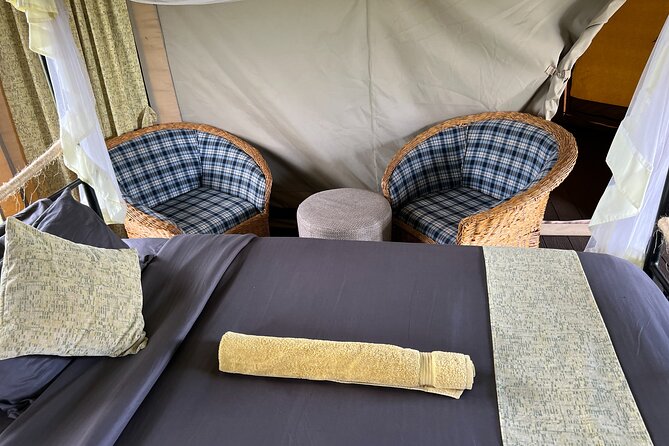
Lake Manyara is famous for its mix of habitats, and that diversity shows up fast. You have evergreen groundwater forest, acacia woodland, grassy plains, swampy delta areas, and the large lake itself.
This matters because different animals use different habitats. The park is known for strong sightings, including buffalo, impala, giraffe, waterbuck, hippos, and elephants near the lake. It’s also one of the rare places where you might see the tree-climbing lions behavior.
Birding is part of the fun too. The itinerary notes options like blue monkeys, velvet monkeys, and very active olive baboons, so it’s not only big cats and elephants.
The potential drawback: Lake Manyara days can feel like you’re constantly adjusting focus, from forest edges to open areas to lake zones. If you get impatient when sightings are spread out, you might find the variety slightly distracting, even though it’s what makes the park interesting.
Day 3: Serengeti drive-in, Masaai Village option, and Olduvai Gorge add-on
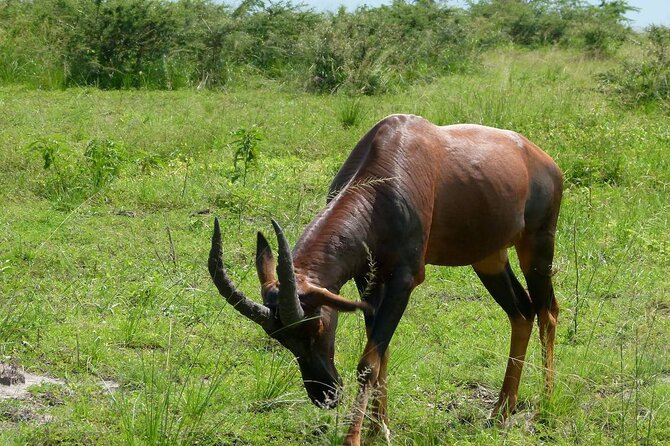
After breakfast you head to Serengeti National Park. This day also points you toward cultural stops on the way, including a Masaai Village visit and Olduvai Gorge, often called the Cradle of Humanity.
Important practical note: these cultural visits are not included in the tour price. If you want them, you’ll need to plan them as add-ons and factor in time.
Why I think the stop options are worth considering: they help balance the safari visuals with context. When you spend days watching animals adapted to survival, it’s also nice to spend time with people and history connected to the same broader region.
For a first Serengeti day, you’ll likely still feel the excitement because you’re arriving in “endless plain” country. The drive sets expectations for what comes next.
Day 4: Full day in the Serengeti, kopjes, predators, and migration herds
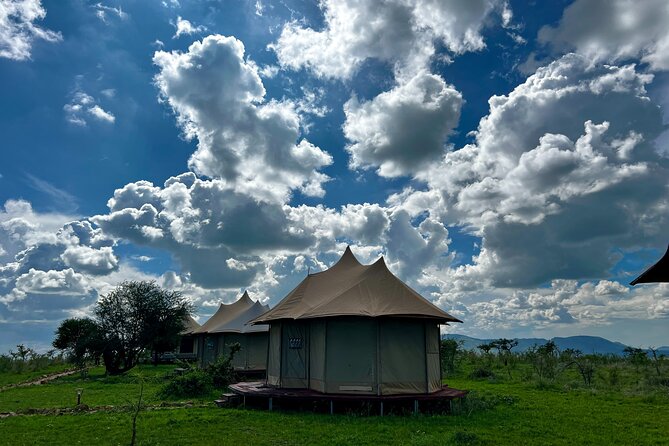
This is one of the core Serengeti days. The itinerary describes Serengeti as a place of huge plains game herds, dominated by wildebeest, zebra, and antelope, plus predators moving between scattered kopjes.
Kopjes matter because they create vantage points and shelter. Predators use the terrain, and prey uses the open sight lines. This is where you can get that classic safari rhythm of scanning, waiting, and then suddenly realizing the action is right there.
You also get a feel for how Serengeti changes by region. The itinerary notes open grass plains in the south, savanna with acacia in the center, hilly wooded grassland in the north, and woodland and black clay plains to the west. Even if you do not cover every corner, you see how the ecosystem shifts your viewing.
Day 5: Ngorongoro Conservation Area transfer and an afternoon drive
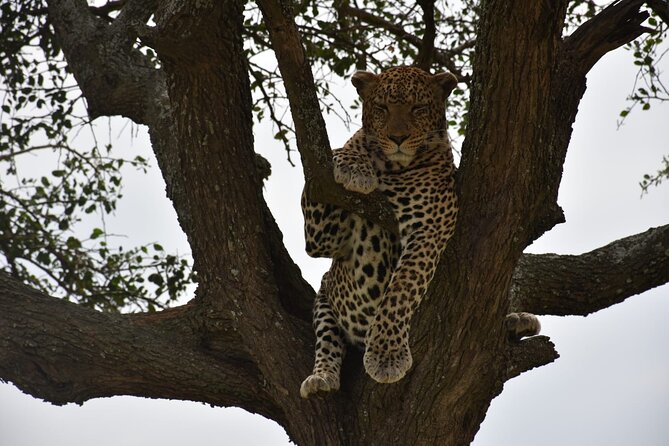
On day 5 you transfer from Serengeti into the Ngorongoro Conservation Area, which is part of the southern Serengeti ecosystem. The itinerary notes that, in this season, wildebeest migration can be found on the short-grass plains from December to April.
This day is structured as a transfer plus an afternoon game drive. That makes it a useful “bridge” day. You’re not only moving lodges or regions, you’re also getting wildlife time right away, which helps prevent the journey from feeling like dead time.
The area is expected to be busy with resident games and elephants, along with birds and general big-game activity. It’s a good way to re-set your eyes after Serengeti proper and get used to the southern ecosystem shift.
Day 6: Ndutu calving day, newborn wildebeest, and best predator action
This is the day that makes the whole trip make sense. You do a full-day game drive in the Ndutu area, exploring swamps, woodland, soda lakes, and the famous Serengeti short-grass plains.
And yes, this is where the itinerary calls out calving. In the stated time of year, you can witness calves running minutes after birth. That is the kind of moment that changes how you remember the safari, because you are not just observing wildlife, you’re seeing life begin in real time.
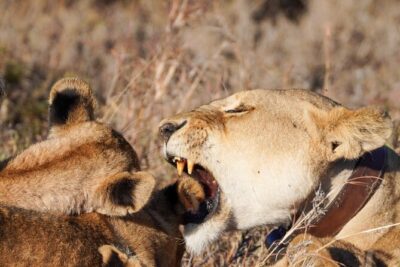
The itinerary also says this time of year offers some of the best predator action. The marshes and lakes support bird life, resident lion prides, and cheetahs on the plains, while wooded ridges are worth checking. Translation: your game drive is set up for more than one kind of excitement.
The only practical consideration is emotional stamina. Watching birth and immediate movement can be intense. If you want comfort, take breaks when you can, keep water handy, and don’t force a nonstop scanning pace.
Day 7: Ngorongoro Crater descent, black rhinos, and Makat Soda Lake
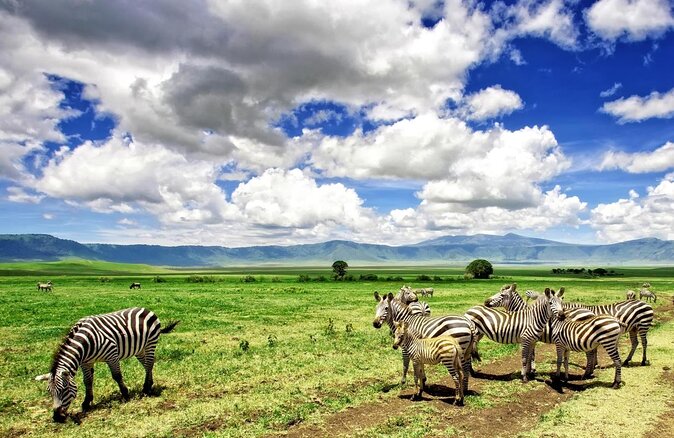
Today is the big geology moment. You descend into Ngorongoro Crater for game driving and exploration. The crater is described as about 600m deep, 16km across, and roughly 265 sq km in area, which helps explain why wildlife can feel concentrated.
The itinerary points to black rhinos grazing on the crater floor, plus a large number of animals occupying the crater, including lion, cheetah, eland, zebra, and gazelle. Flamingos can often be seen feeding at Makat Soda Lake, which adds bird and color even if the cats do not deliver a close-up kill.
A strong practical advantage of this day is how “contained” it feels. Instead of crossing huge distances to chase sightings, you work within one dramatic system. That usually makes it easier to manage expectations and still have a full day of scanning and wandering.
In the afternoon, you drive back to Moshi for overnight at Springlands Hotel, so you end the safari with a familiar base before your flight home.
Day 8: Moshi morning and your Kilimanjaro Airport transfer
You finish with a morning at leisure in Moshi, then transfer to Kilimanjaro Airport for your flight home. If your flight is during the evening, the itinerary suggests speaking to the operator to arrange add-on day trip activities.
The key point here is mental pacing. After days of dawn-to-sunset wildlife time, you’ll likely appreciate having at least part of your final day feel lighter.
What makes this operator’s approach feel like value
One pattern shows up in the names people share from past trips: guides and planning that focus on smooth timing and spotting skills. In the stories tied to this safari experience, names like Martin, Marko, Kileo, and a travel designer named Patrick come up. That kind of consistency matters because safari outcomes depend heavily on where your vehicle positions you and how quickly your guide notices changes.
From a practical perspective, you also get 24-hour support during the safari from the office in Moshi. That reassurance matters most if you hit delays, schedule shifts, or weather changes. You are not just handed a ticket and left to sort it out.
Also note the trip includes airport transfers and uses qualified driver/guide staff in 4×4 vehicles. Those are basics, but on longer circuits, they are the difference between a relaxing trip and one that feels like logistics homework.
Who should book this private calving safari, and who might skip it
You should book if you want a Tanzania safari circuit with a real chance to see calves running in the Ndutu area during January to March. You also should book if you like a small-group vibe, early starts, and a route that mixes Serengeti with Ngorongoro Crater in the same week.
You might skip it if you prefer a slower pace with fewer long driving days, or if you are mainly interested in budget travel without add-ons. Also, cultural options like the Masaai Village and Olduvai Gorge visit are not included, so plan for that if those stops matter to you.
Should you book it?
If your top goal is wildebeest calving during the real season window, this safari is built for that. The combination of Ndutu calving timing, full-day drives, and the dramatic Ngorongoro Crater makes the route feel purposeful, not random.
Given the price, I’d only book if you can handle long days and you really want both baby-wildebeest moments and classic big-game viewing in multiple ecosystems. If that sounds like your kind of Tanzania trip, this is a strong match.
FAQ
Which parks and areas are included on this safari?
The itinerary includes Lake Manyara National Park, Serengeti National Park, the Ngorongoro Conservation Area, and a game drive day inside Ngorongoro Crater. It is also described as part of a Tanzania circuit that includes Tarangire National Park.
How long is the safari, and when do the days begin?
The safari is about 8 days. The start time is listed as 7:00 am.
What is included in the price?
The package includes all fees and taxes, transport in 4×4 vehicles with a viewing roof, full board accommodation with breakfast, lunch, and dinner during safari days, bush lunch in the Serengeti, bottled water in the safari vehicles, and transfers to and from the airport. It also includes 24-hour support from the office in Moshi.
What is not included?
Not included are Tanzania entry visa, travel and health insurance, Masaai village tour and Olduvai Gorge Tour, international flights, and any meals, drinks, or excursions not described in the itinerary. Domestic flights can be organized on request.
What group size should I expect?
The maximum group size is 6 travelers.
Is park entry included?
Yes. All fees and taxes are listed as included.
What happens if I cancel?
This experience is non-refundable and cannot be changed for any reason. If you cancel or request an amendment, the amount paid will not be refunded.
Just posted around Arusha
- 8 Days Serengeti Migration safari★ 5.0 · 11 reviews
- tarangire & ngorongoro 2 days tour★ 5.0 · 14 reviews
- serengeti, ngorongoro & tarangire 4 days private tour★ 5.0 · 18 reviews
- tarangire, ngorongoro & lake manyara park 3 days private tour★ 5.0 · 11 reviews
- serengeti & ngorongoro 3 days private tour★ 5.0 · 15 reviews
- climb the KILIMANJARO via Lemosho route★ 5.0 · 4 reviews
- Mt. Kilimanjaro: Shira plateau to Cathedral point 3872m Day hike★ 5.0 · 7 reviews
- Kilimanjaro Waterfalls Hike & Moshi Hot Springs Day Trip Tour★ 5.0 · 4 reviews
Private, compared.
3 Hours Private Stone Town walking Tour with Guide
Read our review →
Private 6-Day Tarangire Manyara Crater and Serengeti with Mid-Range Lodges
Read our review →
Full-Day Private Stone Town +Spice Farm and Prison Island Tour
Read our review →
5-Day Private Northern Tanzania Safari from Arusha
Read our review →