
Reviewed · SERENGETI SAFARIS
7 Days Tarangire, Serengeti, Ngorongoro & Manyara Camping Safari Tour Tanzania
When the migration calls, you plan around it.
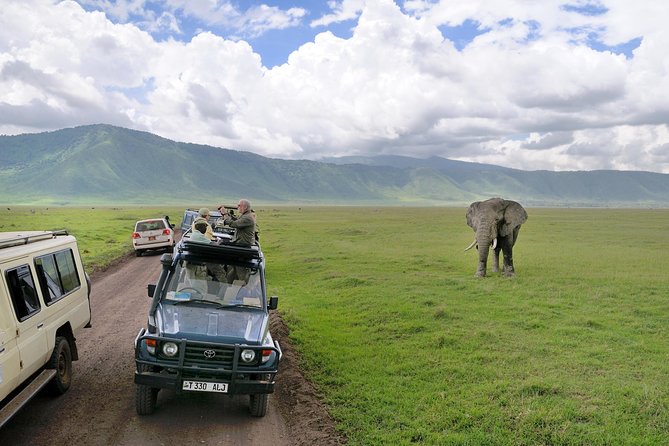
This 7-day Tanzania camping safari out of Arusha is designed to match the Great Migration timing, with at least four nights in the Serengeti, typically split between the Central Area and where the herds are moving for the season. You start with Tarangire at 7:00 am, then keep pushing deeper into the parks so the days feel like real game-viewing time, not constant driving.
I like that the route is built for big-cat odds and animal behavior, not just a checklist. I also like the practical pack-and-go approach: you get an English, Spanish, and French-speaking guide, plus the essentials for camping like a sleeping bag and bath towels, and all meals (7 breakfasts, lunches, and dinners). One consideration: some people find the lunches a bit repetitive during the long run, so you may want to bring a few small extras you enjoy.
In This Review
- Key Highlights at a Glance
- How This Safari Tracks the Great Migration the Smart Way
- Tarangire Starts Your Safari Off Strong at 7:00 am
- Serengeti Central Area Nights: Big Cats Have the Advantage
- Migration Nights in the Right Zone, at the Right Time
- Ngorongoro and Manyara: Variety After the Serengeti Core
- Camping Comfort That Does Not Feel Like You Are Barely Prepared
- The Guide Makes the Difference, and Names Like Assad Stand Out
- Meals, Wine, and a Small Lunch Issue to Plan For
- Price and Value: What You Get for $2,692.31
- Who Should Book This Safari, and Who Might Not Love It
- Should You Book This 7-Day Tarangire, Serengeti, Ngorongoro, and Manyara Safari?
- FAQ
- What time does the safari start?
- How long is the tour?
- Where is the tour based?
- How many people are in the group?
- Which national parks are included?
- Does the tour include airport pickup and drop-off?
- What meals and drinks are included?
- Is a sleeping bag provided for the camping part?
- Who will guide me, and what languages do they speak?
- What is not included in the price?
- Is free cancellation available?
Key Highlights at a Glance
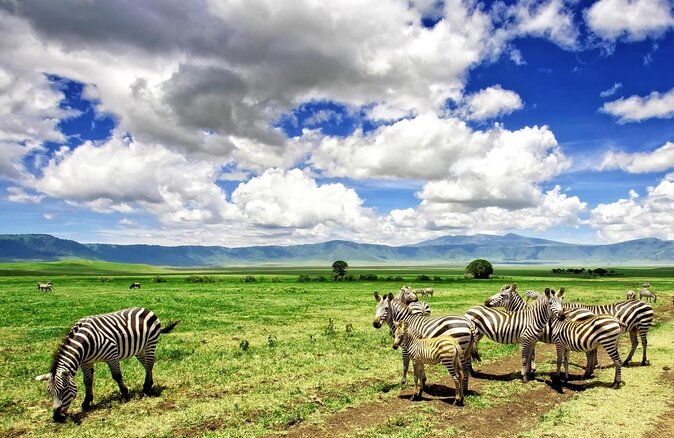
- Migration-first planning with at least 4 Serengeti nights and seasonal placement where herds are moving
- Central Serengeti focus with usually 2 nights in the Central Area for big-cat density
- Remote Serengeti finish that often ends with a fly-out, with the option to redesign for a land return
- Camping support included (sleeping bag and bath towels), plus water and wine
- Small group size with a maximum of 6 people for quieter, more flexible guiding
- Guides who position well and explain what you are seeing, with names like Assad, Mtina, Omer, Aron, and Mohamed showing up in the experience
How This Safari Tracks the Great Migration the Smart Way
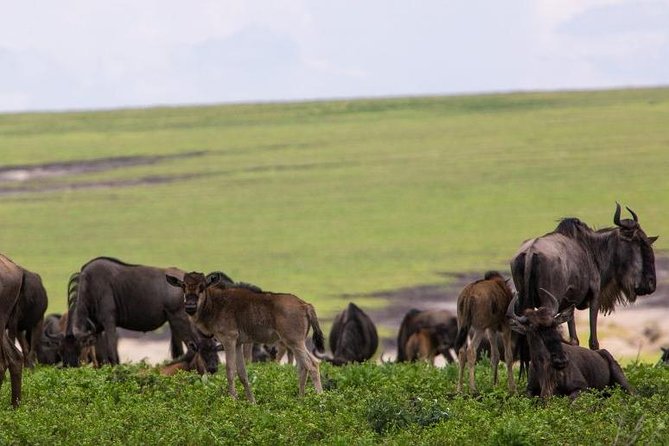
The best thing about this tour is that it treats the Great Migration like the main character, not side content. The design usually works like this: you spend at least four nights in the Serengeti, with two nights based in the Central Area, then two nights where the migration is according to the time of year. That setup matters because the Serengeti is huge, and the difference between being in the right zone versus the wrong one can be the difference between watching interesting movement and watching serious action.
I also like the flow logic. You are not stuck doing the same drive patterns all week. Instead, you build viewing time around where animals are expected to be, which gives your guide real chances to put you in the right places at the right time. And because the tour is built around seasonal timing, it feels more like a living plan than a rigid script.
One more practical note: the tour is designed so you finish in a remote part of the Serengeti and then fly from there to your next destination. If you prefer to end back in Arusha by land, they say they can redesign the route. That flexibility is important because it affects how you think about your final day.
More Safaris in Arusha
- Balloon Safari & Bush Breakfast in Serengeti – Miracle Experience
★ 5.0 · 1,646 reviews - 4 Days Group Camping Safari
★ 5.0 · 1,101 reviews - 5 Days Group Camping Safari
★ 5.0 · 730 reviews
Tarangire Starts Your Safari Off Strong at 7:00 am
Most safaris try to “get moving” from day one. This one does that early, starting at 7:00 am, which is a gift if you hate wasting daylight. Tarangire gives you a fast start, a first taste of the park rhythm, and a chance to shake out any jet lag while still getting real game viewing time.
Why I think Tarangire is a smart opener here: it helps you get used to the camping safari pace before you reach the Serengeti core. You will already be in “watching mode” by the time you spend those key nights where the migration is expected. It also sets the tone for how your guide works, since the tour is built on positioning you for animals, then explaining what you are seeing.
Another small practical win is that airport pickup and drop-off are included, so you are not scrambling on arrival day. That kind of smooth start is what lets you relax into the safari right away.
Serengeti Central Area Nights: Big Cats Have the Advantage
For the Serengeti portion, this tour typically places you in the Central Area for two nights. The Central Area is described as having the largest concentration of big cats, and that line is more useful than it sounds. Big cats are not just about seeing lions and leopards, they are about understanding patterns, territory, and timing. When you base yourself in a high-probability zone, your guide can spend more time helping you read animal behavior instead of chasing long distances.
This is where the guide matters a lot. In the experiences tied to this tour, guides like Omer and Aron are praised for finding good spots and keeping you in position to watch the moment unfold. That is exactly what you want during Central Serengeti nights. It is not only about the animal arriving, it is about where you are when it shows up.
Camping here also means the Serengeti feels like yours, at least for a few nights. You are not just passing through. You are settling in, going out to drive, then coming back to camp under the same park sky. For many people, that change from “day trip” mode to “weeks of living like this” mode is what makes the trip stick in memory.
Migration Nights in the Right Zone, at the Right Time
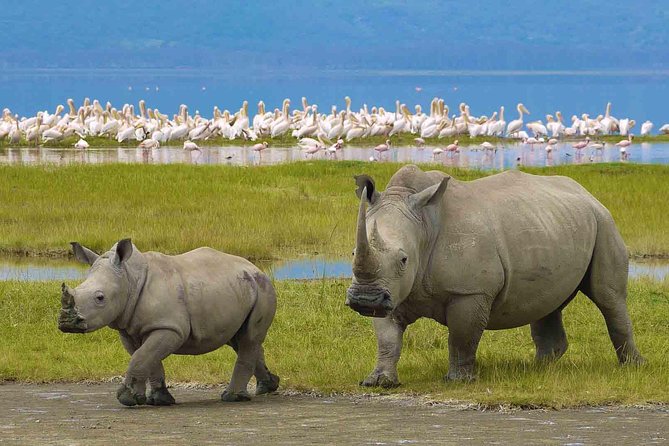
The two nights where the migration is according to the season are the heart of this safari. You are not just hoping for herds. You are designing the week around where they are moving. That is why the tour description emphasizes matching timing, and it is why the Great Migration route is the big selling point.
In practical terms, migration-focused guiding often means your day plan shifts with what you are seeing. If the movement is active, you are likely to spend time watching interactions and tracking patterns. If things are quieter, a strong guide can still keep the experience alive by interpreting behavior and reading the landscape in the way animals use it, like where they feed and how they reposition.
Some guides on this circuit are specifically praised for making the animal stories click. Assad is mentioned for expertise that turns sightings into understanding, and there is even an example of a lioness hunt being explained in a way that made the scene easier to follow. That is the difference between seeing animals and learning what you are actually watching.
Also, because the tour has you in multiple Serengeti zones, you get a change in viewing mood. Central Area nights tend to feel focused on predators. Migration-zone nights feel more like a moving ecosystem, where everything is connected to the movement of the herds.
More camping safaris from Arusha:
- 3 Days Serengeti & Ngorongoro Group Camping Safari
★ 5.0 · 574 reviews - 2 Days Tarangire and Ngorongoro Group Camping Safari
★ 5.0 · 146 reviews - 6 Days Tanzania Budget Camping Safari
★ 5.0 · 145 reviews - 3 Days Tarangire, Ngorongoro & Lake Manyara Group Camping Safari
★ 5.0 · 102 reviews
Ngorongoro and Manyara: Variety After the Serengeti Core
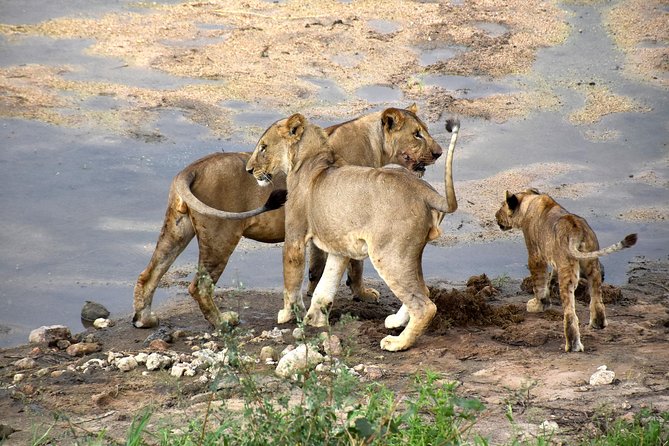
You do not stop at Serengeti. The tour includes Ngorongoro and Manyara as well, which is a smart balance. The Serengeti is the main event, but a well-run safari benefits from adding different habitats so your week does not feel like one long repeat.
Here is how I’d frame it for your expectations. By the time you get to Ngorongoro and Manyara, you will already have several nights of big-animal viewing under your belt. That means these later park days can feel like variety and contrast, not “more of the same.” You will also have the advantage of a guide who has already been working with you through the migration plan, so your attention is still sharp and your questions are more specific by then.
One more structural piece matters: the tour is designed to finish in a remote part of the Serengeti and then fly out. That implies the whole week is planned to end efficiently after you have completed your key Serengeti nights. If you want a land-only finish back in Arusha, they say it can be redesigned, so ask early rather than assuming it is automatic.
Camping Comfort That Does Not Feel Like You Are Barely Prepared
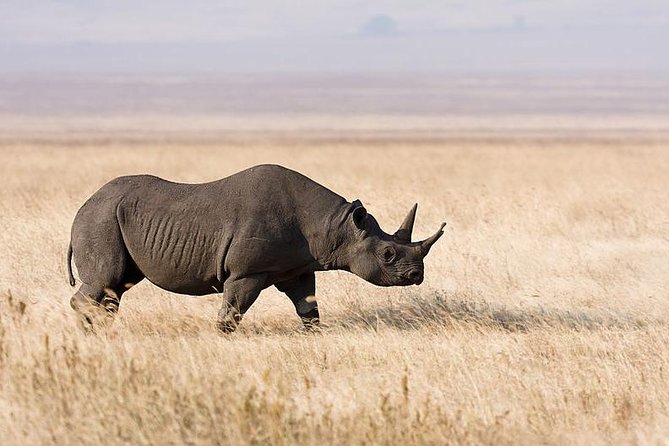
This is a camping safari, but it does not look like the super-basic, “good luck” style. Sleeping bag and bath towels are included, which is a huge relief. It means you do not have to spend travel budget on gear you will only use once.
Food and water are also handled. Breakfast (7), lunch (7), and dinner (7) are included, along with drinking water and wine. That sounds like a luxury add-on, but practically it keeps the trip simple. You are not constantly hunting for meals or worrying about what you will do for drinks once you are deep in the parks. In a week like this, that kind of simplicity is a real value.
Accommodations can also vary. In experiences connected to the tour, people mention sleeping in a lodge some days and in a tent other days. So if you are deciding between camping comfort and lodge comfort, expect a mix. The overall impression is that accommodations are good, with food that holds up well across multiple days.
If you are the type who packs everything “just in case,” this tour still rewards you, but it should reduce your anxiety. You can travel lighter on sleeping gear and towels, then focus on comfort upgrades you personally like, like a small dry bag for electronics or extra layers for early mornings.
The Guide Makes the Difference, and Names Like Assad Stand Out
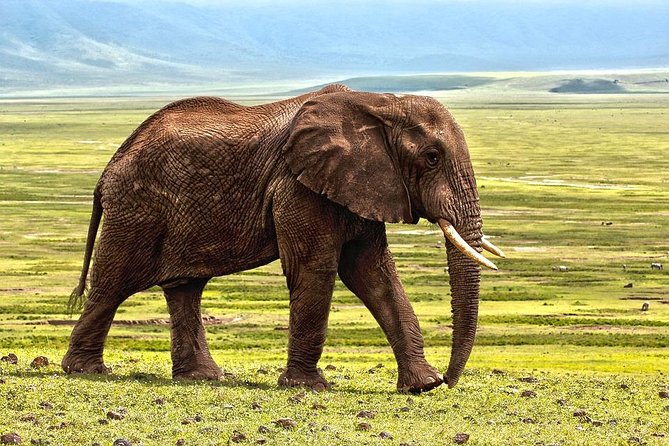
On paper, this tour has a professional driver/guide who can speak English, Spanish, and French. In real life, the guide is what shapes your whole week, because safaris are a game of timing and reading animal behavior.
This tour seems to attract guides who do more than drive. In the experiences tied to this safari, you see names repeatedly: Assad, Mtina, Omer, Aron, and Mohamed. The common thread is that they are described as friendly, helpful, and sharp at finding the best viewing spots.
That matters because one of the biggest safari frustrations is missing the moment. A great guide reduces that. They position you where you have a clean view, and they can interpret what you are seeing, so you are not just watching in silence. Even the humor gets mentioned in some accounts, which is not a small detail. On long drive days, a guide with good energy can make the safari feel like a team effort rather than a tour bus ordeal.
Meals, Wine, and a Small Lunch Issue to Plan For
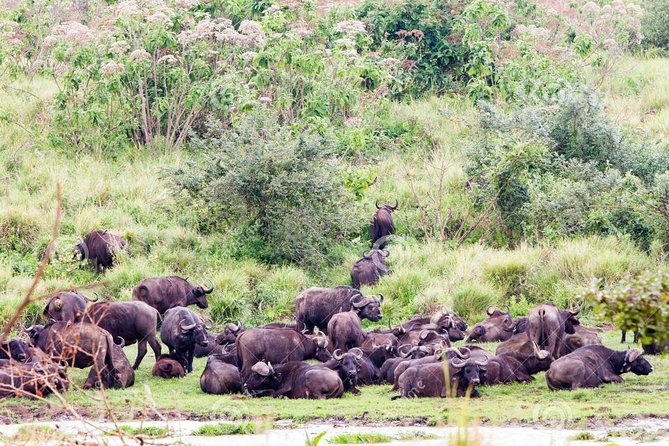
Let’s talk food, because you are doing it every day for a full week. The tour includes breakfast (7), lunch (7), and dinner (7), plus drinking water and wine. That is a lot of logistics taken off your plate, which is why these inclusions are not fluff.
Dinner and breakfast tend to be easier to enjoy because the rhythm is clear, and camps and lodges usually manage them well. Lunch is the one place where people have flagged a downside. Some experiences say lunches can be too similar day to day. That does not ruin the safari, but it is something to factor in if you are picky about food variety.
My practical advice: if you know you will crave something specific, bring small extras you can add on your own, like snacks you love, tea bags, or a favorite instant drink. You do not need to turn it into a project. Just keep yourself from getting stuck with the same flavor loop if it bothers you.
Price and Value: What You Get for $2,692.31
At $2,692.31 per person, this is not a budget safari. But the value story is clearer when you break down what is included.
You get:
- all fees and taxes included
- a professional English, Spanish, and French-speaking guide
- airport pickup and drop-off
- all meals for the week (7 breakfasts, 7 lunches, 7 dinners)
- drinking water and wine
- a sleeping bag and bath towels
- a free day tour on request
Then there are the things not included, like tips, visas, international flights, and travel insurance. Tips are not listed in the price, so you should budget for them. Visa costs also vary, and international flights are a separate line item.
So where does the money actually go? Mostly into the hard parts: park access, guiding time, and the multi-day logistics that move you between parks and keep you on track for the migration plan. Since this safari also focuses on a specific timing strategy in the Serengeti, you are paying for planning that tries to put you in the right place when the herds are moving.
If you want the Great Migration route without dealing with complicated coordination yourself, this package approach can feel like good value.
Who Should Book This Safari, and Who Might Not Love It
This safari fits best if you:
- want a migration-focused Serengeti plan with at least four Serengeti nights
- like the idea of camping but still want key comfort items provided
- enjoy learning from your guide, not just ticking off animal sightings
- prefer a smaller group experience (maximum of 6 travelers)
It may not fit as well if you:
- need a very strict land return to Arusha at the end, since the tour is designed to finish in remote Serengeti and often fly out, though they say it can be redesigned
- get annoyed by food repetition on long trips, since lunch similarity has come up
If you handle those two points well, the rest of the experience is designed to make your days feel full of real wildlife time.
Should You Book This 7-Day Tarangire, Serengeti, Ngorongoro, and Manyara Safari?
I think you should book if you are coming for the Great Migration timing and you want a guide-led plan that tries to put you in the right zones instead of hoping for luck. The mix of Tarangire start, Central Serengeti big-cat focus, and migration placement is a coherent route, and the included camping essentials help you travel lighter.
Before you pay, I’d ask one key question: at the end, do you want that remote Serengeti fly-out or a land return to Arusha, and can they redesign the route for your preference. Also, if you know you care a lot about lunch variety, mention it and consider bringing a few personal favorites to keep yourself comfortable.
If those fit your travel style, this is the kind of safari that feels like it is chasing a story, not just driving in circles.
FAQ
What time does the safari start?
It starts at 7:00 am, with the experience beginning in Arusha.
How long is the tour?
The duration is listed as about 7 days.
Where is the tour based?
The location is Arusha, Tanzania, with pickup and drop-off included.
How many people are in the group?
The tour has a maximum of 6 travelers.
Which national parks are included?
This safari includes Tarangire, Serengeti, Ngorongoro, and Manyara.
Does the tour include airport pickup and drop-off?
Yes. Airport pickup and drop-off are included.
What meals and drinks are included?
Breakfast, lunch, and dinner are included for 7 days. Drinking water and wine are also included.
Is a sleeping bag provided for the camping part?
Yes. A sleeping bag is included, along with bath towels.
Who will guide me, and what languages do they speak?
You get a professional driver/guide who can speak English, Spanish, and French.
What is not included in the price?
Tips for the guide and safari cook, personal expenses, visas, international flights, and travel insurance are not included.
Is free cancellation available?
Yes, there is free cancellation, and you can cancel up to 24 hours in advance for a full refund.
More Tarangire Safaris in Arusha
- 5-Day Highlights mid-Range Crater, Serengeti, Tarangire
★ 5.0 · 296 reviews - 5 Days Camping Tarangire, Serengeti & Ngorongoro crater & Visiting Maasai
★ 5.0 · 229 reviews - 4 Days Join Group tour Tarangire Serengeti and Ngorongoro crater
★ 5.0 · 219 reviews - 4-Day Safari from Arusha: Tarangire, Serengeti and Ngorongoro
★ 5.0 · 173 reviews
More Lake Manyara Safaris in Arusha
- Private 6-Day Tarangire Manyara Crater and Serengeti with Mid-Range Lodges
★ 5.0 · 238 reviews - 3 Days Private Safari – manyara, Ngorongoro & Tarangire
★ 5.0 · 94 reviews - 05 Days Tarangire, Serengeti, Ngorongoro and Lake Manyara
★ 5.0 · 54 reviews - 5 Days 4 Nights Tarangire, Serengeti , Ngorongoro & Manyara Wildlife Safari
★ 5.0 · 40 reviews
Just posted around Arusha
- 8 Days Serengeti Migration safari★ 5.0 · 11 reviews
- tarangire & ngorongoro 2 days tour★ 5.0 · 14 reviews
- tarangire, ngorongoro & lake manyara park 3 days private tour★ 5.0 · 11 reviews
- serengeti, ngorongoro & tarangire 4 days private tour★ 5.0 · 18 reviews
- serengeti & ngorongoro 3 days private tour★ 5.0 · 15 reviews
- climb the KILIMANJARO via Lemosho route★ 5.0 · 4 reviews
- Mt. Kilimanjaro: Shira plateau to Cathedral point 3872m Day hike★ 5.0 · 7 reviews
- Kilimanjaro Waterfalls Hike & Moshi Hot Springs Day Trip Tour★ 5.0 · 4 reviews
Serengeti Safaris, compared.
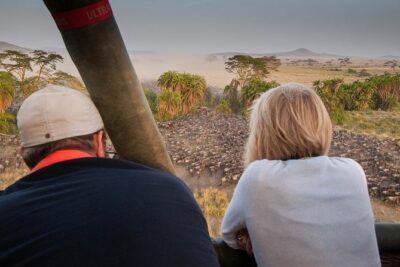
Serengeti Balloon Safari and authentic bush breakfast
Read our review →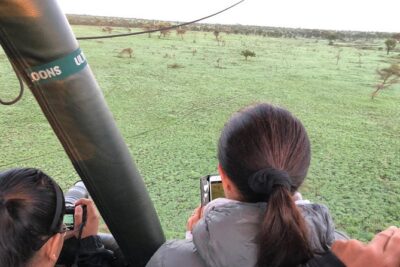
Balloon Safari & Bush Breakfast in Serengeti – Miracle Experience
Read our review →
3 Days Serengeti & Ngorongoro Group Camping Safari
Read our review →
5-Day Highlights mid-Range Crater, Serengeti, Tarangire
Read our review →
Private 6-Day Tarangire Manyara Crater and Serengeti with Mid-Range Lodges
Read our review →
5 Days Camping Tarangire, Serengeti & Ngorongoro crater & Visiting Maasai
Read our review →Browse the lists this tour appears in