Reviewed · 4-DAY EXPERIENCES
4 days safari
Five days, four parks, one great rhythm. This Tanzania safari links Tarangire, Serengeti, Ngorongoro, and Lake Manyara into a simple circuit, with pickup from Arusha and game drives timed for real animal density, not just a checklist. You also get a small-group setup (max 6) and a mobile ticket, which makes the whole thing feel smoother than the usual “one more form” travel day.
I like two things most. First, Tarangire is a strong start because it has year-round water in the form of the Tarangire River, plus those iconic baobabs and the buzz about tree-climbing lions. Second, the experience is driven by guides who actually talk species and behavior, with names like Joseph and Joel showing up again and again in the feedback, along with chef Joachim, often called Mr. D, for camp meals. When you’re in a vehicle for hours, that kind of storytelling matters.
One possible drawback to plan for: this is a camping safari. Overnight stays are listed as budget camping, Simba campsite, and Panorama campsite, so comfort will be more basic than lodge life. Also, you have early morning game driving on Ngorongoro day, which means you should be ready for a wake-up that comes before your brain fully clocks in.
In This Review
- Key highlights I’d circle
- Price and Logistics: what you’re paying for (and what you’re not)
- Starting in Arusha: pickup, meeting point, and a small-group vibe
- Tarangire National Park: elephants, baobabs, and the Tree of Life effect
- Serengeti Central Seronera: where resident wildlife has a home base
- Two days in Serengeti: why extra time matters more than you think
- Ngorongoro Crater Conservation Area: a caldera game drive day
- Lake Manyara via Maasai village: Rift Valley facts and a change of pace
- Meals at camp: the value of having a real chef behind the scenes
- What the guide does for you, beyond finding animals
- Comfort, timing, and what to plan for on a camping circuit
- Who this safari fits best
- Should you book Making Memories in Africa’s safari?
- FAQ
- What does the safari include?
- What is not included in the price?
- How long is the safari?
- Where does the safari start?
- What parks are visited?
- Are there camping nights?
- Is a mobile ticket provided?
- How big is the group?
- What is the cancellation policy?
- Does the tour cover park admission?
Key highlights I’d circle
- Tarangire’s year-round river keeps wildlife moving even in dry-season conditions
- Tree-climbing lions and baobabs give Tarangire a look you do not forget
- Serengeti Central Seronera is set up for resident cats and huge grazing herds
- Ngorongoro caldera morning focuses on one place where wildlife density is the point
- Small group max 6, plus pickup in Arusha, keeps the trip feeling personal
Price and Logistics: what you’re paying for (and what you’re not)
At $1,300 per person, this safari is priced for people who want national park access plus guiding and food handled in one package. The big value detail is that it includes all fees and taxes, and the daily notes list admission ticket as free, which usually means park fees are taken care of within the tour cost rather than tacked on later at the gate.
You also get meals built into the itinerary: 4 breakfasts, 5 lunches, and 4 dinners. That’s not glamorous math, but it matters. Eating out in safari towns can add cost and hassle, and keeping meals included makes a long day of driving feel more manageable.
What is not included is also clear. You will still want to budget for visas and personal expenses, and there is a note that tips for the driver, guide, and safari cook are not included. In other words, you control gratuities based on how the service feels to you, but the tour cost itself does not bake them in.
One more logistics point: the itinerary runs about 5 days even though the summary also describes it as a shorter safari window. The route includes Tarangire, Serengeti for two days, Ngorongoro, and Lake Manyara, plus transfer time between parks.
More Safaris in Arusha
- Balloon Safari & Bush Breakfast in Serengeti – Miracle Experience
★ 5.0 · 1,646 reviews - 4 Days Group Camping Safari
★ 5.0 · 1,101 reviews - 5 Days Group Camping Safari
★ 5.0 · 730 reviews
Starting in Arusha: pickup, meeting point, and a small-group vibe
Your safari begins with pickup from your accommodation in Arusha. The meeting point is listed as Shoppers Supermarket in Arusha, with hours shown as 8:00 AM to 5:00 PM, Monday through Sunday. That gives you a real reference point for where to meet if you’re coordinating your own arrival day.
The group size cap is 6 travelers. For safari, that’s a big deal. Smaller groups can help you keep a more relaxed rhythm during long drives and at game drive stops. It also means your guide can spend less time herding the group and more time pointing out details from the vehicle.
You’ll also get a mobile ticket, which is one less “print this, carry that” step. When you’re traveling in and out of park access systems, that matters.
Tarangire National Park: elephants, baobabs, and the Tree of Life effect
Most safari routes start with “we’ll see lions.” Tarangire starts with something more varied and often more immediately visual: elephants, baobab trees, and that legendary talk about tree-climbing lions. On day one, you’re picked up in Arusha and driven to Tarangire National Park.
The park’s identity is the Tarangire River, which flows all year. That means the water is a magnet for wildlife, especially when the dry season tightens the options elsewhere. When you’re in a place where animals can reliably find water, your game drives tend to feel purposeful rather than random.
You’ll also see why baobabs get called the Tree of Life. They look prehistoric, like something that grew through every season and every story people tell. Even without “big cat” luck, Tarangire can still feel like a full safari day because the ecosystem has character.
A practical note: the day is listed as about 6 hours, so this is not a stroll around the visitor center. It’s a drive, a ramp-up, then game viewing. If you tend to get stiff on long sits, plan for that with posture breaks whenever the itinerary allows.
Serengeti Central Seronera: where resident wildlife has a home base
Serengeti is one of the few places that holds attention even before you spot anything. The itinerary takes you specifically to Central Seronera, which is known for strong resident wildlife. The route highlights the Big Five as the target set, listing lion, leopard, elephant, rhino, and buffalo.
What I like about this setup is that it is not relying on one “special moment” narrative. It leans on resident populations. That means you’re hunting in a place where the animals live there, not just passing through like commuters.
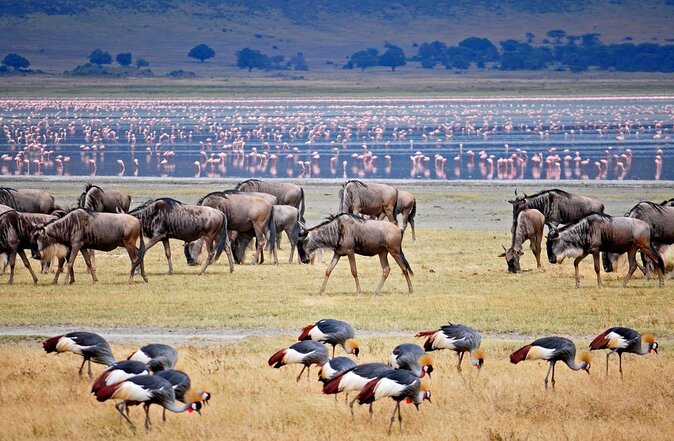
Serengeti also has the numbers that make the whole system click. The itinerary notes around 200,000 zebras and 300,000 Thomson’s gazelles, joining wildebeest grazing as part of the seasonal motion. Even if you’re not counting them with a spreadsheet, seeing herds at that scale changes your sense of scale immediately.
Leopards are mentioned as reclusive, but present, particularly in the Seronera region. That’s a useful expectation: you might not see one every hour, but you’re in a place where leopards are part of the ecosystem rather than a rumor.
Serengeti is also UNESCO World Heritage Site, which matters because it usually helps protect the core of the place and keeps it managed as more than just a scenic set.
More safaris from Arusha:
- 3 Days Serengeti & Ngorongoro Group Camping Safari
★ 5.0 · 574 reviews - 7-Day Premium Luxury Tanzania Safari All-Inclusive
★ 5.0 · 426 reviews - 3-Day Classic Serengeti Safari
★ 5.0 · 263 reviews - 8 Days Great Wildebeest Calving Migration Safari from Arusha
★ 5.0 · 254 reviews
Two days in Serengeti: why extra time matters more than you think
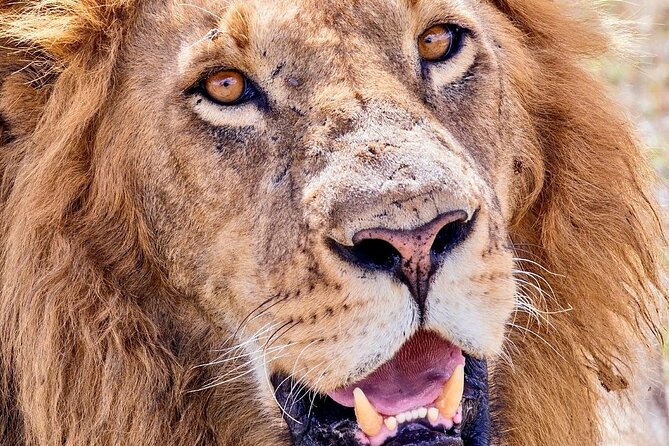
This itinerary gives you two days in Serengeti, which is one reason I consider it good value even at a higher price point. One day in Serengeti can feel like you blinked and missed something. Two days gives you repetition without boredom, and that is how safari viewing improves.
You also have two different overnight styles listed: day two is Budget Camping, and day three is Simba campsite. That change can break up the routine, and it also keeps the trip moving to different base areas.
I would treat those two days as your main “cat and herd” window. Since the route focuses on resident wildlife, having a second day is your best bet for getting a different mix of sightings and behavior, not just the same view from the same bend in the road.
Ngorongoro Crater Conservation Area: a caldera game drive day
Ngorongoro is the day that feels like a special delivery. After breakfast, the itinerary calls for an early morning drive into the Ngorongoro Conservation Area, a UNESCO World Heritage Site west of Arusha.
The key idea here is the crater itself. The itinerary frames Ngorongoro as the world’s largest caldera, with a stunning bowl-shaped environment and a high concentration of wildlife. It even states a figure of some 25,000 animals, which tells you the goal is density, not distance.
This is also where the Big Five mention becomes more than a slogan. The crater environment can make sightings feel like you’re watching life on a large nature TV screen. But it’s still Africa, so you should be flexible about which animals show themselves when.
On this day, the itinerary lists B/L/D (breakfast, lunch, dinner) and an overnight at Panorama campsite. Again, it’s camping, so you get the outdoors feeling, but with meals supported so you do not have to scramble for food after a long game drive day.
Lake Manyara via Maasai village: Rift Valley facts and a change of pace
Day five shifts the tone away from big cat hunting and into a more scenic and cultural rhythm. After breakfast, you drive to Lake Manyara, via a Maasai village stop.
The itinerary also includes a fun, specific plant detail tied to the park name. It says Lake Manyara gets its name from the Maasai word Manyara, connected to the plant Euphorbia tirucalli, used by the Maasai to grow livestock stockades. It even notes that a specimen is found at the entrance of the gate. That’s exactly the kind of detail that makes a nature stop feel grounded in local life rather than generic tourism talk.
The Rift Valley context is also spelled out: it’s described as a fault line stretching about 8,000 kilometers and noted as clearly visible to astronauts landing on the moon. Whether you remember the exact science or not, it helps you understand why the region looks the way it does.
After the park time, you’re taken back to the hotel in the afternoon. The day is listed around 6 hours total.
Meals at camp: the value of having a real chef behind the scenes
Safari isn’t just about animals. It’s also about how you recharge between drives. This package includes 4 breakfasts plus 5 lunches and 4 dinners, so you’re not piecing together meals day after day.
The feedback around the cooking is strong, with chef Joachim, sometimes called Mr. D, repeatedly singled out for keeping camp food enjoyable. When you camp, the meal is more than fuel. It’s the moment you can sit down, swap stories, and get your legs back.
Expect camp-style dining rather than fancy table service. The upside is that meals are part of the tour design, which makes your day smoother.
What the guide does for you, beyond finding animals
A good safari guide does three jobs: interpretation, logistics, and calm. From the names that come up repeatedly in the feedback, guides like Joel and Joseph are praised for knowing the parks deeply and for explaining animal behavior in a way that sticks.
It’s also clear the team approach matters, with multiple guides getting credit for friendly, practical help. You should feel that the vehicle time has purpose, not just a window-seat view. On a long route that includes Tarangire, Serengeti, Ngorongoro, and Lake Manyara, that interpretive layer is what keeps the hours from turning into sameness.
Comfort, timing, and what to plan for on a camping circuit
This safari is built around camping nights at Budget Camping, Simba campsite, and Panorama campsite. That means the “hotel comforts” level is not the focus. What you can do is plan your mindset and bring what makes camping easier for you.
Also plan for timing. Ngorongoro is an early morning game drive day. Early mornings can be the difference between seeing animals calmly and seeing animals at peak crowd time. Either way, you should set your body clock before the trip gets going.
Finally, consider motion sickness and long drives. Safari vehicles are close quarters, and you might be on the road for hours between parks. If you’re sensitive to that, pack what helps you handle the ride. It’s the type of small preparation that keeps the whole trip enjoyable.
Who this safari fits best
This is a great fit if you want a focused circuit through Tanzania’s most famous wildlife areas, and you’re comfortable with camping nights. It’s also a strong option if you like small-group travel and want a guide who talks while you drive.
You might want to look elsewhere if you need lodge-level comfort every night, or if camping feels like a deal breaker. The route is also more “big day, big driving” than slow and lazy. If that sounds like your style, you’re in the right place.
Should you book Making Memories in Africa’s safari?
I’d book this safari if your priority is getting quality time across Tarangire, Serengeti, Ngorongoro, and Lake Manyara without juggling lots of separate bookings. The included fees and meals help protect your budget from last-minute add-ons, and the small group size keeps the experience human-scaled.
I’d hesitate if camping discomfort is a deal breaker for you, or if you already know you will struggle with early wake-ups. In that case, you may prefer a lodge-based version where the nights are more cushy.
If you do book, I’d also suggest you go in with flexibility about animal sightings. The itinerary is designed for high odds, but wildlife is wildlife. Your best souvenir is the combination of parks, timing, and the guide team doing the reading of the landscape into something you can actually understand.
FAQ
What does the safari include?
The package includes all fees and taxes, plus 4 dinners, 5 lunches, and 4 breakfasts.
What is not included in the price?
Personal expenses, tips for the driver, guide, and safari cook, and visas are not included.
How long is the safari?
The tour summary describes a 4-day safari, but the itinerary runs about 5 days.
Where does the safari start?
The meeting point is Shoppers Supermarket in Arusha, Tanzania, and pickup is offered from your accommodation in Arusha.
What parks are visited?
You’ll visit Tarangire National Park, Serengeti National Park, Ngorongoro Conservation Area (including Ngorongoro Crater), and Lake Manyara National Park.
Are there camping nights?
Yes. The itinerary lists overnight stays as Budget Camping, Simba campsite, and Panorama campsite.
Is a mobile ticket provided?
Yes, the tour includes a mobile ticket.
How big is the group?
This tour has a maximum group size of 6 travelers.
What is the cancellation policy?
You can cancel for a full refund up to 24 hours in advance of the experience start time. Within 24 hours, the paid amount is not refunded.
Does the tour cover park admission?
The itinerary notes admission ticket as free for each park day, and the package also states that all fees and taxes are included.
Just posted around Arusha
- 8 Days Serengeti Migration safari★ 5.0 · 11 reviews
- tarangire & ngorongoro 2 days tour★ 5.0 · 14 reviews
- serengeti, ngorongoro & tarangire 4 days private tour★ 5.0 · 18 reviews
- tarangire, ngorongoro & lake manyara park 3 days private tour★ 5.0 · 11 reviews
- serengeti & ngorongoro 3 days private tour★ 5.0 · 15 reviews
- climb the KILIMANJARO via Lemosho route★ 5.0 · 4 reviews
- Mt. Kilimanjaro: Shira plateau to Cathedral point 3872m Day hike★ 5.0 · 7 reviews
- Kilimanjaro Waterfalls Hike & Moshi Hot Springs Day Trip Tour★ 5.0 · 4 reviews
4-Day Experiences, compared.
4 Days Join Group tour Tarangire Serengeti and Ngorongoro crater
Read our review →
4-Day Safari from Arusha: Tarangire, Serengeti and Ngorongoro
Read our review →
4 Days Tarangire, Serengeti and Ngorongoro Mid-Range Group Safari
Read our review →
4 Days Tanzania Lodge Safari With Two Nights at Serengeti
Read our review →