
Reviewed · MAASAI VILLAGE VISITS
24 Hours in Arusha—Arusha Museum, Cultural Heritage, Maasai Market, Shanga
Arusha rewards patience, not rushing. This private day plan is built to help you see real culture and real craft in one go, starting with the Cultural Heritage Centre, then moving through Shanga & the Shanga Foundation, and finishing at the Arusha National Natural History & Cultural Museum.
I like that the route is tightly managed with private transportation and door-to-door convenience, so you spend less time negotiating logistics and more time actually looking around. I also like that you get a provided lunch and included admission at the main cultural stops, which keeps the day feeling complete instead of piecemeal.
One consideration: this is a full day. With multiple stops and a lot to look at, you will want comfortable shoes and a shopping strategy, because the markets and craft stores can get overwhelming fast.
In This Review
- Key things that make this day work
- How the day stays on schedule in Arusha
- Stop 1: Cultural Heritage Centre, shopping with context
- Stop 2: Shanga & Shanga Foundation, craft plus purpose
- Stop 3: Maasai Market, how to browse without getting swamped
- Stop 4: Arusha National Natural History & Cultural Museum in a German boma
- Lunch, water, and the small choices that make the day better
- Price and value: is $205 per person fair?
- Your guide experience, and why it matters
- Who this tour is best for
- Should you book 24 Hours in Arusha?
- FAQ
- What is the price per person for this Arusha experience?
- How long is the tour and what time does it start?
- Is this a private tour?
- What is included in the price?
- Do you get pickup from your accommodation?
- Which stops are part of the day?
- What is the cancellation policy?
Key things that make this day work
- Private pickup and drop-off means less wasted time in Arusha traffic.
- Cultural Heritage Centre admission included for a focused look at crafts and precious stones.
- Shanga Foundation visit includes the production vibe, from bead-making to glass-related work.
- Maasai Market browsing with a simple approach to basket shopping and respectful vendors.
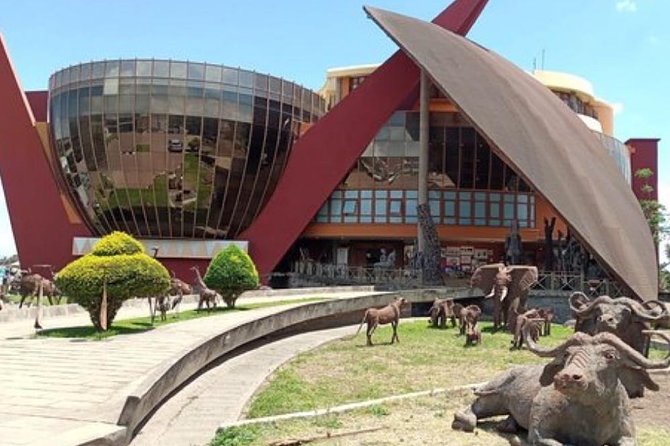
- Arusha Museum in a former German boma adds context, not just sightseeing.
- Lunch and included refreshments keep you moving without constant stopovers.
How the day stays on schedule in Arusha
Arusha is a gateway city, so it can be easy to lose your day to back-and-forth planning. This tour is designed to reduce that. Your start time is 8:00 am, and the day runs about 12 hours with a private guide and private transportation, plus pickup and drop-off at your accommodation.
That timing matters because each stop has its own rhythm. The Cultural Heritage Centre is part museum-like (decor, displays, and shops), Shanga is hands-on and observational, the Maasai Market is sensory and social, and the Arusha National Natural History & Cultural Museum is best when you slow down to read and look carefully.
I also appreciate that this tour is structured as one group, so you are not squeezed into a shared schedule. Group discounts are offered, but it still stays private for your party, which generally means you can ask more questions without waiting your turn.
If you hate rushing, this is a good match. If you prefer a loose afternoon that you control completely, you might find the flow a little tighter than your style.
More Maasai Village Visits in Arusha
- 5 Days Camping Tarangire, Serengeti & Ngorongoro crater & Visiting Maasai
★ 5.0 · 229 reviews - Maasai village visit, Materuni waterfalls & coffee experience
★ 4.5 · 95 reviews - 7-Day Private Tanzania Safari with Sunset Walking on the Crater Rim and Maasai
★ 5.0 · 40 reviews
Stop 1: Cultural Heritage Centre, shopping with context
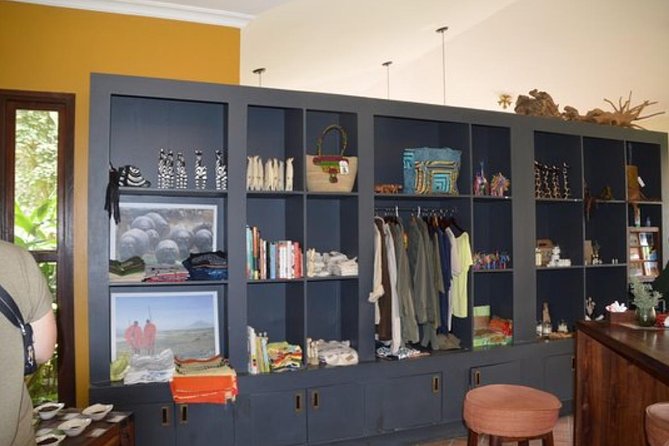
The Cultural Heritage Centre is on the outskirts of Arusha, and it’s one of those places where shopping is part of the story. You are not just popping into stores, you’re stepping into a center with curio shops, a jewelry boutique, a tanzanite and precious stones counter, a restaurant, and what they call a bargain center. There’s also an art gallery with commercial art, plus a broad mix of ornaments, antiques, and local crafts.
Here’s what I like about this stop for your trip: it gives you context before you go to the market. You get to see how crafts are categorized and sold, what materials are common, and what items tourists usually buy. If you care about your budget, this helps you set realistic price expectations before you start comparing.
And if you are even mildly curious about Tanzania’s famed stones, this is the moment. They highlight a collection of precious and semi-precious stones, including rubies, emeralds, tsavorite, diamonds, sapphires, and opals. They also point you to tanzanite, described as a rare blue or violet stone they value most highly. Even if you do not buy jewelry, it’s useful to learn the language and the basics of what you are being shown.
What you should watch for: the place can feel like several mini-stores in one building. Take a quick lap first. Then decide what you actually want to focus on, whether that’s textiles and clothing, spices and books, jewelry, or general crafts. Your time at this stop is about 3 hours, so a clear plan keeps you from drifting and overspending.
Stop 2: Shanga & Shanga Foundation, craft plus purpose
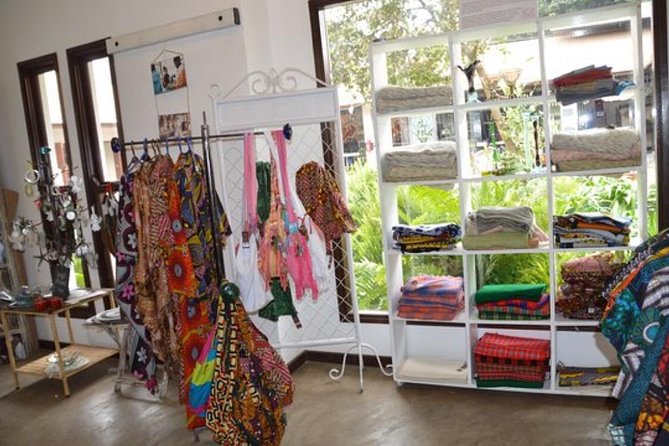
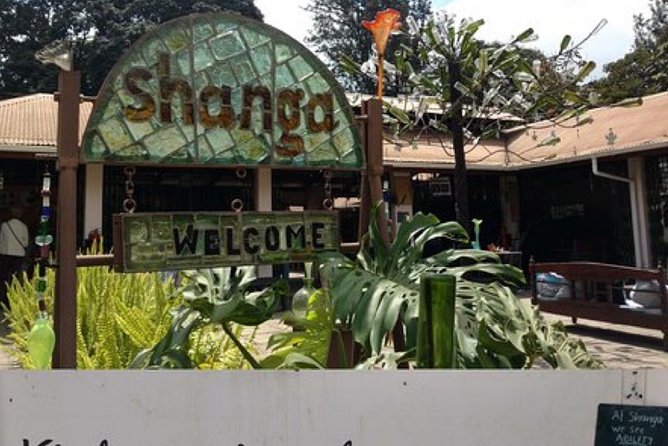
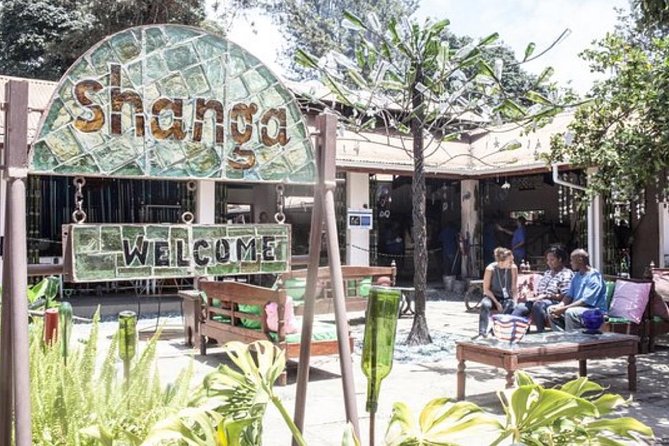
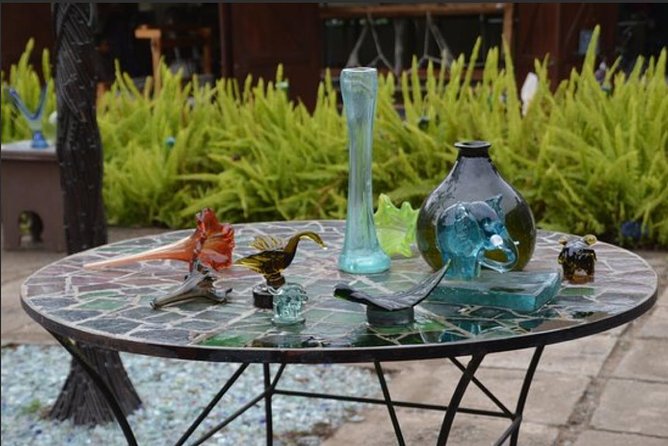
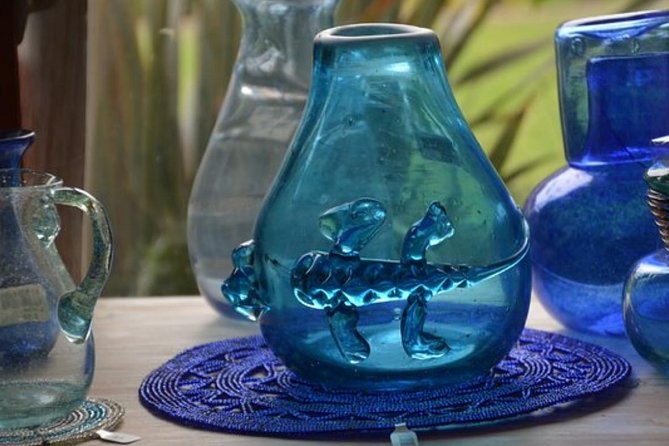
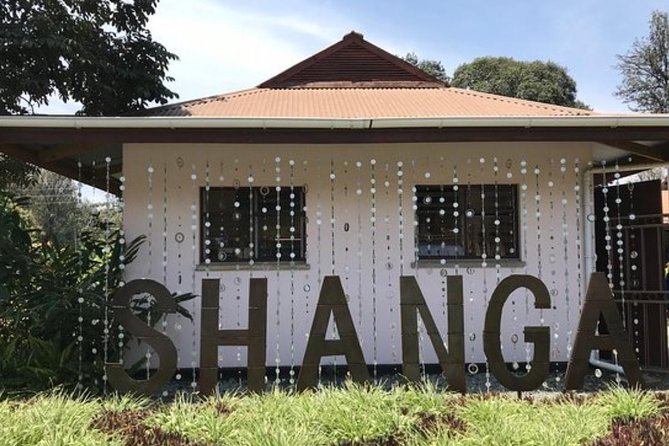
After the stone and craft shops, Shanga & the Shanga Foundation shifts the mood in a good way. Shanga is a social enterprise that employs people with disabilities to create handmade jewelry, glassware, and home wares using recycled materials. Profits are reinvested into developing more opportunities for employment. That mission is not just printed on a wall, it’s tied to what you see as you visit the work areas.
This stop is especially valuable because you can observe the work being made, not just the items for sale. You get a look at the processes and the production side of craft, which makes shopping more meaningful. Instead of feeling like you bought a souvenir, you can connect the object to the effort and the people behind it.
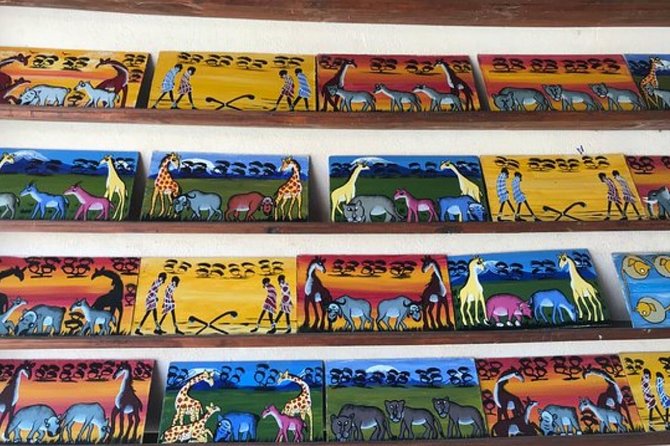
The workshop and craft areas they mention include glass-related work (including glass-blowing), weaving, sewing, Tinga Tinga painting, bead-making, and metal work. There is also a shop where Shanga’s handmade products are showcased.
What I’d recommend: treat this as both a learning stop and a buy stop. Look first at what’s being made and how, then browse the shop with your new context. If you do want something to take home, this is often a place where the story behind the craft matters as much as the design.
The main drawback here is that you may be tempted by lots of different product types in one place. If you know what you’re buying ahead of time, you’ll enjoy the experience more. If you do not, you might leave with too many small items and not enough of one great piece you truly wanted.
Stop 3: Maasai Market, how to browse without getting swamped
The Maasai Market is big, with so many stalls that it feels like you step into a moving sea of colors and options. Each stall appears to carry similar items, while others have their own mix. That repetition is normal, but it can create decision fatigue fast.
Here’s the good news: the vendors in this market are described as respectful and polite. They greet you, they invite you to enter their stall, and they make it easy to interact. One practical detail I’m glad to hear is that touching is presented as welcome, with vendors telling you it’s free to touch. That means you can handle textiles or crafts to check quality, texture, and workmanship without feeling like you’re doing something wrong.
You’ll also notice a simple browsing tactic. Vendors may hand you a medium size basket and indicate that you can place items in it while you continue looking. This keeps your arms from constantly carrying merchandise, and it gives you time to compare without committing too early.
This is also a market where politeness shows even if you do not buy. Vendors are described as saying thank you even when you walk away. That matters, because it helps you shop at your own pace and reduces the pressure stress.
Practical shopping advice:
- Set a budget before you go in, and stick to it.
- Decide on one category to focus on, like textiles, crafts, or small gifts.
- Do a slow pass first, then circle back if you still like the items after seeing alternatives.
At around 3 hours here, you’ll have time to look thoroughly, but you should also plan your energy. Markets like this are mentally loud, and breaks help.
More Maasai village visits:
- Kilimanjaro: Maasai Village Visit, Waterfalls, & Coffee Tour
★ 4.9 · 27 reviews - Arusha: Maasai Village Tour
★ 4.8 · 22 reviews - 5- Days Best Mid-range Safari and Maasai Village experience
★ 5.0 · 20 reviews - Maasai Boma Cultural Experience (maasai village tour)
★ 4.5 · 14 reviews
Stop 4: Arusha National Natural History & Cultural Museum in a German boma
The last major stop is the Arusha National Natural History & Cultural Museum, housed inside an old German boma, a fortified compound completed in 1900. That setting adds atmosphere. It’s not just a museum building, it’s a reminder that Arusha has been shaped by different eras.
The museum has three parts. The top highlight is the wing dedicated to human evolution. This is the best section because a lot of what they know about human evolution came from fossils unearthed in Tanzania. That means the subject is not abstract. It’s connected to the country you’re visiting.
There are also displays on insects, Arusha’s history during the German colonial era, and wildlife photos and mounts. If you like your museums with a mix of science and local context, this stop lands well.
What I like from a visitor’s point of view is that it gives you a change of pace. After the crafts and markets, the museum slows everything down. You can sit, read, and look closely without negotiating.
A possible drawback: if you are short on patience for museum reading, you might feel this portion is more structured than the market stops. The fix is simple. Pick your focus zone first, like human evolution, then do the other sections at a lighter pace.
You’ll have about 3 hours at the museum, which is enough time to see the main wing and still keep it enjoyable.
Lunch, water, and the small choices that make the day better
You get a provided lunch during the tour, plus drinking water and soft drinks included. That matters in a day like this because you’re going from curated indoor spaces to busy markets. Even if you do not feel thirsty, dehydration can sneak up on you in warm conditions and with lots of walking and standing.
A practical tip: plan your day around your energy. Eat your lunch even if you are not starving. Then slow down for a few minutes. Markets and shopping stops tempt you to run on adrenaline, but you’ll enjoy the museum more if you arrive with your head clear.
What to bring based on what the day involves:
- Comfortable shoes for walking and standing in markets and craft areas
- Sun protection, since you’ll be outside at least some of the time
- Small cash for market browsing, since not every stall always works like a fixed-price shop
- A light plan for shopping, like a short list of what you want to buy
Also, alcohol is not listed as included. If you want it, plan on buying separately.
Price and value: is $205 per person fair?
At $205.00 per person, this tour is not a budget half-day. But when you look at what you get, the price starts to make sense.
You’re paying for:
- Private transportation and door-to-door service
- Admission included for the Cultural Heritage Centre and Shanga, plus entry included for each stop listed
- A provided lunch
- A full 12-hour day that covers four major stops without you coordinating transport and timing on your own
In practical terms, you’re buying time and smooth routing. In Arusha, that can be the difference between a day that feels organized and a day that feels like you’re constantly troubleshooting.
This tour also includes group discounts, so if you are traveling with others, the value can improve. And because it’s private, your guide can tailor the pace a bit, especially if you want more time at one stop and less at another.
If your trip is short and you want multiple cultural stops without the stress of planning, it’s a solid value. If you enjoy spending hours wandering independently and you already have a driver lined up, your own routing might be cheaper. But it also usually takes more mental work.
Your guide experience, and why it matters
One standout detail is the guide experience. In at least one account, the day started with on time pickup and the guide, Daniel, was described as professional, courteous, personable, and very knowledgeable about Arusha and Tanzania.
Even if you do not know what you want to ask yet, a good guide changes the day. You get context faster. You avoid aimless waiting. And you can get answers while you still have your curiosity turned on, not after you’ve moved on.
For you, that means more rewarding visits. The Cultural Heritage Centre is easier to navigate when you understand what each section is for. Shanga feels more meaningful when you know why recycled materials matter to the enterprise. And the museum reads more clearly when someone points you toward what matters most.
A good guide won’t force you to buy. But they can help you buy smarter, and that’s the real win in a day that includes crafts and markets.
Who this tour is best for
This is a great fit if you want:
- A private, structured day in Arusha without transport hassles
- Culture, craft, and history in one route
- A guided approach to shopping, so you can make decisions without rushing
It’s especially good for first-timers who feel unsure about how to connect Arusha’s key places efficiently. It also suits people who like a mix of shopping and learning, because the itinerary includes both crafts and museum time.
If you dislike markets, or if you hate structured pacing, you might want a different kind of day. But if you’re curious, this is one of the better ways to see the city’s human side, not just the scenery.
Should you book 24 Hours in Arusha?
If your main goal is to see multiple cultural highlights in a short time, I’d lean yes. The strongest reasons are the private logistics, the included admissions, and the smart spread across four different experiences: stones and crafts, disability employment and handmade production, market browsing, and a museum anchored in the old German boma.
Book it when:
- You want a full day that is planned for you.
- You care about craft details and want a guided shopping path.
- You value starting on time and ending at your accommodation without figuring out transport.
Skip or reconsider when:
- You prefer totally free wandering and do not want set stop durations.
- You are very sensitive to busy markets or shopping-heavy environments.
- You only want one type of activity, like pure sightseeing or pure shopping.
Bottom line: for a one-day Arusha window, this route is practical, thoughtful, and built to give you more than a collection of random stops.
FAQ
What is the price per person for this Arusha experience?
The price is $205.00 per person.
How long is the tour and what time does it start?
The tour runs about 12 hours and starts at 8:00 am.
Is this a private tour?
Yes. It is private, and only your group will participate.
What is included in the price?
Lunch, all fees and taxes, private transportation, drinking water and soft drinks during the experience, and included admission tickets for the listed stops.
Do you get pickup from your accommodation?
Yes. Pickup is offered, and the tour includes convenient pickup and drop-off at your accommodation.
Which stops are part of the day?
The day includes the Cultural Heritage Centre, Shanga & Shanga Foundation, the Maasai Market, and the Arusha National Natural History & Cultural Museum.
What is the cancellation policy?
You can cancel for a full refund up to 24 hours in advance of the experience start time.
More Shopping Tours in Arusha
- Tanzanite experience tour – Tanzanite shopping in Arusha
★ 5.0 · 12 reviews - Zanzibar:Stone town Street food market walking tour,transfer
★ 4.5 · 9 reviews - Private Market Tour and Tanzanian Cooking Class in Moshi
★ 5.0 · 7 reviews - Full-Day Moshi Private Forest Walk and Local Market Tour
★ 5.0 · 4 reviews
More Markets in Arusha
- Arusha: Traditional Tanzania Cooking Class & Food Market Tour
★ 5.0 · 34 reviews - Arusha: Traditional Tanzania Cooking class& Food Market Tour
★ 4.9 · 12 reviews - Stone Town Guided Tour: Culture, Slave Market & Spice Market
★ 4.8 · 44 reviews - Spice , Prison Island ,Stone Town and Slave Market Site Tour
★ 5.0 · 24 reviews
Just posted around Arusha
- 8 Days Serengeti Migration safari★ 5.0 · 11 reviews
- tarangire & ngorongoro 2 days tour★ 5.0 · 14 reviews
- serengeti, ngorongoro & tarangire 4 days private tour★ 5.0 · 18 reviews
- tarangire, ngorongoro & lake manyara park 3 days private tour★ 5.0 · 11 reviews
- serengeti & ngorongoro 3 days private tour★ 5.0 · 15 reviews
- climb the KILIMANJARO via Lemosho route★ 5.0 · 4 reviews
- Mt. Kilimanjaro: Shira plateau to Cathedral point 3872m Day hike★ 5.0 · 7 reviews
- Kilimanjaro Waterfalls Hike & Moshi Hot Springs Day Trip Tour★ 5.0 · 4 reviews
Maasai Village Visits, compared.

5 Days Camping Tarangire, Serengeti & Ngorongoro crater & Visiting Maasai
Read our review →
Maasai village visit, Materuni waterfalls & coffee experience
Read our review →5 Days Camping Tarangire, Serengeti & Ngorongoro crater & Visiting Maasai
Read our review →
7-Day Private Tanzania Safari with Sunset Walking on the Crater Rim and Maasai
Read our review →
Maasai village visit and Chemka hot-springs with hot lunch.
Read our review →

Maasai Village Visit, Waterfalls, & Coffee Tour
Read our review →Browse the lists this tour appears in