
Reviewed · SAFARIS IN MOSHI
6Days Migration Safari
Six days of migration magic starts in Ngorongoro. I like the mix of big-game sightseeing and real geographic variety, especially the 600-meter crater descent that sets the tone fast. You get an afternoon safari feel right away, then spend the rest of the trip chasing the herd’s rhythms across the Serengeti.
The second thing I love is how the route matches the migration map: the Lobo area around July/August and again in late October/November, plus the Wagakuria area typically August to October. I also like the Grumeti River focus, where resident game is strong year-round, and where you might spot hippos and huge crocodiles by the water.
One consideration: migration sightings are pattern-based, not guaranteed. The schedule is timed for seasons when you have a better chance, but wildlife is wildlife, so you should be ready for days that feel “almost there” before things click.
In This Review
- Key things that make this safari work
- Moshi, Kilimanjaro Airport, and how the timing sets expectations
- Day 1: Ngorongoro crater descent and the first big wildlife moment
- Days 2-3 in the Serengeti: Lobo area migration route and Grumeti resident game
- Day 4: Wagakuria timing, when the herd tends to show up
- Day 5: Grumeti River waterholes, hippos, and huge crocodiles
- Day 6: Kogatende airstrip area, then game drive to Arusha
- Price and logistics: does $3,700 per person feel fair?
- Small group size, communication, and why the guides matter
- What to pack for 8-hour safari days
- Is this safari right for you?
- Should you book the 6 Days Migration Safari (Ungitours)?
- FAQ
- How long is the 6 Days Migration Safari?
- Where does the safari start and end?
- Is pickup included?
- What does the price include?
- What is not included in the cost?
- When does the wildebeest migration normally pass the Lobo area?
- When can you normally find the wildebeest in the Wagakuria area?
- How many people are in the group?
Key things that make this safari work
- Crater wow on day one, with a dramatic descent into the Ngorongoro crater for afternoon viewing
- Migration routing by area, including Lobo (mid-year and again late-year) and Wagakuria (August to October)
- Grumeti River game year-round, with the odds improving for big river animals
- Long, full safari days (about 8 hours per day in the Serengeti), best for people who love the drive-and-watch pace
- Small-group feel, capped at 6 travelers, which usually means less crowding in the usual viewing spots
- Faiza plus guides like Laurent and Raymond are mentioned for smooth planning, clear explanations, and adjusting timing to fit the group
Moshi, Kilimanjaro Airport, and how the timing sets expectations
This safari is built around your connection to Kilimanjaro. You start at Kilimanjaro Airport and end back at Kilimanjaro International Airport, with pickup offered and transfers in both directions included. The tour also uses a mobile ticket, which is handy because it keeps everything in one place.
Plan your mindset like this: you are not doing a “quick look, quick photo” trip. The days are structured around full safari time, with about 8 hours of safari activity on days in the Serengeti, then a shorter final day. If you enjoy settling in, glassing the plains, and letting the day unfold, this format fits you well.
If you hate sitting in a vehicle for long stretches, this is the one place to think twice. You are trading comfort breaks for viewing time, and the payoff is that the route has you in the right regions at the right seasons.
More Safaris in Moshi
- Safari Serengeti And Ngorongoro
★ 5.0 · 288 reviews - Big Five Safari In Tanzania
★ 5.0 · 99 reviews - Unforgettable Tanzania Safari And Zanzibar Beach
★ 5.0 · 97 reviews
Day 1: Ngorongoro crater descent and the first big wildlife moment
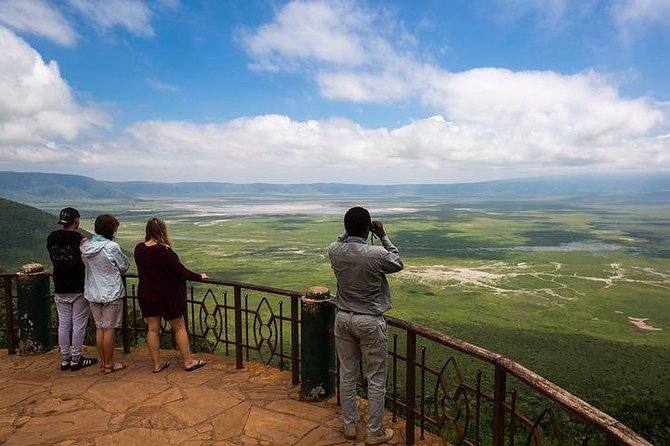
The opening act is the Afternoon safari with a descent over 600 meters into the crater. That vertical drop matters because it changes the whole feel of the day. You are moving from the higher areas down into a bowl where wildlife concentrates, and visibility often improves once you are down in the crater.
You’ll spend the afternoon scanning for the usual Ngorongoro highlights: everything from grazers to predators depends on what’s active that day. The best part of starting here is psychological. It helps you “get it” fast, before you even start chasing the migration across the Serengeti.
Practical note: crater days can be cooler than you expect, even if Moshi feels warm. Bring a light layer and something with a pocket for small essentials, because you will be out looking more than you’re bouncing back and forth.
Days 2-3 in the Serengeti: Lobo area migration route and Grumeti resident game
The next step is the Serengeti, and the route places you around the Lobo area and then the broader Lobo and Grumeti River zone. Here’s why I like this plan for value. Instead of treating migration as one single event, it treats it as a movement through different chapters.
Migration timing you can plan around:
- The wildebeest migration normally passes through the Lobo area around July/August
- It can pass through again in late October/November en route toward the southern Serengeti National Park
On top of that, the Lobo and Grumeti River area has good resident game throughout the year. That matters because it means you are not “waiting on migration” only. Even if the herd flow is slower than expected, you still have animals to watch.
At Grumeti, the river edge changes the game. You can find clusters of activity where water draws wildlife, and the whole area feels more alive when the day’s temperatures hit their stride. Also, if you’re a photography person, the lighting and animal behavior near water often gives you chances for closer, more interesting moments than you get on empty grassland.
Day 4: Wagakuria timing, when the herd tends to show up
Day four shifts you toward the northern Serengeti, specifically the Wagakuria area. This is where the trip leans hard into migration timing, because the wildebeest can normally be found in Wagakuria from August to October.
Why that window helps: when you are within that range, the herd’s needs line up with local conditions more often. That usually translates into better odds of seeing the herd in motion, feeding, and gathering around the day’s watering patterns.
A realistic note: even in peak months, the herd can move unpredictably. But the value here is that your time is positioned where migration is more likely to be in range, not miles away. It’s a smarter way to spend your days, especially in a six-day schedule where you do not have room for “try again next week.”
More safaris from Moshi:
- 8-Day Essence of Tanzania Safari – Luxury
★ 5.0 · 72 reviews - Great Migration Safari In Tanzania
★ 5.0 · 71 reviews - 6 Days 5 Night Safari
★ 5.0 · 57 reviews - 7-Day Magical Tanzania Safari -Premium High End Package
★ 5.0 · 53 reviews
Day 5: Grumeti River waterholes, hippos, and huge crocodiles
Day five keeps you in the Serengeti and doubles down on what the Grumeti River can deliver. You might spot large pods of hippos and huge crocodiles in the river area.
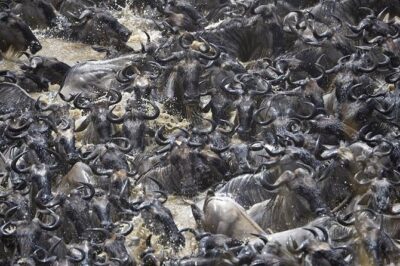
This is also where the explanation about timing becomes more useful than it sounds. The wildebeest often gather around waterholes mid-morning in densities that can look almost unbelievable, like a swarm. Even if the herd isn’t at peak numbers during your exact visit, you can still expect intense activity around the water because that’s where multiple species overlap in needs.
If you want to maximize animal watching, plan to stay present during the mid-morning stretch. It’s easy to get restless, but this is often the part of the day where things suddenly look busy everywhere at once.
Day 6: Kogatende airstrip area, then game drive to Arusha
The final day moves you toward the Kogatende airstrip area after breakfast, with a game drive en route as you head back toward Arusha. Even though it’s your last day, this piece is more than just a transfer. It’s your chance to pick up any missed sightings and end the trip with one more solid safari block.
Kogatende is a key Serengeti gateway area. You are still thinking “wildlife first,” then “get home,” and the day is built around that order.
If you’re the type who wants a final photo loop, this is where you can relax a little less and watch more. Last days often feel rushed, but in this setup you’re still out on the road for wildlife time before the journey wraps.
Price and logistics: does $3,700 per person feel fair?
At $3,700 per person, this is clearly a premium safari. The good news is that a big chunk of the usual extras appear to be covered: all fees and taxes, full board accommodation on safari, and transfers both direction. It also lists admission tickets as free in the tour schedule, which typically removes one of the budget surprises people hate.
So where does the extra cost “show up” in practice? You’re paying for:
- a tight six-day route that hits multiple migration regions
- safari lodging for the full stay (not just a hotel stop)
- driving and park access time spread across several long safari days
- a small group cap of maximum 6 travelers, which often improves comfort and viewing flow
What is not included is the Tanzania visa. The cost is listed as $50 for USA and Canada passport holders, and $100 for others. If you’re comparing value, include that total in your planning so you’re not shocked at the last moment.
Bottom line: if your goal is migration-focused time with strong odds based on season, the pricing can make sense, especially because the core safari costs seem bundled.
Small group size, communication, and why the guides matter
This tour caps at 6 travelers, and that’s meaningful. In safari situations, fewer people often means less crowding in the best viewing angles and fewer compromises when you need to move quickly based on animal movement.
I also like the operator’s service approach as it shows up in the way people talk about coordination and guiding. Faiza is repeatedly described as the point person who keeps planning smooth, with guides like Laurent and Raymond praised for being professional, answering questions clearly, and adjusting safari timing to match what the group wants on specific days.
You’ll feel this most in practical moments:
- When your day’s animal sightings change, the guide can shift time where it counts
- When you have questions, you get real answers rather than vague hints
- When something small goes wrong, you’re not stuck improvising alone
In short, the guide is part of the experience, not a background detail.
What to pack for 8-hour safari days
The itinerary implies a lot of time outdoors in changing temperatures, plus long stretches in the vehicle. You’ll feel it if you under-pack.
Here are the basics I’d bring for this kind of schedule:
- a light warm layer for early and late hours (crater areas can feel cooler)
- a hat and sunscreen for midday glare
- sunglasses with decent protection
- a small day bag with essentials (water, snacks if allowed, sunscreen, tissues)
- binoculars if you use them often, because migration viewing is all about spotting movement early
Also, bring patience for the long game. Migration safaris are not a “turn on the show at 9:00” thing. The best days are usually the ones where you stay alert and calm, even when you’re staring at empty grassland for a bit.
Is this safari right for you?
This works best if you want:
- migration by region, not just a generic “Serengeti safari”
- a mix of crater wildlife plus river-focused action
- a small-group feel with a route designed for the seasonal movement (Lobo and Wagakuria windows)
- full-board comfort so you can focus on watching, not logistics
It’s less ideal if you:
- hate long drive days
- expect a guaranteed migration sighting every time you visit
- need a lot of downtime between activities
Should you book the 6 Days Migration Safari (Ungitours)?
If your travel dates fall inside the migration windows the route targets, I think it’s a smart booking. You’re not just paying for a car ride through the Serengeti, you’re paying for time aimed at specific movement patterns, plus year-round game around the Grumeti River.
Before you hit book, do two quick checks:
1) Match your travel month to the Lobo (July/Aug and late Oct/Nov) and Wagakuria (Aug to Oct) expectations.
2) Confirm your total budget includes the Tanzania visa, since that part is not included.
If those line up, this is the kind of safari where the days feel busy in the best way, with crater drama up front and river intensity by day five.
FAQ
How long is the 6 Days Migration Safari?
It runs for about 6 days.
Where does the safari start and end?
It starts at Kilimanjaro Airport and ends at Kilimanjaro International Airport.
Is pickup included?
Yes. Pickup is offered, and transfers both directions are included.
What does the price include?
The price includes all fees and taxes, full board accommodation on safari, and transfers both direction. Admission tickets are listed as free, and you’ll have a mobile ticket.
What is not included in the cost?
The Tanzania visa is not included. It is listed as $50 for USA and Canada passport holders, and $100 for others.
When does the wildebeest migration normally pass the Lobo area?
The wildebeest normally passes through the Lobo area around July/August, and again in late October/November.
When can you normally find the wildebeest in the Wagakuria area?
The wildebeest can normally be found in the Wagakuria area from August to October.
How many people are in the group?
The group size has a maximum of 6 travelers.
Just posted around Moshi
- machame route★ 5.0 · 16 reviews
- Mt Kilimanjaro 6 days Marangu route hike★ 5.0 · 3 reviews
- Kilimanjaro Climbing Umbwe Route★ 5.0 · 3 reviews
- Wildlife Extravaganza: Manyara, Tarangire & Ngorongoro in 3 Days★ 5.0 · 3 reviews
- 3 Days Private E-Bike Tour in West Kilimanjaro★ 5.0 · 3 reviews
- West Kilimanjaro cycling Adventures★ 4.5 · 8 reviews
- Kilimanjaro Climb • Marangu Route ~ 9 Day★ 5.0 · 4 reviews
- Private Cycle to Kilimanjaro Bike Park Safari★ 5.0 · 6 reviews
Safaris in Moshi, compared.

Unforgettable Tanzania Safari And Zanzibar Beach
Read our review →
7-Day Magical Tanzania Safari -Premium High End Package
Read our review →
Browse the lists this tour appears in