
Reviewed · SPICE FARM TOURS
Spice tour and cooking class (local food)
Spices have stories you can smell. This Nungwi spice tour turns a spice farm visit into a hands-on cooking session, so you learn by walking, tasting, and cooking, not just looking.
I especially love that you get to pick ingredients and then use them in the dishes you make, guided by local women and an interpreter who explains what you are doing. I also like the focus on practical technique, including the classic spice rice with coconut sauce style you can recreate later at home.
One possible drawback: it runs around 8 hours and depends on decent weather for the farm portion, so plan for it being an outdoorsy day.
In This Review
- Key things to know before you go
- From Zanzibar City to Nungwi: the start of your spice day
- Spice farm walking tour: smell, taste, and learn by doing
- The local market ingredient choosing: where your meal starts
- Cooking class on the porch: hands-on, guided, and very doable
- What you learn about spice cooking (and why it matters)
- The meal: eating together, not just finishing a class
- Private group energy: why it feels smoother
- Value check: is $155 per group worth it?
- What to wear and bring for an 8-hour farm-to-cooking day
- Choosing your guide and reading the room
- Who this spice tour and cooking class is best for
- Should you book the Zanzibar spice tour and cooking class?
- FAQ
- How long is the spice tour and cooking class?
- Is pickup available from Zanzibar City or nearby areas?
- Is this tour private or shared?
- How much does it cost?
- What happens during the day?
- Do I need anything to show at the start?
- What is the cancellation policy?
Key things to know before you go
- You walk a real spice farm first, then start cooking right after, while the smells are still in your head.
- Ingredient picking at a local market gives the lesson a fun choose-your-own-feel.
- You cook with locals, not just watch, including instruction and translation so you can follow along.
- Spice rice and coconut sauce are a centerpiece, and you get to eat what you made.
- Small, private group means you get more hands-on attention during prep.
- Banana variety is part of the story, and yes, some bananas surprise people.
From Zanzibar City to Nungwi: the start of your spice day
If your Zanzibar trip is feeling a bit too easy, this kind of day adds real texture. The experience is built around Nungwi, and it is designed to take you from pickup to farm to cooking without making you figure anything out. Even if you are based in Zanzibar City, you are still aiming at that grounded, local-food vibe.
I like that the tour is described as a private activity for your group, not a big cattle-call. That matters because cooking classes go faster when you can hear instructions clearly and keep your hands moving. It also helps you feel less like you are performing for the moment and more like you are actually learning.
Practical note: you should treat this as an active day. The farm walk is part of the point, so comfy shoes and some sun protection help a lot. And because it needs good weather, you will want to keep your plans flexible in case the operator has to shift the timing.
More Food Tours in Zanzibar
- Zanzibar:Stone town Street food market walking tour,transfer
★ 4.5 · 9 reviews - Zanzibar Cooking Class [Swahili food test ] and Spice farm Private tour
★ 4.5 · 6 reviews - Stonetown: Food Markets and Street Food Walking Tour
★ 4.7 · 151 reviews
Spice farm walking tour: smell, taste, and learn by doing
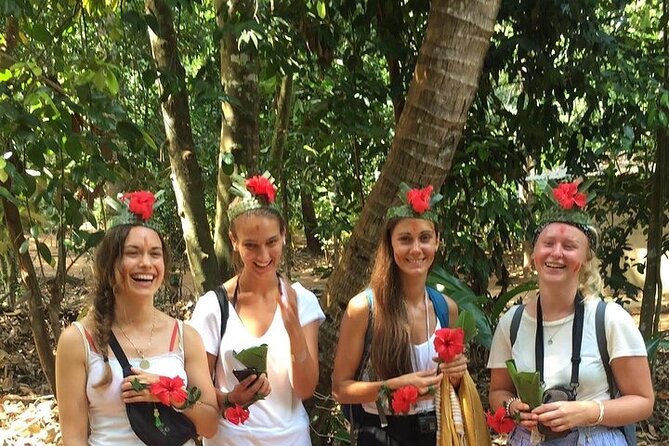
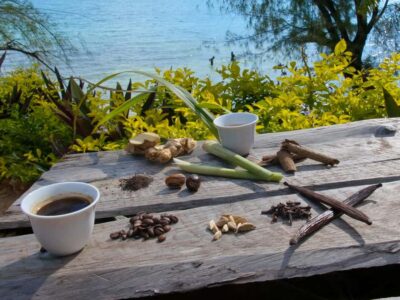
The day typically begins once you arrive at the spice farm. Then you get a walking tour of the property, with your senses working overtime. You are not just hearing names of plants. You are seeing them where they grow, noticing textures and colors, and getting the chance to taste.
This is where the whole experience earns its keep. Many spice talks end with a shop. Here, you start in the field. That way, later when you are cooking, you already understand the ingredients as living things, not as jars on a shelf.
One of the most memorable details from the experience is how far the guide goes with local plants. In one account, people were genuinely surprised by the number of banana types, with discussion of 11 types of bananas. You can expect similar moments where the guide makes you question what you think you know about everyday produce.
The farm walk also helps you understand the logic of spice cooking. Spices are not just for flavor. They have roles in aroma, depth, and balance. When you learn them on the property, you start cooking with more intention.
The local market ingredient choosing: where your meal starts
After the farm walk, your experience keeps moving toward the parts you will actually eat. A key feature is that you get to pick out ingredients at a local spice market. That makes the lesson feel personal, because your lunch is based on what you select, not just what is prepared for the group.
For me, this is one of the best ways to avoid restaurant fatigue. In a restaurant, your meal is already decided. In this class, you help shape it. Even if you do not consider yourself a “foodie,” ingredient picking is an easy way to feel connected to the meal.
It also gives you a better memory later. When you get home and try to cook from what you learned, the ingredients you chose are the anchors. You remember the taste, the plant, and the explanation, not just the final dish.
Tip for you: during the picking part, ask simple questions. How do you use this in the kitchen? What is it used for in local cooking? If there is an interpreter, use them. The more you engage, the more the lesson clicks.
Cooking class on the porch: hands-on, guided, and very doable

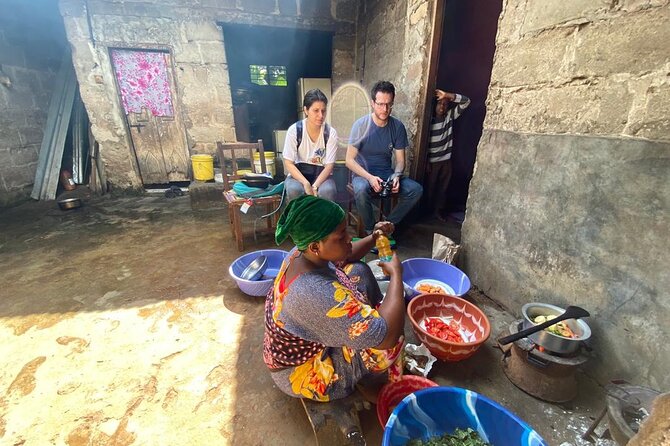
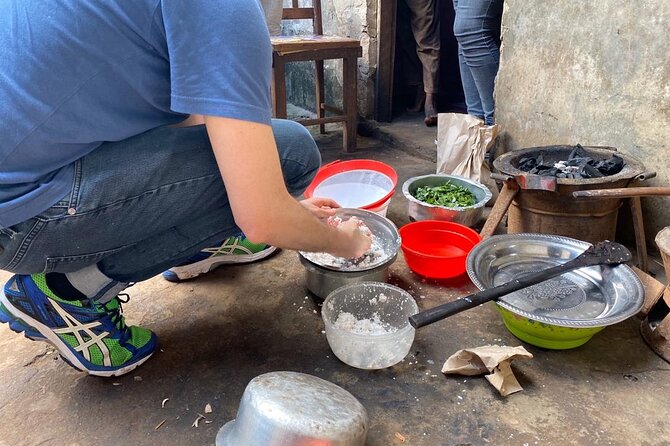
Here is where it becomes a real cooking class, not a demo. You start the lesson with local food preparation and a focus on spice rice with coconut sauce. You are given instructions, and you take part in prepping. At the end, you get to eat what you made together.
Several accounts highlight the same practical setup: cooking happens in a porch-style setting, with a teacher or host working alongside the group while explanations flow through an interpreter. That combination matters. You are watching the technique, but you are also getting translation for every step, so you are not guessing.
And yes, many people only think they are “cooking” when they stir a pot at the end. This experience is different because you help with prep and assembly. Some guests described that they mainly did the ingredient prep, but still walked away with a broad variety of dishes and a meal they genuinely enjoyed.
Also, the pacing tends to support learning. You are not thrown into ten tasks at once. You follow the sequence, learn what each spice is doing, and then eat soon after, while everything is still fresh. That fast payoff is one of the underrated reasons cooking classes work.
More spice farm visits in Zanzibar City:
- Zanzibar: Stone Town, Spice Tour, Prison Island with Lunch
★ 4.4 · 1,219 reviews - Zanzibar: Prison Island, Stone Town, & Spice Farm Tour
★ 4.5 · 579 reviews - Zanzibar: Stone Town, Spice tour & Prison Island with Lunch
★ 4.6 · 453 reviews - Full-Day Private Stone Town +Spice Farm and Prison Island Tour
★ 4.5 · 216 reviews
What you learn about spice cooking (and why it matters)
The standout educational piece is that you connect plants to flavor while you are actively working. When you learn spices on a farm and then cook with them minutes later, your brain stops treating the ingredients like trivia.
You should come away with more than a recipe. You learn the logic of how Zanzibar cooking builds flavor. Spices are layered. Aromatics set the base. Coconut helps smooth and round the result. The result is comfort-food depth, not just heat.
One of the most praised aspects is the variety of what you make. That variety is important for you because it protects you from the “one dish wonder” problem. Even if you came for spice rice, you will likely experience multiple local preparations as part of the session. That gives you a wider toolkit for recreating Zanzibar flavors later.
And if you love cooking new cuisines, this kind of class is a good match. You are not just eating; you are learning a method you can repeat. It gives you a tangible souvenir, the kind you can use beyond photos.
The meal: eating together, not just finishing a class

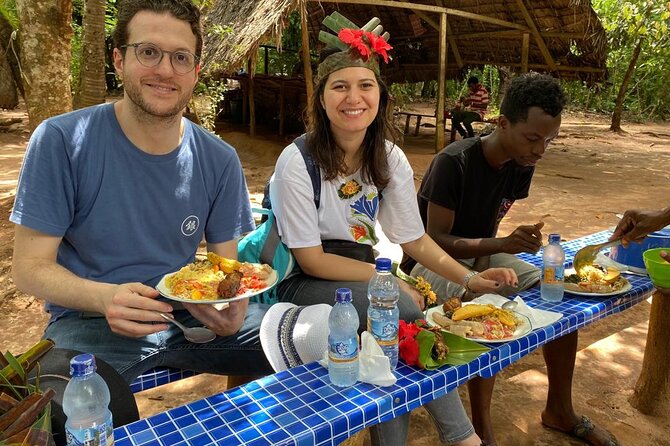
The final part is simple and powerful: you eat together what you cooked. Some people describe the entire experience as a cure for restaurant fatigue, and I get that. After days of trying dishes you did not make, it is satisfying to sit down to food that has your fingerprints in it.
This meal time is also where the lesson turns social. You are sharing plates, asking questions, and getting a feel for how locals eat. The group dynamic tends to be relaxed, especially with an interpreter keeping things clear.
If you are cautious about spice levels, you can still enjoy the meal because the class focuses on flavor-building spices, not only on burning-hot heat. That said, spice cooking can surprise you, so consider bringing a mindset of tasting and adjusting rather than expecting a bland outcome.
Private group energy: why it feels smoother
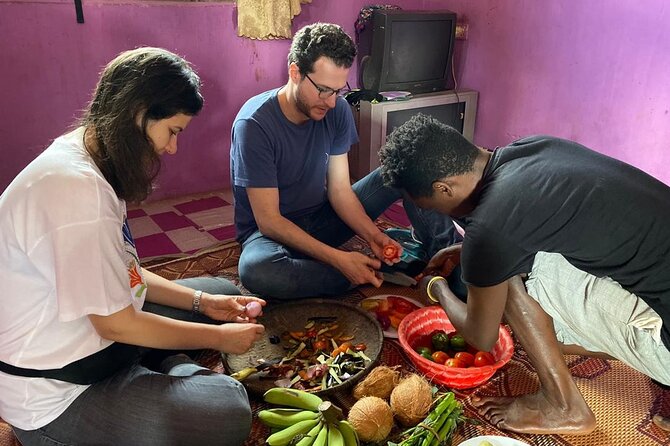
Because it is a private tour for your group, the vibe tends to be more personal than a standard group class. That changes the experience in small but meaningful ways.
For you, it means:
- You get more attention during prep if you have questions.
- The interpreter can help you follow your specific tasks.
- You move at a comfortable pace without feeling rushed by strangers.
Even in a private setup, you should still show up ready to participate. This is a cooking class. The best outcomes come when you are willing to handle ingredients, ask questions, and taste as you go.
Value check: is $155 per group worth it?
At $155.00 per group, up to 2 people, the price is not “cheap.” But it can be fair value if you compare it to what you actually get in return: a spice farm walk, market ingredient picking, an 8-hour experience, hands-on cooking instruction, and a meal based on your work.
If you are traveling with a partner, this pricing can feel like a bargain. You are splitting the group cost, and you get a more intimate experience than many per-person tours. The class also replaces multiple costs: you do not just pay for a meal. You pay for the learning and the guided access to ingredients.
Where the value gets even better is if you are the type who likes to cook at home. If you rarely cook, you might still enjoy the day, but your satisfaction might depend more on the food itself than the technique. This experience is best when you care about food details and you like learning through hands-on work.
Also, consider the rarity factor. A Zanzibar cooking style is not something you stumble into everywhere. You are paying for context, local guidance, and a practical method you can bring home.
What to wear and bring for an 8-hour farm-to-cooking day
Since the day starts outdoors at the spice farm, dress for heat and dirt-friendliness. Wear closed-toe shoes you do not mind getting a little dusty. Bring a hat and sunscreen if you are sensitive to sun.
For personal comfort, consider:
- A light layer for morning shade
- A small towel or wipes, since you will handle ingredients
- Water, if you tend to get thirsty while walking
You will likely move between farm areas and cooking spaces, so keep your daypack light. If you have a rain plan, remember the tour requires good weather. If conditions are poor, the operator may offer a different date or a full refund.
Choosing your guide and reading the room
The tour is provided by Nungwi adventures and safari, and the experience can feel extra special when you click with your guide. One guest specifically praised Sultan as a great guide, which is a good sign that explanations and pacing can land well.
Even with great guiding, remember this is a working day in a local food setting. Your job is to be curious, polite, and willing to learn. When you stay engaged, the whole lesson makes more sense.
If you want the most out of your time, start asking questions during the farm walk. What does this plant do in cooking? How is coconut used here? What changes when spices are fresh versus dried? Small questions lead to big understanding.
Who this spice tour and cooking class is best for
This is a strong fit if you:
- Love cooking and want a method you can repeat at home
- Want a hands-on break from restaurant meals
- Enjoy learning through tasting and ingredient stories
- Prefer smaller, private experiences
It is also a smart choice if you want a cultural food moment that is not just a sit-down activity. The farm and market parts give you the local context before the cooking starts.
If you hate cooking with your hands or you want a purely observational activity, the class may feel like too much participation. In that case, look for something more viewing-focused. But if you like learning with your body, this is the right track.
Should you book the Zanzibar spice tour and cooking class?
I think you should book it if you want an authentic Zanzibar food day with real learning, not a quick stop for a spicy sample. The most highly praised parts make the case: the spice farm walk, the market ingredient choice, cooking with local women and an interpreter, and the satisfying meal you eat together at the end. Add the small private-group feel, and you get a day that feels worth the time.
Book it especially if $155 per group is manageable for your budget, and you will actually use what you learn later. If you are traveling with someone, the per-group price makes even more sense.
Only hesitate if your schedule cannot handle an 8-hour outdoor activity or you are very sensitive to weather changes. If you can be flexible, this is the kind of experience that gives you more than a photo.
FAQ
How long is the spice tour and cooking class?
It runs about 8 hours.
Is pickup available from Zanzibar City or nearby areas?
Yes, pickup is offered.
Is this tour private or shared?
It is a private tour or activity, and only your group participates.
How much does it cost?
It costs $155.00 per group (up to 2 people).
What happens during the day?
You arrive at the spice farm, take a walking tour, then have a cooking lesson that includes local foods and spice rice with coconut sauce. You get instructions, cook/prep, and then enjoy the meal you made.
Do I need anything to show at the start?
You will have a mobile ticket.
What is the cancellation policy?
Free cancellation is available. You can cancel up to 24 hours in advance for a full refund, and weather-related cancellations can lead to a different date or a full refund.
More Food in Zanzibar City
- Authentic Street Food Tours in Stone Town, Zanzibar
★ 5.0 · 46 reviews - Arusha: Traditional Tanzania Cooking Class & Food Market Tour
★ 5.0 · 34 reviews - Organic Coffee Tour and Local Food Experience in Arusha
★ 5.0 · 29 reviews - Stone Town Evening Walk Tour With Visit Food Markets
★ 4.5 · 28 reviews
More Cooking Classes in Zanzibar City
- A private half day spice farm with a cooking lesson
★ 5.0 · 13 reviews - Mnemba Dolphin Tour, Cooking Class, Spice Tour, Horseback Riding
★ 4.0 · 4 reviews - Zanzibar Cooking Class & Spice Tour
★ 4.5 · 77 reviews - Zanzibar: Spice Farm Tour with Traditional Cooking Lesson
★ 4.8 · 77 reviews
Just posted around Zanzibar City
- Mnemba Private Snorkeling Experience★ 5.0 · 4 reviews
- Serengeti & Ngorongoro 3 days Fly Safari in from Zanzibar★ 5.0 · 21 reviews
- Zanzibar Full Day experience★ 4.5 · 5 reviews
- Private Zanzibar Stone Town Historical Tour★ 5.0 · 13 reviews
- Zanzibar Spices Farms Tour (Private)★ 5.0 · 3 reviews
- Zanzibar’s Finest: Private Tour of Top 5 Attractions with Lunch★ 4.5 · 9 reviews
- Full-Day Stone Town and Prison Island Tour in Zanzibar★ 4.0 · 9 reviews
- Private Spice Tour in Zanzibar with Pick Up★ 5.0 · 10 reviews
Spice Farm Tours, compared.

Stone Town, Spice Tour, Prison Island with Lunch
Read our review →
Stone Town, Spice tour & Prison Island with Lunch
Read our review →
Full-Day Private Stone Town +Spice Farm and Prison Island Tour
Read our review →
The Swahili Spice Experience – Spice Tour + Culinary Journey
Read our review →Browse the lists this tour appears in