Reviewed · 5-DAY EXPERIENCES
Safari “Kifaru” – 5 days in the most famous Parks in the world
Five days, three legends of wildlife. I love the tight circuit through Lake Manyara, Ngorongoro Crater, and Serengeti, and I love the private, door-to-door pace that keeps logistics from stealing daylight. The only catch: your flight timing matters, because if you arrive late you may skip the optional Lake Manyara game drive and head straight toward Karatu.
This is run by Safari Crew Tanzania, a team with 20-plus years of operating in the Rift Valley. They also say they follow the World Code of Tourism Ethics, and they won Tripadvisor Travellers’ Choice 2024 awards in Safari, Photo Tour, Nature and Wildlife categories. That matters because in a place like Tanzania, smooth coordination makes the difference between a great safari and a stressful one.
One more reason I like this style of trip: you get real variety, not just “drive, stop, repeat.” Lake Manyara brings forests, savannah, marsh edges, plus big bird life and monkey groups. Then you drop into the Ngorongoro world, where a collapsed volcano becomes a single animal-rich stage. Finally, Serengeti gives you that open-country feel where sightings keep coming.
In This Review
- Key highlights to pay attention to
- Safari Kifaru in Tanzania: what your 5 days are really about
- Arusha, arrivals, and why timing changes what you see
- Lake Manyara: baboons, birds, and a whole range of habitats
- Mto wa Mbu village visit: real rural life at the base of the Rift
- Ngorongoro Crater photo safari: one ancient volcano bowl, 25,000-plus animals
- Serengeti National Park: open grass, migration energy, and a big ecosystem
- How the migration planning affects your trip
- Ngorongoro Conservation Area: not a national park, and that changes the feel
- Value and price: where your $2,930 per person makes sense
- What to expect on the ground: photo safari pace and daily rhythm
- Who this Kifaru safari fits best (and who should rethink it)
- Booking with Safari Crew Tanzania: what I’d use to judge fit
- Should you book this Kifaru safari?
- FAQ
- How long is the Safari Kifaru experience?
- Where does the safari start and how does airport pickup work?
- Which parks and areas are included?
- Is this a private safari or shared group?
- What meals are included?
- Are park admission tickets included?
- What about flights and the entry visa?
- Is tips included in the price?
- What is the cancellation and refund window?
Key highlights to pay attention to
- Lake Manyara’s mix of habitats in a small park, including heavy bird and monkey life
- Private transportation plus all fees and taxes in the package price
- Arrival-time choices on Day 1, including an optional game drive or a village visit
- Ngorongoro Crater’s concentrated animal setting, with a savannah floor inside the caldera
- Serengeti migration timing support, with overnight planning in Ndutu and Seronera for late Dec to April
- Strong communication track record, including a guide named Michael who spoke Italian in at least one past safari
Safari Kifaru in Tanzania: what your 5 days are really about
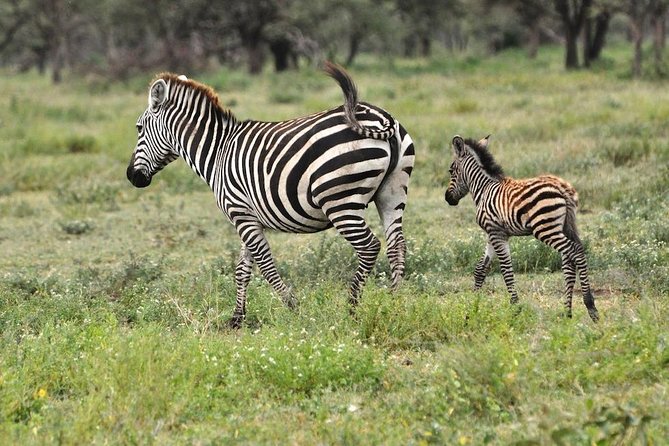
This is the classic northern safari sweep, but the way it is stitched together helps you see the big icons without wasting time. You are based around Arusha, then you move into the Rift Valley park triangle: Lake Manyara, Ngorongoro, and Serengeti. That routing is popular for a reason. Each stop has its own rules of wildlife viewing, and the scenery keeps your brain from getting bored.
What you are paying for here is not only the animal country. You are also paying for the human system that gets you there: private transportation, airport transfers, accommodations, and the meal plan laid out across the days. When you do it right, you feel the time in daylight, not in planning.
The “Kifaru” part of the trip name fits the vibe: steady, practical, and wildlife-focused. You are not signing up for a museum tour or a culture lecture series. You are moving through ecosystems where animals do the talking.
More Safaris in Arusha
- Balloon Safari & Bush Breakfast in Serengeti – Miracle Experience
★ 5.0 · 1,646 reviews - 4 Days Group Camping Safari
★ 5.0 · 1,101 reviews - 5 Days Group Camping Safari
★ 5.0 · 730 reviews
Arusha, arrivals, and why timing changes what you see
You are in the Arusha orbit. Transfers are set up for flights into Kilimanjaro Airport (JRO) and Arusha Airport (ARK). If you are arriving before 9:00 am on the first day, you have a choice. You can start with a Lake Manyara game drive, or pair the day with an option to visit Mto wa Mbu (depending on how the schedule is arranged for your arrival).
If you land late morning, you can still reach Karatu by around 1:00 pm, but the day shifts toward getting into position for the parks time. In other words, your arrival window can change the balance between wildlife viewing and cultural viewing.
This is worth planning for. If you have control over flights, try to land earlier when possible. If not, don’t panic. The later-start version still gets you into the safari flow, it just adjusts which stop happens first.
Lake Manyara: baboons, birds, and a whole range of habitats
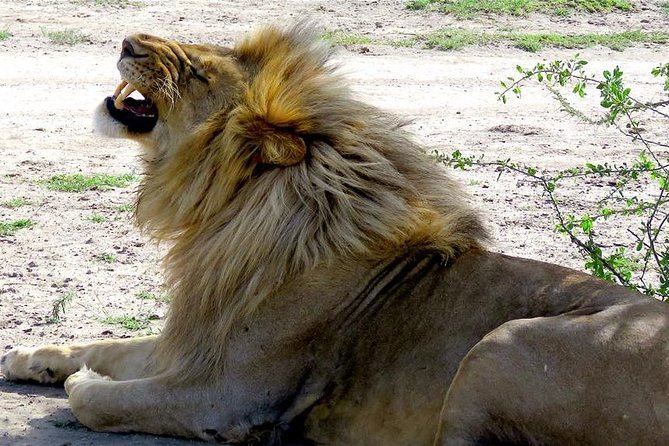
Lake Manyara is the warm-up that actually feels special. It is a small park by Tanzania standards, but it packs in a lot: dense forests fed by springs at the Rift Valley edge, savannah areas, and marshy zones around the lake. That habitat mix is why wildlife can feel “dense,” even when the park footprint is not huge.
Wildlife focus here is broad. You can expect species including elephants, giraffes, and monkeys, plus large colonies of baboons and vervets. Birding is a major selling point too, with 380 bird species mentioned. Even if you are not a hardcore birder, that kind of variety often means there is always something moving, calling, or surprising.
What I like about this start: it helps your eyes adjust to African wildlife viewing. The animals are not only “out there” in the distance. Some of the action is closer to the mix of trees, grass, and lake edges.
A possible drawback: Many safari days are built for early starts and long drives. Lake Manyara comes with an “in the right place at the right time” rhythm. If your day begins later due to your flight, you might lose some of the flexibility for that exact timing.
Mto wa Mbu village visit: real rural life at the base of the Rift
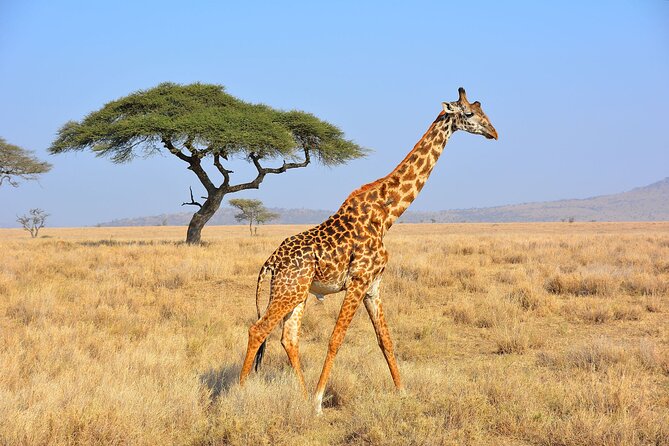
One of the most interesting choices on the first travel day is the stop in Mto wa Mbu, an agricultural village at the base of the Rift cliff. The idea is simple: you get an authentic glimpse into contemporary rural Tanzania rather than staying locked in safari-only mode.
This area is described as home to multiple ethno-linguistic groups that contribute to Tanzania’s ethnographic mix. In practical terms, that means the village visit is not just a photo stop of scenery. It is a chance to understand how people live alongside the larger conservation and wildlife economy.
Why it is valuable for your safari: wildlife safaris can become “big animal, big animal, big animal.” The village stop adds context. It reminds you this land is not only a wildlife map. It is also a living place, with agriculture and communities at the center.
Watch-out: the village option is scheduled based on your arrival timing and the parks day plan. If you are chasing every possible wildlife minute, you may prefer the game drive option instead.
More safaris from Arusha:
- 3 Days Serengeti & Ngorongoro Group Camping Safari
★ 5.0 · 574 reviews - 7-Day Premium Luxury Tanzania Safari All-Inclusive
★ 5.0 · 426 reviews - 3-Day Classic Serengeti Safari
★ 5.0 · 263 reviews - 8 Days Great Wildebeest Calving Migration Safari from Arusha
★ 5.0 · 254 reviews
Ngorongoro Crater photo safari: one ancient volcano bowl, 25,000-plus animals
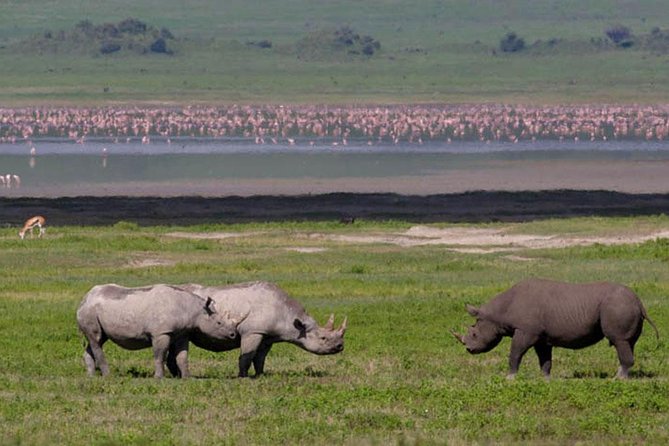
Ngorongoro Crater is the “wow” stop that many people plan the whole Tanzania trip around. The setting is unusual: it is the remains of an ancient volcanic cone, where the top collapsed about 2.5 million years ago, leaving a caldera. Inside that caldera, a savannah develops on the floor, with raised edges about 600 m above the bottom.
This is not a vague nature description. The plan gives you numbers that help you picture the scale: the caldera diameter is given as 16 to 20 km, and the crater floor supports more than 25,000 large animals. The height of the rim is also noted around 2,300 m above sea level, with viewpoints that offer dramatic panoramas.
Wildlife notes here are very specific. The crater supports typical species of the region, with the notable exception that giraffes do not find nourishment in this environment. All the same, you are looking at a strong chance of seeing large mammals in a concentrated area, and the crater’s “contained” feel often gives that classic safari density.
Why this works for photographers: this is described as a photo safari, and the crater setting helps because sighting conditions are shaped by a bowl-like geography. You are not guessing where wildlife might be across thousands of square kilometers. You are viewing from vantage points into a defined space.
Possible drawback: concentration can also mean long periods of waiting for the right moment, especially if animals are lingering far from roads. If you come expecting constant action, you might feel more like a wildlife watcher than a “spot it instantly” hunter.
Serengeti National Park: open grass, migration energy, and a big ecosystem
Serengeti is the name that needs no introduction. What helps is that the trip plan connects Serengeti to a living ecosystem, not only park boundaries.
You get a sense of scale immediately: the Serengeti ecosystem is described as home to more than 1,500,000 wildebeest, about 300,000 zebras, 500,000 Thompson’s gazelles, and large numbers of big cats like lions, leopards, and cheetahs. Elephants, giraffes, and a long list of other animals are included too. Crocodiles and hippos are mentioned for the waterways, and there are over 400 bird species.
That is a lot of wildlife on paper. The practical takeaway is that you are dealing with an ecosystem where movement matters. The schedule even emphasizes that the grasslands and open environment favor sightings, because tall tree growth is limited in much of the park due to volcanic subsoil, especially in the southern part.
How the migration planning affects your trip
A key detail: the plan says that during the period from the end of December to April, the safari is set up with overnight stops to meet the great migration. It mentions staying overnight on the third day in southern Serengeti (Ndutu) and staying overnight on the second day in central Serengeti (Seronera).
If you travel within that late Dec to April window, this is one of the biggest “value” elements of the route. Instead of rushing through one region, you get built-in time for the migration to be in play.
If you travel outside that window, you still get Serengeti game drives, but the migration spectacle might look different. In that case, the open habitats and animal densities still do the job, just with less focus on a specific migration moment.
Ngorongoro Conservation Area: not a national park, and that changes the feel
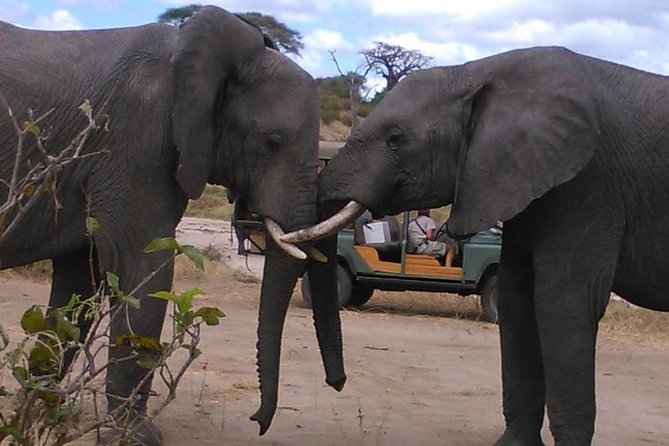
Day 4 includes time in the Ngorongoro Conservation Area, which is important because it is not a national park. It is described as a conservation area administered independently, where the environment is preserved and settlement rights for Maasai communities are recognized.
The status also adds weight: it has been a UNESCO World Heritage Site since 1978 and an International Biosphere Reserve since 1981. The conservation area is much larger than the crater itself, at 8,300 square kilometers, and it includes several ecosystems such as rainforest, mountain grasslands, and grass expanses bordering Serengeti. The crater sits within it as well, with an area listed as 265 sq km.
Why you should care: when land-use and community settlement are part of the management plan, the vibe on the ground can feel less like a fenced-off wildlife stage and more like a working landscape where conservation rules exist alongside human life. That can make the whole safari feel more grounded.
Also, the plan marks admission here as free, which matters for your overall value math.
Value and price: where your $2,930 per person makes sense
At $2,930 per person for a roughly 5-day safari, the biggest question is simple: what are you buying besides the parks names?
Here is what the package clearly includes:
- Private transportation
- All fees and taxes
- Accommodations
- Transfers to and from JRO and ARK
- Meals: 4 dinners, 4 breakfasts, and 5 lunches
That kind of “all-in” setup can be good value if you hate spreadsheet travel. In Tanzania, the time cost of coordinating vehicles, park entry, and meal planning is real. Paying for a single operator to manage the pieces often means you spend your energy on the wildlife and photos, not on logistics.
Two things are not included, and you should budget for them:
- International and local flights
- Entry visa, mentioned for EU, CH, and UK citizens
- Tips and anything not specified in inclusions
So, if you are comparing prices with DIY planning, make sure you compare apples to apples. A lower “base safari price” can quickly rise once you add park entries, driver fees, lodging, and meals. Here, the package spells out those inclusions, which is why the price tends to feel fair when you actually tally it.
Also, the tour summary notes group discounts, so if you have flexibility in your party size, you can sometimes reduce the per-person cost further.
What to expect on the ground: photo safari pace and daily rhythm
This is described repeatedly as a photo safari, which usually means the driving rhythm is designed for sightings and angles rather than “see everything in ten minutes.” You are going to spend significant time in vehicles between parks, and then you will stop for drives where visibility and animal movement matter.
The good news is that the route itself supports that rhythm. Lake Manyara gives variety early. Ngorongoro gives concentration. Serengeti gives open-country motion.
Practical comfort tip: bring layers and plan for changing conditions. The plan includes a viewpoint rim altitude of around 2,300 m at Ngorongoro. Even if you do not obsess over temperatures, you will likely want something warmer when the wind picks up.
For photos, also remember that “best shot” moments can be short. If you rely on a single camera setting, consider making sure you have backups for common scenarios like bright sun and shaded animals.
Who this Kifaru safari fits best (and who should rethink it)
This safari fits best if you want:
- A classic northern Tanzania circuit with minimal planning stress
- Strong focus on wildlife viewing in major parks
- A private setup for pacing, rather than being tossed into a larger mixed group schedule
- A trip that can include a village visit if your arrival timing supports it
It may not fit if:
- You are extremely schedule-sensitive and might land late, because late arrivals can reduce what you do on the first day
- You want a “bare minimum driving” safari with very short transfer times between areas, because a multi-park route always has roads to cover
The operator also says most travelers can participate, which suggests there are not major participation barriers listed in the tour description. Still, if you have mobility concerns, it is smart to ask your provider what the on-vehicle time and day structure looks like.
Booking with Safari Crew Tanzania: what I’d use to judge fit
If you are deciding whether to book, I’d use three quick checks based on the information you have here.
First, ask how they will handle your arrival time. The first-day choice is tied to landing before or after 9:00 am, and that is the difference between starting with a Lake Manyara drive or focusing on getting to Karatu and positioning for the parks day.
Second, confirm how they plan lodging and drives around your travel month. If you are traveling late Dec to April, the Ndutu and Seronera overnight plan is part of what makes this route powerful for migration viewing.
Third, check what language support you might get. In one past safari experience, the guide Michael spoke Italian. In another case, the team member Rocco was highlighted for fast responses and adapting to requests. You might not get the same exact match, but it signals the operator is used to working with different language needs.
Should you book this Kifaru safari?
If your goal is to see the big Tanzanian icons in a short window, this is a strong candidate. The mix of Lake Manyara, Ngorongoro Crater, Serengeti, plus the Ngorongoro Conservation Area gives you different wildlife mechanics instead of one repeating scene. And the package’s stated inclusions, especially private transportation, all fees and taxes, and a full meal plan, remove a lot of the guesswork that can quietly inflate other safari deals.
I would book it if you can land early enough to give yourself flexibility on the first day, and if you care about getting to Serengeti with the option to align overnight stops during the late Dec to April migration window. If you are traveling outside that migration window, it still works as a major wildlife safari, just with less emphasis on a specific migration moment.
If you want, tell me your travel month and whether you prefer more time in parks or more time in local villages. I can help you think through which arrival timing option gives you the best shot at your priorities.
FAQ
How long is the Safari Kifaru experience?
It runs for about 5 days.
Where does the safari start and how does airport pickup work?
The trip is based around Arusha, with transfers from Kilimanjaro Airport (JRO) and Arusha Airport (ARK). Pickup is offered.
Which parks and areas are included?
You visit Lake Manyara, Ngorongoro Crater, Serengeti National Park, and the Ngorongoro Conservation Area. There is also an optional stop for the village of Mto wa Mbu.
Is this a private safari or shared group?
It is a private tour/activity, meaning only your group participates.
What meals are included?
The package includes 4 breakfasts, 5 lunches, and 4 dinners.
Are park admission tickets included?
Lake Manyara and the main game drive days are marked as admission ticket included. Ngorongoro Conservation Area is marked as admission ticket free in the provided details.
What about flights and the entry visa?
International and local flights are not included. Entry visa is also not included for EU, CH, and UK citizens.
Is tips included in the price?
No. Tips and anything not specified in the inclusions are not included.
What is the cancellation and refund window?
You can cancel up to 6 days in advance for a full refund. With cancellations made 2 to 6 days before the start, you get a 50 percent refund. Less than 2 days before the start means no refund.
Just posted around Arusha
- 8 Days Serengeti Migration safari★ 5.0 · 11 reviews
- tarangire & ngorongoro 2 days tour★ 5.0 · 14 reviews
- serengeti, ngorongoro & tarangire 4 days private tour★ 5.0 · 18 reviews
- tarangire, ngorongoro & lake manyara park 3 days private tour★ 5.0 · 11 reviews
- serengeti & ngorongoro 3 days private tour★ 5.0 · 15 reviews
- climb the KILIMANJARO via Lemosho route★ 5.0 · 4 reviews
- Mt. Kilimanjaro: Shira plateau to Cathedral point 3872m Day hike★ 5.0 · 7 reviews
- 2 Days Tanzania Midrange Group Join Safari★ 5.0 · 7 reviews
5-Day Experiences, compared.
5-Day Highlights mid-Range Crater, Serengeti, Tarangire
Read our review →
5 Days Camping Tarangire, Serengeti & Ngorongoro crater & Visiting Maasai
Read our review →
5-Day Private Northern Tanzania Safari from Arusha
Read our review →
5 Days Best of Tanzania Luxury Safari Northern Circuit
Read our review →