Reviewed · HALF-DAY
Half-Day Volunteer Experience at SATINO Preschool, Arusha
A preschool visit can feel like a quick photo stop. This one is different. You spend real time with kids at SATINO Daycare & Preschool in Arusha, join their daily rhythm, and see how your help turns into education and care. It runs Monday to Friday, and it’s built for small groups, so you get time to talk, play, and participate.
I love the hands-on interaction. You’re not just watching from the edge. You can join lessons, help with classroom activities, read or talk with kids, and take part in craft or learning moments when appropriate.
One thing to consider: this is a child-centered visit. You’ll want to plan for active engagement, and it’s not the best fit if you have limited mobility, need wheelchair access, or prefer a quiet sightseeing day.
In This Review
- Key points at a glance
- Arriving in Arusha, then stepping into a child-focused mission
- The welcome briefing: what SATINO is trying to change
- Classroom visits: how you participate without taking over
- Playtime and extracurricular fun: where connection happens fast
- Lunch with the students: traditional food and community at the table
- The volunteer impact: what your $35 actually does
- Logistics that affect your experience (and how to plan)
- What to wear, bring, and avoid for a smooth visit
- Who this is best for, and who should choose another option
- Price and value: turning a short visit into a real month of support
- Should you book SATINO’s half-day volunteer visit in Arusha?
- FAQ
- How long is the SATINO preschool volunteer experience?
- When does pickup happen and when do you return to Arusha?
- What days does the tour run?
- How big is the group?
- What languages are spoken by the guide?
- What is included during the visit?
- What should I bring?
- What should I avoid during the tour?
- Does the tour support the children’s education?
Key points at a glance

- Monthly education impact: your tour fee supports a child’s school education for a full month.
- Small group, real time: limited to 7 participants, so you actually connect.
- Meet the leadership: the director Weza (and school leaders such as Augustino) explain SATINO’s purpose.
- Classrooms with energy: you’ll see lessons that keep young kids focused and excited to learn.
- Playtime is part of learning: sports, games, and singing are woven into the day.
- Share a traditional lunch: you eat with the students, not just around them.
Arriving in Arusha, then stepping into a child-focused mission

Your morning starts with pickup in Arusha. The standard plan is 9:00am pickup, around a 30-minute van ride to SATINO, then you’ll come back to your accommodation area by about 2:30pm. That tight schedule matters. You get a meaningful block of time without turning the day into a full travel day.
When you arrive, you’re welcomed into a place that feels built around children first. SATINO is described as more than a preschool. For many families facing severe financial hardship, it provides a lifeline: education, meals, and emotional support in a setting that aims to be safe and positive.
You’ll also get the story behind the school from the director, with Weza mentioned often by visitors. In some cases, school leadership such as Augustino is discussed too, including how the preschool project began through fundraising. That context is practical, not heavy. It helps you understand why something as simple as a classroom visit can matter so much.
A few more Arusha trips to compare
- Balloon Safari & Bush Breakfast in Serengeti – Miracle Experience
★ 5.0 · 1,646 reviews - Tanzania Classic – 7 Days
★ 5.0 · 1,151 reviews - 4 Days Group Camping Safari
★ 5.0 · 1,101 reviews
The welcome briefing: what SATINO is trying to change
The moment you get oriented, you learn the mission in plain language: SATINO aims to create a stable, caring space where kids can learn, eat, and grow with moral values and good behavior taught from an early age.
This is where the visit becomes more than a feel-good activity. SATINO’s purpose is tied to poverty pressures in the Arusha area that block many children from regular schooling. Your money is framed as direct support for education needs, including school supplies, meals, and teacher salaries.
And yes, you’ll likely notice a tone of respect. One visitor specifically highlighted the goal of a preschool without violence against children. That comes through in the atmosphere you see, not just the explanation.
Classroom visits: how you participate without taking over
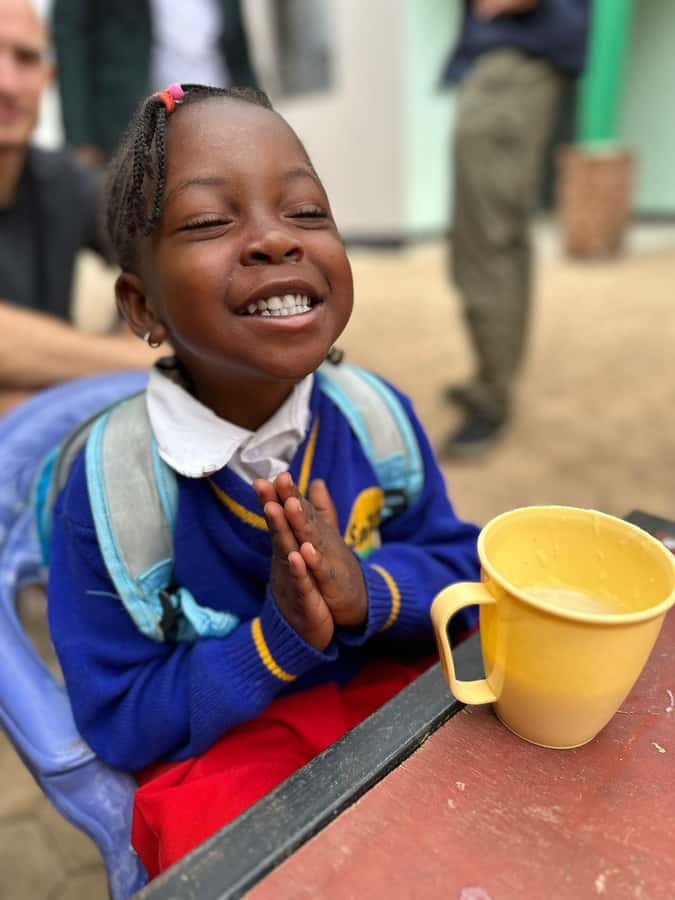
The heart of the half-day is the classroom time, about two hours on-site. You’ll see how the teachers run lessons for young children, and the rooms are described as lively with curiosity. Kids are eager. That’s the main thing I want you to remember: this isn’t a passive audience.
You’ll be encouraged to engage. Depending on what’s happening that day, you might help with a lesson, participate in a craft, or join in small learning activities. Several visitors described teaching a bit of English, while others focused on storytelling, showing kids something, or simply reading together.
A detail I like: it feels age-appropriate. One review mentioned the school has around 60 kids aged roughly 3 to 6, and the energy matches that stage. So if you’re worried you’ll feel awkward as a foreign adult, don’t. The teachers guide the moment. Your role is to be a friendly helper, not a classroom manager.
Still, keep expectations realistic. You’re visiting a preschool, not a museum exhibit. That means you should expect noise, movement, and moments of hugging and excitement. Bring patience. It’s part of the experience.
Playtime and extracurricular fun: where connection happens fast
After the classroom time, playtime is a major part of the day, and it’s not treated as downtime. It’s tied to social and emotional growth, which is a fancy way of saying kids practice being together, sharing space, using energy, and learning rules through games.
On some days (like one Friday visit described in detail), the school participates in a sports session in a local field. On other days, you might join singing, games, or structured activities led by teachers. Either way, you’re welcome to join in.
This is often where visitors feel the most personal connection. Kids who may have limited chances to interact with visitors are thrilled. They’ll show drawings, engage openly, and turn brief greetings into real bonds.
Practical tip: don’t overthink games. If you know a simple counting game or a call-and-response song, you can mirror what you see. But even without that, your presence and smile usually do the job. The teachers set the pace.
Same base in Arusha, a completely different day:
- 5 Days Group Camping Safari
★ 5.0 · 730 reviews - Materuni Waterfalls, coffee tour & Kikuletwa Hot Springs
★ 5.0 · 643 reviews - 3 Days Serengeti & Ngorongoro Group Camping Safari
★ 5.0 · 574 reviews - 7-Day Premium Luxury Tanzania Safari All-Inclusive
★ 5.0 · 426 reviews
Lunch with the students: traditional food and community at the table
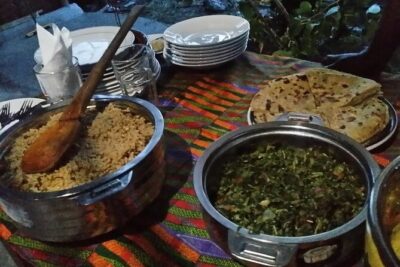
Then you share lunch with the students. A full lunch hour is built in, so this is not a rushed snack. Visitors described the food as simple but filling, including meals like beans and greens. Some mentioned the school provides food for the children and may even grow vegetables.
What makes this lunch meaningful is the context. You’re not eating alone in the van while the kids keep learning. You’re sitting in the same shared space and eating the same kind of food that families at SATINO rely on. That turns “volunteering” into community, because you’re part of the day’s normal routine.
If you’re sensitive to unfamiliar flavors or textures, just plan for that. But don’t treat lunch like a test. The value here is the togetherness, not gourmet dining.
The volunteer impact: what your $35 actually does
The tour price is $35 per person, and the school explains that 100% of the tour fee goes to supporting the education of the children. That’s not vague support. You’re told your fee funds a child’s school education for a full month.
For me, that clarity is what makes the activity feel fair. You’re not buying an experience that pays staff out of a separate pot while donations happen later. You’re paying for an organized visit with a direct education outcome.
It also helps you avoid the common volunteer trap of doing “good vibes” without impact. Here, your time matters, but so does the tuition support. That balance is a big reason so many visitors describe the day as heartwarming and inspiring, but also grounded and real.
If you want to add extra support, the visit guidance encourages bringing extra school supplies or books as a donation. Just follow the rules, and keep it simple.
Logistics that affect your experience (and how to plan)
This is designed as a half-day, so plan like it is. The schedule is tight: pickup at 9:00am, then van time in and out. You’ll likely be on your feet for interaction, and you’ll spend time participating in activities.
Your group is small, limited to 7 participants. That’s one of the biggest quality factors. In a larger group, kids and teachers would struggle to manage attention and learning flow. Here, you can actually form a connection.
You’ll also have a live guide who speaks English and Swahili. That matters because it helps you understand what you’re seeing and keeps the experience respectful. It’s also helpful if you want to ask practical questions about the school mission or classroom focus.
Pick-up is included within a 6 km radius of Satino School, and a small extra fee applies beyond that distance. Before your day, confirm your exact pickup location so you don’t lose time.
What to wear, bring, and avoid for a smooth visit
This is the kind of experience where your clothing and gear affect how comfortable everyone feels.
Bring:
- Water
- Comfortable shoes
- Clothing suitable for interacting with children
Avoid:
- Short skirts
- Smoking and alcohol or drugs
- Weapons or sharp objects
- See-through clothing
A simple rule: dress like you’re going to help in a school. Neutral, covered, and comfortable beats anything trendy.
Also, bring a camera if you want photos. It can be a strong memory tool. Just be mindful and let the staff guide where and when photography is appropriate.
Who this is best for, and who should choose another option
This visit is ideal if you want a meaningful, local Arusha experience that goes beyond sightseeing. If you’re traveling for safari or a Kilimanjaro climb and you want something grounded and human afterward, this fits well. It’s short enough to fit a busy schedule, but structured enough that it doesn’t feel random.
You’ll also enjoy it if you like direct interaction: classroom time, playtime, storytelling, and sharing lunch.
On the flip side, it may not suit:
- Children under 2 years (not suitable)
- People with mobility impairments and wheelchair users (not suitable)
If you’re traveling with accessibility needs, you’ll want to choose a different type of activity where the space can accommodate you fully.
Price and value: turning a short visit into a real month of support
At $35 for 4 hours, the price feels reasonable for a few reasons.
First, you’re paying for more than admission. You get pickup and drop-off, a guided visit, classroom interaction time, playtime participation, and a traditional lunch. That’s a lot for half a day.
Second, the key value is impact. The program specifically frames your fee as funding monthly education for a child. If you care about doing something that’s accountable and trackable, this structure is a strong fit.
Third, the small group size reduces friction. You’re not squeezed into a mass experience. You can actually engage, and the school can actually manage the learning environment.
So yes, you’re paying money, but you’re also buying organization. And for a cause-based tour, that organization matters.
Should you book SATINO’s half-day volunteer visit in Arusha?
Book it if:
- You want a short Arusha activity with measurable education support.
- You’re excited to interact with kids through games, lessons, and conversation.
- You like cultural connection that includes sharing meals.
Skip or rethink it if:
- You prefer strictly observational sightseeing.
- You need a wheelchair-accessible experience.
- You’re not up for active engagement with young children.
If you do book, go in with the right mindset: be kind, be patient, and let teachers guide you. Your day will feel simple, but that’s the point. When your time and your tuition support come together, it turns into a morning you’ll remember for all the right reasons.
FAQ
How long is the SATINO preschool volunteer experience?
It’s a half-day tour lasting about 4 hours.
When does pickup happen and when do you return to Arusha?
Pickup starts at 9:00am, and you’re dropped back by about 2:30pm.
What days does the tour run?
It runs Monday to Friday, except for school holidays.
How big is the group?
The tour is a small group, limited to 7 participants.
What languages are spoken by the guide?
The guide speaks English and Swahili.
What is included during the visit?
Included are hotel pick-up and drop-off (within the stated radius), interaction with students, participation in classroom activities, playtime with students, and a traditional Tanzanian lunch.
What should I bring?
Bring water, wear comfortable shoes, and dress appropriately for interacting with children.
What should I avoid during the tour?
Avoid weapons or sharp objects, smoking, alcohol and drugs, short skirts, and see-through clothing.
Does the tour support the children’s education?
Yes. The tour states that 100% of the tour fee goes to supporting the education of the children, including school education for a full month.
Just posted around Arusha
- 8 Days Serengeti Migration safari★ 5.0 · 11 reviews
- tarangire & ngorongoro 2 days tour★ 5.0 · 14 reviews
- serengeti, ngorongoro & tarangire 4 days private tour★ 5.0 · 18 reviews
- tarangire, ngorongoro & lake manyara park 3 days private tour★ 5.0 · 11 reviews
- serengeti & ngorongoro 3 days private tour★ 5.0 · 15 reviews
- climb the KILIMANJARO via Lemosho route★ 5.0 · 4 reviews
- Mt. Kilimanjaro: Shira plateau to Cathedral point 3872m Day hike★ 5.0 · 7 reviews
- Kilimanjaro Waterfalls Hike & Moshi Hot Springs Day Trip Tour★ 5.0 · 4 reviews
Half-Day, compared.

Half-Day Kuza Cave Swimming Adventure and Cooking Class
Read our review →

Jozani Forest Reserve Half-Day Guided Tour from Zanzibar
Read our review →
Half-Day Dolphin & Snorkeling Tour in Mnemba Island Zanzibar
Read our review →