Reviewed · SAFARIS IN ARUSHA
8 Days, Migrations Safari-River crossing -(July to October)
A herd crossing is pure movie magic. This 8-day migrations safari is built around Mara River crossing chances while still hitting major wildlife highlights like Tarangire and Ngorongoro. The best part is how structured the days are: you spend real time in the right regions instead of bouncing every hour.
What I like most is the hands-on guiding. You get a professional guide who speaks English and Spanish, and the camp-to-park flow is set up with pickup and airport transfers. That matters because when wildlife is moving, timing and reading behavior are everything.
One consideration: the river crossing is never guaranteed. Even with full days in the Mara area, sometimes herds only decide later, and other times you might only spot them near the water first. It is worth it, but you should plan for some luck.
In This Review
- Key things to know before you go
- Price and what $5,600 actually covers
- Day 1: Tarangire National Park and why elephants rule here
- Days 2 and 3: Serengeti, resident big game, then migration trails
- Days 4 and 5: Mara River crossing days, where luck matters
- Day 6: Serengeti morning, then Olduvai Gorge and the Laetoli footprints
- Day 7: Ngorongoro Crater early, dense wildlife and black rhinos
- Day 8: Lake Manyara, baboons, blue monkeys, and tree-climbing lions
- Maasai Village and the value of a cultural stop that is actually included
- Guides, service style, and the patterns in the praise
- How to handle the hardest part: river crossing expectations
- Who this safari fits best
- Should you book this 8-day Mara River migrations safari?
- FAQ
- How long is the safari?
- Where does the safari start and what time?
- Is this tour private?
- Which areas are included in the 8 days?
- Are park admission tickets included?
- What meals and drinks are included?
- What is not included in the package?
- What language will the guide speak?
Key things to know before you go
- Private tour for your group so the pace and vehicle placement are more in your control
- Mara River days built for crossing viewing, with a realistic note that it can be hard
- Tarangire’s year-round water helps concentrate wildlife in the dry season
- Serengeti time focused on migration tracks and the sound of the plains
- Ngorongoro rim + early crater drive for the best shot at wildlife density
- All-fee coverage and meals included so you can budget tips and personal spending only
Price and what $5,600 actually covers
At $5,600 per person for an 8-day safari, you are paying for the real cost drivers in Tanzania: long distances, multiple national parks, a driver-guide, park logistics, and proper accommodation for several nights. This package is priced like a “someone handled the details” safari, not a bare-bones route.
From the included list, you are covered for all fees and taxes, game driving, and your core meals. Breakfast is included 7 times, lunch 8 times, and dinner 7 times, plus drinks during game drives such as a glass of house wine and soft drinks (and premium beer is listed as well). You also get airport transfers and pickup.
The balance: your biggest extra costs are typically tips for the driver-guide and any hard drinks or personal items. And because accommodation in Arusha before and after the safari is not included, you may need an extra night if your flight schedule does not line up perfectly.
More Safaris in Arusha
- Balloon Safari & Bush Breakfast in Serengeti – Miracle Experience
★ 5.0 · 1,646 reviews - 4 Days Group Camping Safari
★ 5.0 · 1,101 reviews - 5 Days Group Camping Safari
★ 5.0 · 730 reviews
Day 1: Tarangire National Park and why elephants rule here
Day 1 starts with a drive from Arusha to Tarangire National Park for a game drive. Tarangire is known for three things that make your first safari day feel special fast: large herds of elephants, tree-climbing lions, and massive baobab trees, often called the Tree of Life.
What makes Tarangire work especially well is the Tarangire River, which flows all year. In dry season, that steady water source becomes a magnet for animals, so your guide can focus the drive where activity builds rather than chasing empty grassland.
If you like wildlife photography, this is a strong opening park because you get variety in one place: open areas for sighting, plus river edge wildlife and the dramatic baobab silhouettes. It is also a nice way to “wake up” your safari eyes before you head into the bigger, busier systems of Serengeti.
The minor drawback: Tarangire is a large park, and your first day can feel long once you factor in the drive from Arusha. Still, it beats spending day one just getting settled.
Days 2 and 3: Serengeti, resident big game, then migration trails
You move into Serengeti for two days, and the itinerary splits the feeling nicely.
Day 2 is positioned for Serengeti’s central areas and resident wildlife. The focus is classic Big Five country, plus a wide mix of antelopes and primates. Even if you are primarily hunting for migration action, I like having a day where the ecosystem offers more steady sightings.
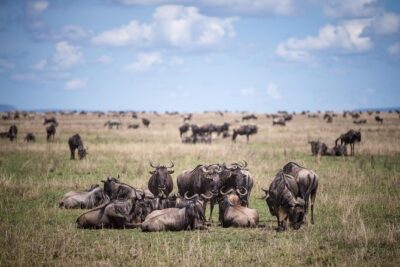
Day 3 is the full-day swing into migration trails. Serengeti is a UNESCO World Heritage site, and the migration is described with specific numbers: around 200,000 zebras and 300,000 Thomson’s gazelles joining wildebeest grazing, with the drama of over six million hooves. That is the kind of scale that changes how you experience the plains. It is not just animals. It is movement as a soundscape.
A practical note: migration days are exciting, but they also require patience. You will likely spend time watching behavior, scanning ridgelines, and waiting for groups to shift. That is normal here. The upside is that when you get it right, it feels like you are reading Africa in real time.
Days 4 and 5: Mara River crossing days, where luck matters
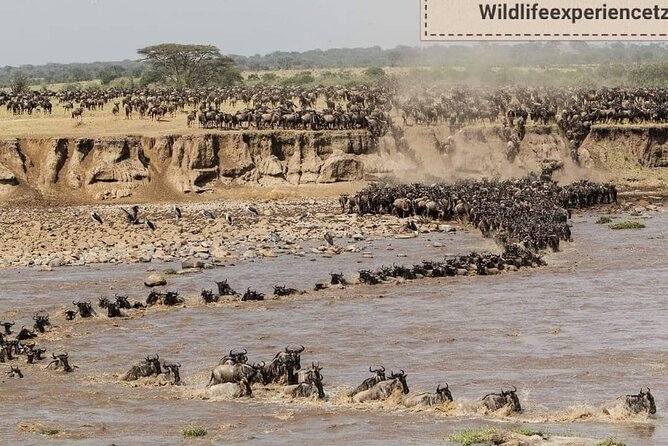
This is the heart of the trip: two full days aimed at the Mara River in the northern area. This region is described as having exceptionally high resident wildlife, and the key feature is the river itself.
Here is the honest part you should go in expecting: seeing a crossing is difficult and sometimes purely a matter of luck. The itinerary explains how a herd can be seen close to the river, then decide to cross only days later. Another possibility is that you get near the action with herds along the water, but the actual moment does not happen during your viewing window.
So what do you do with that reality? You make the day count. Your best “strategy” is to rely on your guide’s spotting skills, stay alert for herd behavior cues, and accept that the crossing might not be at the exact time you hope.
The scenery in this Mara zone is described as kopjes, woodland, riverine vegetation, and open plains. That variety helps, because wildlife is not limited to one kind of sight. Even if the crossing is delayed, you are not necessarily stuck watching empty ground.
If you are traveling with a group and you want a clear win, this is still one of the strongest setups available, because two full days in Mara gives you more chances than a single “maybe” block.
More safaris from Arusha:
- 3 Days Serengeti & Ngorongoro Group Camping Safari
★ 5.0 · 574 reviews - 7-Day Premium Luxury Tanzania Safari All-Inclusive
★ 5.0 · 426 reviews - 3-Day Classic Serengeti Safari
★ 5.0 · 263 reviews - 8 Days Great Wildebeest Calving Migration Safari from Arusha
★ 5.0 · 254 reviews
Day 6: Serengeti morning, then Olduvai Gorge and the Laetoli footprints
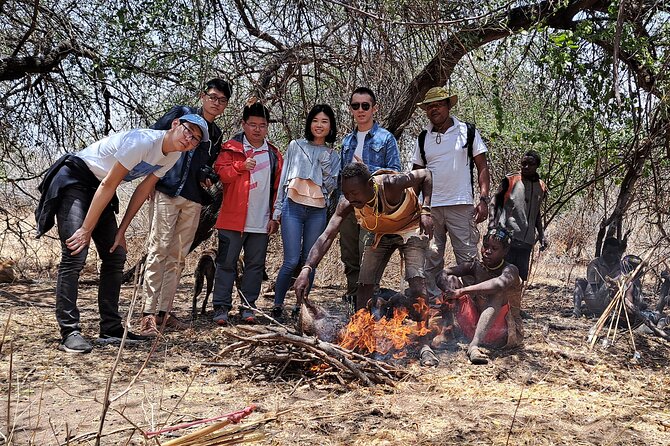
Day 6 mixes wildlife with deep time, and that combo is a good palate cleanser after two days of migration drama.
In the morning, there is another game drive in Serengeti. The itinerary then shifts in the afternoon to Ngorongoro Conservation Area, with stops tied to Olduvai Gorge and nearby sites.
You will visit Olduvai Gorge museum, and then head to Laetoli, where hominid footprints are preserved in volcanic rock dating back 3.6 million years. That detail matters because it is not just a museum stop. It is a tangible window into early human history in a landscape shaped by volcanoes and time.
Then you drive to the rim of Ngorongoro for an overnight stay. The rim is a great setting for sleep before the crater day, because it keeps you close to the next morning’s best wildlife access.
The only drawback is the tempo. This is an active day with both driving and a museum-style experience. If you want one super relaxed day, this is not it.
Day 7: Ngorongoro Crater early, dense wildlife and black rhinos
Ngorongoro’s crater is the next big ticket moment, and the day starts early with a drive inside the crater.
The Ngorongoro Conservation Area is described as a highland region along the Rift Valley, with the crater at its center. The conservation purpose is clear: to protect wildlife and natural resources, and it notes very few black rhinos remaining.
This is the day where many first-time safari riders finally understand what “density” feels like. The crater’s geography compresses the ecosystem, so your guide’s scanning pays off quickly when animals are active.
What I like about pairing Ngorongoro with the rest of your route is pacing. After Serengeti and Mara, you are not just hunting for movement. You are looking at a self-contained world where animals seem to appear from every direction.
Day 8: Lake Manyara, baboons, blue monkeys, and tree-climbing lions
Day 8 closes the loop with Lake Manyara National Park and then a return to Arusha for either overnight or a flight, depending on timing.
Lake Manyara is described as having lush, jungle-like forests tied to groundwater, plus baboons and blue monkeys. It is also famous for tree climbing lions, which is a special kind of sight, because you are not only looking for big cats on the ground. You are also watching trees, branches, and vantage points.
This day usually feels like the easiest wrap-up because you finish the main parks and then roll into Arusha. If your brain is still buzzing from river crossing suspense, this is a nice shift into more varied behavior and calmer sightseeing.
The only “gotcha”: since you return by the end of the day, your flight planning matters. The itinerary says you transfer to Arusha or the airport on time for your flight. I would still double-check your airline schedule so you are not rushing at the end.
Maasai Village and the value of a cultural stop that is actually included
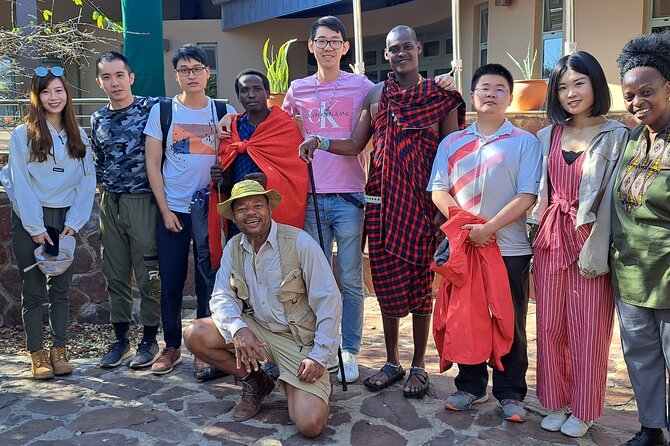
One of the inclusions that I appreciate is the visit to a Maasai Village. It is not tacked on as a vague checkbox. It is built into the package, which means you do not have to hunt down extra permissions or arrange separate transportation.
Cultural visits work best when you go in with two attitudes: stay respectful of filming and personal space, and ask questions instead of trying to collect souvenirs from people. If your guide is bringing you to the village, you are more likely to hear context tied to the region rather than a generic performance script.
Guides, service style, and the patterns in the praise
This is one of the places where the reviews provide useful signals for your decision. The company is led by people travelers describe as very hands-on, with a director named Damas Kimaro and an owner/figure referred to as Mr. Tiger or Tiger. In multiple comments, Tiger is described as greeting people at the hotel and managing arrangements.
The guides also get named, and that is a good sign because it suggests consistency. You will see guide names like Dullah, Joseph, and Anuary mentioned in positive terms, often for being careful, patient, friendly, and clearly experienced in interpreting animals.
I also like that the operator is described as quick with answers during booking. On a migration safari, communication matters because the logistics are complex and the timing is tight.
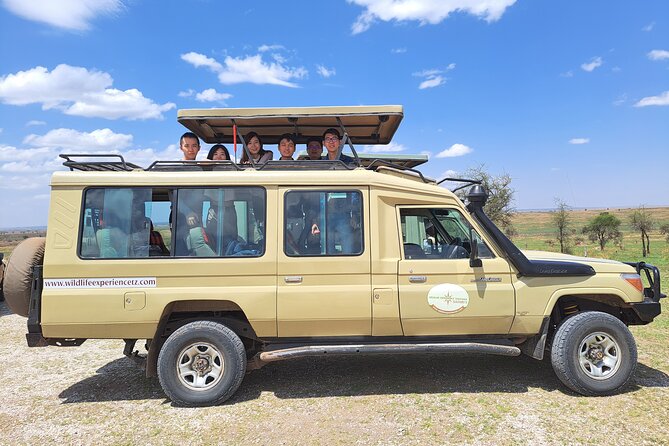
One more service detail worth noting: the tour is described as private, meaning it is only your group. That can make a huge difference when you want to ask questions, reposition for wildlife, or just keep the day comfortable without juggling other people’s priorities.
How to handle the hardest part: river crossing expectations
Let’s talk about the part that can make or break your mood: Mara River crossings.
The itinerary is very upfront that crossing viewing can be challenging. So do not treat the crossing as a guaranteed moment. Instead, treat it as a target you are actively searching for, alongside regular wildlife viewing.
Here’s how you can make this more enjoyable in real life:
- Stay focused on herd behavior. A lot of action begins before the actual water push.
- Be ready for delayed timing. If the herd is near but not crossing, keep watching rather than assuming it is done.
- Let your guide drive the plan. The itinerary emphasizes experienced game driving in this area, and the difference between seeing a herd near the river and seeing them commit is often in the details.
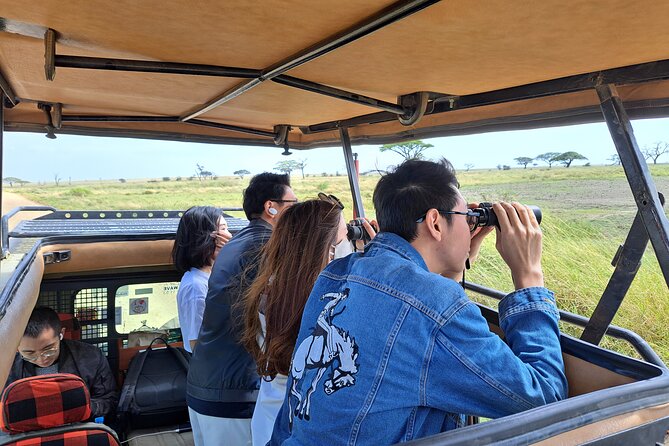
- Bring the right gear. Even though the tour data does not mention binoculars or cameras, you will want something that helps you scan and zoom quickly in open plains and along river edges.
If the crossing happens, it is unforgettable. If it does not happen in the exact window, you still have two full days in the right area, which is a big advantage versus a one-day gamble.
Who this safari fits best
This trip makes the most sense if you want:
- A migration-focused route that actually spends multiple days in Mara River territory
- A mix of big-cat areas plus a crater day, rather than only one park
- A private group experience with an English and Spanish speaking guide
- Included meals and fee coverage so you can focus on wildlife, not invoices
It is also a good choice for families and first-time safari goers, especially if you like having a guide to explain what you are seeing. That said, if you hate long days in a vehicle, look closely at the time blocks. Game drives listed are often 8 to 10 hours.
Should you book this 8-day Mara River migrations safari?
If your top goal is to see the Great Migration and you specifically want Mara River crossing days in July to October, this is a strong match. Two full Mara days are a real value, because you get more chances when nature decides to be moody.
Book it if you want a structured route that includes major parks and key sites, plus a named leadership team and guides who are repeatedly described as professional and patient. You are also getting a lot of “included” value for your money, from park fees to meals and airport transfers.
Skip it or go in with eyes wide open if you need a guaranteed crossing moment. This itinerary is designed for opportunity, not certainty. If you can handle a little suspense, you will be rewarded with serious wildlife time across Tarangire, Serengeti, Ngorongoro, and Lake Manyara.
FAQ
How long is the safari?
It is listed as about 8 days.
Where does the safari start and what time?
It starts from Arusha, with the start time listed as 8:30 am.
Is this tour private?
Yes. It is described as a private tour/activity, with only your group participating.
Which areas are included in the 8 days?
You spend time at Tarangire National Park, Serengeti National Park, Mara River area for migration viewing, Ngorongoro Conservation Area (including Olduvai Gorge museum and Laetoli footprints), Ngorongoro Crater, and Lake Manyara National Park. A Maasai Village visit is also included.
Are park admission tickets included?
The itinerary indicates admission tickets as free on multiple days, and the tour includes all fees and taxes.
What meals and drinks are included?
Breakfast is included 7 times, lunch is included 8 times, and dinner is included 7 times. During game drives, a glass of house wine and soft drinks are included, and premium beer is listed.
What is not included in the package?
Tips for your driver-guide are not included. Hard drinks and personal items are also not included, and accommodation and meals in Arusha before and after the safari are not included.
What language will the guide speak?
The guides are described as fluent in English and Spanish.
Just posted around Arusha
- 8 Days Serengeti Migration safari★ 5.0 · 11 reviews
- tarangire & ngorongoro 2 days tour★ 5.0 · 14 reviews
- serengeti, ngorongoro & tarangire 4 days private tour★ 5.0 · 18 reviews
- tarangire, ngorongoro & lake manyara park 3 days private tour★ 5.0 · 11 reviews
- serengeti & ngorongoro 3 days private tour★ 5.0 · 15 reviews
- climb the KILIMANJARO via Lemosho route★ 5.0 · 4 reviews
- Mt. Kilimanjaro: Shira plateau to Cathedral point 3872m Day hike★ 5.0 · 7 reviews
- Kilimanjaro Waterfalls Hike & Moshi Hot Springs Day Trip Tour★ 5.0 · 4 reviews
Safaris in Arusha, compared.
Balloon Safari & Bush Breakfast in Serengeti – Miracle Experience
Read our review →
3 Days Serengeti & Ngorongoro Group Camping Safari
Read our review →
7-Day Premium Luxury Tanzania Safari All-Inclusive
Read our review →
8 Days Great Wildebeest Calving Migration Safari from Arusha
Read our review →