Reviewed · ARUSHA TOURS
8 Days Great Migration – Grumeti River
The Great Migration drama starts before breakfast. This Grumeti-focused safari lines up classic Tanzania parks with culture stops and long, wildlife-first game drives.
I really like the unlimited mileage approach, meaning the driver does not clock out when animals move. I also like the emphasis on professional guide time, with guides geared to answer questions and help you read what is happening on the savanna.
One thing to consider before you pay: there are some serious, conflicting reports online tied to a person named Godfrey, including claims of payment problems and even being stranded in Ngorongoro. If you book, get every arrangement in writing and confirm pickup, timing, and payment terms before committing.
In This Review
- Key highlights worth caring about
- The route that aims you at Grumeti River action
- Why this pacing matters
- Price and what it gets you, not just the number
- The value angle
- Morning starts, open-roof 4×4, and how the day likely feels
- Tarangire National Park: elephant density and birdlife in one park
- The drawback here
- Mto wa Mbu walking tour and Lake Manyara’s pink-bellied soda lake
- How to enjoy this day
- Serengeti entry with Maasai village context
- What you should know about timing
- One full day moving with the herds, clockwise on the plains
- Why this is one of the most valuable parts
- Central Serengeti game drive: lions and leopards with year-round appeal
- A practical note for your expectations
- Ngorongoro Crater: the Big Five target in one high-walled world
- What makes this finale feel different
- Guide effort, unlimited mileage, and why that can change everything
- One balanced caution
- What to pack and how to ride the day well
- Should you book this Grumeti-focused safari?
- My practical booking checklist
- FAQ
- How long is the safari, really?
- When is the best time to see the Grumeti River migration crossing?
- What’s included in the price?
- Is pickup offered, and what time does the tour start?
- How large is the group?
- What is not included in the experience?
Key highlights worth caring about
- Grumeti River focus in the May to July window, when crossing chances peak in this area of Serengeti
- Unlimited mileage and no artificial driving limits, so your guide can chase what matters
- Small group size, up to 6 travelers, which usually means less crowd pressure on sightings
- Real cultural stops, including a visit to Mto wa Mbu and a Maasai village
- Serengeti day built around the herds, including full-day moving with migration in a clockwise pattern
- Ngorongoro Crater with a Big Five target, plus the rare black rhino mentioned for this itinerary
The route that aims you at Grumeti River action
This is built as a north and central Tanzania sampler, but with one clear mission: get you into position for Great Migration movement around the Grumeti River area of Serengeti. You are not just “touring parks.” The pace is meant to keep you with the story line of herds, predators, and river crossings.
You start with Tarangire, then connect to Lake Manyara via Mto wa Mbu. After that you go into the Serengeti for multiple days, including a full day designed around migration movement. You wrap up at Ngorongoro Crater for a high-density finale, where you can see a lot of wildlife in one dramatic bowl.
A few more Arusha trips to compare
- Balloon Safari & Bush Breakfast in Serengeti – Miracle Experience
★ 5.0 · 1,646 reviews - Tanzania Classic – 7 Days
★ 5.0 · 1,151 reviews - 4 Days Group Camping Safari
★ 5.0 · 1,101 reviews
Why this pacing matters
Migration sightings are partly luck, partly timing, and partly how quickly you can adjust when the animals change direction. This route is set up to reduce the downtime between sightings. Instead of jumping park to park constantly, it gives you enough time on Serengeti plains to react when conditions shift.
Price and what it gets you, not just the number
The price is listed at $4,984.62 per person, for an experience branded as 8 days, with a duration of about 6 days. That sounds steep until you break down what is included.
What you typically care about on safari is whether the big costs are handled for you. Here, they are:
- 4×4 transport with an open pop-up roof for game viewing
- All park entrance fees for the national parks
- Full board accommodation during the time on the itinerary
- Unlimited drinking mineral water
- Government taxes
- Professional multilingual guide with wildlife knowledge
- Unlimited mileage driving throughout the trip
What is not included:
- Tips
- Travel insurance
- International flights
The value angle
The “unlimited mileage” part is not a marketing line you can ignore. On safari, the animals do not check schedules. They change pace, water stops, and routes. If your vehicle is restricted, you lose precious hours when the herds shift. With unlimited mileage and no limit described for drivers, you buy yourself more chances for real sightings and less time watching other jeeps drive by.
Also, this is a small group with a maximum of 6 travelers, which often means your guide can spend more time scanning and less time herding a crowd.
Same base in Arusha, a completely different day:
- 5 Days Group Camping Safari
★ 5.0 · 730 reviews - Materuni Waterfalls, coffee tour & Kikuletwa Hot Springs
★ 5.0 · 643 reviews - 3 Days Serengeti & Ngorongoro Group Camping Safari
★ 5.0 · 574 reviews - 7-Day Premium Luxury Tanzania Safari All-Inclusive
★ 5.0 · 426 reviews
Morning starts, open-roof 4×4, and how the day likely feels
The meeting time is 7:30 am. That matters because many of the best animal encounters happen when it is still cool and the light is good.
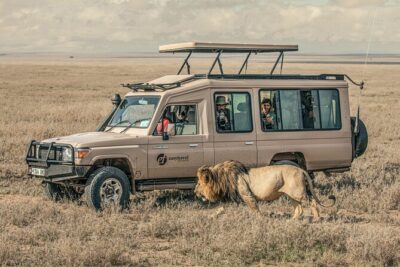
You travel in a 4×4 with a pop-up open roof for the safari drives. That is the difference between taking photos through glass and actually feeling like part of the action when you spot birds, lions, or elephants at close range.
You are also offered pickup, and you get a mobile ticket. If you hate logistical surprises, that is a good sign.
Tarangire National Park: elephant density and birdlife in one park
Your safari begins at Tarangire National Park. This is a strong first stop because Tarangire is famous for its elephant concentrations, and because the park’s river system pulls wildlife into repeatable patterns.
In the dry season, the park is described as packed with wildlife. Expect a lot of action around the Tarangire River, where herds of wildebeest, zebras, and gazelles draw in predators. Tarangire is also highlighted for:
- Large concentrations of elephants
- A high number of breeding bird species
- Big cats like lions, cheetahs, and leopards
- Antelope you might not see as often elsewhere, like kudu, oryx, and gerenuk
The drawback here
Tarangire is wildlife-heavy, but it is also one of those parks where sightings can be uneven from one drive to the next. You might get a stunning elephant moment and then spend time searching for the next cluster. That is exactly where unlimited mileage and guide effort help.
Mto wa Mbu walking tour and Lake Manyara’s pink-bellied soda lake
From Tarangire you connect toward Mto wa Mbu, where you take a walking tour through a farming town. The focus is local life. The tour includes visits tied to how people grow and make things, including:
- Rice and banana plantations
- A local beer factory
- A school
- A carving factory
It is also described as a place that includes over 120 different tribes from across Africa, creating a mix of customs in one area.
Then you head to Lake Manyara National Park, a park known for its soda lake with pink-hued flamingos, plus:
- A large population of baboons
- Incredible birdlife
- Breathtaking viewpoints
- Animals you might see like giraffes, elephants, hippos, and buffalo
How to enjoy this day
Treat this stop as a rhythm shift. Tarangire and Serengeti are about vehicles and scanning. Mto wa Mbu is about slowing down and looking at how daily work fits around the landscape. If you like meaningful travel that is not only animal chasing, this part is a bonus.
Serengeti entry with Maasai village context
On the way into Serengeti National Park, you stop at a Maasai village. The intent is to see something of the lifestyle of the Maasai people, before you jump into the migration story itself.
Once you arrive, you do a picnic lunch, then continue with a game drive.
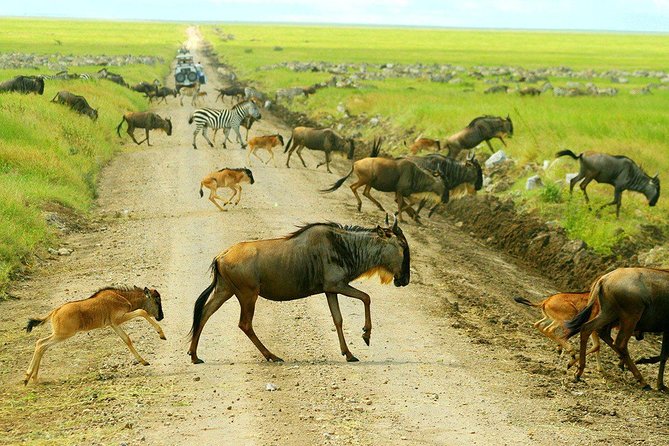
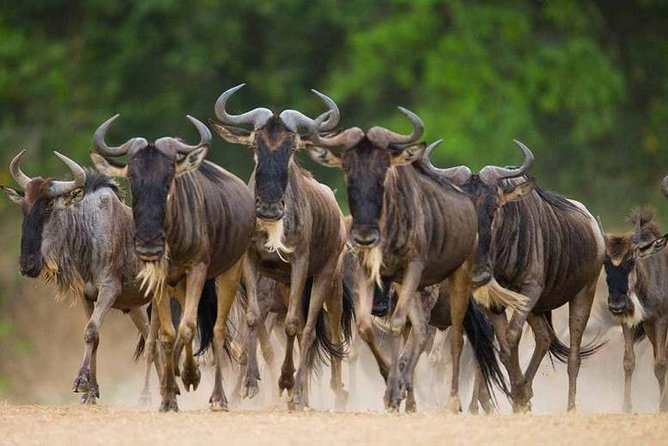
This is also where the itinerary is explicit about the migration window. There is a change you can see the Great Migration of wildebeest crossing the Grumeti River in the area of Serengeti between May and July. The herds have to handle fast-flowing water and crocodiles, then face predators waiting on the other side. It is described as an amazing spectacle for a reason: it is a built-in survival test.
What you should know about timing
If you travel in May, June, or July, your odds improve because the schedule is aimed at that crossing period. If you travel outside that window, you may still see plenty of migration activity and predators, but the crossing highlight may not match the same intensity.
One full day moving with the herds, clockwise on the plains
You rise early for a full day in Serengeti, departing your lodge and spending time moving with the herds across the plains. The itinerary describes migration movement as a clockwise circle each year, and it positions your day to follow that momentum.
This is the kind of day you prepare for mentally. It is not “sit back and enjoy the ride.” You are likely making constant adjustments, watching for the next moment where the herds funnel toward water or where predators set up a strategy.
The prize is a broader picture of how the migration works, not just a single crossing.
Why this is one of the most valuable parts
Most safaris give you “a migration day.” This one tries to give you “a migration mode day,” where your route and timing are shaped by herd movement. If you care about understanding the ecosystem instead of only collecting a few species photos, this format fits.
Central Serengeti game drive: lions and leopards with year-round appeal
After the migration-focused day, you go for another drive in the central part of Serengeti. This area is described as famous for abundance of lions and leopards that can usually be seen quite easily. Game viewing here is said to be spectacular all year round.
Expect open plains and a steady stream of sightings, with animals listed like:
- cheetahs
- elephants
- giraffes
- hippos
- ostrich
- and even a mention of pangolin
A practical note for your expectations
Even in “easy to see” zones, you still have to work for it. Leopards often do not appear on demand. The benefit of unlimited mileage and a guide who actively answers your questions is that you can learn what you are looking at while you search.
Ngorongoro Crater: the Big Five target in one high-walled world
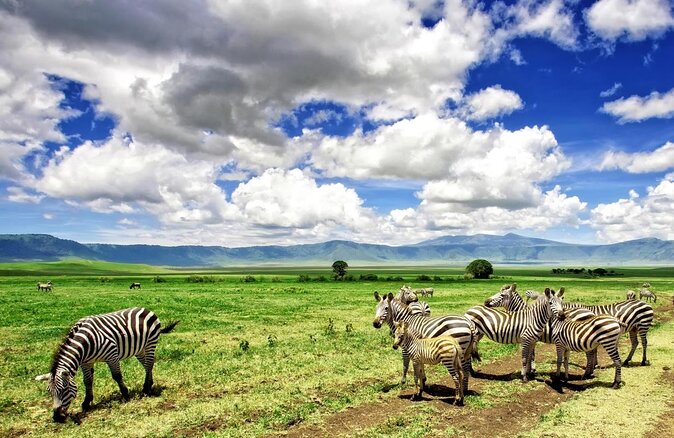
Your final major wildlife stop is Ngorongoro Crater. The itinerary describes it as sheltering close to 30,000 animals, including the Big Five, with the rare black rhino also mentioned.
The crater is described as teeming with:
- zebras
- buffaloes
- lions
- wildebeest
- baboons
- elephants
- flamingos
- ostriches
- hippos
- cheetahs
- and the rare black rhino
The visual side is part of the pitch too, with attention given to colors and clouds making the crater almost surreal.
What makes this finale feel different
Because the crater concentrates wildlife, it can feel like the safari turns into a wildlife classroom. When you find a good viewing area, the odds of seeing multiple species close together climb fast. It is also a dramatic place for photos, since you are watching animals inside a natural amphitheater.
Guide effort, unlimited mileage, and why that can change everything
The tour’s big operational promise is unlimited mileage for driving when searching for animals, with no limit described on how far drivers can go to find wildlife. In real safari terms, that means your guide can keep pressure on the hunt when the first spot does not deliver.
The other recurring advantage is how much time guides spend engaging with you. The description emphasizes that the guides will answer every question you may have and have extensive wildlife experience in the African savanna. In the feedback shared online, the guide name Mike shows up with praise for organization, timing, patient searching, and not cutting corners to reach key areas.
One balanced caution
Unlimited mileage can only help if your guide is good at reading the landscape and moving logically. So when you book, ask who the guide will be, and confirm your schedule, pickup, and meeting points in writing.
What to pack and how to ride the day well
I know safari packing lists can get silly, so here is the practical version based on how this itinerary behaves: lots of early mornings, full-day drives, and sun over open roofs.
Bring:
- A light rain layer, just in case
- Neutral clothing in safari colors for less glare
- Sun protection for long drives (hat, sunglasses, sunscreen)
- Binoculars if you own them, or you might want to consider renting locally
- Comfortable shoes that work for short walks in places like Mto wa Mbu
Also plan for timing. When you leave early for migration days, sleep becomes part of your gear.
Should you book this Grumeti-focused safari?
If your main goal is to experience the migration season in Serengeti, this itinerary is built with that in mind, especially the May to July Grumeti River crossing angle. The combination of multiple Serengeti days, open-roof 4×4 travel, park fees included, and unlimited mileage makes it a strong value package on paper.
But there is a serious “do your homework” flag here. Some reports online claim payment problems and a stranded situation in Ngorongoro tied to a person named Godfrey. The company also responded to at least one complaint with apologies and notes that issues affected others. Still, you should treat this as a reason to slow down, not a reason to panic.
My practical booking checklist
- Get a clear written plan for pickup, daily timing, and who your guide is.
- Confirm what you are paying and when, and avoid paying in ways that leave you powerless if something goes wrong.
- If you can, book with options that give you leverage if the start goes off track.
- Since the “best chance” is May to July for Grumeti crossings, pick dates that match what you want to see.
If you handle the booking carefully and you go in with flexible expectations about animal movement, this safari can deliver the kind of multi-park Tanzania experience that feels like more than a checklist.
FAQ
How long is the safari, really?
It is listed as 8 Days Great Migration – Grumeti River, but the duration is shown as about 6 days (approx.).
When is the best time to see the Grumeti River migration crossing?
The itinerary specifically notes that you have a chance to see wildebeest crossing the Grumeti River area between May and July.
What’s included in the price?
Transport in a 4×4 with a pop-up open roof, all park entrance fees, full board accommodation as mentioned on the itinerary, unlimited mineral water, government taxes, a professional guide, and unlimited mileage driving are included.
Is pickup offered, and what time does the tour start?
Pickup is offered, and the meeting start time is 7:30 am.
How large is the group?
The tour has a maximum of 6 travelers.
What is not included in the experience?
Tips, travel insurance, and international flights are not included.
Just posted around Arusha
- 8 Days Serengeti Migration safari★ 5.0 · 11 reviews
- tarangire & ngorongoro 2 days tour★ 5.0 · 14 reviews
- serengeti, ngorongoro & tarangire 4 days private tour★ 5.0 · 18 reviews
- tarangire, ngorongoro & lake manyara park 3 days private tour★ 5.0 · 11 reviews
- serengeti & ngorongoro 3 days private tour★ 5.0 · 15 reviews
- climb the KILIMANJARO via Lemosho route★ 5.0 · 4 reviews
- Mt. Kilimanjaro: Shira plateau to Cathedral point 3872m Day hike★ 5.0 · 7 reviews
- Kilimanjaro Waterfalls Hike & Moshi Hot Springs Day Trip Tour★ 5.0 · 4 reviews
Arusha Tours, compared.
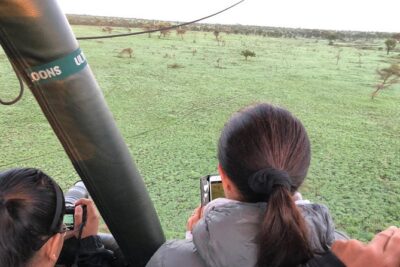
Balloon Safari & Bush Breakfast in Serengeti – Miracle Experience
Read our review →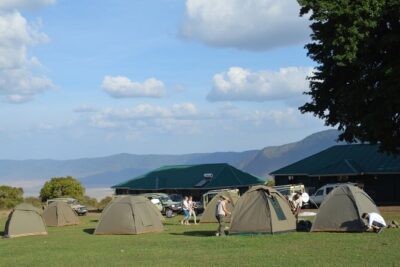
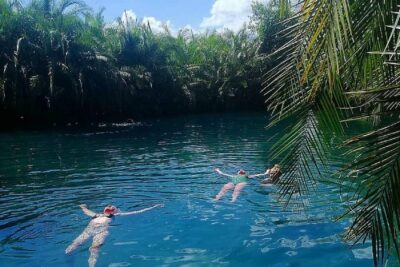
Materuni Waterfalls, coffee tour & Kikuletwa Hot Springs
Read our review →
3 Days Serengeti & Ngorongoro Group Camping Safari
Read our review →
7-Day Premium Luxury Tanzania Safari All-Inclusive
Read our review →
5-Day Highlights mid-Range Crater, Serengeti, Tarangire
Read our review →