Reviewed · SAFARIS IN ARUSHA
8 Days Follow the Wildebeest Migration River Crossing Safari
There is something about migration safaris that hits different. This one is built for the weeks when the wildebeest arrive to calve and the herds keep moving, so you are chasing a living event across Serengeti and nearby Ndutu country.
I particularly like the way this trip plans game drives around real migration geography, not just a checklist of parks. The other standout is the focus on staying flexible around the Mara River crossings, where the action is dramatic but never guaranteed.
A possible drawback is the price and the reality of the river-crossing gamble. You can get great sightings without a full-on river stampede, and the long driving days start early.
In This Review
- Key highlights to know before you go
- First Contact in Arusha, Then Straight Into Safari Mode
- Tarangire National Park: Elephants, Birds, and a Calmer Pace
- Serengeti Arrival and the Endless Plains Feeling
- Ndutu, Calving Season, and Why Timing Changes the Whole Safari
- Mara River Days: The Crossing You Might See, and Why It Is Hard
- Wagakuria and Northern Serengeti: When Plains Look Like Theater
- Central Serengeti: More Than the Big Five, More Than the Obvious
- Ngorongoro Crater Sunrise: A Different Kind of Safari
- Lodging Inside the Park, and How It Changes Your Days
- Price and Value: What $4,539 Buys You, and What It Does Not
- Congema Team, Communication, and On-the-Ground Help
- Quick Reality Check: Who This Tour Fits Best
- Should You Book This Safari?
- FAQ
- How do I get from Kilimanjaro International Airport to Arusha?
- What parks and areas are included on this safari?
- What time does the safari start?
- Are park entry fees and the crater fees included?
- Does the price include meals?
- Is bottled water included during game viewing?
- What is not included in the price?
Key highlights to know before you go
- Migration timing focused on calving season: December through April, plus Serengeti plains and Ndutu region routing
- Mara River realism: you will hear how hard it is to time a crossing, so expectations stay grounded
- Inside-the-park lodge options: Embalakai Authentic Camp or Serengeti Serena Lodge (depending on your pick)
- Value add: unlimited game mileage and park fees included: fewer surprise costs once you arrive
- Big variety across parks: Tarangire for elephants, Serengeti for the migration, Ngorongoro for a crater morning
First Contact in Arusha, Then Straight Into Safari Mode
Your trip starts in Arusha, with a transfer from Kilimanjaro International Airport to your evening accommodation. If you land close to the start schedule, this is the kind of first-day setup that helps you avoid the classic Tanzania problem: losing a precious morning to logistics.
The day also feels like a proper kickoff because you get an introduction to the country right away from your driver. Starting at 6:00 am on the first safari day matters more than it sounds. With African wildlife, early hours often mean better light, cooler temperatures, and more active animals, especially when you are aiming at migration movement.
One thing to plan for is that this is a full-on safari rhythm, not a slow travel pace. Even though transfers are included, you are still spending substantial time in the vehicle. If you dislike long drives or early starts, you will need to mentally prepare.
More Safaris in Arusha
- Balloon Safari & Bush Breakfast in Serengeti – Miracle Experience
★ 5.0 · 1,646 reviews - 4 Days Group Camping Safari
★ 5.0 · 1,101 reviews - 5 Days Group Camping Safari
★ 5.0 · 730 reviews
Tarangire National Park: Elephants, Birds, and a Calmer Pace
Tarangire National Park is a strong second day choice because it changes the vibe from the northern circuit. This park is described as quiet and slightly off the main safari route, and that matters when you want wildlife without constant crowd pressure.
Tarangire is most famous for elephants, and it also earns points for birding. If you like seeing animals that are not just the big roar-and-rumble stars, you will probably enjoy the extra attention to birds and the steadier pace of a park that can feel more relaxed.
Practical note: you will have a full day game drive after handling park entry procedures at the gate. That means the day is built for sightings, not just quick photos, and it gives you room to stay put when the action starts somewhere unexpected.
A drawback to keep in mind is that Tarangire is a different kind of safari from Serengeti. You are less likely to see the big migration theater here, so treat it as a welcome warm-up rather than the main event.
Serengeti Arrival and the Endless Plains Feeling
After Tarangire, you swing into Serengeti National Park, often described as the endless plain. The Serengeti brand is not just hype. With resident wildlife plus migration movement, you get a more constant sense of life across the grasslands.
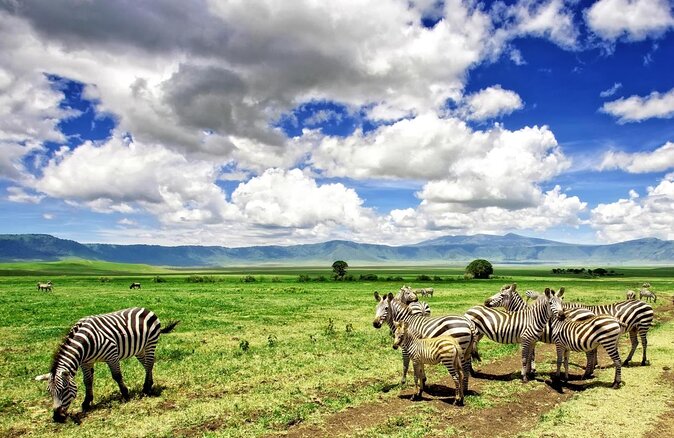
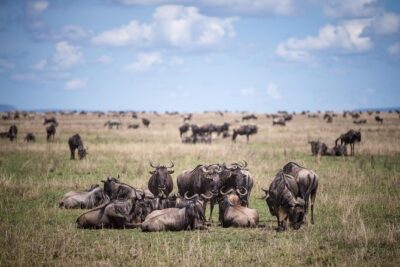
Here, the numbers are part of the spectacle. The region supports around 200,000 zebras and about 300,000 Thomson’s gazelles that join the wildebeest trek for grazing. And that famous migration sound is real in spirit: the experience is framed around listening to millions of hooves pounding the plains.
You also want to understand what “resident wildlife” means for your trip. Even if migration timing shifts a bit day to day, you are not waiting in emptiness. This matters because it helps you get sightings across the whole trip, not only on the days with the most dramatic geography.
One consideration: Serengeti is huge, and your exact wildlife density can vary by where the herds are moving. That is true of every migration safari, but it is especially relevant if you are hoping for one specific iconic shot every single day.
Ndutu, Calving Season, and Why Timing Changes the Whole Safari
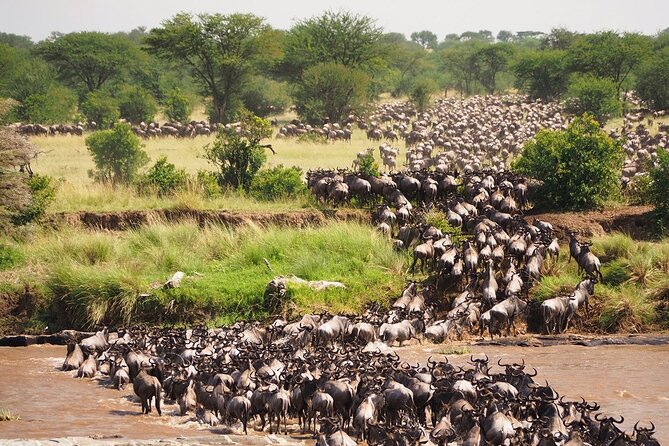
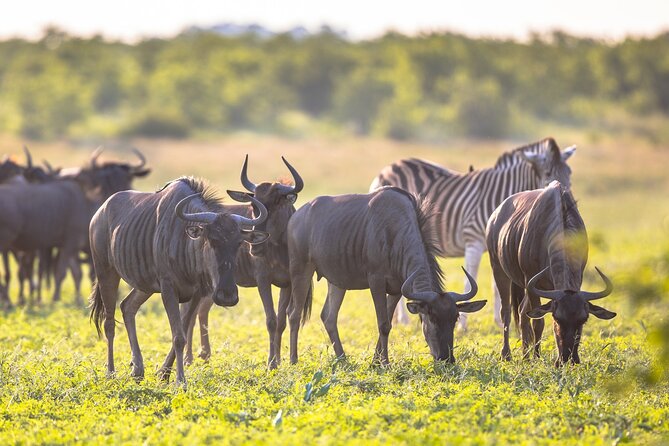
This safari is designed to follow the Great Serengeti Wildebeest migration during December to April, when calves are born. That timing shift is the difference between seeing wildebeest as just moving dots and seeing them as part of a high-stakes survival moment.
The focus on the Lake Ndutu region is a practical move. Ndutu area country is known for calving season concentration, so your chance of seeing young animals in the mix can increase when the timing lines up.
If you care about authenticity, calving season adds texture. It is not only about the chase. It is about watching how herds behave when new calves need safety, and how predators and scavengers respond to that constant energy shift.
A drawback to accept: newborns and river crossings do not happen on a schedule that matches your camera battery. Even with the best planning, the migration is weather- and grass-driven. Your best strategy is to bring flexible expectations, then enjoy whatever the day delivers.
More safaris from Arusha:
- 3 Days Serengeti & Ngorongoro Group Camping Safari
★ 5.0 · 574 reviews - 7-Day Premium Luxury Tanzania Safari All-Inclusive
★ 5.0 · 426 reviews - 3-Day Classic Serengeti Safari
★ 5.0 · 263 reviews - 8 Days Great Wildebeest Calving Migration Safari from Arusha
★ 5.0 · 254 reviews
Mara River Days: The Crossing You Might See, and Why It Is Hard
The heart of any Great Wildebeest Migration safari is the Mara River storyline. This trip sets up north Serengeti drives where herds may cross the Mara River north one day and then move back south days later.
Here is the honest part: finding a river crossing is sometimes a matter of luck. You are told that upfront for a reason. If you can accept that, you will probably have more fun, because your mind stops trying to force one “perfect” moment.
That does not mean the days are quiet. The Wagakuria and north Serengeti routing is described as a wildlife-rich area, with pride sizes that can be large. If lions are active when you arrive, you can get intense action without needing the full river stampede.
A practical tip for river-focused days is mindset management. Plan to stay patient in the vehicle when the guide suggests waiting near likely movement routes. Migration days can look slow until suddenly everything happens at once, and your best photos often come from being in the right place at the right time, not from rushing around.
One more reality check: “close to the river” is not the same as “crossing today.” A herd might linger near the water for days before committing. Your best win is seeing the tension, the hesitation, and the decision, even if the crossing does not happen on your exact day.
Wagakuria and Northern Serengeti: When Plains Look Like Theater
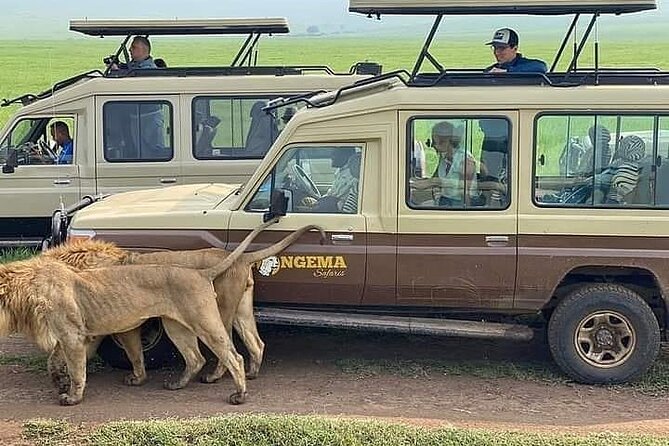
Wagakuria is highlighted for high wildlife density and a mix of terrain, including kopjes, woodland, riverine vegetation, and open plains. That diversity is important because it gives you different sight lines and different hunting environments.
This is also where the safari leans into the Mara River again. The pattern is similar: herds can appear near the river and only decide later. If you have two full days in the northern Serengeti zone, you do not just get one shot at the crossing story, you get repeated chances.
If you love predator behavior, this is a strong stretch. The guidance points out prides, including prides up to around 30 strong, which suggests you may see group hunting dynamics or repeated lion sightings.
A possible downside is time spent scanning. The northern Serengeti days can feel like waiting for movement. If you get restless with patience-based wildlife viewing, you might need to balance your excitement with comfort, like having sun protection and water ready during game drives.
Central Serengeti: More Than the Big Five, More Than the Obvious
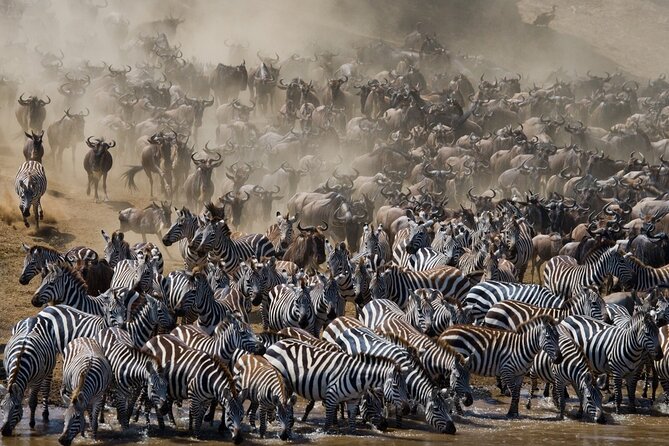
On the Central Serengeti day, the safari broadens its wildlife focus. It still includes large mammals, but it also calls out the smaller, weirder, cooler stuff that many people miss when they are only chasing the biggest names.
You might spot gaudy agama lizards, and you may see rock hyraxes scuffling around the granite koppies. Dung beetles are mentioned, and bird life is also strong, with a noted range of species from ostrich to secretary bird and black eagles. Even if you do not identify every species, it adds a sense of place. You see how the ecosystem functions beyond the “lion in the grass” moments.
This kind of day is valuable because it reduces the pressure to hit only migration drama. By now you have hopefully already seen enough wildebeest and zebras, and this central day gives you room to appreciate Serengeti’s broader wildlife web.
The other perk is the late-day transition. The plan includes an evening drive back to camp for leisure and overnight, so you do not end the day in total darkness with nowhere to decompress.
Ngorongoro Crater Sunrise: A Different Kind of Safari
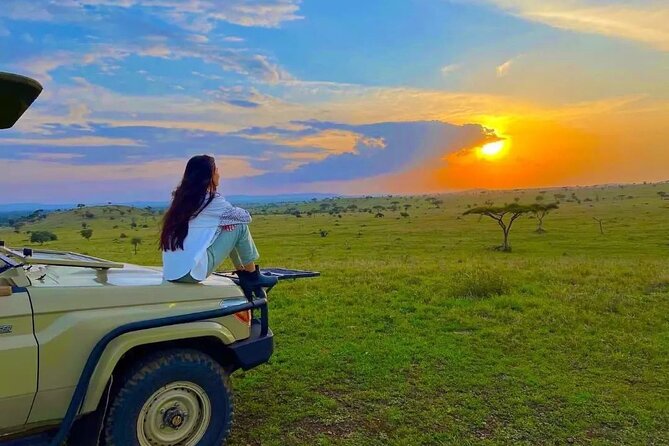
Ngorongoro Conservation Area is the next major shift, and the crater day is built around an early morning game drive inside the crater. The timing matters. Morning light helps with spotting, and wildlife often feels more active when temperatures are cooler.
The crater itself is the focus, with Ngorongoro as the focal point of a larger highland region. Ngorongoro is also described as established to conserve wildlife and natural resources and to safeguard indigenous interests while supporting tourism. That adds context for why the place is managed the way it is.
What to expect inside the crater is a more enclosed, dramatic setting compared with open plains. If you have been spending days watching herds move across wide grasslands, the crater can feel like a compressed wildlife stage. It is still Serengeti-level caliber, just a different viewpoint on animal life.
One possible drawback is the day length and driving time. The drive from the Serengeti circuit to the crater area is substantial, so this is another long day where you will want to settle in and treat the vehicle as part of the safari.
Lodging Inside the Park, and How It Changes Your Days
You have mid-range and semi-luxury accommodation options listed for the Serengeti portion, including Embalakai Authentic Camp (mid-range) and Serengeti Serena Lodge (semi-luxury). Both are described as located inside the park, and that matters.
Staying inside or right near the action typically means you lose fewer daylight hours to travel. It can also change the atmosphere in the evenings, when sounds out in the grasslands start to become part of your memory.
This safari includes full board on multiple days, with breakfast, lunch, and dinner. Having meals sorted reduces decision fatigue, and it keeps you on a steady schedule that matches game drive timing.
The value angle: food logistics are usually where budget safaris get messy. Here, you are told full board is covered for key days, which often makes the trip feel smoother in real life.
Price and Value: What $4,539 Buys You, and What It Does Not
At $4,539 per person for an 8-day migration-focused safari, you are paying for a serious wildlife route, park access, and the cost of spending time where migration energy concentrates.
Here is what you do get that supports the price:
- Park entry fees and crater fees included (noted as 24-hour single entry)
- Unlimited game mileage on your safari days
- Unlimited bottled drinking water during game viewing
- A professional English-speaking driver guide
- AMREF Flying Doctor Insurance
- Full board meals for the safari days listed as included
- Pickup is offered, and you get flexibility tools like a mobile ticket and group discounts
And here is what you do not get:
- International flights
- Tips, with guidance of US$20 per person per day
- Travel insurance and medical repatriation
- Alcoholic drinks
- Personal items and visa-related costs
So is it worth it? If your priority is migration timing during calving season, and you want a route that covers Tarangire, Serengeti (north and central), plus Ngorongoro, this pricing starts to make sense. You are not only buying rides, you are buying access, game driving time, and reduced hassle.
If your budget is tight or you want a lighter pace, you might find alternatives elsewhere. But if you are the type who wants the real drama of Serengeti and the crater in one trip, this package is built for that goal.
Congema Team, Communication, and On-the-Ground Help
This is organized by Congema Safaris. From the feedback style and names shared, people often single out Sébastien as a key contact and mention Musa Osman as part of the on-site team. That kind of attention matters on safari, because the small things, like being ready on time and keeping plans smooth after long drives, can decide whether your trip feels effortless.
You also get a private-tour format, meaning only your group participates. Even without a stated group size, private usually means less competition for positioning and a more responsive approach when sightings happen suddenly.
If you prefer a straightforward process, that is the bigger value here: clear coordination, a real driver guide role, and fewer surprises after you arrive in Tanzania.
Quick Reality Check: Who This Tour Fits Best
This tour fits you best if:
- You want a Great Wildebeest Migration safari built for December to April calving season
- You care about seeing Serengeti from multiple angles, not just one corridor
- You accept that the Mara River crossing can be unpredictable, but you still want to chase it seriously
- You like wildlife variety, including birds and smaller animals, not only the big five headlines
You might want to think twice if:
- You hate early starts and long game drive days
- You are purely chasing one single photo moment and would feel let down if the river crossing does not happen on your exact day
- You are looking for a budget-friendly trip, since the package price is high
Should You Book This Safari?
I think you should book it if your “win” is experiencing migration country in a way that feels planned and serious. The combination of Tarangire for elephants and birds, multiple Serengeti zones for resident wildlife plus migration behavior, and the Ngorongoro crater morning drive gives you a strong mix without losing focus.
Before you commit, do one thing: be clear with yourself about river crossing expectations. If you treat it as a bonus rather than a promise, you will likely enjoy every day, not just the day with the most drama.
If the timing works for you and you want a well-run, migration-centered circuit with park fees, game mileage, and full board handled, this is the kind of trip that can stay vivid long after the flight home.
FAQ
How do I get from Kilimanjaro International Airport to Arusha?
Your first day includes a transfer driver who meets you at Kilimanjaro International Airport and escorts you to Arusha city in your chosen accommodation for evening rest.
What parks and areas are included on this safari?
You will visit Tarangire National Park, Serengeti National Park (including north and central areas), and the Ngorongoro Conservation Area with a game drive inside Ngorongoro Crater. The trip also focuses on the Lake Ndutu region during the migration calving season.
What time does the safari start?
The start time is listed as 6:00 am.
Are park entry fees and the crater fees included?
Yes. Park entry fees and Crater fees are included (24-hours single entry).
Does the price include meals?
Breakfast, lunch, and dinner are included for 7 breakfasts and 7 dinners and lunches, as listed in the inclusions.
Is bottled water included during game viewing?
Yes. Unlimited bottled drinking water is included during game viewing.
What is not included in the price?
International flights, tips (guidance is US$20 per person per day), personal items, alcohol, and travel insurance and medical repatriation are not included.
Just posted around Arusha
- 8 Days Serengeti Migration safari★ 5.0 · 11 reviews
- tarangire & ngorongoro 2 days tour★ 5.0 · 14 reviews
- serengeti, ngorongoro & tarangire 4 days private tour★ 5.0 · 18 reviews
- tarangire, ngorongoro & lake manyara park 3 days private tour★ 5.0 · 11 reviews
- Mt. Kilimanjaro: Shira plateau to Cathedral point 3872m Day hike★ 5.0 · 7 reviews
- serengeti & ngorongoro 3 days private tour★ 5.0 · 15 reviews
- climb the KILIMANJARO via Lemosho route★ 5.0 · 4 reviews
- Kilimanjaro Waterfalls Hike & Moshi Hot Springs Day Trip Tour★ 5.0 · 4 reviews
Safaris in Arusha, compared.
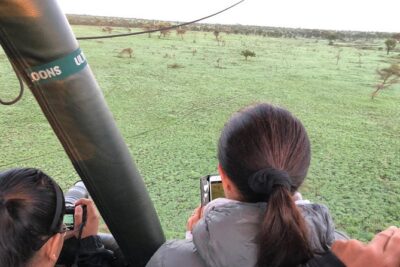
Balloon Safari & Bush Breakfast in Serengeti – Miracle Experience
Read our review →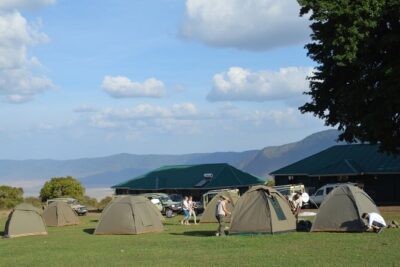
3 Days Serengeti & Ngorongoro Group Camping Safari
Read our review →
7-Day Premium Luxury Tanzania Safari All-Inclusive
Read our review →
8 Days Great Wildebeest Calving Migration Safari from Arusha
Read our review →