Reviewed · 5-DAY EXPERIENCES
5 Days Tanzania Safari Great Wildebeest Migration
Migration crowds the sky, but it is real here. This 5-day safari gives you a practical shot at the Great Migration loop around the Serengeti-Masai Mara ecosystem, with park fees and most daily basics handled. I like the long, well-timed game drives, especially the sunrise block in Serengeti, and I like that meals plus a sleeping setup are included. The main thing to weigh is that it is a full-on circuit with early starts and campsite stays, not hotel downtime.
You get a private tour, so your group sets the pace inside the driving limits, and you are not waiting on other people. You also travel with a professional driver-guide in English, Spanish, or French, plus camping equipment and a sleeping bag, which makes the “what do I need?” question a lot simpler.
Logistics are straightforward too, with pickup offered and a mobile ticket. You even get small built-in timing breaks, like a short washroom stop at the Tarangire entrance while the guide handles formalities, and coffee or tea with snacks before the morning Serengeti drive.
In This Review
- Key highlights worth your attention
- Why the Serengeti-Masai Mara migration loop is the real headline
- Tarangire National Park on day one: easy start, then game drives
- Serengeti days two and three: chasing the herd with early blocks
- North Serengeti on day four, then Ngorongoro prep with a smart overnight
- Ngorongoro Crater day five: early descent and a crater-floor picnic
- What you get for the price, and what is extra
- Comfort, timing, and the long-drive reality check
- How to make the migration chase work on your camera and your body
- Reliability and organization: what the operator does well
- Price and logistics: is $1,990 per person a smart deal?
- Should you book this Tanzania Great Migration safari?
Key highlights worth your attention
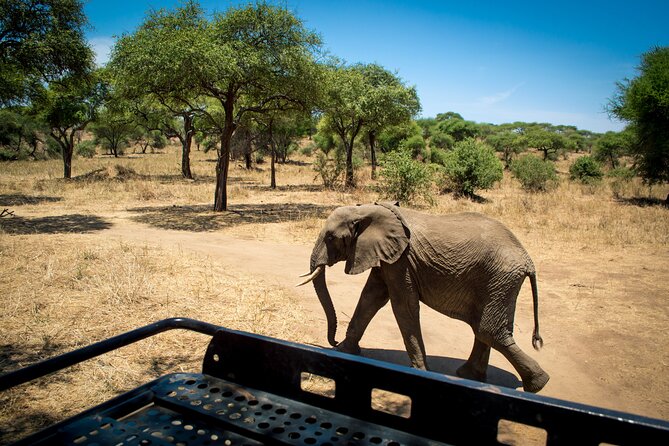
- Serengeti-Mara migration focus: aimed at seeing wildebeest, zebra, and antelope moving clockwise through the ecosystem
- Tarangire game drives on day one: morning and afternoon drives after a short Arusha-to-park hop
- Sunrise to late-morning Serengeti timing: a dedicated morning window, then another drive later chasing the herd
- Mara River pursuit: after breakfast, you head north with the goal of spotting migration near the river
- Simba Campsite by the crater rim: a convenient base for an early Ngorongoro descent
- Meals, drinking water, and camping gear included: fewer add-ons and less daily hassle
Why the Serengeti-Masai Mara migration loop is the real headline
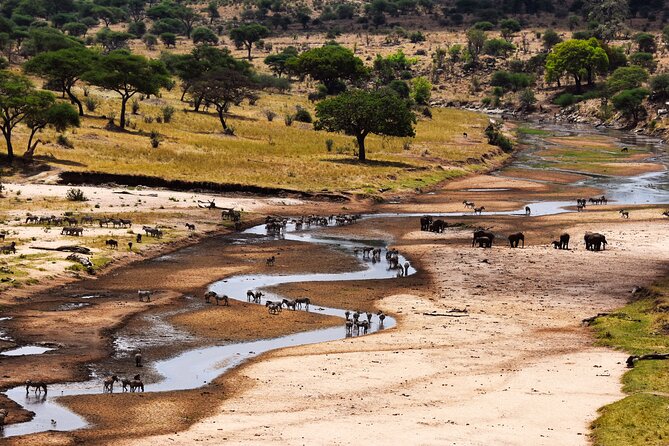
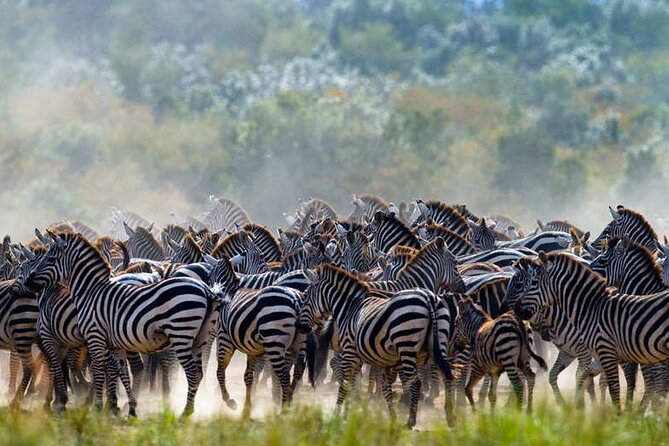
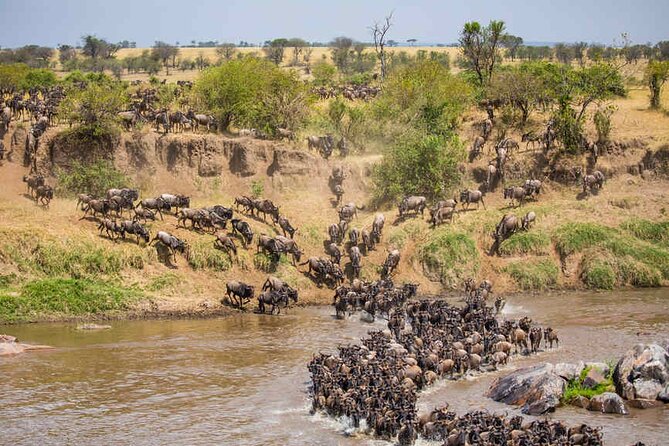
The draw here is simple: the Serengeti-Masai Mara ecosystem is where one of the planet’s most dramatic wildlife movements plays out in real time. The idea of this safari is to keep you in the right region to watch the migration cycle as it moves clockwise, not just to pass through on a quick drive-by.
If you care about behavior, this is the kind of trip that lets you see more than “lots of animals.” The migration has built-in story beats like courting, mating, and birthing along the way, and the route is planned to maximize your time in the areas where those moments tend to happen. Even when the herd location shifts day to day, your days are structured around the hunt, with morning and afternoon game drive blocks rather than one short viewing period.
There is also a smart practical reason this route feels good: it chains the parks together in a way that keeps you from wasting time. Instead of hopping randomly, you move from Tarangire into Serengeti for multiple days, then finish at Ngorongoro Crater, where wildlife viewing can be strong because of its steady water and grazing.
More Safaris in Arusha
- Balloon Safari & Bush Breakfast in Serengeti – Miracle Experience
★ 5.0 · 1,646 reviews - 4 Days Group Camping Safari
★ 5.0 · 1,101 reviews - 5 Days Group Camping Safari
★ 5.0 · 730 reviews
Tarangire National Park on day one: easy start, then game drives
Day one begins in Arusha with a departure at 08:00. The drive to Tarangire is about 2 to 2.5 hours for roughly 120 km, so you are not spending the entire first day in transit.
When you reach the park entrance, you get a short washroom window of about 10 minutes while the guide takes care of the park formalities. Then the plan is set up for real viewing time, with game drives that run into both morning and afternoon. Lunch is included, which matters because it keeps you from losing your best daylight to finding food stops.
After that, you exit the park and continue to your campsite for dinner and overnight. Tarangire’s value on this itinerary is that it gives you a proper wildlife warm-up before Serengeti, so you start the migration chase with momentum. And since park admission is listed as free for this day, the first-day logistics are clean.
Serengeti days two and three: chasing the herd with early blocks
Serengeti is where you spend your “main time,” and the schedule reflects that. You start day two with an early morning breakfast, then head out ready for a longer driving day into the Serengeti area.
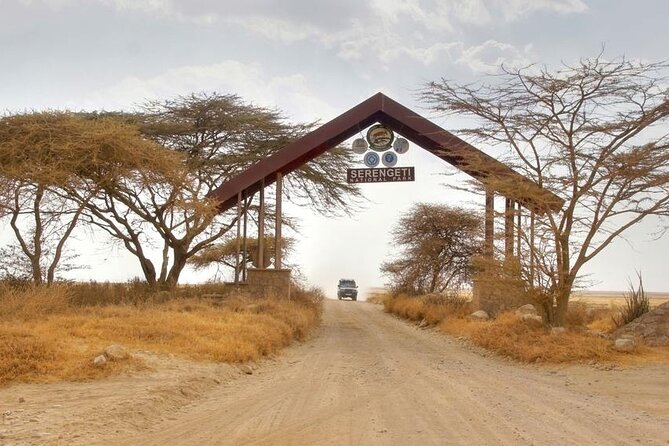
The transfer to the park entrance takes about 4.5 to 5 hours for roughly 250 km. Along the way, you transit the Ngorongoro Conservation Area and get an en-route game drive, plus a chance to see the Ngorongoro Crater view before you reach the Serengeti entrance gate.
After you arrive and have lunch, your afternoon game drive runs until evening, when you reach your campsite for dinner and overnight. This gives you two viewing sessions on day two, which is a big deal when you are trying to maximize animal sightings right away.
Then day three turns up the intensity with a true morning-focused plan. You start the game drive during sunrise, roughly from 06:30 until about 10:00. Before you head out, you have a simple breakfast with coffee or tea and snacks, which is the kind of small detail that keeps you comfortable while waiting for the light to change.
You return to camp for a full breakfast, then you do something important: you go again, this time after breakfast while pushing toward the north. The goal is to reach the Mara River area, where you try to spot the migration. You finish the day back at camp with dinner and overnight, keeping you close to the action without losing your energy.
Day three is also when you feel the “migration mindset” most. The herd is never in just one place all day, so having that morning drive plus a later drive helps you respond when the animals shift.
North Serengeti on day four, then Ngorongoro prep with a smart overnight
Day four is built around continuing the search in North Serengeti, then working back toward central Serengeti. You get game drives in both zones, which is useful because migration positioning can vary, and your best chance often comes from staying mobile within the region rather than committing to one spot all day.
In the afternoon, you switch gears and head to the Ngorongoro Conservation Area. Your overnight base is Simba Campsite, which is described as being a few hundred meters from the crater rim. That detail is quietly important. Being near the rim helps you start day five with less rushing and more time for the crater descent.
After checking into camp for dinner and overnight, day four ends with the kind of rhythm that safari days need: structured game viewing, then rest before the next big focal point.
More safaris from Arusha:
- 3 Days Serengeti & Ngorongoro Group Camping Safari
★ 5.0 · 574 reviews - 7-Day Premium Luxury Tanzania Safari All-Inclusive
★ 5.0 · 426 reviews - 3-Day Classic Serengeti Safari
★ 5.0 · 263 reviews - 8 Days Great Wildebeest Calving Migration Safari from Arusha
★ 5.0 · 254 reviews
Ngorongoro Crater day five: early descent and a crater-floor picnic
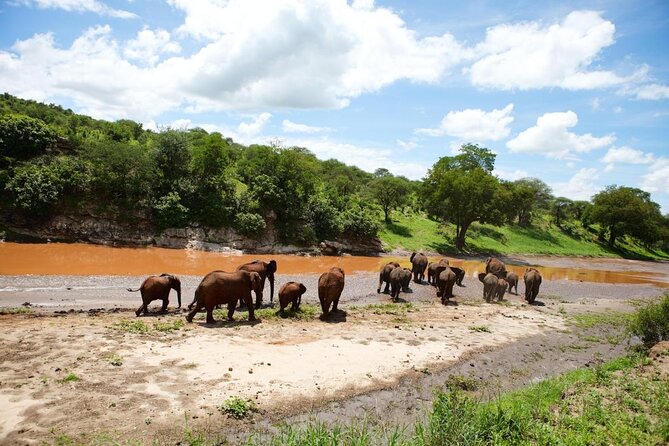
Day five starts with early breakfast around the time you need to get going. Then you descend into Ngorongoro Crater for a game drive with a picnic lunch planned inside the crater.
Ngorongoro’s big advantage is that the crater supports a permanent wildlife population because there is dependable grazing and water across seasons. In practical terms, that means your odds are not only about migration timing. You are also dealing with residents that are there year-round, so the crater can deliver even when migration conditions are a bit different from yesterday.
Once your crater drive and picnic lunch are done, you head back toward Arusha for the afternoon. This finish is satisfying because it feels like a “finale” moment. You go from open savanna movement to a concentrated, enclosed viewing environment where animals gather and you can watch them more closely.
What you get for the price, and what is extra
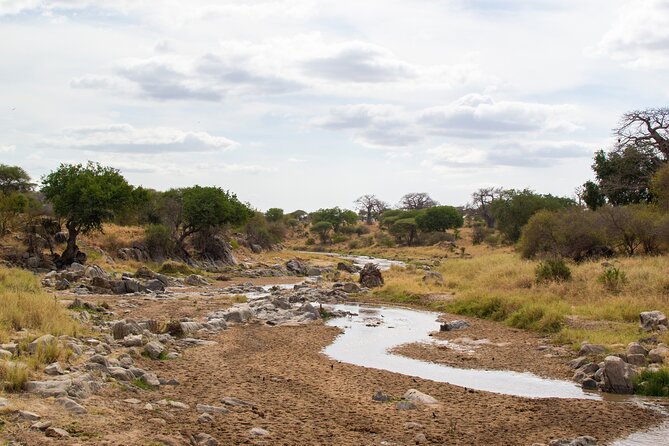
The posted price is $1,990.00 per person for this 5-day circuit. What makes that number feel more reasonable is what is included, not just the headline itinerary.
You are covered for:
- Professional driver-guide (English, Spanish, French)
- All park fees
- All activities
- All accommodation
- Camping equipment
- Meals and drinking water
- Sleeping bag
- Breakfast (5), Lunch (5), Dinner (4)
That meals coverage adds up fast on a safari. You avoid “shopping your day,” and you keep your schedule tight, which matters for game drives that start early. Drinking water included is also a real comfort detail.
What is not included:
- Tips for the driver-guide and safari cook
- Personal items
- International flights
- Visas
A quick reality check on value: the biggest line items in safari costs are usually park admissions, guide time, vehicle use, and food. Since those are listed as included here, the money you pay is mostly buying the ability to spend your days where wildlife is, without constant extra ticketing.
One more note for planning confidence: the cancellation terms are free up to 24 hours before the experience start time, which gives you some room if your travel plans are fluid.
Comfort, timing, and the long-drive reality check
This trip is private, so you are traveling as one group. That can be a big comfort advantage, since you are not caught waiting around for a wider group schedule.
Still, it is important to acknowledge the pace. You have multiple driving legs between parks, including the 120 km hop to Tarangire on day one and the 250 km transfer to Serengeti on day two. Safari driving is part of the experience, but it does mean your day is structured around wheels and viewing windows, not roaming.
You should also know you are using a camping setup, with camping equipment and a sleeping bag provided. The listing does not spell out hotel-style comfort, so if your idea of “relaxing” is a bed with room service, this may not match your expectations. If you are fine with the outdoors, this setup is usually part of what makes the days feel authentic.
The good news is that the schedule includes small pacing comforts: you return to camp for full breakfasts after the morning drive in Serengeti, and you get built-in meal breaks like lunch included on day one and a crater-floor picnic on day five.
How to make the migration chase work on your camera and your body
The trip’s timing is designed to hit wildlife at the times when activity is often strongest. You start Serengeti mornings around 06:30, and you do a second push after breakfast toward the Mara River. That means your body needs to handle early mornings, not just your camera gear.
A few practical ways to set yourself up for the best experience:
- Get enough sleep the nights you can, since your sunrise start is not a “maybe”
- Stay hydrated, since game drives plus warm daylight can add up quickly, and drinking water is included
- Keep your mornings simple and ready, with the coffee or tea and snacks break planned before you go out
- Treat the day like a marathon, not a list, you are moving for good reason, to stay in touch with where the animals are
Also, when you arrive at park entrances, you should expect a short delay while guides complete formalities. On day one in Tarangire you even get a small washroom window while that happens, which is a thoughtful touch that helps you not feel rushed.
Reliability and organization: what the operator does well
The vibe that comes through is that the operation is organized and consistent. The feedback highlights professionalism, kind support, and a feeling that things are arranged well from place to place. Food gets a positive mention too, which matters more than people think. On a multi-day safari, good meals keep your mood up and your energy steady.
There is also a clear pattern of patience in the way the team communicates before the trip is locked in. That helps a lot if you have questions about what you need, what you will do each day, or how the driving and lodging work. For me, that is the difference between a stressful trip and a smooth one.
Price and logistics: is $1,990 per person a smart deal?
For a 5-day loop hitting three major safari areas plus a crater finale, the price can make sense because so much is bundled. You are paying for:
- guide time across multiple days
- all park fees
- daily meals and drinking water
- camping equipment and a sleeping bag
You are also buying the chance to experience the migration loop rather than just reading about it. Even with wildlife timing out of your control, this itinerary is set up to give you multiple chances across several regions, including a focused drive toward the Mara River during your Serengeti days.
The main “cost” side is not money, it is comfort and time. You commit to early mornings, long drives, and campsite living. If you are good with that trade, the price looks much more attractive. If you want hotel comfort and slow mornings, you may feel the trade is heavier than you want.
Should you book this Tanzania Great Migration safari?
I think this is a strong choice if you want a classic Tanzania circuit with a real focus on the migration areas, not just random park stops. You get multiple game drive blocks, sunrise timing in Serengeti, and a crater day that is structured for close wildlife viewing, with a picnic lunch built into the crater-floor experience.
Book it if you:
- want Tarangire, Serengeti, and Ngorongoro in one smooth circuit
- can handle early starts and long driving days
- are comfortable with campsite sleeping supported by a provided sleeping bag and equipment
- prefer a package that includes park fees and most meals, so you are not doing daily budget math
Skip it, or at least ask more questions first, if you:
- need hotel-style comfort and a low-movement schedule
- hate sunrise mornings or long transits between parks
- have a tight tipping budget, since tips for the driver-guide and safari cook are not included
If you want, tell me your travel month and group size, and I can help you think through whether your best odds for the migration match what this route is designed to do.
Just posted around Arusha
- 8 Days Serengeti Migration safari★ 5.0 · 11 reviews
- tarangire & ngorongoro 2 days tour★ 5.0 · 14 reviews
- serengeti, ngorongoro & tarangire 4 days private tour★ 5.0 · 18 reviews
- tarangire, ngorongoro & lake manyara park 3 days private tour★ 5.0 · 11 reviews
- serengeti & ngorongoro 3 days private tour★ 5.0 · 15 reviews
- climb the KILIMANJARO via Lemosho route★ 5.0 · 4 reviews
- Mt. Kilimanjaro: Shira plateau to Cathedral point 3872m Day hike★ 5.0 · 7 reviews
- 2 Days Tanzania Midrange Group Join Safari★ 5.0 · 7 reviews
5-Day Experiences, compared.
5-Day Highlights mid-Range Crater, Serengeti, Tarangire
Read our review →
5 Days Camping Tarangire, Serengeti & Ngorongoro crater & Visiting Maasai
Read our review →
5-Day Private Northern Tanzania Safari from Arusha
Read our review →
5 Days Best of Tanzania Luxury Safari Northern Circuit
Read our review →