

Reviewed · STONE TOWN TOURS
Stone Town Walking Tour with Hassan
Stone Town runs on stories. I like how this 3-hour walking tour connects landmark buildings to how Zanzibar actually lived. You also get Forodhani Gardens time, so the history isn’t just framed behind walls. The only catch: several stops have admission fees, so budget a little extra if you want to go inside every site.
This is a private tour led by a certified English speaking guide, Hassan, and it moves at a pace that feels “just right” for a sightseeing sprint through the UNESCO streets. The main consideration is simple, some key attractions have separate tickets, and the walk is weather-dependent since the tour requires good conditions.
In This Review
- Quick reasons to book this Stone Town walk
- Stone Town feels different when you read the street
- Price and timing: is $25 really good value?
- Where the tour starts, how pickup works, and what to bring
- Stop 1: House of Wonders, ceremony and power in one building
- Stop 2: Forodhani Gardens night market time, not just photos
- Stop 3: Old Fort (Ngome Kongwe), Portuguese roots in stone
- Stop 4: Freddie Mercury Museum, pop culture with Zanzibar origins
- Stop 5: St. Joseph’s Roman Catholic Cathedral, missions and the land problem
- Stop 6: Jaws Corner, coffee, jokes, and local rhythm
- Stop 7: Old Slave Market and the Anglican Cathedral, history you should take seriously
- Stop 8: Darajani Bazaar, the market side of Stone Town
- Stop 9: Old Dispensary, a charitable project with a complicated ending
- Stop 10: Malindi Mosque and the 1994 renovation look
- Stop 11: Old Customs House, Zam Zam’s home to port administration
- Stop 12: People’s Palace Museum, war scars and a political name change
- The guide makes the difference: why Hassan’s style works
- Who should book this, and who might want something else
- Should you book this Stone Town Walking Tour with Hassan?
- FAQ
- How long is the Stone Town walking tour with Hassan?
- What does the $25 price include?
- Is the tour private or shared?
- What is included at Forodhani Gardens?
- Which stops include admission tickets?
- Which stops do not include admission tickets?
- Where does the tour start and end?
- Is transport from my hotel included?
- What ticket format do I use?
- What if the weather is bad or I need to cancel?
Quick reasons to book this Stone Town walk

- Hassan’s approach ties buildings to Zanzibar life, politics, and the small details you’d otherwise miss
- Forodhani Gardens includes time at the famous night food market vibe
- Top sights in one loop without the fatigue of trying to plan everything yourself
- Fair value at $25 per person with guide service and bottled water included
- A private group means your questions stay in your group, not competing with strangers
Stone Town feels different when you read the street

Stone Town is a UNESCO World Heritage area shaped by traders, sultans, and colonial-era influences. As you walk, you start noticing how the architecture keeps changing styles, sometimes within a few blocks. That’s not random. It reflects who had power, who built, and what Zanzibar was doing economically and culturally over time.
What I like most about this style of tour is that it doesn’t treat the city like a museum. You’re not just looking at pretty doors and carved balconies. You’re getting context that makes the city’s mix of cultures feel logical, especially the Omani-led era that helped define much of the town’s look from the 19th century onward.
More Walking Tours in Zanzibar
- Stone Town Private Walking Tour
★ 5.0 · 371 reviews - Zanzibar: 3 Hours Private Stone Town walking Tour with Guide
★ 4.6 · 301 reviews - Zanzibar: Stone Town Historical Cultural Walking Guided Tour
★ 4.5 · 179 reviews
Price and timing: is $25 really good value?
At $25.00 per person, this is one of those deals that can fit into almost any Zanzibar budget. It’s also scheduled as a 3-hour experience, which is ideal when you want “big hits” in a limited time window.
Here’s where the value comes from. You’re paying for a certified English speaking guide plus a bottle of water. You’re also getting a route that includes several well-known monuments plus market time. And the booking pattern matters too, it’s commonly reserved about a month ahead, which usually signals steady demand for a well-run tour that’s not hard to sell out.
There’s one practical note: admission is not included for every stop. Some sites include tickets in the tour price, others don’t. If you want to enter everything, plan for additional entry fees beyond the $25.
Where the tour starts, how pickup works, and what to bring
The tour starts at Forodhani, Zanzibar, Tanzania and ends back at the same meeting point. Being back where you began is handy, especially if you’re using local transport or want an easy handoff back to your day.
Transport itself is your responsibility. The tour doesn’t include getting you from your hotel to the meeting point, but there is a helpful option: if your hotel is in Stone Town, you can send an advanced message for pickup.
A couple more practical details you should know:
- You’ll use a mobile ticket
- Confirmation is sent at the time of booking
- The experience is designed so most people can join
- It runs near public transportation, so you can adjust plans if needed
Stop 1: House of Wonders, ceremony and power in one building
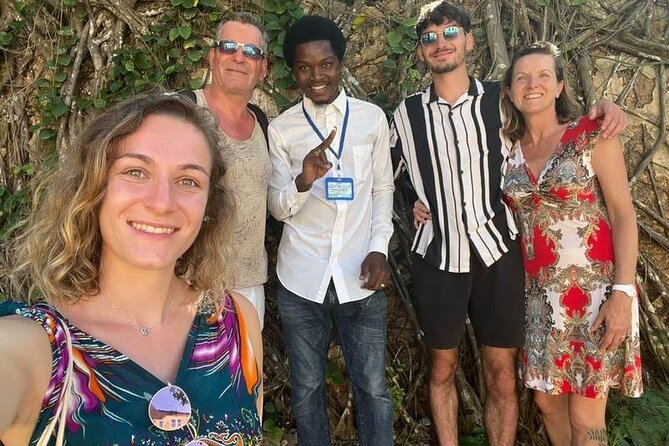
Your first major landmark is the House of Wonders. This was built in Stone Town by Sultan Baraghash bin said. In the 19th century, it was both the tallest and largest building in the area, and it still commands attention because of its prominent position facing Forodhani Gardens.
This building also had a job beyond being impressive. It served as a ceremonial palace and reception hall. That matters, because it helps you understand the town’s layout as a political stage, not just a collection of homes.
The admission ticket for this stop is not included, so if you want to go inside, you’ll need to pay separately. Even if you only appreciate it from outside, it’s a strong “anchor” for the rest of the walk.
More Stone Town walks:
- Zanzibar: Stone Town, Spice Tour, Prison Island with Lunch
★ 4.4 · 1,219 reviews - Zanzibar: Prison Island, Stone Town, & Spice Farm Tour
★ 4.5 · 579 reviews - Zanzibar; Prison Island, Nakupenda, StoneTown Tour with BBQ
★ 4.3 · 457 reviews - Zanzibar: Stone Town, Spice tour & Prison Island with Lunch
★ 4.6 · 453 reviews
Stop 2: Forodhani Gardens night market time, not just photos
Next comes Forodhani Gardens, and this is one of the best parts of the whole experience because it’s included and it’s lived-in. You’ll get time to visit the night food market, where tourists and local people come to eat a simple dinner.
Forodhani Gardens also has a backstory tied to power and celebration. It was laid out in 1936 to commemorate the silver jubilee of Sultan Khalifa. So while you’re eating, you’re also standing in a place made for public celebration.
This stop includes admission, so you’re not hit with another surprise payment right here. If you’re the kind of traveler who likes a sensory break between formal sites, this is the perfect pause.
Stop 3: Old Fort (Ngome Kongwe), Portuguese roots in stone
The Old Fort, also called Ngome Kongwe, adds a different layer to the story. Portuguese influence is part of the town’s history here, with the fort built in the 16th century. Today, the Old Fort is used for different Zanzibar festivals, which means the building isn’t just preserved, it’s still in use.
People also describe it as the Arabic fort in Stone Town. That name difference is interesting because it hints at Zanzibar’s blend of influences. The point isn’t to get lost in labels, it’s to recognize the town’s history is layered, and different empires left different architectural fingerprints.
Admission for this stop is included, so you can focus on the visuals and the explanations without managing extra tickets.
Stop 4: Freddie Mercury Museum, pop culture with Zanzibar origins
Then you’ll reach the Freddie Mercury Museum. Freddie Mercury was born in Zanzibar Town on 5 September 1946, and he later became a British singer and songwriter as the lead vocalist and pianist of Queen. He died on 24 November 1991.
This stop can be a little polarizing if you’re not into music history, but it’s still a clever way to show how Zanzibar’s influence reaches beyond the island. Even if you only spend a short amount of time here, it gives you a modern reference point that contrasts nicely with older forts and sultans.
Admission is not included for this stop, so if you’re interested in going inside, keep that in mind ahead of time.
Stop 5: St. Joseph’s Roman Catholic Cathedral, missions and the land problem

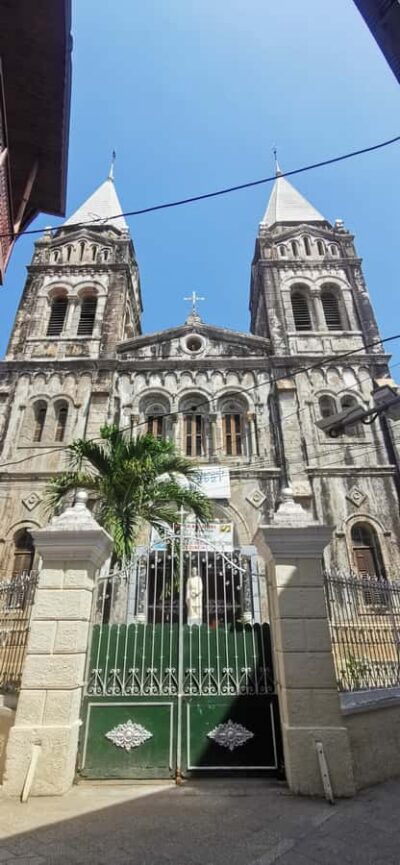
St. Joseph’s Roman Catholic Cathedral tells a story of missionary work, but also of complications on the ground. Construction started in 1863 with French missionaries who came from the French colony Reunion around 1857 to 1860. Work stopped because the land had graves, which is one of those practical obstacles that can shape building timelines.
Construction resumed about 30 years later, and the first mass was held at Christmas in 1898. That timeline helps you see how history here wasn’t only political, it was physical and logistical too.
Admission is not included. Still, even a quick stop gives you a clear sense of how different faith communities took root in Stone Town and left lasting landmarks.
Stop 6: Jaws Corner, coffee, jokes, and local rhythm
Between big monuments, you also get a small break at Jaws Corner. This area is often described as the heart of town and a meeting place for locals and tourists, where people grab coffee and joke with each other.
This stop is short, and it’s free, but it’s useful. It’s your chance to see Stone Town as a working city rather than a checklist. If you’re someone who gets tired of standing still for photos, this kind of “street pause” helps your energy.
Stop 7: Old Slave Market and the Anglican Cathedral, history you should take seriously
The Old Slave Market stop is heavy, but it’s essential for understanding Zanzibar. The site was once a market of slaves, with people brought from different countries. The market was closed around 1873 by Sultan Baraghash.
Later, the building was adapted into an Anglican Church by Edward Steere, the third Bishop of Zanzibar, who served from 1874 to 1882. After Steere died of a heart attack in the building next door, he was buried behind the altar.
This is the kind of stop where how you feel matters. I’d treat it as more than sightseeing. If you want to ask questions, this is a strong moment to do it, because the guide can connect the building to Zanzibar’s political choices and the human realities behind them.
Admission is not included for this stop.
Stop 8: Darajani Bazaar, the market side of Stone Town
Darajani Bazaar is where Stone Town gets practical. It’s the largest of the central market structures and designed in an eclectic style by British architect J. H. Sinclair. The market was inaugurated in August 1904 and faces the creek.
Inside, you’ll find the small-market layout Zanzibar is known for, with areas that include fish, spices, meat, fruits, and vegetables. This is the kind of place where your senses do a lot of the learning. The guide helps you understand what you’re looking at, which is better than simply wandering.
Admission is included here, which means you can focus on exploring stalls instead of scanning for ticket desks.
Stop 9: Old Dispensary, a charitable project with a complicated ending
The Old Dispensary has a quieter story. Construction was commissioned in 1887 by Tharia Topan, and the goal was for the building to be used as a charitable hospital for the poor. When Tharia Topan died in 1891, the building wasn’t finished.
His widow resumed the works, but had to suspend them in 1893 because her budget ran out. After that, the building was sold due to a family quarrel and ultimately completed in 1894 by the new owner.
Admission is not included for this stop. Even so, it’s a good location to pause and think about how social services and public care were shaped by funding, family politics, and changing priorities.
Stop 10: Malindi Mosque and the 1994 renovation look
Next is Malindi Mosque, also connected with the Ijumaa mosque concept, often described as the Friday mosque. It was built in the 19th century and is relatively plain compared with other Zanzibar mosques that have taller minarets and more domes.
But the building got a modern refresh in 1994. In that year, the Ijumaa mosque was completely renovated in a modern arabesques style. That kind of update shows how living religious spaces change over time while keeping recognizable roots.
Admission is not included for this stop.
Stop 11: Old Customs House, Zam Zam’s home to port administration
Old Customs House ties Stone Town to Zanzibar’s trade system. The building was constructed around 1865 and served as a home for Zam Zam, a daughter of Seyyid Said, the first Sultan of Zanzibar. Her husband was Sayyid Humud bin Ahmed from the Busaidy family.
After bin Ahmed died a few years later, Zam Zam moved out, leaving the house to relatives of her later husband. In 1928, customs authority moved from Forodhani to the new port area, but the family house then served as the customs house until 1987.
This stop includes admission. It’s a great one because you see how a building’s purpose can shift while the structure stays. It’s history you can literally trace with your eyes.
Stop 12: People’s Palace Museum, war scars and a political name change
Your final stop is People’s Palace Museum. This palace was built by Seyyid Said bin Sultan in the 1830s for members of the Sultan’s family, and it was the second palace he built, after Mtoni Palace.
The building was hit during the Anglo-Zanzibar war in 1896 and was reduced to half its original size. It continued as the Al Busaidy palace until the Revolution of Zanzibar in 1964, when Sultan Jemshid was overthrown.
After that, it was renamed People’s Palace and continued as government offices. The palace museum officially opened in 1994.
Admission is not included for this stop. Still, if you care about how political upheaval shows up in stone, this is the perfect closing chapter. The guide ties it back to earlier stops so the walk feels like a connected story.
The guide makes the difference: why Hassan’s style works
One reason this tour earns top marks is the guide’s balance. Hassan’s explanations are structured, but not stiff. He’s described as informative without dragging, and he also connects the buildings to Zanzibar’s politics and everyday life as a Zanzibarian.
That matters because Stone Town can be overwhelming. A good guide does two things: he helps you understand what you’re seeing fast, and he keeps the walk moving at a pace you can enjoy rather than suffer.
This tour also has a flexible feel. You’re not stuck with an ultra-rigid script, which can help if you’re curious or you want a little extra time at a market moment.
Who should book this, and who might want something else
This tour is a great fit if you:
- Want a 3-hour Stone Town overview that hits major landmarks
- Like guided context that connects architecture to history and daily life
- Prefer a private setup rather than merging into a larger group
- Want to include Forodhani night market time without complicated planning
You might choose another format if you:
- Only care about museums you can enter with included tickets, since several major stops are not included
- Want a longer, slower walk with deeper time in fewer places
Should you book this Stone Town Walking Tour with Hassan?
If you want an efficient, well-led Stone Town experience that covers both iconic monuments and market life, this is a strong booking. The $25 price is fair because you’re getting a certified English speaking guide plus a built-in highlight at Forodhani Gardens. The main reason to think twice is admission extras, especially if you plan to enter every museum and cathedral.
If you’re smart about budgeting entry fees and you show up ready to walk through a UNESCO neighborhood with strong local context, this tour is an easy yes.
FAQ
How long is the Stone Town walking tour with Hassan?
It lasts about 3 hours.
What does the $25 price include?
The tour includes a professional and certified English speaking guide and a bottle of water. Some admissions are also included, while others are not.
Is the tour private or shared?
It is private. Only your group participates.
What is included at Forodhani Gardens?
Forodhani Gardens includes admission and time to visit the night food market.
Which stops include admission tickets?
Admission tickets are included at Forodhani Gardens, the Old Fort (Ngome Kongwe), Darajani Bazaar, and Old Customs House.
Which stops do not include admission tickets?
Admission is not included at House of Wonders, Freddie Mercury Museum, St. Joseph’s Roman Catholic Cathedral, Old Slave Market and Anglican Cathedral, Old Dispensary, Malindi Mosque, and People’s Palace Museum.
Where does the tour start and end?
It starts at Forodhani and ends back at the meeting point.
Is transport from my hotel included?
No. Transport from your hotel to the meeting point is not included. If your hotel is in Stone Town, you can send an advanced message for pickup.
What ticket format do I use?
You receive a mobile ticket.
What if the weather is bad or I need to cancel?
The experience requires good weather. Cancellation is free up to 24 hours before the start time for a full refund. If you cancel within 24 hours, the amount paid is not refunded.
Just posted around Zanzibar
- Stonetown Private Half-day Walking Tour★ 5.0 · 21 reviews
- Full Day Safari to Mikumi National Park from Zanzibar with Lunch★ 4.5 · 3 reviews
- Dolphin Watching Tour & Josani Forest Sea Trip – Zanzibar★ 4.5 · 3 reviews
- Come and taste the Zanzibar feelings★ 5.0 · 12 reviews
- Cooking Class Tour★ 5.0 · 9 reviews
- Cultural Walking Tour through Stonetown, a UNESCO World Heritage Site★ 4.5 · 14 reviews
- Cave Tour & Rock Restaurant Visit★ 3.5 · 5 reviews
- Private Catamaran – Stone Town Islands & Sandbanks (5 hrs)★ 5.0 · 10 reviews
Stone Town Tours, compared.
Stone Town, Spice Tour, Prison Island with Lunch
Read our review →

Prison Island, Nakupenda, StoneTown Tour with BBQ
Read our review →Stone Town, Spice tour & Prison Island with Lunch
Read our review →
3 Hours Private Stone Town walking Tour with Guide
Read our review →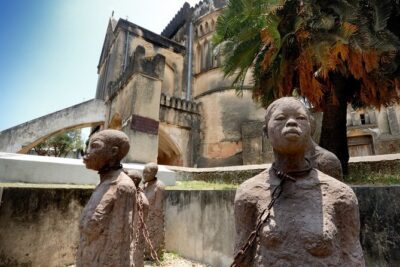
Full-Day Private Stone Town +Spice Farm and Prison Island Tour
Read our review →
Stone Town Historical Cultural Walking Guided Tour
Read our review →Browse the lists this tour appears in