
Reviewed · STONE TOWN TOURS
Private Stone Town Walking Tour
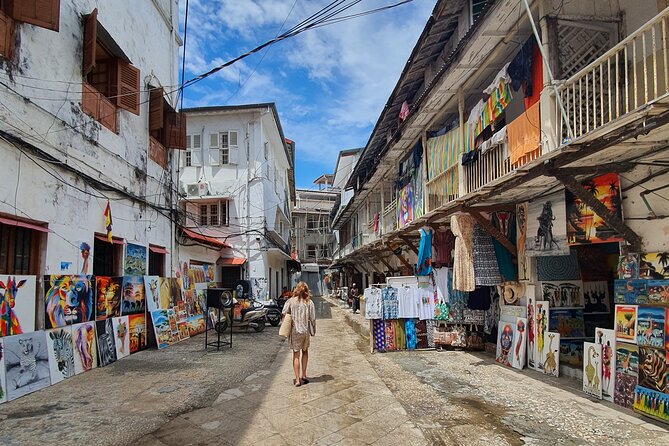
Stone Town is a maze you actually want to walk. This private 3-hour Zanzibar tour threads through key landmarks, from Beit-el-Ajaib to the former slave market site, while your guide helps you read the architecture and street life. I especially like how it pairs big-picture context with small details, and how it spots the religious mix of mosques, churches, and temples that sit side by side.
Two other highlights for me: the House of Wonders stop, because it explains why it mattered so much under Sultan Barghash, and the Old Fort, where you get the full story of Portuguese, Omani, and later cultural uses. One drawback to consider is timing and pace, since this is a walk through crowded historic streets, so you will want comfortable shoes and a guide who can manage the group well.
If you’re new to Zanzibar, this is a strong first-day orientation walk. And if you’re the type who likes to ask questions, you’ll likely come away with a clearer, more honest picture of how Stone Town became what it is today.
In This Review
- Key points to know before you go
- Walking Stone Town, one doorway at a time
- Beit-el-Ajaib (House of Wonders): why this building was a shock
- Old Fort (Ngome Kongwe): Portuguese, Omani, then festivals
- Christ Church and the old slave market site
- St. Joseph’s Roman Catholic Cathedral: twin spires and French details
- Freddie Mercury Museum: Zanzibar’s music passport
- Why the tour price feels fair for Stone Town
- What you’ll likely do and how the route flows
- Practical tips that make this walk easier
- Who should book this Stone Town private walking tour
- Should you book it?
- FAQ
- How long is the Stone Town walking tour?
- Where does the tour start, and does it end nearby?
- What is included in the price?
- Is the Freddie Mercury Museum entrance included?
- Is this tour private, and is it close to public transportation?
- What happens if the weather is poor?
Key points to know before you go
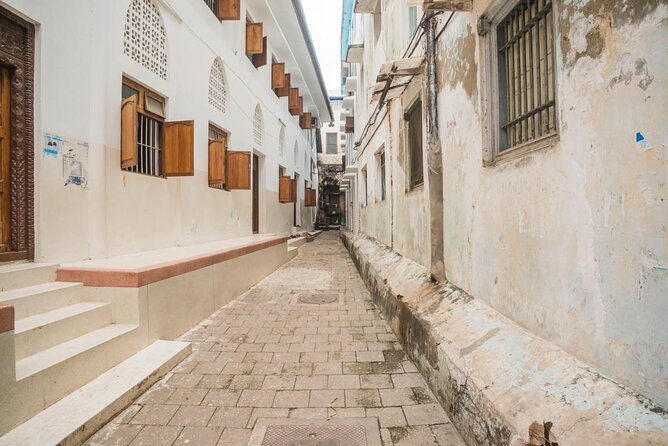
- Private 3-hour Stone Town walking route with a professional guide and a water bottle
- Beit-el-Ajaib (House of Wonders) stop tied to Sultan Baraghash and 1883
- Old Fort (Ngome Kongwe) history from Portuguese to Omani rule, now a cultural center
- Slave market site context with a monument at Christ Church and the topic handled directly
- Religious buildings on the same circuit including St. Joseph’s Roman Catholic Cathedral
- Freddie Mercury Museum visit time included in the route, but entry is not included
Walking Stone Town, one doorway at a time
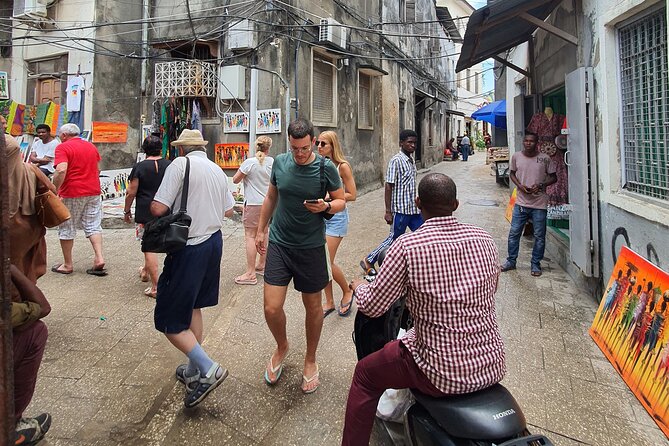
Stone Town is UNESCO-listed, and the streets feel like they’re built for slow wandering. You’ll move through narrow lanes where you can spot the famous doorways that blend African styles with Indian and Arabic designs. It’s one of those places where architecture is not decoration, it’s history.
What makes this tour feel practical is the way it gives you anchors as you walk. Instead of naming random sights, you connect each stop to the island’s trade links and political shifts. That turns a confusing old town into something you can actually navigate.
I also like that this is not a mega-group experience. It’s private, meaning your guide can keep the pace right for your group, pause for questions, and route you based on what you want to focus on.
More Walking Tours in Zanzibar
- Stone Town Private Walking Tour
★ 5.0 · 371 reviews - Zanzibar: 3 Hours Private Stone Town walking Tour with Guide
★ 4.6 · 301 reviews - Zanzibar: Stone Town Historical Cultural Walking Guided Tour
★ 4.5 · 179 reviews
Beit-el-Ajaib (House of Wonders): why this building was a shock
The House of Wonders, Beit-el-Ajaib, is where the story turns from street-level curiosity to a real power-and-technology snapshot. Built in 1883 under Sultan Baraghash, it’s described as the first biggest house in East Africa with features that were unusual for the time. You’ll hear how it had electricity, a water tap system, and even an elevator.
That sounds like tourist trivia until you think about what it signals. On an island driven by long-distance trade, big ideas traveled fast, and rulers competed using modern comforts. This stop helps you see Stone Town as a place where global connections became local changes, not just distant rumors.
The good news for your wallet is that admission for this stop is listed as free. So you’re not forced into surprise add-ons right away, which makes the tour feel like you’re getting value from hour one.
Old Fort (Ngome Kongwe): Portuguese, Omani, then festivals
Old Fort, Ngome Kongwe, is one of those landmarks where the dates matter. It’s often explained as a Zanzibar story in miniature: first built by the Portuguese in the 17th century, then rebuilt by the Omanis in the 18th century. Later it served different roles, including as a train station, before becoming a cultural center.
When you visit, you’re not just looking at walls. You’re seeing how the same space can be repurposed again and again as power changes hands. And because the fort’s inner courts are used for events, it helps you understand Stone Town as a living place, not a museum set.
Admission here is listed as free. The practical payoff is that you can spend more of your time walking, asking questions, and looking closely, instead of budgeting every stop separately.
Christ Church and the old slave market site
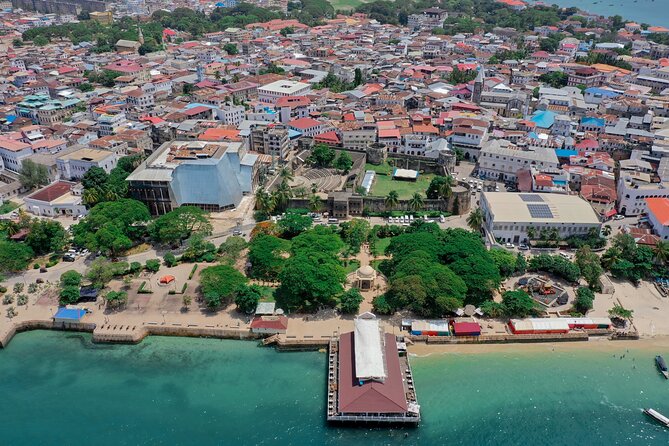
The most serious stop on the route is the area of the old slave market, marked by the Anglican Cathedral of Christ Church. The cathedral stands at a site where the biggest slave market of Eastern Africa once operated, and that fact is not hidden behind vague wording.
Outside the cathedral, there is a stone monument showing four people enchained by their necks, designed to reflect how people were presented for sale. This is one of those moments where your guide’s framing matters, because it’s easy for visitors to skim past a heavy topic. A good guide makes sure you understand the trade system, not just the shock value.
You’ll also hear how the slavery trade linked Europeans who used slaves for plantation work in the Indian Ocean with African rulers. By the 19th century, Zanzibar’s Sultanate was a major hub, partly because of its strategic location across key sea routes. It’s estimated that between 1830 and 1873, around 600,000 people were sold there, and thousands more visited temporarily.
For practical planning, the included information says the slave market entrance fee is covered as part of the tour. Still, the tour route may discuss the site in a way that feels respectful and direct, not quick and casual, so don’t schedule anything tightly right after this stop.
More Stone Town walks:
- Zanzibar: Stone Town, Spice Tour, Prison Island with Lunch
★ 4.4 · 1,219 reviews - Zanzibar: Prison Island, Stone Town, & Spice Farm Tour
★ 4.5 · 579 reviews - Zanzibar; Prison Island, Nakupenda, StoneTown Tour with BBQ
★ 4.3 · 457 reviews - Zanzibar: Stone Town, Spice tour & Prison Island with Lunch
★ 4.6 · 453 reviews
St. Joseph’s Roman Catholic Cathedral: twin spires and French details
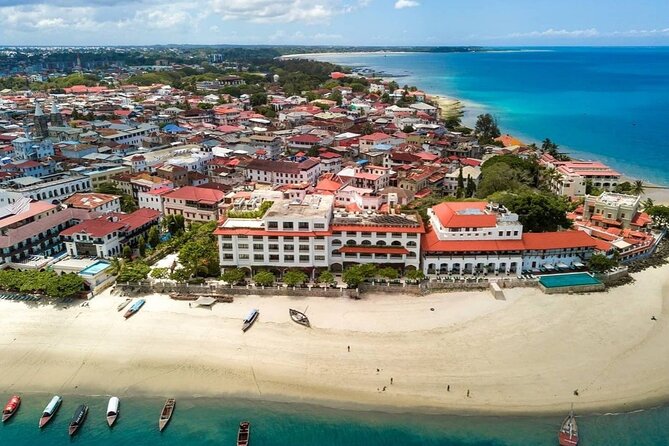
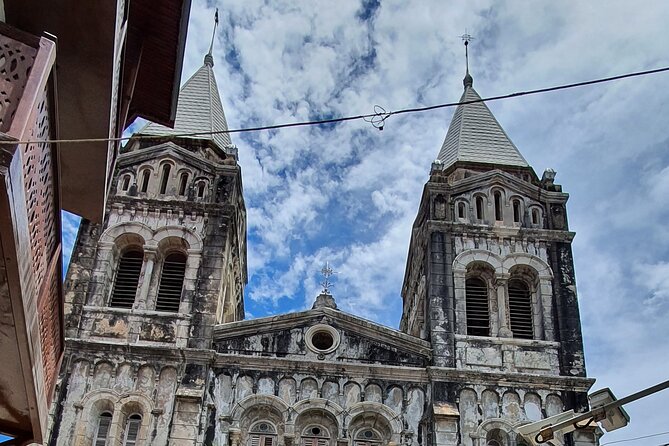
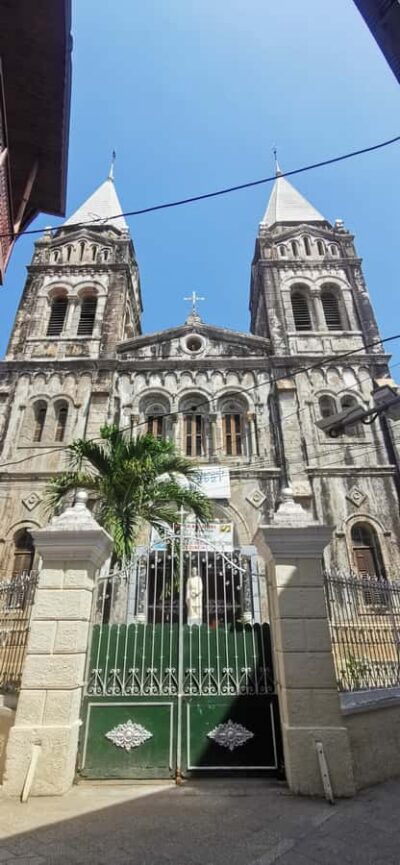
Stone Town’s religious map is unusual, because you can see different faiths close together. St. Joseph’s Roman Catholic Cathedral sits in the Baghani area, built by French missionaries between 1893 and 1898. The cathedral plans are credited to the same French architect who designed the cathedral in Marseille.
Look for the twin spires. They’re prominent in Stone Town’s skyline and can be spotted from farther out along the coast. Inside, you’ll hear about Old Testament murals and stained glass that were imported from France.
If you want one takeaway from this stop, it’s how foreign influence shows up as craftsmanship. It’s not just a building style, it’s materials, artists, and networks imported into Zanzibar. The cathedral is also described as in regular use by the Catholic community, with masses on Sundays and occasionally on weekdays.
Admission is listed as free, which helps keep the tour moving without constant ticket decisions.
Freddie Mercury Museum: Zanzibar’s music passport

Even people with zero music background tend to connect with the Freddie Mercury Museum area quickly. Freddie Mercury was born in Zanzibar, and the museum is located in Stone Town, which is a UNESCO World Heritage Site. This is one of the easiest stops to enjoy, because it shifts the mood from heavy historical context to pop culture rooted in place.
The museum stop is listed as not included for admission. So if Freddie Mercury is your personal priority, plan on paying that entry separately. The upside is that you can choose how long to spend there without feeling like you must rush through everything else.
I like adding this kind of stop because it gives Stone Town a second dimension. It reminds you that history here doesn’t just happen in the past, it shows up in modern identity too.
Why the tour price feels fair for Stone Town
At $43 per person for about 3 hours, this is positioned as a value walk for a UNESCO site that can otherwise cost you time and money to explore well. The biggest reason I’d call it fair is that you get a professional guide plus a bottle of water, and multiple major stops are free to enter.
The tour also includes admission at the slave market stop, which is typically the one place you do not want to guess about at the last minute. On top of that, group discounts may apply, and the tour offers a mobile ticket.
One more practical note: this is a private tour/activity, meaning you’re not sharing your guide with strangers. In a place like Stone Town, where street congestion and constant questions can slow down a group, that private setup matters.
You may still pay extra if you want to enter the Freddie Mercury Museum. But the rest of the core stops on the route are listed as free, which helps you control costs.
What you’ll likely do and how the route flows

This is built as a walking loop that starts at Old Fort on Mizingani Road and ends back at the same meeting point. The tour is near public transportation, which makes it easier to stitch into the rest of your day.
The route centers on landmark storytelling, but it also connects to market streets. One of the things I like about Stone Town walks is that you get street context, not just buildings. You may pass through the main market areas, and you can encounter specific sections like fish markets, which help you understand what people do here day to day.
Your guide’s style is a big part of the value. Guides such as Osman and Said show up often in feedback, and they’re described as friendly, patient, and willing to tailor the visit to what your group wants. If you want more time for shopping or a deeper look at a particular street, ask. A flexible guide can turn a rigid checklist into a route that actually fits your interests.
Practical tips that make this walk easier
Stone Town is best experienced with good walking shoes and a little patience. This tour moves through narrow streets and close quarters, so you’ll want to keep your pace relaxed and your questions coming when they feel natural.
Bring a water bottle only if you’re picky, since the tour includes one. Also consider a light layer, because weather can change and the experience notes say good weather is required. If rain or poor conditions hit, you should expect rescheduling or a full refund.
If you care about language, this is worth noting. Feedback includes guides who speak French very well, and you might also get an English-speaking guide depending on your booking and guide assignment. If language comfort matters, mention it when you reserve.
Who should book this Stone Town private walking tour
This tour is a great fit if you:
- Want a first-time orientation to Stone Town’s big landmarks
- Like architecture and want help interpreting doorways and religious buildings
- Prefer a private guide who can adjust the pace for your group
- Want the slave market history addressed directly, with clear context
- Are short on time and still want a high-density walk
It may not be perfect if you only want light sightseeing with zero heavy topics. The slave market stop is central to the route, and the monument and context are emotionally weighty.
If you’re traveling with teens or adults who ask questions, you’ll likely get a lot out of this. If you’re bringing very young kids, consider whether you want them in a tour that includes difficult history.
Should you book it?
I’d book this private Stone Town walking tour if you want a structured, human-scale way to understand Stone Town. The guide-led storytelling makes the UNESCO site feel navigable, and the mix of Beit-el-Ajaib, Old Fort, Christ Church, St. Joseph’s Cathedral, and the Freddie Mercury connection covers a lot of ground without feeling random.
It’s also good value because several major stops are free, and the tour includes the slave market admission plus a bottle of water. Just plan for extra entry if you choose to go into the Freddie Mercury Museum.
If you want to get your bearings fast, ask your guide to focus on doorways and the religious side-by-side story early in the walk. Then let the rest of the route follow your interests, and you’ll come away with Stone Town that makes sense.
FAQ
How long is the Stone Town walking tour?
The tour lasts about 3 hours.
Where does the tour start, and does it end nearby?
You start at Old Fort Mizingani Rd, Zanzibar, Tanzania. The activity ends back at the meeting point.
What is included in the price?
The tour includes a professional tour guide, a bottle of water, and the entrance fee at the slave market.
Is the Freddie Mercury Museum entrance included?
No. The Freddie Mercury Museum admission ticket is listed as not included.
Is this tour private, and is it close to public transportation?
Yes, this is a private tour/activity, and it is noted as being near public transportation.
What happens if the weather is poor?
The experience requires good weather. If it is canceled due to poor weather, you’ll be offered a different date or a full refund.
Just posted around Zanzibar
- Stonetown Private Half-day Walking Tour★ 5.0 · 21 reviews
- Full Day Safari to Mikumi National Park from Zanzibar with Lunch★ 4.5 · 3 reviews
- Dolphin Watching Tour & Josani Forest Sea Trip – Zanzibar★ 4.5 · 3 reviews
- Come and taste the Zanzibar feelings★ 5.0 · 12 reviews
- Cooking Class Tour★ 5.0 · 9 reviews
- Cultural Walking Tour through Stonetown, a UNESCO World Heritage Site★ 4.5 · 14 reviews
- Private Catamaran – Stone Town Islands & Sandbanks (5 hrs)★ 5.0 · 10 reviews
- Cave Tour & Rock Restaurant Visit★ 3.5 · 5 reviews
Stone Town Tours, compared.
Stone Town, Spice Tour, Prison Island with Lunch
Read our review →

Prison Island, Nakupenda, StoneTown Tour with BBQ
Read our review →Stone Town, Spice tour & Prison Island with Lunch
Read our review →
3 Hours Private Stone Town walking Tour with Guide
Read our review →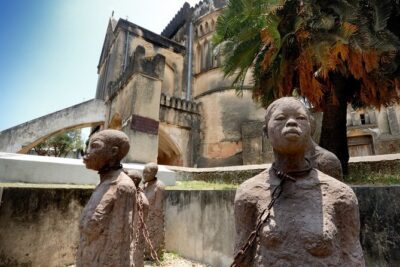
Full-Day Private Stone Town +Spice Farm and Prison Island Tour
Read our review →
Stone Town Historical Cultural Walking Guided Tour
Read our review →Browse the lists this tour appears in