
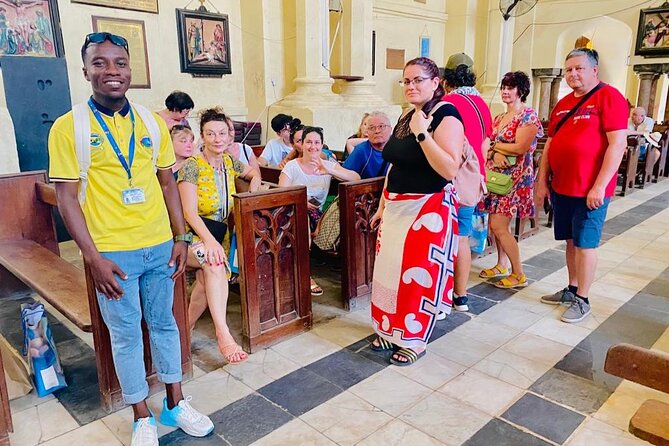
Reviewed · STONE TOWN TOURS
3 Hours Private Stone Town Walking Tour
Stone Town makes history walkable. This private 2 to 3 hour walk threads through the tight streets and big landmarks that explain how Zanzibar got shaped by Arab, Persian, and European influences.
I especially like the Old Fort to House of Wonders stretch, because you get a clear sense of power shifting over centuries without it feeling like a school lecture. I also love the built-in food and local-life stops, including Forodhani Gardens and a great chance to eat at Lukmaan.
One thing to plan for: a few sights have extra entry fees if you want inside. The Freddie Mercury Museum and the Hamamni Persian Baths, for example, are often an outside look unless you pay the onsite fee (not included in the tour price).
In This Review
- Key highlights to look for
- Why This 2 to 3 Hour Private Stone Town Walk Works
- Starting at Forodhani, then letting the streets guide you
- Ngome Kongwe (Old Fort): Omanis, forts, and today’s cultural life
- Forodhani Gardens: the waterfront rhythm and what to eat
- House of Wonders: Swahili and Arab architecture, plus royal-era context
- Freddie Mercury Museum: a photo stop, with an $8 choice inside
- Old Slave Market and Anglican Cathedral: the hardest stop, handled with time
- People’s Palace Museum: royal power in a short visit
- Saint Joseph’s Cathedral: French missionary roots, Gothic feel
- Darajani Bazaar and Jaws Corner: shopping, spice, and everyday Stone Town
- Lukmaan Restaurant: the practical food choice (and a real price ceiling)
- Swahili House rooftop: city views, plus the drink requirement
- Hamamni Persian Baths: outside viewing first, then optional $8 entry
- Price and value: what you pay, what you don’t
- What kind of traveler this fits best
- Should you book this Stone Town private tour?
- FAQ
- How long is the private Stone Town walking tour?
- How much does the tour cost?
- Is this tour private?
- Where does the tour start and end?
- Is pickup available?
- Does the price include bottled water?
- Are entrance fees included?
- What is the entrance fee for the Freddie Mercury Museum if I want to go inside?
- What is the entrance fee for Hamamni Persian Baths if I want to go inside?
- What is the cancellation policy?
Key highlights to look for
- Private pacing with your own guide, so you can slow down for photos and questions
- A tight route from Ngome Kongwe (Old Fort) to royal-era sites and historic churches
- Food stops that fit the walk, especially around Forodhani and the Darajani area
- Real context for the slave trade, with time at the Old Slave Market and memorial area
- Optional indoor experiences like Freddie Mercury and Hamamni Persian Baths if you want more detail
- Practical extras included, like bottled water and parking fees
Why This 2 to 3 Hour Private Stone Town Walk Works
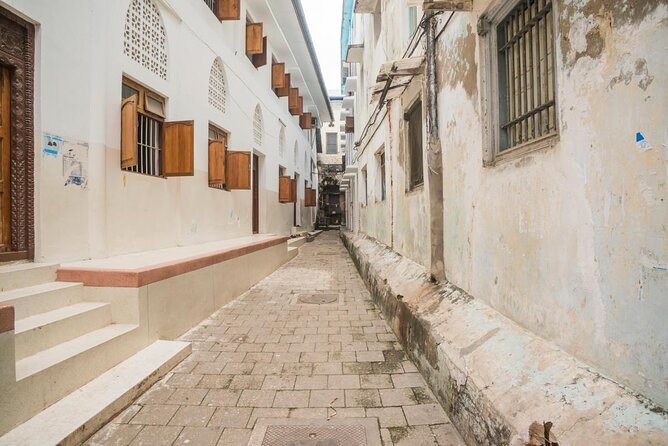
Stone Town can feel like a maze when you first arrive. This tour solves that problem by using a short time window and a route that keeps the key sights close enough together that you are not wasting your day on backtracking.
You also get the big advantage of a private setup: it is just your group. In the Stone Town heat and crowds, that matters more than people expect.
More Walking Tours in Zanzibar
- Stone Town Private Walking Tour
★ 5.0 · 371 reviews - Zanzibar: 3 Hours Private Stone Town walking Tour with Guide
★ 4.6 · 301 reviews - Zanzibar: Stone Town Historical Cultural Walking Guided Tour
★ 4.5 · 179 reviews
Starting at Forodhani, then letting the streets guide you
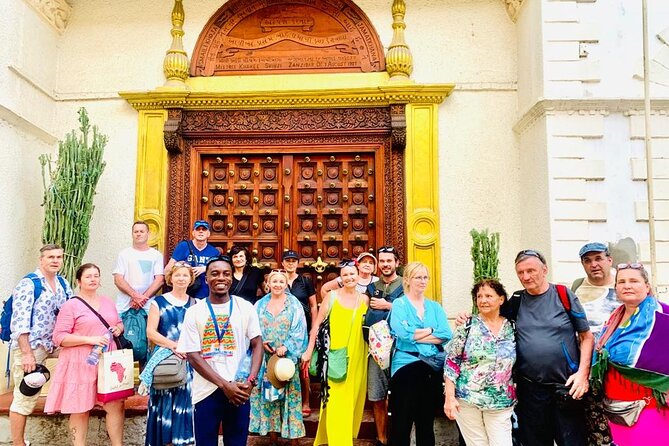
The tour starts in the Forodhani area, then moves through Stone Town’s narrow lanes. You will spend most of your time outside, so wear shoes you can walk in for a while and keep water handy.
If your plan is to combine this with a relaxed evening, this is a smart match. Forodhani Gardens is especially known for its evening food atmosphere, and the walk naturally puts you near that energy.
If pickup is offered for your group, you may be met at your hotel. Some groups report being collected in an air-conditioned vehicle, which is a nice buffer after travel.
Ngome Kongwe (Old Fort): Omanis, forts, and today’s cultural life
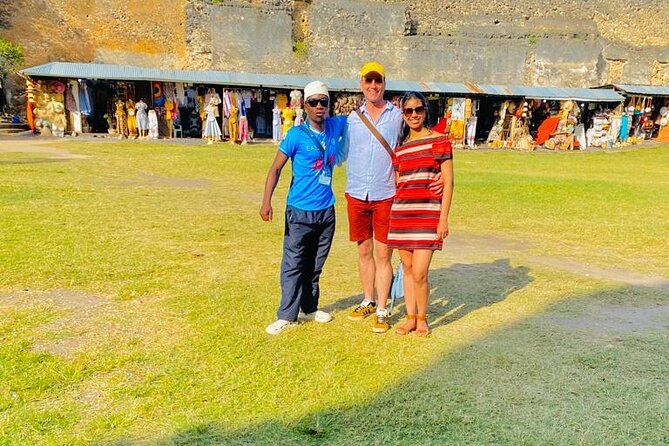
The first major stop is Old Fort (Ngome Kongwe), built in the 17th century by the Omanis. Even without going deep into museum-style content, it is a strong starting point because a fort tells you who controlled the island’s future early on.
What I like here is that it is not only a relic. Today it functions as a cultural center with shops and art spaces, so you can connect the history to what is happening now.
Good to know: the stop time is short, and the entry at this site is listed as free.
Forodhani Gardens: the waterfront rhythm and what to eat
Next up is Forodhani Gardens, a waterfront park where the evening food market is the main attraction. This is one of those places where you see the island through taste and routine, not just through stone buildings.
You can expect a mix of popular local bites. The tour description highlights options like seafood and Zanzibar pizza, plus other local delicacies that you can pick based on what looks good that evening.
Practical tip: this is a great spot to snack lightly rather than go all-in on a full meal if you still want to try Lukmaan later.
More Stone Town walks:
- Zanzibar: Stone Town, Spice Tour, Prison Island with Lunch
★ 4.4 · 1,219 reviews - Zanzibar: Prison Island, Stone Town, & Spice Farm Tour
★ 4.5 · 579 reviews - Zanzibar; Prison Island, Nakupenda, StoneTown Tour with BBQ
★ 4.3 · 457 reviews - Zanzibar: Stone Town, Spice tour & Prison Island with Lunch
★ 4.6 · 453 reviews
House of Wonders: Swahili and Arab architecture, plus royal-era context
Then you move into the House of Wonders area, a palace space tied to Zanzibar’s royal family. The big value here is the architecture. Swahili and Arab design influences show up clearly, and the building helps you connect the social story: Zanzibar was trading power, political power, and cultural power all at once.
This is also one of the smoother stops for first-time visitors because it is easy to understand what you are looking at, even if your background knowledge is zero.
The listed entry for this stop is free, and the visit time is brief.
Freddie Mercury Museum: a photo stop, with an $8 choice inside
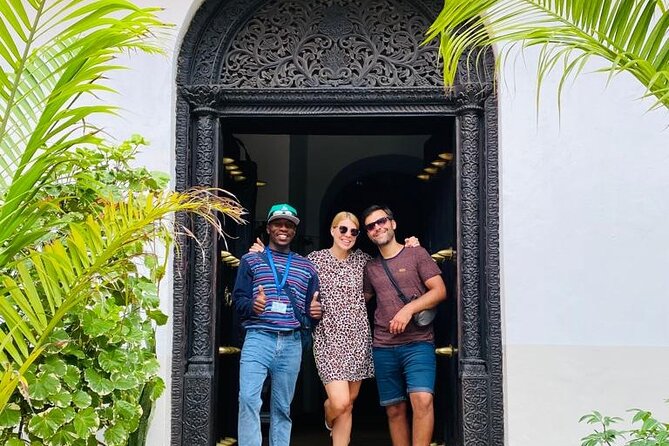
Freddie Mercury’s birthplace in Stone Town is now a small museum. For most people, the first moment is seeing it and realizing the story has a real physical location in the city.
Here the format is practical: you will visit mainly outside for photos. If you want to go inside, there is an entrance fee listed as $8 per person.
I like this approach because it keeps your time efficient. You can still get the cultural hit of the connection, and you can decide based on your interest level and budget whether the inside exhibits are worth it for you.
Old Slave Market and Anglican Cathedral: the hardest stop, handled with time

The tour includes the Old Slave Market site and the nearby Anglican Cathedral, with a memorial element recognizing the victims. This stop is serious. The value is not just in the location, but in how the route frames Zanzibar’s role in the slave trade, so the city history feels complete, not softened.
Time on this stop is longer than the quick-photo sites, which helps. When you are walking through Stone Town, it is easy to treat everything like “sights,” but this is the one moment you should slow down and let it land.
Note on entry: entrance fees for the Old Slave Market are listed as not included in the tour price. Plan a little extra cash if you decide to pay on site.
People’s Palace Museum: royal power in a short visit
Next is the People’s Palace Museum, the former palace of the sultans. Even though your stop time is short, it is a valuable counterpoint to the earlier fort and palace connections.
This is where you can start mapping the political story: who ruled, how the palace spaces worked, and how authority showed up in architecture and city planning.
This stop is listed as free for admission, and the time is kept brief.
Saint Joseph’s Cathedral: French missionary roots, Gothic feel

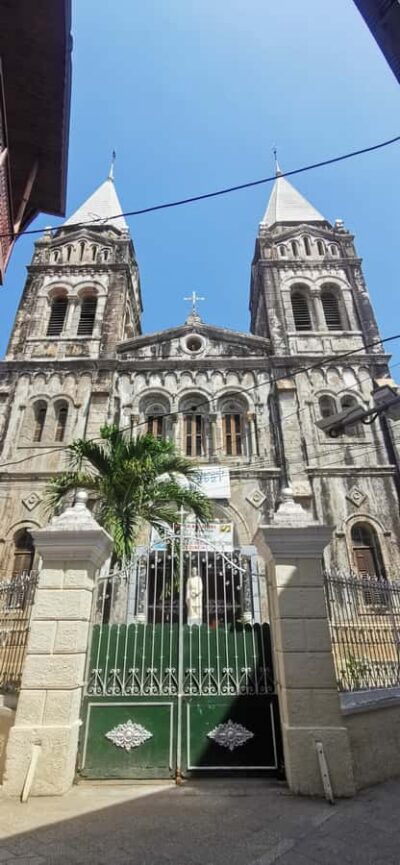
The walk continues to Saint Joseph’s Cathedral, built by French missionaries in the 19th century. The design is described as similar to the Marseille Cathedral in France, which gives you a useful visual comparison.
In Stone Town, churches are part of the layered history, not just religious structures. This one also shows how Zanzibar’s connections reached beyond the Middle East into Europe through missionary work.
Entry is listed as free, with a short stop.
Darajani Bazaar and Jaws Corner: shopping, spice, and everyday Stone Town
You will then hit Darajani Bazaar, a busy market area where you can find spices, fruits, vegetables, textiles, and more. This is where Stone Town feels like Stone Town, meaning you get the everyday economy, not only the monuments.
A little later, the tour brings you to Jaws Corner, a well-known gathering spot. The focus here is on atmosphere and social energy, with chances to interact with locals and enjoy aromatic beverages.
I like these two stops together because they balance the heavier history sites. One helps you see how people live and buy. The other helps you see how people meet and talk.
Both stops are described as free time, meaning you are not forced into paying for entry to enjoy them.
Lukmaan Restaurant: the practical food choice (and a real price ceiling)
One of the best parts of this walk is the planned time at Lukmaan Restaurant, a long-running favorite for Zanzibari cuisine in Stone Town. The tour description frames it as affordable, with the expectation you can eat without going over $20 per person for a meal.
You will have the time for a proper pause, so treat this as your meal plan checkpoint. The walk is history heavy, then market heavy, then it becomes easier to enjoy the food because you are not rushing.
Tip: if you want to try street snacks at Forodhani, keep Lukmaan for something more filling.
Also, lunch is listed as not included in the tour price, so you pay for your own meal here.
Swahili House rooftop: city views, plus the drink requirement
The route includes the Swahili House, which functions like a hotel with a restaurant and rooftop. The good news is that the rooftop view is described as free to access.
The rule is simple: you should buy a drink, like water or soda, to enjoy the rooftop time. It is a common setup in tourist areas, and honestly, it is a fair way to keep the rooftop accessible.
This is one of the stops that helps the walk “click” visually. After hours of narrow lanes, you finally see the scale of Stone Town.
Hamamni Persian Baths: outside viewing first, then optional $8 entry
The last major historical touch is Hamamni Persian Baths, dating to the 19th century. The point here is the architecture and the cultural mix, showing Persian and Arabian influence.
You will visit mainly outside to see the design. If you want to go inside, there is an entrance fee listed as $8 per person.
If you love history and architecture and you are okay with extra fees, it can be worth it. If you just want the strongest visual impression without paying more, the outside portion still gives you the key idea.
Price and value: what you pay, what you don’t
The price is $20 per person, and the value comes from how the walk is designed.
Included:
- Parking fees
- Bottled water (mineral water is free)
- Time and access for many of the stops that are listed with free admission
Not included (so you budget for it):
- Lunch and alcoholic beverages
- Entrance fees at select sites, including the Old Slave Market, Freddie Mercury Museum, and the Swahili House area (plus the sultan’s palace is also mentioned as not included in the general entrance-fee note)
- Interior visits at Freddie Mercury and Hamamni Persian Baths have a stated onsite fee of $8 per person if you choose to go in
You can think of this tour as a history and city-walk framework with optional “pay to go deeper” stops. The base price is strong if you are happy with outside views at certain spots and want to spend your money on food instead.
What kind of traveler this fits best
This is a great match for:
- First-timers who want to get bearings fast in Stone Town
- People who prefer walking and talking over long bus rides
- Anyone who wants the city history explained in a way that connects buildings to bigger events
- Visitors who want a sensible plan for snacks and a meal stop
If you hate walking in warm weather or you need long indoor museum time, you might find the pace a little too street-focused. But the tour is private, so you can usually ask for small adjustments without derailing the whole route.
Guides named Rakib and Nasir are mentioned as examples of how the tour is run, with a focus on polite service and strong explanations of how Stone Town’s architecture and events fit together.
Should you book this Stone Town private tour?
If you want a short, organized route through the heart of Stone Town that balances palaces, churches, markets, and the most difficult historical reminder, I think you should book it. The $20 price is reasonable for a private guide, bottled water, and a walk that saves you from guessing which streets to prioritize.
I would only hesitate if you know you want lots of indoor museum time at multiple sites, because several entrances can cost extra. If you are fine with outside viewing plus one or two paid add-ons, this tour is a solid way to understand Zanzibar without turning your day into paperwork and tickets.
FAQ
How long is the private Stone Town walking tour?
It runs about 2 to 3 hours.
How much does the tour cost?
The price is $20.00 per person.
Is this tour private?
Yes. It is a private tour, so only your group participates.
Where does the tour start and end?
It starts at Forodhani, Zanzibar, Tanzania and ends back at the meeting point.
Is pickup available?
Pickup is offered.
Does the price include bottled water?
Yes. Mineral waters are free.
Are entrance fees included?
Many stops are free, but some entrance fees are not included in the tour price, including places like the Old Slave Market and the Freddie Mercury Museum.
What is the entrance fee for the Freddie Mercury Museum if I want to go inside?
The entrance fee is listed as $8 per person.
What is the entrance fee for Hamamni Persian Baths if I want to go inside?
The entrance fee is listed as $8 per person.
What is the cancellation policy?
You can cancel for free up to 24 hours in advance for a full refund. If you cancel less than 24 hours before, the amount you paid will not be refunded.
Just posted around Zanzibar
- Stonetown Private Half-day Walking Tour★ 5.0 · 21 reviews
- Full Day Safari to Mikumi National Park from Zanzibar with Lunch★ 4.5 · 3 reviews
- Dolphin Watching Tour & Josani Forest Sea Trip – Zanzibar★ 4.5 · 3 reviews
- Cultural Walking Tour through Stonetown, a UNESCO World Heritage Site★ 4.5 · 14 reviews
- Come and taste the Zanzibar feelings★ 5.0 · 12 reviews
- Cooking Class Tour★ 5.0 · 9 reviews
- Private Catamaran – Stone Town Islands & Sandbanks (5 hrs)★ 5.0 · 10 reviews
- Cave Tour & Rock Restaurant Visit★ 3.5 · 5 reviews
Stone Town Tours, compared.
Stone Town, Spice Tour, Prison Island with Lunch
Read our review →

Prison Island, Nakupenda, StoneTown Tour with BBQ
Read our review →Stone Town, Spice tour & Prison Island with Lunch
Read our review →
3 Hours Private Stone Town walking Tour with Guide
Read our review →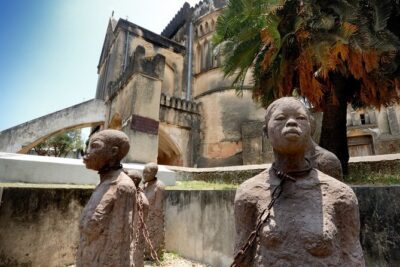
Full-Day Private Stone Town +Spice Farm and Prison Island Tour
Read our review →
Stone Town Historical Cultural Walking Guided Tour
Read our review →Browse the lists this tour appears in