Reviewed · 2-DAY EXPERIENCES
2 Day Massai Village Experience (all-incl.)
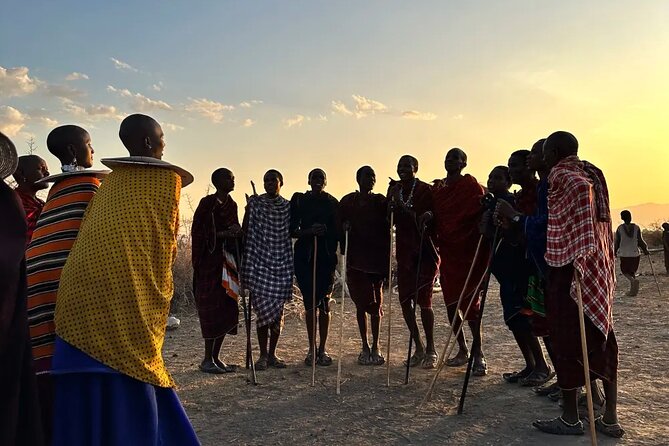
This Maasai stay has a conservation backbone. You get to meet Mr. Kipelyan Olesisian, also known as Kipe Laizer, a Maasai warrior and wildlife conservationist, and you’ll spend time in his community at Oltukai near Lake Manyara. I like the hands-on village moments, from milking cows to herding goats and making crafts, and I also like the clear community support angle through Kipe Adventure’s 20% profit donation. The main drawback is that this is rural and traditional, so you should be ready for a simple, hands-on experience, and there’s a moderate physical component.
You’re also not signing up for a huge crowd. This runs as a small group, with a maximum of 15 travelers, and you get private transportation as part of the all-incl. package. The trip returns you back to the start point at the end of day 2, so you’re not left trying to coordinate your own pickup.
Over two days, you’ll pair cultural time with real-life learning moments, including a school visit and time around a waterhole. Expect early daylight and outdoor activities, and plan on dressing for sun, dust, and changing temperatures.
In This Review
- Key Highlights That Make This Different
- Lake Manyara Meets Oltukai, Not a Cookie-Cutter Stop
- Getting to Know Kipe Laizer and Why Conservation Is Part of the Visit
- Day 1 Near Lake Manyara National Park: Village Life in Motion
- Overnight in a Traditional Maasai Hut: The Moment You Remember
- Day 2 Sunrise Over Lake Manyara, School Time, and the Waterhole
- What Is Actually Included, and Where You Might Pay Extra
- Price and Value: Is $468.65 Worth It?
- Who Should Book This Maasai Village Experience?
- Should You Book? My Straight Answer
- FAQ
- How long is the Maasai Village Experience?
- Where does the experience take place?
- What does the price of $468.65 per person include?
- Is pickup offered, and where do you meet?
- Who leads the Maasai part of the experience?
- What is the cancellation policy?
Key Highlights That Make This Different
- Meet Kipe Laizer in the Lake Manyara region and understand how Maasai life connects with wildlife conservation
- Stay overnight in a traditional Maasai hut in Oltukai village
- Hands-on village activities like milking, herding goats, and craft-making
- Day 2 includes school time and a waterhole visit, two things that shape daily life there
- Small group size, max 15 for more respectful, personal interaction
- Community impact is built in, with a 20% profit donation and support for clean water, food, and education
Lake Manyara Meets Oltukai, Not a Cookie-Cutter Stop
What makes this experience click is the setting and the people’s role in it. Oltukai is tied to one of Tanzania’s iconic safari areas, the Lake Manyara region, and the schedule is built around daily life, not just photo stops. You’ll spend your time with a Maasai community that also links to conservation through Kipe Laizer, so the story you hear is more than just cultural performance.
I like that the plan includes activities with real routines. When you try milking cows, help with herding goats, or make traditional crafts, you’re not just observing from the sidelines. You’re participating at a level that can help you understand the skills and time involved in village life.
There’s also an important practical feel to the way it’s set up. You get private transportation and the tour ends back at the meeting point, which matters when you’re traveling in a less tourist-dense area. You also get a mobile ticket, which is usually easier than juggling paper receipts in transit.
The part to be honest about is that this is “traditional” by design. You are going to spend a night in a traditional Maasai hut, and you’ll be outdoors for parts of the day. That can be wonderful, but it’s not the kind of trip where you can expect modern comforts on every step.
Other trips running out of Tanzania:
- Serengeti Balloon Safari and authentic bush breakfast
★ 5.0 · 2,480 reviews - Balloon Safari & Bush Breakfast in Serengeti – Miracle Experience
★ 5.0 · 1,646 reviews - From Zanzibar: Mikumi Safari Day Trip with Flights and Meal
★ 4.7 · 1,470 reviews
Getting to Know Kipe Laizer and Why Conservation Is Part of the Visit
This trip centers on Mr. Kipelyan Olesisian, who goes by Kipe Laizer. He’s described as a Tanzanian Maasai warrior and wildlife conservationist from the northern region of Tanzania, with ties to the Lake Manyara area. That matters because it shapes how your conversations land.
Instead of a vague “culture lesson,” you get a perspective on how Maasai life and conservation can exist in the same place. The experience also frames community support as part of the visit’s purpose. Kipe Adventure donates 20% of its profit to support vulnerable children and orphans in Kipe’s village, known as Oltukai.
You’ll also hear how your stay supports essentials that change outcomes, not just smiles. With your overnight and activities, the information you’re given connects the visit to clean water, food, and education for children in the community. That’s the kind of link I look for when I’m trying to spend money in a way that leaves a footprint.
One more nuance: you’re not arriving to a stage-managed event. The schedule includes time with family life, school moments, and a water source context. That gives the conservation story more weight, because you’re seeing the parts of daily life that conservation and community support try to protect.
Day 1 Near Lake Manyara National Park: Village Life in Motion
Day 1 starts with Lake Manyara National Park as your first big point of reference, and then it quickly shifts into community time at Oltukai. The experience is designed around meeting local people and learning everyday traditions, including customs, beliefs, and practices.
You can expect a hands-on day. The activities listed are very specific: milking cows, herding goats, and making traditional Maasai crafts. Even if you’re not a natural farm-hand, you’ll likely get guided step-by-step. That’s where the value comes from. You’re not just watching, you’re doing small parts of the work that keep a community running.
This is also where the “views” part works differently. The information emphasizes savannah views and wildlife as you learn about the Maasai people’s conservation role. In other words, you’re getting the scenery layered over a cultural explanation, not the other way around.
One consideration: your comfort level with animals and outdoor work will shape your day 1 enjoyment. The trip calls for moderate physical fitness, and the listed activities suggest you should expect some walking, standing, and basic farm chores. If you’re only comfortable with light, indoor experiences, this might feel a bit active.
The itinerary credit that matters here is the time balance. Day 1 isn’t described as endless. It’s set up as a first day that links national-park context with village reality, so you’re not just arriving and crashing. It sets the tone for your night in the hut.
Overnight in a Traditional Maasai Hut: The Moment You Remember
After your day of activities and cultural time, the standout is the night in the traditional Maasai hut. This is where the experience becomes personal and real. A night in a family setting tends to slow things down, and it forces you to notice details like sounds at dusk, cooking rhythms, and how family life structures the evening.
Some visitors highlight how welcoming the family feels. The info you have says you’ll be able to enjoy dinner and spend time in a mother’s hut, which suggests you’re included in family life rather than kept at a distance. It also notes that you’ll feel comfortable and safe, which is exactly what you want to hear for an overnight in a rural homestay style experience.
What you should plan for is simplicity. The term traditional hut is direct. That usually means fewer modern comforts than you’re used to on a standard hotel trip. You’ll likely rely more on patience and flexibility. If you go in expecting a safari lodge setup, you’ll be disappointed. If you go in expecting a cultural night with family, it’s much more likely to land well.
This is also where the conservation-and-community purpose can feel tangible. When you know the visit supports clean water, food, and education, your overnight feels more like participation than sightseeing. You’re not just passing through. You’re using the community’s time, and you’re contributing to its needs.
Same base in Tanzania, a completely different day:
- Zanzibar: Quad Bike Adventure departing from Kendwa or Nungwi
★ 4.9 · 1,233 reviews - Zanzibar: Stone Town, Spice Tour, Prison Island with Lunch
★ 4.4 · 1,219 reviews - Tanzania Classic – 7 Days
★ 5.0 · 1,151 reviews - 4 Days Group Camping Safari
★ 5.0 · 1,101 reviews
Day 2 Sunrise Over Lake Manyara, School Time, and the Waterhole
Day 2 begins with a sunrise over Lake Manyara. The schedule frames this as a warm start to the day, and sunrise timing matters because it often shifts the mood from “arranging the day” to “watching how the day starts.” If you like early light and quieter air, this is the part that can feel almost meditative.
Then the experience turns to two key life-in-place moments: the school and the waterhole. You’ll spend time with children at the local school. The description highlights laughter, learning, and shared dreams. This part matters because it’s not a one-minute interaction. You’re given time to be present with the school community, and that makes your presence feel more meaningful.
After that, you can head to the waterhole. That’s described as a life source that sustains existence, and it’s one of those experiences that helps you understand how survival works in a place where water is not automatic. You’ll likely see the everyday resilience involved in collecting and using water, even if you’re not physically doing the full process yourself.
A small practical note: day 2 sounds emotional, and it’s worth bringing a respectful mindset. When you’re meeting children and spending time in a school context, the best approach is simple. Be patient. Keep interactions short if requested. Follow guidance from your hosts.
By the time you finish day 2, you’re back to the meeting point at the end of the experience. That structure is helpful for planning the rest of your Tanzanian trip, especially if you’re pairing it with a safari circuit.
What Is Actually Included, and Where You Might Pay Extra
This is priced as a 2-day all-incl experience, and several pieces are clearly covered. Included items are dinner, breakfast, and private transportation. There is also a conservation fee included, and you’re told it does not need extra payment.
That’s a big deal for value because conservation fees in Tanzania can be confusing when they’re tacked on later. Here, you at least have clarity: you pay for the trip price, and the conservation fee is already accounted for.
Where you might have to budget for extras is also straightforward. If you want to go out of the Maasai village during your visit, transportation to the main road is listed as $20. That’s not included, so if leaving the village for any reason matters to your plan, factor that in early.
Also keep in mind the overall experience setup. It’s a private-transport format, and the tour ends back at the meeting point. That usually means you’re not arranging public transport on your own. For a rural village stay, that reduces stress.
Finally, the tour is capped at 15 travelers. A smaller group can make a big difference for overnight stays and school moments because the attention isn’t stretched thin. That can also reduce the sense of being hurried.
Price and Value: Is $468.65 Worth It?
At $468.65 per person for about 2 days, this isn’t a budget day trip. But it doesn’t pretend to be. The value depends on what you want from Tanzania.
If you’re looking for a quick cultural stop with minimal cost impact on the community, this might feel pricey. But if you want more than a photo and you care about how your visit supports local needs, the math shifts. This experience includes meals, private transportation, and a conservation fee that’s already covered. That pulls down the hidden costs that often sneak into “almost all-incl” tours.
The biggest value driver is the community benefit link. Kipe Adventure donates 20% of its profit to vulnerable children and orphans in Oltukai. The stay is also tied to clean water, food, and education for children. Even if you don’t know the local cost structure, you can still see the intention is practical, not just symbolic.
The small-group limit, max 15, also adds value because it tends to create smoother interactions. School time and a family overnight go better when the group is manageable.
The one downside to keep in mind is that “value” here is about relationships and participation, not luxury. You’re paying for access and impact, not polished amenities. If that matches your travel style, this is a strong fit.
Who Should Book This Maasai Village Experience?
You should book if you want a culture and community experience that has a clear link to conservation and local support. It’s also a good choice if you like practical interactions, like learning through doing, whether that’s crafts or farm-related activities.
It’s especially suitable for people who are comfortable with moderate activity and outdoor time. The trip calls for moderate physical fitness, and the listed activities suggest you’ll be on your feet and participating in daily work.
It’s also a solid option for family travel, at least in the sense that visitors have reported a positive experience with children, including a parent traveling with a 9-year-old. The overall tone you’re given emphasizes comfort and safety in the home setting, which is the big concern for families.
You might hesitate if you strongly prefer structured sightseeing over hands-on cultural participation, or if a rustic overnight is a deal-breaker. Since this is a traditional hut stay, you should go in with realistic expectations.
Should You Book? My Straight Answer
I’d book this if you want Tanzania that feels personal and purposeful, not just stamped on a checklist. The combination of meeting Kipe Laizer, doing village activities like milking and herding, and spending time at school and a waterhole makes it more than a one-note cultural stop.
The decision comes down to your comfort with a traditional night and some physical participation. If that sounds like your kind of travel, then $468.65 buys you meals, private transport, conservation-fee coverage, and a real community support structure through Kipe Adventure.
If you want an easy, fully comfortable lodging style experience with zero participation, then this is not built for that. But if you want to connect in a respectful, practical way, this 2-day Maasai village stay near Lake Manyara is a strong choice.
FAQ
How long is the Maasai Village Experience?
It runs for 2 days (approximately).
Where does the experience take place?
It takes place in Tanzania, at Oltukai Maasai Village near Lake Manyara National Park in the Lake Manyara region.
What does the price of $468.65 per person include?
Dinner, breakfast, private transportation, and the conservation fee (stated as included and not needing extra payment).
Is pickup offered, and where do you meet?
Pickup is offered, and the meeting point is TotalEnergies MAKUYUNI SERVICE STATION A104, Junction To Karatu, Dodoma Rd, Makuyuni 00000, Tanzania. The activity ends back at the meeting point.
Who leads the Maasai part of the experience?
Mr. Kipelyan Olesisian, also known as Kipe Laizer, is the Maasai warrior and wildlife conservationist connected to the community in Lake Manyara.
What is the cancellation policy?
You can cancel up to 3 days in advance for a full refund. If you cancel less than 3 days before the start time, the amount paid is not refunded.
Just posted around Tanzania
- Stonetown Private Half-day Walking Tour★ 5.0 · 21 reviews
- Full Day Safari to Mikumi National Park from Zanzibar with Lunch★ 4.5 · 3 reviews
- Dolphin Watching Tour & Josani Forest Sea Trip – Zanzibar★ 4.5 · 3 reviews
- Come and taste the Zanzibar feelings★ 5.0 · 12 reviews
- Cooking Class Tour★ 5.0 · 9 reviews
- Cultural Walking Tour through Stonetown, a UNESCO World Heritage Site★ 4.5 · 14 reviews
- Private Catamaran – Stone Town Islands & Sandbanks (5 hrs)★ 5.0 · 10 reviews
- Cave Tour & Rock Restaurant Visit★ 3.5 · 5 reviews
2-Day Experiences, compared.
2 Day Serengeti Safari Experience from Mwanza
Read our review →
2 Days Tarangire and Ngorongoro Group Camping Safari
Read our review →
2 Days 1 Night Mikumi National Park from Dar es salaam
Read our review →
2 Day Safari To Mikumi National Park + transfers from Dar Es Salam
Read our review →
2-Day Private Mikumi National Park Tour with Pickup
Read our review →